Can a private SBA buyer close a co-op conversion?
Rarely without a political fight. Bylaws, a member vote, and for-profit eligibility are three gates. Another co-op or an NCG-affiliated operator usually wins the file.
Grocery Store Business Broker · HedgeStone Business Advisors · Jason Taken
Last updated 2026-09-04
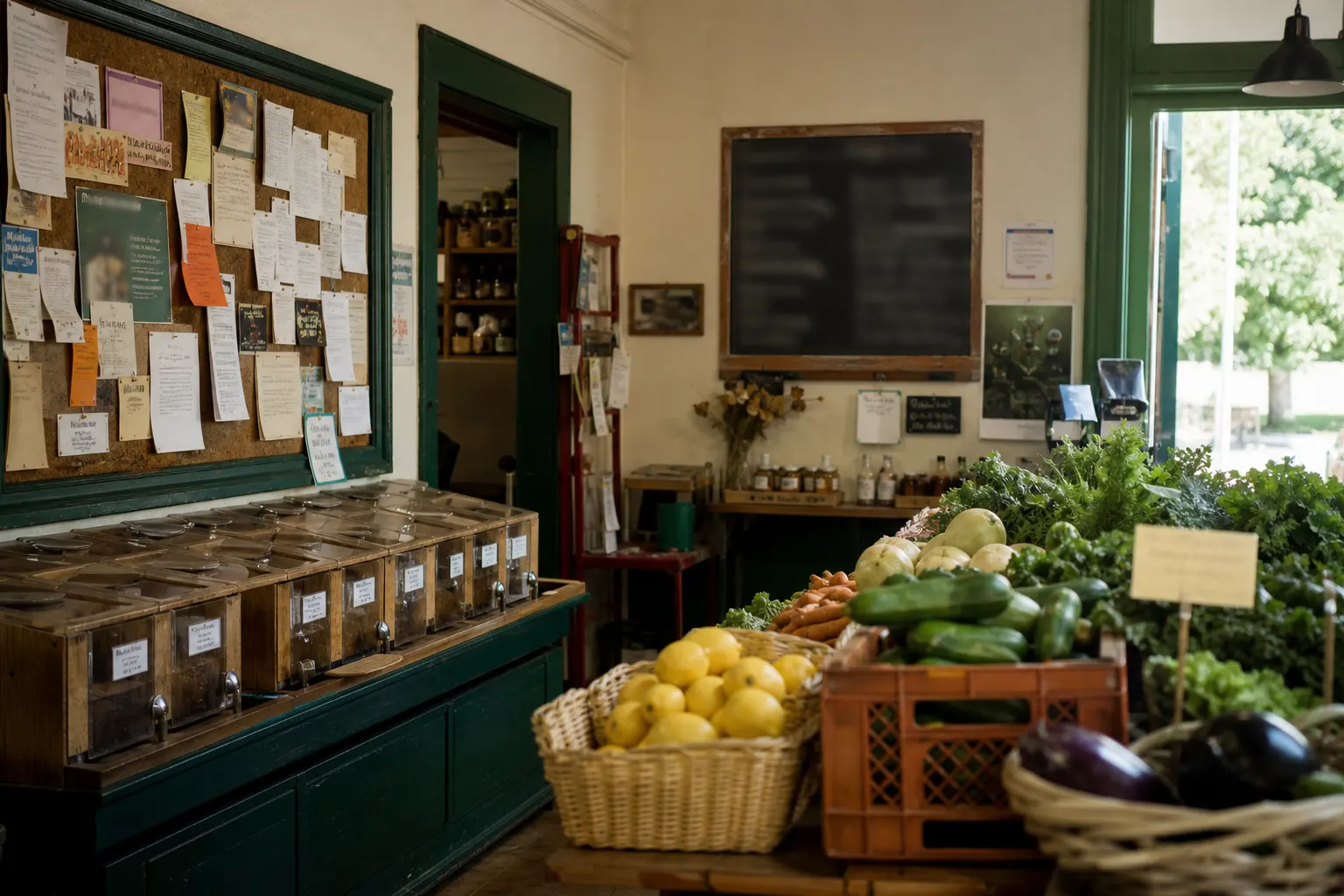
Buying a food co-op is a governance question before it is a grocery multiple. Can you live with the bylaws. Can you survive a member vote. Can you recast earnings when patronage rebates and volunteer hours sit on the P&L like they are permanent. If any of those answers is no, you are not buying a store. You are applying for a political process. Grocery Store Business Broker — HedgeStone Business Advisors, led by Jason Taken — works that sequence with you. Start at the buyer hub and mark the Buyer Underwriting Workbook before anyone calls a special meeting.
This site does not publish a live listings board. You bring a structure you can live with, capital you can document, and a geography you will occupy. Then you look at files. How to buy a grocery store step by step is still the grocery calendar. The co-op calendar is extra: notice, quorum, and a vote the board cannot fake. A natural / organic store can look similar on the floor and still be a private asset sale. Do not confuse the two.
Ask for the articles, the bylaws, the member-equity ledger, and the last two years of board minutes before you argue SDE. Selling “the co-op” may be a member vote, not an asset sale to a private buyer. Some files are a sale of assets out of a cooperative. Some are a merger into another co-op. Some are a conversion to a private independent that the membership will fight. Counsel who has closed a cooperative — not only a grocery APA — has to read the statute in the state of organization. Working with attorneys and CPAs is the reminder. Asset purchase agreement essentials still matter if the deal is an asset sale. They do not replace the vote.
If the board cannot deliver a vote, you do not have a seller. That is a walk-away, not a longer LOI. How to read a CIM is useful when a CIM exists. Many co-op files start as a board packet, not a CIM.
Equity is member equity. Confirm what is redeemable, what is patronage payable, and whether the real estate is separately owned by the co-op, a related entity, or a landlord. Recast the store on market rent, then cap the building if you are actually buying it. Buying a store with real estate is two prices. The grocery-with-real-estate buy page is the twin essay. A below-market related-party rent still juiced earnings if it exists. Use the rent-as-percent-of-sales checker and lease diligence.
Do not treat member shares as a down payment you can keep. Do not treat patronage payable as an add-back. Those balances are claims. Deal structure and asset sale versus stock sale are the vocabulary. A cooperative may be neither a simple stock sale nor a simple asset sale. Counsel writes the box. You do not invent it on the call.
Member-owned. Patronage rebates, board governance, and volunteer labor (if any) make recast SDE a different exercise. If members work shifts for a discount, those hours are not free forever. A private buyer who ends the volunteer program inherits wages. A co-op buyer who keeps the program inherits the politics. Put real labor on the model either way. State minimum wage is the floor for hired hours. Evaluating a store’s P&L and recasting a grocery P&L are the grocery method. Add a patronage line the conventional recast does not have.
Shrink still lives in produce and bulk. Shrink, margin, and turns does not care that the store is a co-op. Department gross margin hides in a storewide blend. Inventory turns on a natural-leaning co-op book can look slow and still be correct — until dated grocery sits.
Volunteer labor counted as if it were free forever is a red flag. So is a board that cannot explain patronage payable in one page.
The supply chain is often UNFI and local farms. Some stores are affiliated with National Co+op Grocers. Confirm membership before you name NCG on a call or in a model. The JSON for this format says to verify. Do that. The wholesaler and cooperative directory lists houses. It does not certify that this store is an NCG member.
Ask whether the UNFI account, any NCG programs, and farm contracts survive a new operator. A conversion to a private independent can lose a book you assumed was furniture. Wholesaler over-advances are still debt. DSD farms will keep delivering after a sloppy close only if someone is paying them.
This is the buyer-specific question. A conventional SBA buyer who wants control on Monday often cannot live with bylaws, open meetings, and a membership that can fire the general manager. Another co-op or an NCG-affiliated operator is the buyer who usually wins. Conversion to a private independent is politically hard. Rarely is this a clean 7(a) shopping trip.
If you are that private buyer, say so early. The membership will find out. Confidentiality is a process, not a speech, and co-op files leak because members talk. A quiet outreach to another co-op or an NCG-affiliated operator is usually the path that gets a vote. A stealth LOI from a conventional grocer is usually the path that gets a packed meeting. Non-competes and confidentiality still belong in the paper. They do not stop a town Facebook thread.
Buying and converting is the essay if the plan is to take the box private. Price the political risk. Member backlash is a walk-away, not a PR problem you will “manage after close.”
A conversion is a statute, a vote, and a customer who may shop elsewhere in protest. Do not force a BizBuySell multiple onto that story. SBA 7(a) can finance a change of ownership. The published maximum is $5 million. Eligibility on the program page includes a for-profit U.S. business that is small under SBA size rules, not an ineligible type, unable to obtain the desired credit on reasonable terms elsewhere, and creditworthy with a reasonable ability to repay. A cooperative that is not a for-profit in the way the program expects is a counsel question, not a slogan. Conventional 7(a) buyers are rarely the right fit. Conventional and alternative financing and buying with seller financing still appear when the structure is a true asset sale with a note.
Use the SBA 7(a) payment and DSCR calculator only after the recast is honest. DSCR is annual cash flow over annual debt service. Hope is not a ratio.
USDA FNS: SNAP authorization does not transfer. The new owner files a new application. That rule is federal. A food co-op does not get a local shortcut. Budget downtime in cash. EBT / SNAP diligence and SNAP authorization are the reconciliation: scan, tax, and EBT should tell one story. Verifying sales with scan data still applies.
Retail food is the baseline if they operate a store. Alcohol — wine, beer — is a class, a quota, or a control-state product. NABCA lists 17 control states plus local-control pockets. Read alcohol regime and liquor license diligence. Print the closing and license checklist. WIC is a vendor file if present.
Corporate or cooperative statute in the state of organization is the extra license. State pages exist because wage, food tax, and alcohol differ. A file in Vermont, Minnesota, or California is not the same clock. Metro teaching such as Minneapolis–St. Paul or Portland is trade-area context, not a store count.
FMI reports 45,575 U.S. supermarkets in 2024 across the formats it counts, and $668,377 average weekly sales per supermarket in 2025. Those figures describe a channel sample. They are not this store’s weekly. FMI’s $1 trillion in 2025 supermarket sales and 2.1 percent food-retailer net are why grocery is still a real industry and why the note is thin. Benchmark KPIs by format is context.
BizBuySell’s grocery/supermarket sold sample shows a 3.38 average earnings multiple in 2025 and an interquartile range of 1.60–3.15 for 2021–2025. The five-year average earnings multiple in that sample is 2.66. The 2025 average revenue multiple is 0.43. Do not force that sample onto a cooperative without governance review. This pack does not publish a co-op-only multiple. The valuation hub is the method. The multiples report is the sourced sample.
Illustrative, not a quote. Recast SDE of $227,067 at 1.78×–2.86× plus $238,708 inventory at cost frames a going-concern band of about $642,887 to $888,120. The 2.23× midpoint lands near $745,067. The vote calendar and patronage payable can move the check more than the multiple.
How inventory is counted at closing still needs rules. Put them in the LOI terms that matter for buyers if you get to an LOI. The cash-to-close estimator and how much money you need still apply when the structure is a true purchase. Member equity redemptions can sit on top of that stack.
Keep the wholesaler paid. Re-file SNAP immediately. Walk shrink logs daily in produce and bulk. Hold any outgoing general manager to the hours in the paper. Recount problem categories within a week. Do not change the mix for sport in a store whose members will vote with their feet. The post-closing 90-day plan and transition and training periods are the grocery version. Add a member-communication plan your counsel will actually let you send.
Red flags that should kill a grocery deal still apply: unreported cash, an oral lease, a wholesaler over-advance you cannot assume. Add the three co-op kills: the board cannot deliver a vote, members will not accept a private buyer, volunteer labor was counted as free forever.
The seller page — sell a food co-op — is how the other side packages the same file. How it works is the sequence after you are under NDA. The FAQ and buyer FAQs cover the relationship. Surviving due diligence is the calendar if a vote actually authorizes a sale.
Qualified is proof of funds, a structure you can live with, and a geography you will occupy. Bring the bylaws if you have them. If you do not, say you need them before you tour. Jason Taken would rather send you to the workbook than put you in a meeting you will lose.
When the workbook is marked, schedule the buyer strategy call. Bring the governance question in one sentence: stay a co-op, merge with a co-op, or convert. Then bring the states you will move to. That is enough to start looking at real files.
Use this napkin recast on Buy a food co-op when you book the call. It is labeled illustrative. BizBuySell's 2025 grocery sold-business earnings multiple averaged 3.38, with a 2021-2025 IQR of 1.60-3.15.
| Input or output | Illustrative figure |
|---|---|
| Weekly sales (illustrative) | $78,000 |
| Annual sales | $4,056,000 |
| Recast SDE | $166,296 (4.1% of sales) |
| Inventory at cost | $253,500 (~16 turns) |
| Occupancy check | $89,232 / year (2.2% of sales) |
| Low going-concern | $611,036 at 2.15x SDE + inventory |
| High going-concern | $702,499 at 2.70x SDE + inventory |
| Sketch DSCR on a note | 1.37 |
If weekly sales or shrink move 8 percent, the SDE and the note move with them. That is why Jason Taken starts with scan data and the lease, not with a neighbor's rumor multiple.
Bring proof of funds or a lender pre-screen, your format, and geography. Jason will tell you whether a store like this can clear SBA or seller-carry math.
Print these, mark them up, and bring the marked copy to the intro. They are educational. They are not a valuation letter and not a listing. All downloadable guides.
Have the file ready so the hour is a recast, not a scavenger hunt. Then pick a time.
Underwrite the deal before you fall in love with the store
Scan data, SNAP mix, rent-to-sales, and DSCR. If those four do not clear, the CIM photos do not matter.
Schedule a Buyer Strategy CallRarely without a political fight. Bylaws, a member vote, and for-profit eligibility are three gates. Another co-op or an NCG-affiliated operator usually wins the file.
SBA 7(a) can finance a change of ownership; the published maximum is $5 million. A cooperative conversion is often a poor fit for a conventional 7(a) buyer. Counsel has to read the statute and the bylaws.
As a claim, not an add-back. Confirm what is redeemable, what is payable, and whether the deal is a conversion, a merger, or an asset sale out of the co-op.
No. USDA FNS: SNAP authorization does not transfer; the new owner files a new application. Bylaws and FNS are separate clocks. Book a confidential intro if you want that sequence before you write an LOI.
Member equity is not seller cash you keep. Counsel maps redemptions against the statute and the bylaws before you wire a purchase price. Building equity is a separate pile if realty is even for sale.
Source and finance a grocery acquisition
Jason Taken works buyers through qualification, SBA or seller-carry structure, and a diligence plan a lender will fund. Book the hour.
Schedule a Buyer Strategy CallThis page is educational information from Grocery Store Business Broker (HedgeStone Business Advisors). It is not legal, tax, or investment advice. Licensing, tax, and financing rules vary by state and deal. Confirm every item with counsel and your lender before you sign.
Ready when you are. Jason Taken will talk through the file.
Book a confidential intro