Is grocery gross margin the same as net profit?
No. Gross stops after cost of goods. Occupancy, labor, shrink that hits below the department, and owner pay still sit underneath. FMI’s 2.1 percent food-retailer net is a different layer.
Grocery Store Business Broker · HedgeStone Business Advisors · Jason Taken
Last updated 2026-09-04
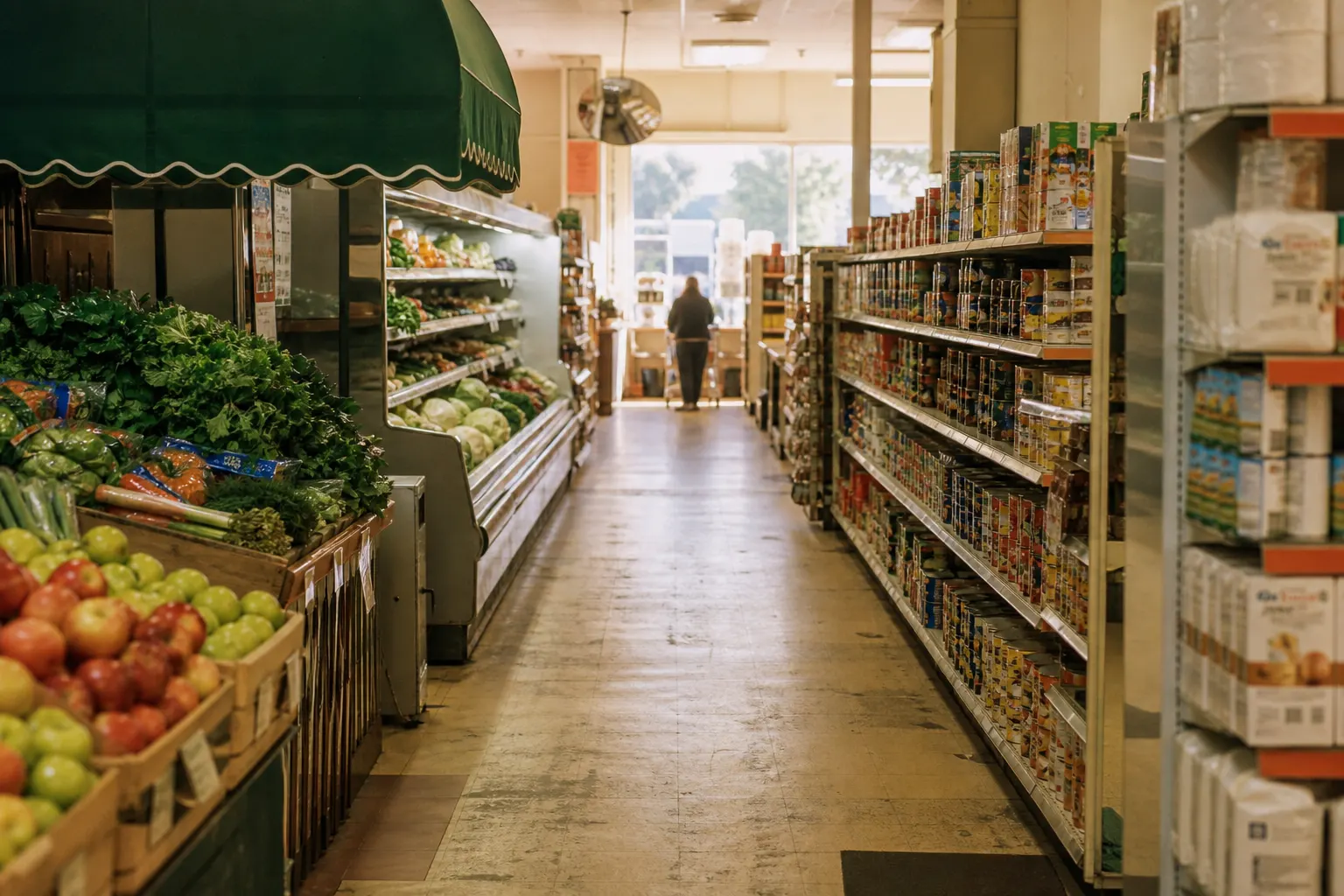
Gross margin — Sales minus cost of goods, before occupancy and labor. In grocery that number is a department story first. Produce, meat, deli, and center store do not share a buying calendar, a shrink pattern, or a labor load. A single storewide percentage is a slogan. Book a confidential intro when you have scan by department and want that mix read against the recast.
Open the P&L anatomy next to a year of scan data. Grocery Store Business Broker — HedgeStone Business Advisors, led by Jason Taken — prices the departments a buyer will actually staff. A pretty blended gross with a collapsing cutter is a different store than the CIM headline.
Gross margin does not pay the closer. It does not pay CAM. It does not restore owner pay. Those sit in net margin and in SDE. FMI’s 2.1 percent average net profit for food retailers in 2025 is a food-retailer net sample. It is useful because it reminds you grocery is thin after the whole P&L. It is not your department gross, and it is not your SDE. Confusing those three layers is how a seller quotes a “healthy store” and a buyer underwrites a job.
Direct store delivery belongs in this conversation. Bread, soda, chips, and some dairy never hit the wholesaler book cleanly. If you only read the warehouse statement, the beverage aisle looks like a mystery and the department gross is fiction. Pull the DSD invoices. Then decide whether the perimeter is earning its labor. Evaluating a store’s P&L is the worksheet habit.
Perimeter departments carry higher labor and shrink than dry grocery. That is why customers choose an independent over a dollar aisle. It is also why a “24 percent storewide gross” can be a meat problem wearing a center-store costume. Ask for departmental sales and departmental cost. Ask how waste is logged in produce. Ask whether the cutter’s yield is measured or hoped. Shrink, margin, and turns is the operating trio. What is a good profit margin is the short question page; this page is the department reading.
Couponing, spoilage, and theft that hit the department belong in the gross you will keep. An “inventory adjustment” that repeats every year is not a one-time gift to margin. Leave it in the number. A true one-time dump of dated seasonal can be explained; a weekly giveaway cannot.
FMI also publishes supermarket scale — 45,575 stores in the 2024 count and about $1 trillion in 2025 supermarket sales, with average weekly sales of $668,377 and $19.59 per square foot of selling area. Those are channel facts. Your 8,000-square-foot box is not that sample. Use them to remember that grocery moves volume. Do not use them as your department target.
BizBuySell’s 2025 grocery and supermarket sold sample shows an average earnings multiple of 3.38, a five-year average of 2.66, an interquartile range of 1.60 to 3.15, and a 2025 average revenue multiple of 0.43. Those multiples attach to recast earnings, not to a department gross percent and not to a weekly-sales rumor. A high meat gross that depends on a seller who still cuts fifty hours is not cash a hired operator keeps. Recast first. Then talk price on the valuation hub.
If you have departmental scan and a P&L, book the margin conversation. Bring the wholesaler recap and the DSD stack. The hour is for the mix, not for a blended trophy.
These figures are a teaching walk-through for Grocery gross margin by department, not a quote and not a sold comp. Order of operations: weekly sales, recast SDE, inventory at cost, then a multiple band.
| Input or output | Illustrative figure |
|---|---|
| Weekly sales (illustrative) | $228,000 |
| Annual sales | $11,856,000 |
| Recast SDE | $426,816 (3.6% of sales) |
| Inventory at cost | $592,800 (~20 turns) |
| Occupancy check | $438,672 / year (3.7% of sales) |
| Low going-concern | $1,510,454 at 2.15x SDE + inventory |
| High going-concern | $1,873,248 at 3.00x SDE + inventory |
| Sketch DSCR on a note | 1.51 |
If weekly sales or shrink move 8 percent, the SDE and the note move with them. That is why Jason Taken starts with scan data and the lease, not with a neighbor's rumor multiple.
Book the intro call with your side of the table ready: seller files or buyer capital. The calendar is the only next step.
Print these, mark them up, and bring the marked copy to the intro. They are educational. They are not a valuation letter and not a listing. All downloadable guides.
Have the file ready so the hour is a recast, not a scavenger hunt. Then pick a time.
Get a specialist on the other side of the table
Grocery deals turn on licenses, inventory, and a recast a lender will believe. Book the intro and bring the file.
Book an Intro Call With Jason TakenNo. Gross stops after cost of goods. Occupancy, labor, shrink that hits below the department, and owner pay still sit underneath. FMI’s 2.1 percent food-retailer net is a different layer.
A strong dry-grocery aisle can mask a meat case that is buying too high or cutting too much. Buyers price the mix they will actually run, not a blended slogan.
Only if it survives into recast cash. BizBuySell’s grocery sold sample attaches multiples to recast earnings, not to a department gross percent.
In cost of goods for those vendors. Bread, soda, and chips that never hit the wholesaler statement still sit in department margin if you want a number a buyer can keep.
Start a confidential grocery conversation
Whether you are exiting or acquiring, pick a time and we will talk through the file.
Book an Intro Call With Jason TakenThis page is educational information from Grocery Store Business Broker (HedgeStone Business Advisors). It is not legal, tax, or investment advice. Licensing, tax, and financing rules vary by state and deal. Confirm every item with counsel and your lender before you sign.
Ready when you are. Jason Taken will talk through the file.
Book a confidential intro