Is $19.59 the number I should hit?
It is FMI’s 2025 weekly sales per square foot of selling area for the supermarket channel. Your independent is not that sample. Compute your own from scan and selling area.
Grocery Store Business Broker · HedgeStone Business Advisors · Jason Taken
Last updated 2026-09-04
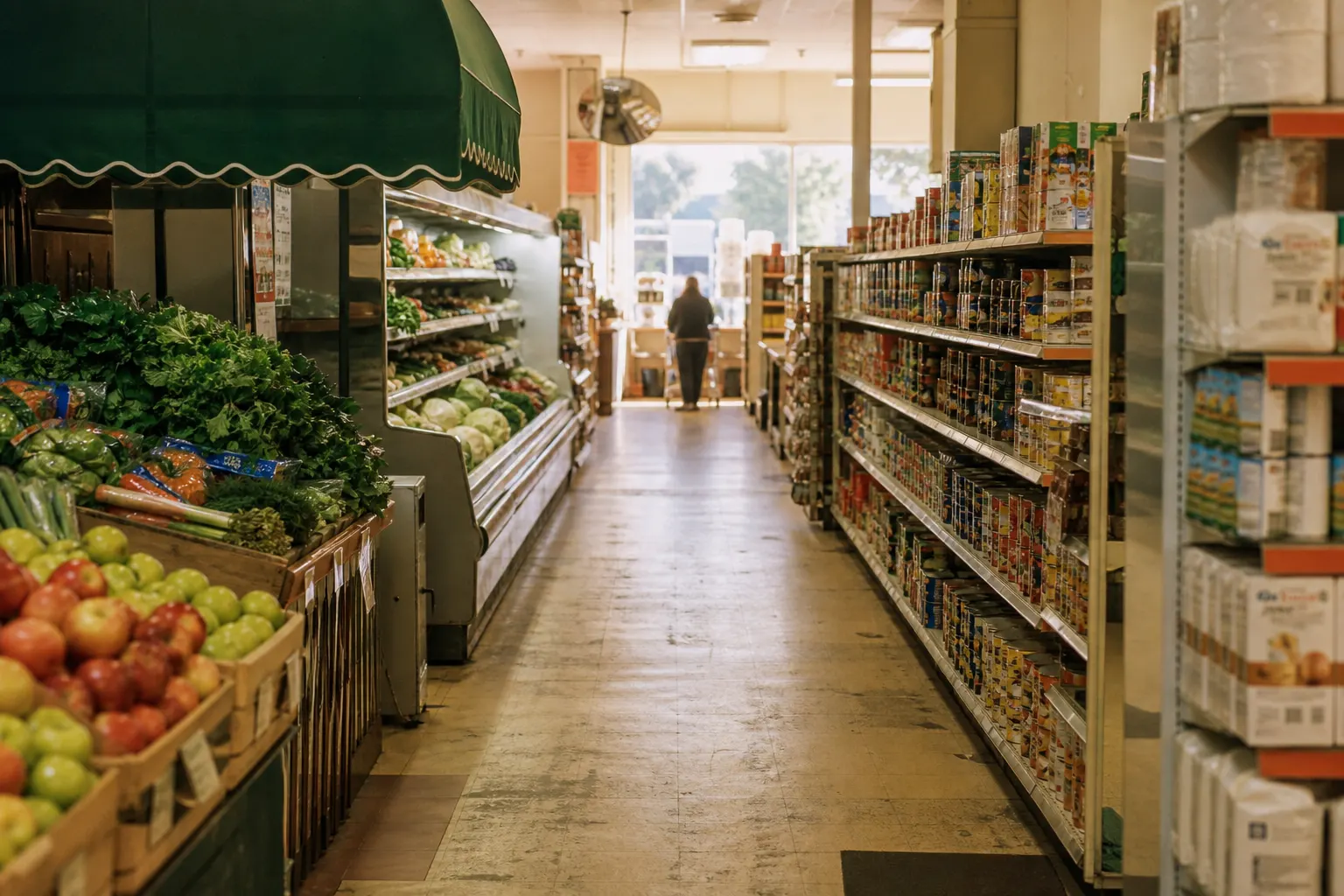
Pull last week’s scan data and the selling-floor plan, not the lease exhibit. The sourced channel figure is FMI’s $19.59 weekly sales per square foot of selling area in 2025. That is a Speaks supermarket benchmark. It is not your independent’s year. It is not a reason to write an offer. Compute your own weekly sales divided by selling area, then recast SDE. Book a confidential intro with the weekly scan and the floor plan when you want that density read on this box.
Grocery Store Business Broker — HedgeStone Business Advisors, led by Jason Taken — treats sales per square foot as context on the valuation hub. Benchmark KPIs by format is the KPI map. This page answers the density question.
Cite $19.59 as FMI’s 2025 weekly sales per square foot of selling area. Say weekly. Say selling area. FMI also publishes $668,377 average weekly sales per supermarket in 2025, $1 trillion in 2025 supermarket sales, and 45,575 U.S. supermarkets in 2024. Those figures describe the same Speaks supermarket channel. An 8,000-square-foot neighborhood box is not that sample. A 4,000-square-foot specialty shop is not that sample. Do not nationalize a corridor.
Verifying sales with scan data is how you get the numerator. Sales-tax filings and EBT deposits should tell the same week. A gap is mix, downtime, or fiction. USDA FNS: SNAP authorization does not transfer. A week that only looks dense because last year’s EBT is assumed to continue is a week you have not yet earned. EBT / SNAP diligence is the calendar.
FMI’s 2.1 percent average net profit for food retailers in 2025 is the reminder that density is not net. A crowded aisle can still throw a thin living. What is a good profit margin is that read.
The lease square footage includes the back room, the vestibule, the office, and the unused mezzanine. FMI’s figure is selling area. If you divide a supermarket weekly by the lease footprint, you have invented a worse number and called it diligence. Walk the selling floor. Measure the merchandized space. That is the denominator.
A dark corner you stopped resetting is still selling area if it is on the floor. Empty gondolas do not make the remaining aisles “more productive” in a way a buyer will pay for. They make the room look tired. Competition and trade-area math tells you whether the density is the trade area or the only store left standing.
Occupancy still has to clear. Run the rent-as-percent-of-sales checker on the actual lease. A dense box with a lease that eats the mid-single digits of sales is not a good density story. Lease diligence is the assignment, remaining term, and CAM read. Related-party rent that juiced the week will reverse.
High sales per square foot can come from unpaid owner hours, a meat case the seller still cuts, or a below-market rent. None of that is a premium a buyer inherits. How to recast a grocery P&L puts a wage on the owner and a rent on the box. What SDE is is the cash that density is supposed to produce.
Basket size and trip count hide inside a storewide weekly. A high ring on a small floor can be a specialty mix. A low ring on a large floor can still be a supermarket living if the week is real. This pack does not invent a “good” independent sales-per-square-foot table. Compute yours. Compare it to $19.59 as channel context, not as a grade.
Alcohol mix can puff density where the privilege exists. NABCA lists 17 control states plus local-control pockets. Do not count a spirits ring the next owner cannot hold. State-by-state alcohol regime is the map.
Shrink on a dense perishable floor can erase the week. What is a good inventory turn is the stockroom clock that density does not replace.
How much the store is worth is still recast SDE times a negotiated multiple, plus inventory at cost. BizBuySell grocery and supermarket businesses sold in 2025 printed a 3.38 average earnings multiple, a 2.66 five-year average, and an IQR of 1.60–3.15. A 0.43 average revenue multiple on the 2025 sold sample is a sales-based cross-check that hides rent and labor — the same trap as worshipping $19.59. How much a grocery store is worth is the arithmetic. What multiple grocery stores sell for is the sample.
SBA 7(a) can finance a change of ownership up to the published $5 million maximum. A dense aisle that does not cover the note still fails DSCR. Density is not coverage.
Hours and selling area interact. A small floor that only works because the owner never leaves is dense and fragile. A larger floor with a night crew can look less dense and still throw more SDE. How much a grocery store owner makes is the living that density is supposed to fund. Do not grade the floor until you have graded the schedule.
Seasonality matters on a small selling area. A festival week or a holiday meat run can make one Saturday look like a Speaks supermarket. Use a trailing twelve months of weekly scan, not a trophy week, before you compare yourself to $19.59. One dense December is not a year.
A conversion fantasy — new banner, new hours, new mix — often assumes the same sales on a rearranged floor. Buying and converting needs a lease that allows the change and a customer who will still come. Density you have not rung is not a diligence input. It is a hope. How to read a CIM is where channel weekly figures show up as decoration. Cross them out. Write your own weekly over your own selling area in the margin.
The buyer hub and how to buy a grocery store step by step start from scan, not from a channel weekly. When you have your own sales-per-selling-square-foot number and a recast, book a confidential intro. Bring the weekly scan, the floor plan, and the lease. Grocery Store Business Broker will treat $19.59 as context and your week as the file.
Use this napkin recast on What is a good sales per square foot? when you book the call. It is labeled illustrative. BizBuySell's 2025 grocery sold-business earnings multiple averaged 3.38, with a 2021-2025 IQR of 1.60-3.15.
| Input or output | Illustrative figure |
|---|---|
| Weekly sales (illustrative) | $78,000 |
| Annual sales | $4,056,000 |
| Recast SDE | $166,296 (4.1% of sales) |
| Inventory at cost | $253,500 (~16 turns) |
| Occupancy check | $89,232 / year (2.2% of sales) |
| Low going-concern | $611,036 at 2.15x SDE + inventory |
| High going-concern | $702,499 at 2.70x SDE + inventory |
| Sketch DSCR on a note | 1.37 |
If weekly sales or shrink move 8 percent, the SDE and the note move with them. That is why Jason Taken starts with scan data and the lease, not with a neighbor's rumor multiple.
Book the intro call with your side of the table ready: seller files or buyer capital. The calendar is the only next step.
Print these, mark them up, and bring the marked copy to the intro. They are educational. They are not a valuation letter and not a listing. All downloadable guides.
Have the file ready so the hour is a recast, not a scavenger hunt. Then pick a time.
Get a specialist on the other side of the table
Grocery deals turn on licenses, inventory, and a recast a lender will believe. Book the intro and bring the file.
Book an Intro Call With Jason TakenIt is FMI’s 2025 weekly sales per square foot of selling area for the supermarket channel. Your independent is not that sample. Compute your own from scan and selling area.
No. FMI’s figure is selling area. Back room, vestibule, and unused mezzanine are not selling area. Use the selling floor you actually merchandize.
Only if the recast cash is real. Density that comes from unpaid hours or below-market rent is not a premium. Return to SDE and the sourced BizBuySell band.
No. Do not turn a channel weekly into an annual law or an offer. Use it as context, then price from recast SDE plus inventory at cost.
Start a confidential grocery conversation
Whether you are exiting or acquiring, pick a time and we will talk through the file.
Book an Intro Call With Jason TakenThis page is educational information from Grocery Store Business Broker (HedgeStone Business Advisors). It is not legal, tax, or investment advice. Licensing, tax, and financing rules vary by state and deal. Confirm every item with counsel and your lender before you sign.
Ready when you are. Jason Taken will talk through the file.
Book a confidential intro