Do I need halal experience to buy this market?
You need a certification path you can prove and a butcher the regulars will still trust. Lose either and the SDE story changes.
Grocery Store Business Broker · HedgeStone Business Advisors · Jason Taken
Last updated 2026-09-04
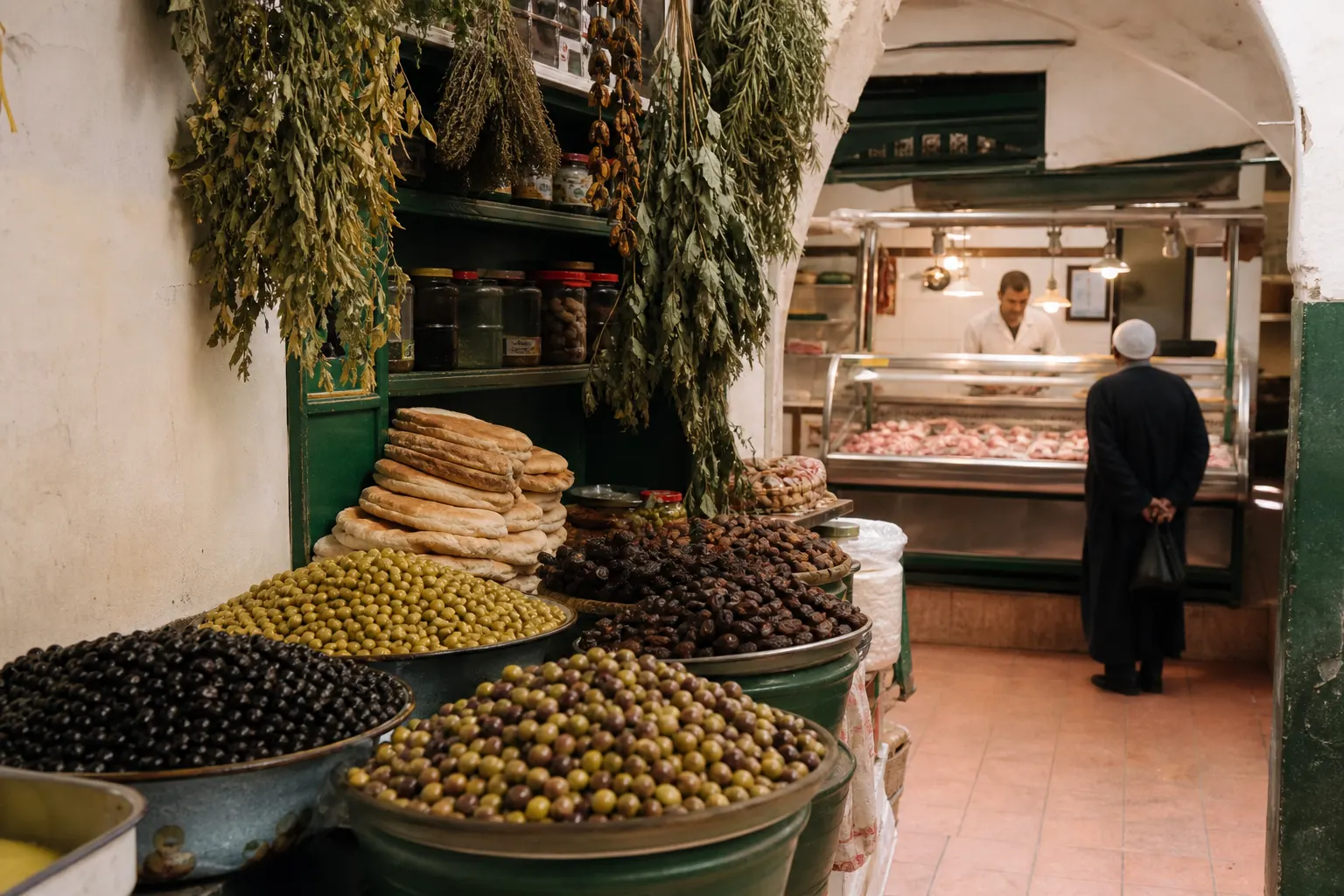
Buying a Middle Eastern or halal market is a meat-case decision, a certification decision, and a trust decision. Halal meat is the traffic engine. Certification and butcher skill are the franchise. Grocery margins on imported dry goods subsidize or are subsidized by the meat case. If you cannot keep the chain of custody or the cutter, the multiple is irrelevant. Grocery Store Business Broker — HedgeStone Business Advisors, led by Jason Taken — underwrites that file with you before you write an LOI. Start at how to buy a grocery store step by step and mark the Buyer Underwriting Workbook.
Do not value this as a conventional neighborhood grocery. Do not treat it as an Asian grocery or an Indian grocery with a different spice rack. A kosher market is a different supervision franchise; do not borrow that playbook and change the noun. If you are outside the community, read buying an ethnic market outside your community and should I buy an ethnic market. Then book a confidential intro with the butcher you can keep and the capital you can document.
Lose the halal certification path or the butcher and the SDE story changes. Treat certification and key employees as closing conditions, not as a tour courtesy. The regulars came for zabiha they trust and a cutter who knows their order. A pretty dry aisle of olives and rice does not replace that.
Department gross margin hides in a storewide blend. Meat can sink a “healthy” number. Shrink on a meat case does not behave like shrink on boxed center store. If shrink is “about 2 percent” with no count history, assume it is worse. Read shrink, margin, and turns and evaluating a store’s P&L. The meat case and the dry import aisle do not share a clock.
Prove the week: scan, tax, EBT, and processor statements should tell one story. A weekly-sales spreadsheet that blends meat and dry grocery is a rumor. Read verifying sales with scan data. How to read a CIM is the annotation method. A CIM that omits the certifier and the meat lead is a brochure.
FMI reports $1 trillion in 2025 supermarket sales and 45,575 U.S. supermarkets in 2024. Those channel figures do not describe a mosque-adjacent meat case. FMI’s $668,377 average weekly sales per supermarket in 2025 is a supermarket-channel average — not last Friday’s tickets at this box. The 2.1 percent food-retailer net sample is a reminder that grocery is thin. Your recast is allowed to be better or worse. It is not allowed to be a slogan about “the halal market.”
Confirm whether the religious certification is contractual, not governmental. It does not ride along in an asset sale the way a buyer hopes a license might. Do not invent a certification-body name. Confirm the store’s actual certifier, the scope, and whether the certifier will continue with a new owner. Write that path into the LOI as a close condition. Unclear chain of custody is a walk-away.
Retail food plus any custom-exempt or retail meat rules sit on their own clock. Ask for inspections, processor invoices, and how boxed meat and cut meat are segregated. A health file and a certification file are different stacks. Surviving due diligence is the calendar after the LOI. Working with attorneys and CPAs exists because counsel who have never closed a grocery file will treat “halal” as a sticker.
A meat-department employee who will not stay is a listed red flag. If the cutter walks, model traffic without that person. Transition and training periods should name the butcher’s hours, not “the staff will help.” Red flags that should kill a grocery deal include a franchise that leaves with one employee.
Who usually wins this file: halal operators who already have inspector and vendor relationships, and owner-operators who already shop and hire in that trade area. A first-time buyer with restaurant hours and no meat-case discipline is a hard file. Read buying as a first-time owner.
Language on the floor is an operating requirement. Arabic, Urdu, Farsi, Turkish, Somali, and English show up in different trade areas. “Middle Eastern” is not a staffing plan. Ask who greets, who cuts, and who the regulars will still talk to after the seller leaves. Ethnic mix without that language is a shrink plan.
Community trust is the butcher and the certifier, not a grand-opening banner. Regulars will leave if the chain of custody looks sloppy on week two. You earn trust by keeping the processor, the cut, and the greeting. Compare this only loosely to a Caribbean / African market or a specialty market. Those books are different. The ethnic versus conventional essay is the format fork.
Landlord complaints about parking at prayer times are a real operations issue — loading, peak hours, and the lease — not a stereotype to write into marketing copy. Walk the peak. Read lease diligence for assignment, remaining term, exclusive use, co-tenancy, and CAM. Remaining term under 24 months without options is a price cut. A below-market related-party rent juiced the earnings and will reverse on day one. Use the rent-as-percent-of-sales checker.
Competition and trade-area math still applies. A second halal case in the same corridor is a mix fight, not a ZIP-code story. State pages such as buy a grocery store in Michigan or New York exist because wage, food tax, and alcohol differ. They do not invent a halal-store count.
Many halal markets do not sell alcohol by design. Adding beer after close can destroy the franchise you just paid for. That is an operating constraint, not a missed add-on. If the store does sell beer or wine, alcohol is a class, a quota, or a control-state product — never “the liquor license” as one magical asset. NABCA lists 17 control states plus local-control pockets. Read state-by-state alcohol regime and liquor license diligence. Transferring a liquor license is the calendar if the privilege exists and if keeping it does not break the trust.
Do not price a conversion that adds a beer cave because a conventional grocer would. Read buying and converting before you fantasize. Write the alcohol position — none, beer only, or a class you can actually obtain — into the LOI terms that matter for buyers. Control state rules are a model input. They are not a reason to invent a spirits story.
Tobacco sits with tax and health agencies. Lottery is often personal. Neither rides along automatically in an APA.
Supply you must underwrite: halal-certified meat processors, specialty importers, and a conventional wholesaler for center store. The conventional door stocks a minority of what fills the basket. The meat that fills the parking lot does not come from the same co-op that stocks an independent supermarket.
Ask whether the processor will open a new account. Ask whether the importer will ship on your credit. DSD vendors will keep delivering after a sloppy close only if someone is paying them. Put processors and importers on a schedule in asset-purchase-agreement essentials. A single processor with no backup is concentration risk. Buying a distressed store still has a meat case and a certifier — price those, not a turnaround novel.
Labor skill is scarce. A cutter the regulars trust is not posted on a supermarket job board. Model the wage you will actually pay after the related-party butcher leaves. Minimum wage is a floor. If the recast only works because the seller is in the case seventy hours a week, you do not have a recast. Use the DSCR calculator after you put real labor back in.
Plan a SNAP downtime window. USDA FNS: SNAP authorization does not transfer. The new owner files a new application. Budget the application and the downtime in cash and in the story you tell the landlord. EBT deposits should reconcile to the SNAP story. A gap is mix, downtime, or fiction. Read EBT / SNAP diligence and what happens to SNAP authorization. Print the closing and license checklist.
SNAP is common on this format when the store is authorized. Meat may have a different tender mix than dry grocery. Unreported cash does not survive SBA 7(a). It also does not survive a serious conventional buyer. See red flags. WIC, if present, is a vendor file, not a sticker on the door.
Write the new-owner SNAP file into the APA as a calendar item. Working with attorneys and CPAs keeps FNS from appearing as a surprise. License outs belong in the LOI.
Do not value a mosque-adjacent halal market as a conventional neighborhood grocery. Equipment in the meat room and the certification path can move the check more than a slogan multiple. Recast before you argue a number. Owner pay, one-time legal, and personal autos can move SDE; recurring meat shrink cannot. Read recasting a grocery P&L and anatomy of a grocery P&L.
BizBuySell’s grocery sold sample (3.38 average earnings multiple in 2025; IQR 1.60–3.15 for 2021–2025) is a listing-site band. This pack does not invent a halal-only multiple. Subtract certifier risk, butcher flight, processor concentration, SNAP lag, and a lease that cannot take the peak at prayer times. Cross-check 0.43 revenue multiple only, then return to SDE. The valuation hub and multiples report stay the method.
Cash to close is larger than the equity slogan because meat and dry import do not share a turn. Teaching example, labeled illustrative: an $850,000 going-concern (ex-inventory) at 15 percent equity is $127,500. Inventory at cost of $160,000 — meat plus imported dry — is usually cash or a short-term piece. Meat turns faster than dry grocery; you still pay for both at close. Add $65,000 for the next processor load and importer invoice, plus $35,000 for closing and SNAP downtime. You are roughly a $387,500 buyer. Say that on the call. Use the cash-to-close estimator and how much money you need.
Inventory is a separate line at cost, counted at close. Retail tags are not cost. Write rules for unsellable meat before 2 a.m. Read how inventory is counted and closing-day count procedures.
SBA 7(a) can finance a change of ownership. Published maximum is $5 million. Inventory treatment, standby seller notes, and equity injection are deal-specific. Buying with seller financing is the other piece. DSCR is annual cash flow after an honest recast, divided by annual debt service. Hope is not a ratio. If the building is in the deal, recast the store on market rent, then cap the realty — buying a store with real estate and grocery with real estate.
The first 90 days after a halal close are processor trust, meat shrink, and refusing to add a beer cave for sport. Keep the processor paid. Re-file SNAP immediately. Walk shrink logs daily in the meat case. Hold the seller and the butcher to the hours in the APA. Confirm the certifier is still on the file. Recount problem categories within a week. Read the post-closing 90-day plan.
Do not reset the dry aisle because a consultant liked a conventional planogram. Regulars came for the cut and the chain of custody. Community trust is who still shops after the seller leaves.
The twin sell a Middle Eastern / halal market page is the other side of the table. How it works is the sequence after you are under NDA. The FAQ and buyer FAQs cover the relationship. Markable paper lives on downloads, including the SDE worksheet.
Jason Taken would rather send you to the workbook than tour a meat case you cannot certify. Bring proof of funds, the language you can staff, and the certifier you can keep. Then book a confidential intro.
Use this napkin recast on Buy a Middle Eastern / halal market when you book the call. It is labeled illustrative. BizBuySell's 2025 grocery sold-business earnings multiple averaged 3.38, with a 2021-2025 IQR of 1.60-3.15.
| Input or output | Illustrative figure |
|---|---|
| Weekly sales (illustrative) | $108,000 |
| Annual sales | $5,616,000 |
| Recast SDE | $230,256 (4.1% of sales) |
| Inventory at cost | $468,000 (~12 turns) |
| Occupancy check | $134,784 / year (2.4% of sales) |
| Low going-concern | $893,974 at 1.85x SDE + inventory |
| High going-concern | $1,193,306 at 3.15x SDE + inventory |
| Sketch DSCR on a note | 1.43 |
If weekly sales or shrink move 8 percent, the SDE and the note move with them. That is why Jason Taken starts with scan data and the lease, not with a neighbor's rumor multiple.
Bring proof of funds or a lender pre-screen, your format, and geography. Jason will tell you whether a store like this can clear SBA or seller-carry math.
Print these, mark them up, and bring the marked copy to the intro. They are educational. They are not a valuation letter and not a listing. All downloadable guides.
Have the file ready so the hour is a recast, not a scavenger hunt. Then pick a time.
Underwrite the deal before you fall in love with the store
Scan data, SNAP mix, rent-to-sales, and DSCR. If those four do not clear, the CIM photos do not matter.
Schedule a Buyer Strategy CallYou need a certification path you can prove and a butcher the regulars will still trust. Lose either and the SDE story changes.
SBA 7(a) can finance a change of ownership; the published maximum is $5 million. The file still has to look like a grocery the program can underwrite.
Name the certifier, the scope, and whether they will continue with a new owner. Write butcher hours into the APA. Unclear chain of custody is a walk-away, not a cleanup.
No. USDA FNS: SNAP authorization does not transfer; the new owner files a new application. Certification and FNS are different paths. Book a confidential intro to sequence both before close.
Often the opposite. Many halal markets do not sell alcohol by design. Adding beer can destroy the franchise. Where alcohol exists, NABCA lists 17 control states plus local-control pockets.
Source and finance a grocery acquisition
Jason Taken works buyers through qualification, SBA or seller-carry structure, and a diligence plan a lender will fund. Book the hour.
Schedule a Buyer Strategy CallThis page is educational information from Grocery Store Business Broker (HedgeStone Business Advisors). It is not legal, tax, or investment advice. Licensing, tax, and financing rules vary by state and deal. Confirm every item with counsel and your lender before you sign.
Ready when you are. Jason Taken will talk through the file.
Book a confidential intro