Is the prepared-foods or cheese case the real P&L?
Often yes. Labor in the kitchen and shrink on cheese can erase a pretty wine ring. Model the hours the owner-chef worked before you treat the margin as durable.
Grocery Store Business Broker · HedgeStone Business Advisors · Jason Taken
Last updated 2026-09-04
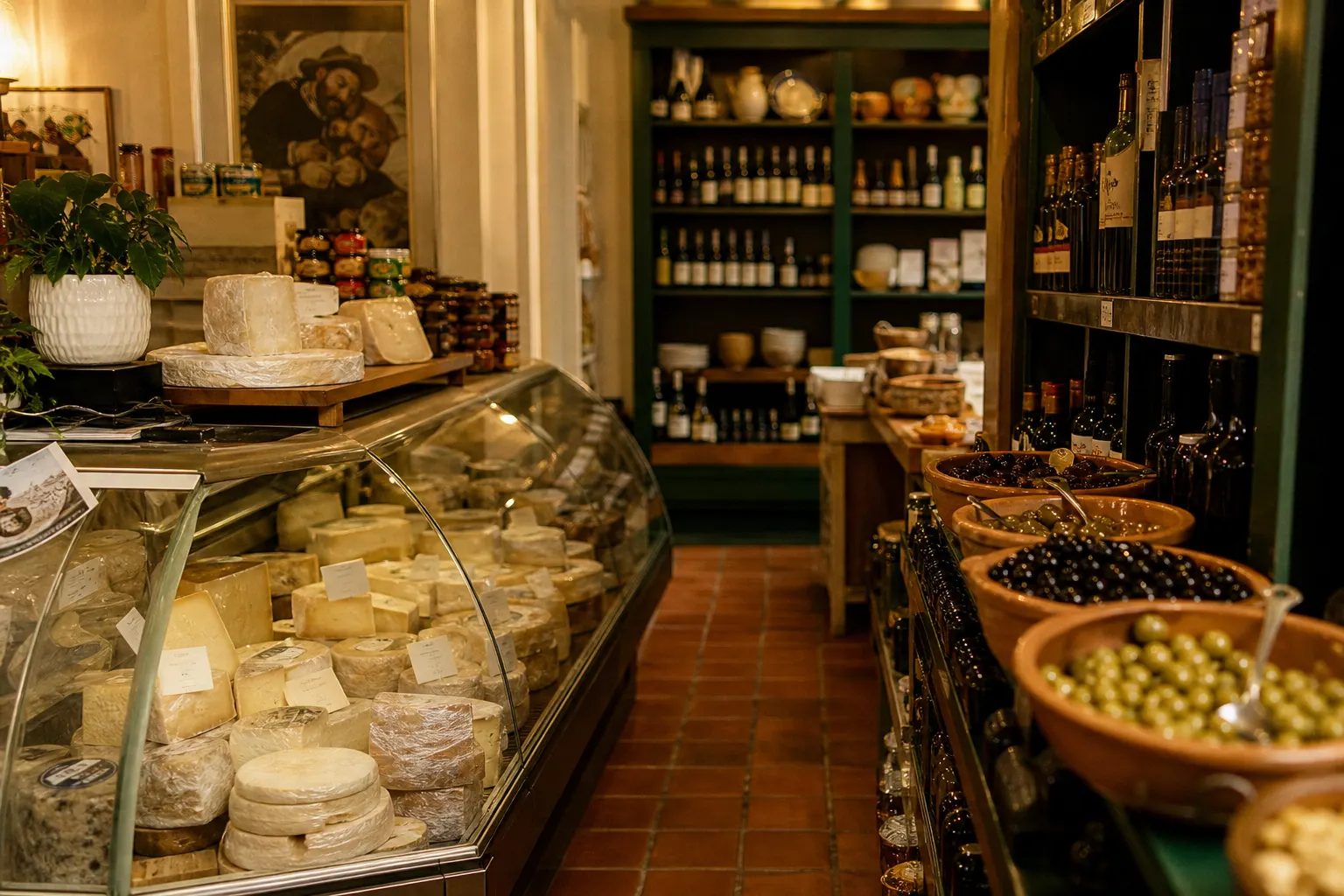
Buying a specialty market is a format-first decision. If you cannot source the book or staff the counter, the multiple is irrelevant. Mark the Buyer Underwriting Workbook, then book a confidential intro with the category you can actually buy after Monday — Italian dry grocery, a cheese case, a wine room, a kitchen — and the cash you can document. Grocery Store Business Broker — HedgeStone Business Advisors, led by Jason Taken — underwrites specialty as grocery with foodservice waste, not as a lifestyle brochure. Jason also sees grocery files through Jaken Finance Group, which is how a pretty shop still has to clear DSCR.
This is not a natural / organic store and it is not an independent supermarket. Cheese, wine, prepared foods, or a single-country assortment sit on different clocks. Start at how to buy a grocery store step by step if you have not yet decided whether you can operate the counter.
FMI’s $668,377 average weekly sales per supermarket and $19.59 weekly sales per selling square foot in 2025 describe the Speaks supermarket channel. FMI also reports $1 trillion in 2025 supermarket sales and 45,575 U.S. supermarkets in 2024. A specialty shop is not that sample. Do not value it as a supermarket. No specialty-only multiple is sourced in this pack.
Turns are not one number. Wine, aged cheese, center-store imports, and a prepared-food well do not share a clock. Shrink on specialty looks like foodservice: trim, spoilage, tasting, and a chef who “just knows.” If shrink is “fine” with no count history, assume it is worse. Read shrink, margin, and turns and evaluating a store’s P&L.
FMI’s 2.1 percent average net profit for food retailers in 2025 is a food-retailer net sample. Specialty can print a fatter gross and still lose the week on labor and waste. Your recast is allowed to be better or worse. It is not allowed to be a slogan about “high-end grocery.”
BizBuySell grocery and supermarket businesses sold in 2025 printed a 3.38 average earnings multiple, a 2.66 five-year average for 2021–2025, a 1.60–3.15 interquartile range, and a 0.43 average revenue multiple. Apply that national listing-site sample as context, then subtract holes: a license that will not move, tourist-only volume, and an owner-chef who is the product. Revenue multiples hide rent and kitchen labor. Return to SDE. The valuation hub is the method. The multiples report is the sourced sample.
Scan data still matters. A weekly-sales spreadsheet without department mix is a rumor — especially when wine and grocery are blended to hide a dying well. Read verifying sales with scan data.
If wine or spirits are the profit center, the liquor license — or the control-state limitation — is the deal. Alcohol is a class, a quota, or a control-state product. It is never “the liquor license” as one magical asset. Read liquor license due diligence and transferring your liquor license before you price the shop. State-by-state alcohol regime is the table.
A kitchen adds a foodservice permit on top of retail food. Prepared foods are a health-department file and a labor file. A license that will not transfer is a walk. Write license outs into the LOI. The LOI terms that matter for buyers exist for this reason.
USDA FNS: SNAP authorization does not transfer. On some specialty files SNAP is a small week or is absent. Budget the application anyway if EBT is present. A specialty shop that rings even a modest EBT week cannot shrug the downtime. Read EBT / SNAP diligence. Print the closing and license checklist.
WIC is uncommon on a cheese-and-wine shop and still a vendor file if it exists. Tobacco and lottery are usually the wrong profit center for this format; if they appear, treat them as personal approvals. Tax clearance belongs in escrow language.
Specialty labor is not a grocery night crew. It is a cheese counter, a slicer, a kitchen, and a wine person who can sell without giving the margin away. The owner-chef who is the product is the red flag. Model the payroll you will hire after that person leaves. State minimum wage is a line. Tipped or hybrid kitchen labor still has to clear a schedule you can defend.
Buying as a first-time owner on specialty is harder than on a conventional box. Chefs and specialty operators usually win these files because they can keep the book. Lifestyle buyers get underwritten harder: capital without category skill is how shrink walks out the door. Buying an ethnic market outside your community applies when the specialty is really a community store — Italian, German, or otherwise — and you do not speak the counter.
Add-backs that repeat every year are the business. A chef’s “one-time” R&D that happens every quarter is payroll. Recasting a grocery P&L has to name kitchen waste. Anatomy of a grocery P&L still helps; just do not force supermarket departments onto a shop that lives on prepared foods.
Transition hours belong in the APA. Hold the seller to the counter and the importer list. Transition and training periods are how the first cheese order after close still arrives.
Inventory at cost on specialty is often not grocery-at-cost in the conventional sense. Wine can sit. Aged cheese can sit. A well can die in a day. Write rules for what is unsellable, who pays the crew, and how disputes resolve before 2 a.m. FIFO versus a messy room is how you start a fight. Read how inventory is counted at closing and closing-day count procedures.
Supply is specialty importers, KeHE or UNFI specialty, and local artisans who may follow the owner, not the lease. Ask who will sell to you after Monday. A single importer who will not transfer is a walk. Call the two largest specialty houses before the LOI and ask whether they will open an account in your name, on this drop size, without the seller’s personal guarantee. DSD still shows up for beverages. The wholesaler relationship is thinner than on a full-line box; the artisan relationship is thicker. Neither is automatic.
The inventory value estimator is a teaching tool. It will not age a Barolo. Working capital is the cash to buy the next import order, not a vibe.
Most of these close as asset sales. Asset purchase agreement essentials are where the wine book, the kitchen equipment, and the excluded family recipes get scheduled — recipes you cannot buy anyway.
NABCA lists 17 control states plus local-control pockets. In a control state you may be buying a product relationship and a retail food permit, not a transferable spirits privilege. That fact can erase a wine-shop buyer’s thesis. Underwrite the regime before you underwrite the cheddar. A quota license is a different scarcity: confirm it moves, and confirm the price of the privilege is not double-counted inside the grocery multiple.
Tourist-only volume with no local base is a season, not a store. A coastal cheese shop that dies from November to March needs working capital for the quiet months. Do not annualize July. Competition and trade-area math still applies when the “trade area” is a weekend.
Lease assignment on a specialty shop is often a landlord who likes the vibe and has not thought about a grocery assignee. Start that conversation early. Occupancy that eats a specialty week is still occupancy. Run the rent-as-percent-of-sales checker. Read lease diligence for remaining term, exclusive use, and CAM. A below-market related-party rent juiced the earnings and will reverse on day one.
If the building is in the deal, recast the shop on market rent first. Buying a store with real estate is two prices.
SBA 7(a) can finance a change of ownership. Published maximum is $5 million. Eligibility still wants a creditworthy borrower with a reasonable ability to repay. A lifestyle buyer with a pretty CIM and no perishable skill is how lenders stall. DSCR is annual cash flow after you replace the owner-chef, divided by annual debt service. Hope is not a ratio. Use the SBA 7(a) payment and DSCR calculator.
Unreported cash does not survive SBA. A tasting-room cash drawer that never hits the bank is not “wine culture.” It is a hole. Red flags that should kill a grocery deal include a license that will not transfer and an owner who is the product.
A seller note can sit on standby behind the senior loan. Read the standby. Buying with seller financing and how much a seller should carry are the two sides. Conventional paper shows up when the license is clean and the borrower is boring — conventional and alternative financing.
How to read a CIM on specialty means annotating the license, the importer list, and the kitchen hours. Surviving due diligence is the calendar. Attorneys who have never closed a grocery-plus-wine file will rediscover the privilege in week six. Hand them working with attorneys and CPAs early.
Cash to close is larger than the equity slogan, and wine makes it larger still. Teaching example, labeled illustrative: a $900,000 going-concern (ex-inventory) at 15 percent equity is $135,000. Inventory at cost of $220,000 — much of it slow wine — is usually cash. Add $60,000 working capital for the next import order and $30,000 for closing plus license lag. You are a roughly $445,000 buyer, not a $135,000 buyer. Say the real number on the call. The cash-to-close estimator and how much money you need exist so you stop surprising yourself.
Earn-outs on grocery are hard because the buyer controls mix after Monday. They are harder on specialty because the buyer also controls the tasting pour. Holdbacks exist because specialty has shrink and successor tax risk. Read escrow, holdbacks, and earn-outs.
Comparing offers means cash at close, note terms, inventory treatment, and license risk — not a headline price attached to a pretty cheese case.
Post-close, keep the importers paid and talking. Re-file SNAP if EBT is present. Walk shrink daily in the well and the cheese case. Hold the seller to the transition hours. Do not reinvent the mix for sport. Regulars came for a book. The post-closing 90-day plan still applies. Buying and converting a specialty shop into “your concept” needs a lease that allows it and a customer who will still come.
If the file is closer to kosher, halal, or a food co-op, go to that essay. Those are different books and different governance. The buyer hub is the method. How it works is the sequence after NDA. Buyer FAQs cover the relationship. How to read a CIM is the annotation method if you have not marked one yet.
When the license regime, the labor you will hire, and the cash-to-close stack are numbers you can say out loud, schedule the buyer strategy call. Bring proof of funds, the category you can staff, and the states whose alcohol rules you will live with. That is enough to start looking at real files.
Price language for Buy a specialty market is (recast SDE x a defendable multiple) + inventory at cost, plus or minus lease and license risk. The table is one consistent example for this URL.
| Input or output | Illustrative figure |
|---|---|
| Weekly sales (illustrative) | $168,000 |
| Annual sales | $8,736,000 |
| Recast SDE | $506,688 (5.8% of sales) |
| Inventory at cost | $728,000 (~12 turns) |
| Occupancy check | $305,760 / year (3.5% of sales) |
| Low going-concern | $1,665,373 at 1.85x SDE + inventory |
| High going-concern | $2,324,067 at 3.15x SDE + inventory |
| Sketch DSCR on a note | 1.53 |
Rent at 3.5% of sales is the occupancy check. If the real lease is higher, the SDE in this table is too generous until you recast to market rent.
Bring proof of funds or a lender pre-screen, your format, and geography. Jason will tell you whether a store like this can clear SBA or seller-carry math.
Print these, mark them up, and bring the marked copy to the intro. They are educational. They are not a valuation letter and not a listing. All downloadable guides.
Have the file ready so the hour is a recast, not a scavenger hunt. Then pick a time.
Underwrite the deal before you fall in love with the store
Scan data, SNAP mix, rent-to-sales, and DSCR. If those four do not clear, the CIM photos do not matter.
Schedule a Buyer Strategy CallOften yes. Labor in the kitchen and shrink on cheese can erase a pretty wine ring. Model the hours the owner-chef worked before you treat the margin as durable.
SBA 7(a) can finance a change of ownership; the published maximum is $5 million. The file still has to look like a grocery the program can underwrite, not a lifestyle shop with no DSCR.
Underwrite the alcohol regime first. In a control state you may be buying a product relationship, not a transferable privilege. Price that risk before you price the cheese.
No. USDA FNS: SNAP authorization does not transfer; the new owner files a new application. On some specialty weeks SNAP is small; file anyway if EBT is present. Book a confidential intro to sequence SNAP with the wine privilege.
Sometimes. In a control state you may be buying a product relationship, not a transferable privilege. Underwrite the regime before you underwrite the cheese case.
Source and finance a grocery acquisition
Jason Taken works buyers through qualification, SBA or seller-carry structure, and a diligence plan a lender will fund. Book the hour.
Schedule a Buyer Strategy CallThis page is educational information from Grocery Store Business Broker (HedgeStone Business Advisors). It is not legal, tax, or investment advice. Licensing, tax, and financing rules vary by state and deal. Confirm every item with counsel and your lender before you sign.
Ready when you are. Jason Taken will talk through the file.
Book a confidential intro