What is on every grocery’s new-owner list?
A food or health permit for the premises, and a new USDA FNS SNAP application if you will accept SNAP. Add alcohol, WIC, tobacco, and lottery only if that store actually has them.
Grocery Store Business Broker · HedgeStone Business Advisors · Jason Taken
Last updated 2026-09-04
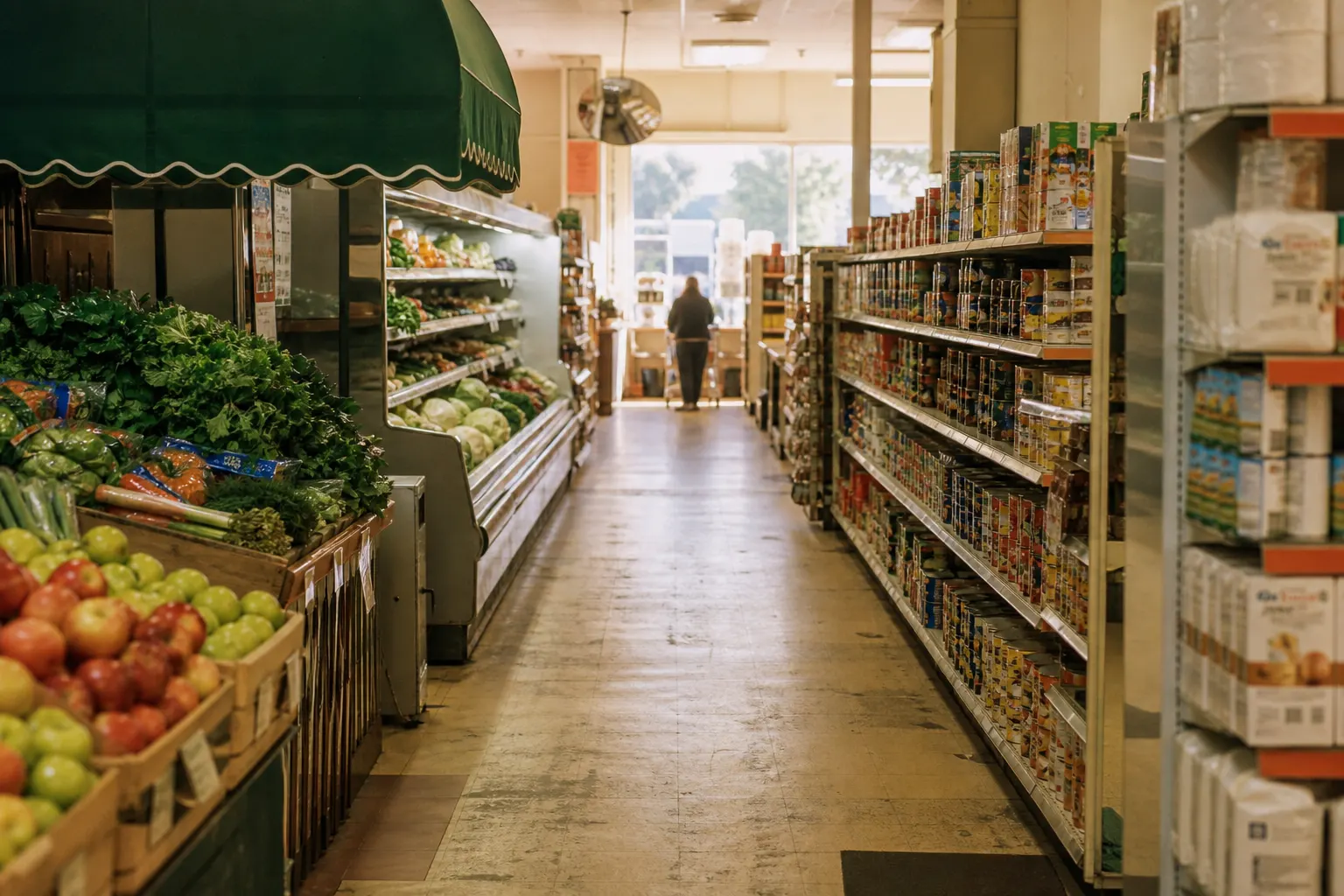
You need the permissions that keep this store open on Monday, not a laminated list copied from another file. Almost every grocery acquisition needs a food or health permit in the incoming entity and, if you will accept SNAP, a new USDA FNS retailer application. Add alcohol if the aisle exists. Add WIC, tobacco, and lottery only if those tenders are in the mix. None of them ride automatically on the APA.
Grocery Store Business Broker — HedgeStone Business Advisors’ grocery practice, led by Jason Taken — builds that calendar before the LOI is cute. Book a confidential intro when you want the list drawn on your target store. Print the closing and license checklist and mark what this box actually has.
FMI counted 45,575 U.S. supermarkets in 2024. Your independent is one premises, one inspector, and one set of desks. Census NAICS 445110 is the industry label for supermarkets and other grocery retailers that sell a general line of food. It is not a license.
Walk the store with a clipboard. Food production and the hot bar need the health permit. The SNAP terminal needs FNS. The beer door needs the alcohol class that is actually posted. The cigarette carton needs the tobacco credential. The lottery machine needs the lottery contract. The WIC fruit and formula need the state vendor file. If a line is not in the store, do not put it on the close.
Ask the seller for a license exhibit: issuing agency, number, expiration, and whether a transfer or a new issue is required. Put that exhibit in diligence. A CIM that says “fully licensed” is a brochure. The exhibit is the file.
Landlord consent sits on the same sheet even though it is not a license. So does wholesaler consent. A store that cannot restock is as closed as a store that cannot pass a health inspection. Read is my wholesaler agreement transferable.
SBA 7(a) can fund a change of ownership up to the published $5 million maximum. A lender will still ask which permissions are walking conditions. If the food permit or SNAP mix is the living, those filings are not paperwork you “catch up after funding.”
The food permit is the premises. Local health departments inspect grocery, deli, and any on-site production. The incoming entity usually pulls a new permit or a change-of-ownership inspection. This page will not invent a wait-day count. Call the inspector who actually covers the address. Write the inspection into the close calendar so you are not counting inventory in a store that cannot legally open.
Tobacco licenses sit with tax departments and sometimes health agencies. They do not transfer because the APA listed “fixtures and inventory.” Fire-safe cigarette rules, age-verification, and tax stamps are the live issues. If tobacco margin is in the recast, confirm the incoming owner can hold the credential.
Lottery contracts are often personal. State lottery authorities appoint retailers. A machine in the vestibule is not an assignable asset until the authority says it is. Confirm before you treat commission as durable SDE. If the commission is noise, exclude it. If it is the difference in the DSCR, it is a consent.
Scales, scanners, and some fuel or propane add-ons have their own metrology or fire-marshal stickers. Gas-station grocery is a different stack — underground tanks and fuel brands. Read the gas-station grocery path if that is the format. Do not steal a supermarket checklist for a c-store.
USDA FNS: SNAP authorization does not transfer. The new owner files a new application for the location and the owners on record. You may not run the seller’s FNS number after the ownership change. Read does SNAP authorization transfer and how to apply as a new owner. Budget cash for an EBT gap. Do not invent a processing clock.
Alcohol is state and local. The agency must approve the incoming licensee. NABCA lists seventeen control states, plus local control jurisdictions in Alaska, Maryland, Minnesota, and South Dakota. In a control state, spirits may sit in a state store or an agency appointment, not in “the grocery liquor license.” Beer and wine may still need a transfer. Read does a liquor license transfer. If the series is quota, read what happens if the license is quota.
WIC is a state vendor file, not a federal SNAP sticker. If WIC is in the mix, start that desk on its own calendar. A door decal is not authorization.
Do not collapse these clocks. SNAP can be dark while beer is live. Beer can be dark while food is live. The recast has to survive the worst tender you actually need. FMI’s 2.1 percent average net profit for food retailers in 2025 is thin enough that one missing desk can erase a month.
One page. Columns: item, agency, new vs transfer, who files, walking condition or not. Rows: lease assignment, wholesaler, food, SNAP, alcohol class, WIC, tobacco, lottery, and any banner or cooperative membership. That sheet is the close. Everything else is narrative.
Write the walking conditions into the LOI. If the store dies without SNAP, condition close on a complete FNS filing or on authorization — pick one on purpose. If spirits are the margin, condition on ABC approval. If the wholesaler can strand you, condition on supply consent. BizBuySell’s 3.38 average earnings multiple on 2025 grocery sold businesses assumes a store you can operate. It does not assume a dark front end.
Tax clearance and bulk-sale notices are not operating licenses, but they sit on the same close. Successor sales-tax risk can attach to an asset purchase even where UCC Article 6 is gone. Put the revenue-agency notice next to the health inspection.
Book a confidential intro when you want Jason Taken to mark the license sheet against your capital and the recast. Bring the seller’s license exhibit if you have it, or a photo of every certificate on the office wall. The parent path is how to buy a grocery store. The buyer hub and how a sale works put the rest of the sequence around that sheet.
These figures are a teaching walk-through for What licenses do I need under new ownership?, not a quote and not a sold comp. Order of operations: weekly sales, recast SDE, inventory at cost, then a multiple band.
| Input or output | Illustrative figure |
|---|---|
| Weekly sales (illustrative) | $124,000 |
| Annual sales | $6,448,000 |
| Recast SDE | $199,888 (3.1% of sales) |
| Inventory at cost | $460,571 (~14 turns) |
| Occupancy check | $161,200 / year (2.5% of sales) |
| Low going-concern | $830,364 at 1.85x SDE + inventory |
| High going-concern | $1,060,235 at 3.00x SDE + inventory |
| Sketch DSCR on a note | 1.41 |
Inventory is cash at close, not a multiple. Confusing the two is how sellers over-ask and buyers under-cash the wire.
Bring proof of funds or a lender pre-screen, your format, and geography. Jason will tell you whether a store like this can clear SBA or seller-carry math.
Print these, mark them up, and bring the marked copy to the intro. They are educational. They are not a valuation letter and not a listing. All downloadable guides.
Have the file ready so the hour is a recast, not a scavenger hunt. Then pick a time.
Underwrite the deal before you fall in love with the store
Scan data, SNAP mix, rent-to-sales, and DSCR. If those four do not clear, the CIM photos do not matter.
Schedule a Buyer Strategy CallA food or health permit for the premises, and a new USDA FNS SNAP application if you will accept SNAP. Add alcohol, WIC, tobacco, and lottery only if that store actually has them.
Usually you re-permit the premises in the incoming entity. Local health desks differ. Confirm the county or city inspector, and write the inspection into the close calendar.
No. It is a class, a quota, or a control-state appointment. NABCA lists seventeen control states. Confirm the privilege at the address.
Tobacco sits with tax and health agencies. Lottery contracts are often personal. Confirm both before you count those margins as durable.
On a one-page consent calendar: landlord, wholesaler, food, SNAP, alcohol, WIC, tobacco, lottery. Condition close on the ones that keep the store alive.
Read how to buy a grocery store and print the closing and license checklist from the downloads page.
Source and finance a grocery acquisition
Jason Taken works buyers through qualification, SBA or seller-carry structure, and a diligence plan a lender will fund. Book the hour.
Schedule a Buyer Strategy CallThis page is educational information from Grocery Store Business Broker (HedgeStone Business Advisors). It is not legal, tax, or investment advice. Licensing, tax, and financing rules vary by state and deal. Confirm every item with counsel and your lender before you sign.
Ready when you are. Jason Taken will talk through the file.
Book a confidential intro