What is the grocery turns formula this page uses?
Cost of goods sold divided by average inventory. Use the same cost basis you will pay at close. Mixing retail tags into the denominator invents a fake clock.
Grocery Store Business Broker · HedgeStone Business Advisors · Jason Taken
Last updated 2026-09-04
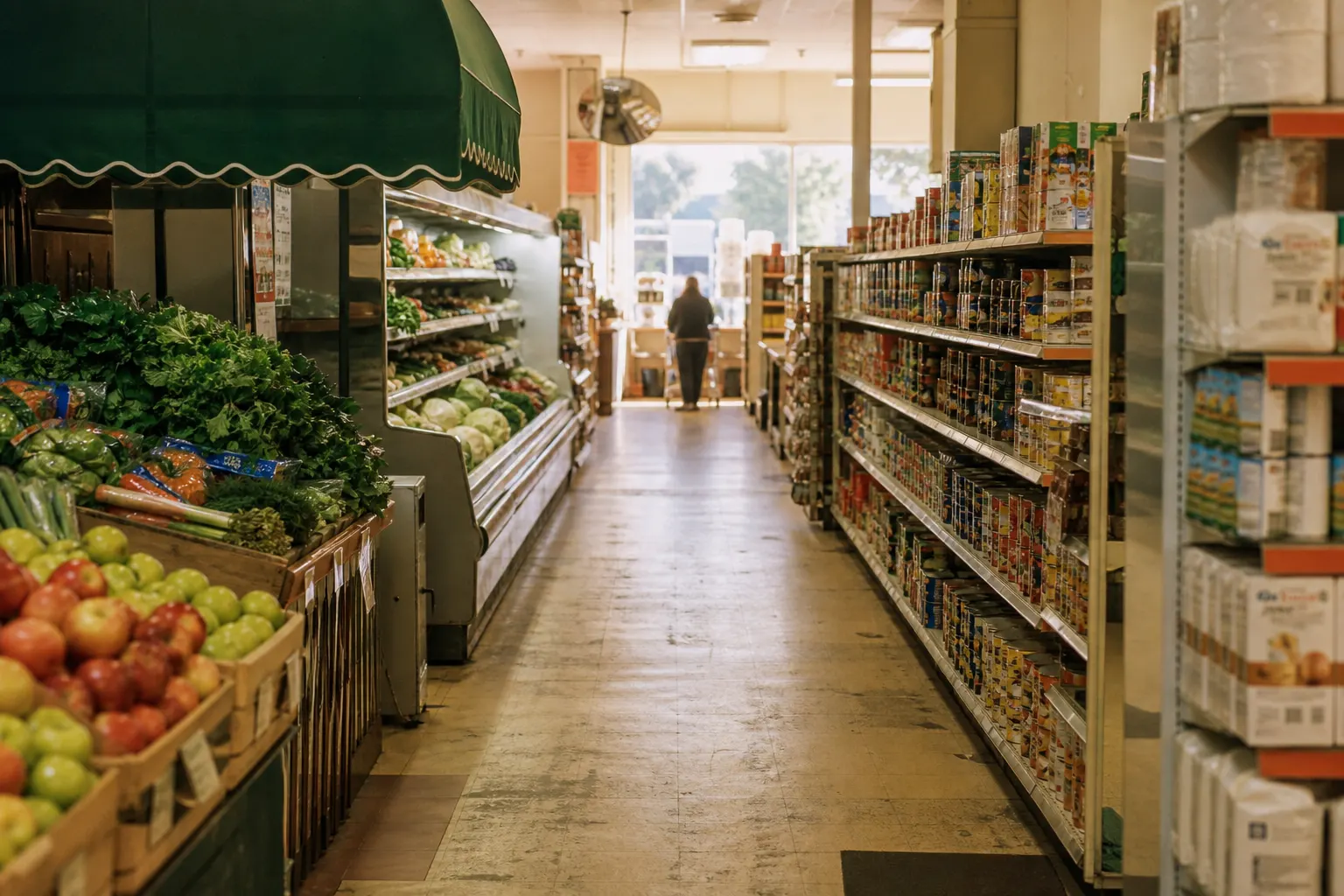
Inventory turns — How many times inventory sells and is replaced in a year, usually cost of goods divided by average inventory. Grocery moves faster than most retail because the week is food. That speed is not one storewide clock. Center store, the meat rail, and a wine wall do not share a calendar. Blend them and you will mis-price working capital on closing night.
Export a year of scan data and the warehouse recap before you quote a turn. Grocery Store Business Broker — HedgeStone Business Advisors, led by Jason Taken — reads turns as a cash trap, not as a trophy KPI. Book a confidential intro when the department clocks disagree with the CIM’s “clean room” sentence.
What is a good inventory turn is the short question. This page is the grocery reading. Soup should not turn like ribeyes. Wine and vitamins should not turn like milk. A storewide average can look “fine” while the back room is a museum. Ask for departmental inventory and departmental cost of goods. If the seller cannot produce either, you are underwriting a story. Shrink, margin, and turns is the operating trio because shrink and slow turns often travel together: product that does not sell starts to disappear as waste, theft, or a quiet markdown.
FMI’s supermarket sample is a volume reminder, not your target. The association’s 2025 facts include about $1 trillion in supermarket sales, 45,575 stores in the 2024 count, average weekly sales of $668,377, and $19.59 per square foot of selling area. A neighborhood box should not be judged against that weekly figure without its own scan. Use the channel facts to remember grocery is a throughput business. Then measure this room.
Inventory at cost is paid on the tape you count. Slow turns mean more dollars sitting on that tape, including goods a buyer will not want. Write unsellable rules before count night. Short-dated dairy, dusty endcaps, and a freezer of last Halloween are not “average inventory” a new owner can sell through at the seller’s cost. How much working capital do I need depends on how fast the room must be replaced after you already paid for what is there.
A buyer who only looks at weeks of supply on dry grocery will miss the wine room and the supplement bay. Those bays are where cash goes to sleep. They are also where a seller hopes a blended turn will hide the problem.
BizBuySell’s 2025 grocery and supermarket sold sample shows an average earnings multiple of 3.38, a five-year average of 2.66, an interquartile range of 1.60 to 3.15, and a 2025 average revenue multiple of 0.43. Those multiples attach to recast SDE or to earnings the listing site is measuring — not to a turn ratio. Fast turns with no earnings is a busy nonprofit. Slow turns with real SDE is a cash-trap you can still buy if you discount the room. The valuation hub is the price argument. This page is the clock.
If the department turns and the aged list are on the table, book the working-capital hour. Bring scan, the last two inventories, and the warehouse statement. The conversation is which product will still be there on Monday, and who pays for the rest.
Price language for Inventory turns in a grocery file is (recast SDE x a defendable multiple) + inventory at cost, plus or minus lease and license risk. The table is one consistent example for this URL.
| Input or output | Illustrative figure |
|---|---|
| Weekly sales (illustrative) | $168,000 |
| Annual sales | $8,736,000 |
| Recast SDE | $506,688 (5.8% of sales) |
| Inventory at cost | $624,000 (~14 turns) |
| Occupancy check | $305,760 / year (3.5% of sales) |
| Low going-concern | $1,561,373 at 1.85x SDE + inventory |
| High going-concern | $2,068,061 at 2.85x SDE + inventory |
| Sketch DSCR on a note | 1.53 |
Inventory is cash at close, not a multiple. Confusing the two is how sellers over-ask and buyers under-cash the wire.
Book the intro call with your side of the table ready: seller files or buyer capital. The calendar is the only next step.
Print these, mark them up, and bring the marked copy to the intro. They are educational. They are not a valuation letter and not a listing. All downloadable guides.
Have the file ready so the hour is a recast, not a scavenger hunt. Then pick a time.
Get a specialist on the other side of the table
Grocery deals turn on licenses, inventory, and a recast a lender will believe. Book the intro and bring the file.
Book an Intro Call With Jason TakenCost of goods sold divided by average inventory. Use the same cost basis you will pay at close. Mixing retail tags into the denominator invents a fake clock.
No. Dry grocery should move on a different calendar than wine, supplements, or a deep freeze of seasonal. Blend them and you will mis-price working capital at close.
Yes. Dated and dusty goods are still on the tape unless the LOI calls them unsellable. Slow turns are how a buyer pays cost for product that will not sell through.
No. Turns describe how cash is stuck in the room. BizBuySell grocery multiples attach to recast earnings. Do not multiply a turn ratio.
Start a confidential grocery conversation
Whether you are exiting or acquiring, pick a time and we will talk through the file.
Book an Intro Call With Jason TakenThis page is educational information from Grocery Store Business Broker (HedgeStone Business Advisors). It is not legal, tax, or investment advice. Licensing, tax, and financing rules vary by state and deal. Confirm every item with counsel and your lender before you sign.
Ready when you are. Jason Taken will talk through the file.
Book a confidential intro