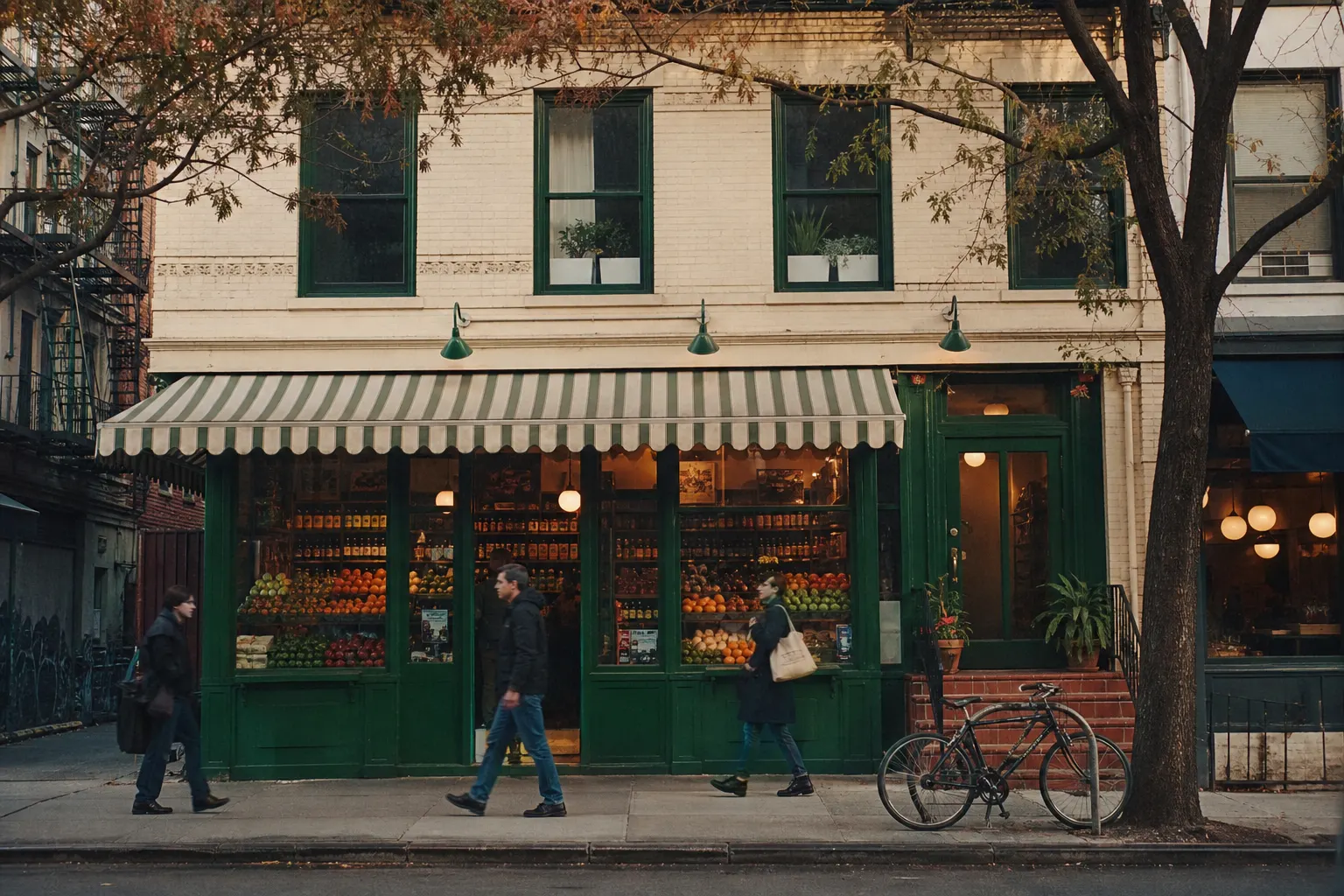
Start a Los Angeles grocery file with the California ABC class on the wall, the county environmental-health permit, and three years of numbers you can recast. Then book a confidential intro with that folder. Grocery Store Business Broker — HedgeStone Business Advisors, led by Jason Taken — will walk the license, the lease, and the SDE the way a financed buyer will. Statewide tax and ABC detail lives on the California seller page and buyer page. This essay is the basin file: how Type 20 differs from Type 21, how Ralphs, Vons, Stater Bros., and Northgate steal trips, and how Koreatown is not the San Gabriel Valley.
FMI’s 2025 supermarket sample — $1 trillion in channel sales, $668,377 average weekly sales, $19.59 per square foot of selling area, and a 2.1 percent food-retailer net — describes the supermarket channel. It is not last Saturday on Pico. Do not use those weekly dollars to back into a basin ask. Do not quote those weekly dollars as this store. The only sourced sold-earnings sample on this site is BizBuySell’s grocery and supermarket set: 3.38 average earnings multiple in 2025, 2.66 five-year average, interquartile range 1.60 to 3.15, and a 0.43 average revenue multiple. Those attach to recast earnings on sold listings. They are not a Los Angeles asking-price table.
Start with the ABC class, not the boulevard name
California Department of Alcoholic Beverage Control issues the privilege. Off-sale beer and wine (Type 20) is the common grocery class. Spirits require a different off-sale general privilege — Type 21 in the usual conversation — and that class is limited by census-tract population formulas in many areas. Confirm the current ABC license report for the address. A Type 20 that a CIM calls “full liquor” is a misread. A Type 21 that cannot transfer on the timeline the LOI assumes is a hole in the check, not a talking point.
ABC transfer is a defined process. It is not automatic with the asset sale. License value can be material, especially where off-sale general seats are scarce. Read liquor-license due diligence and transferring your liquor license before you fold alcohol into going-concern value. The liquor versus no-liquor essay is the format fork. A beer-and-wine independent is not a package store with produce.
County environmental health plus the city business-tax desk sit on the same close calendar. California Department of Public Health and county environmental health share the retail-food lane. A new operator is a new file, not a sticker on the walk-in. Put those dates next to landlord consent. Lease assignment and lease due diligence are often the critical path on a basin leasehold. This pack does not publish a Los Angeles rent-per-foot range. Occupancy is a ratio from the lease and the P&L. Use the rent-as-percent-of-sales checker on the actual document.
If the seller owns the box, recast the store on market rent first, then price the dirt as a second asset. Read selling with a lease versus real estate and buying a store with real estate. Do not let a related-party rent invent SDE.
How Ralphs, Vons, Stater Bros., and Northgate set the clock
Ralphs and Food 4 Less, Vons and Albertsons, Stater Bros. on the basin edge, and Northgate plus other Hispanic banners are competitive context. They are not sold listings on this page and not a multiple. An independent still has to explain the trips those banners do not take: language on the floor, a produce house the warehouse will not replace, hours the union store will not match, or a meat case the circular ignores.
UNFI, C&S Wholesale Grocers, and KeHE (specialty) show up on many California independents. Confirm drop minimums, over-advances, and whether the incoming owner gets an account. Wholesaler and banner agreements are a close item, not a courtesy. A buyer who only shops Vons will mis-read a Northgate-adjacent independent. A seller who prices against Ralphs’ weekly sales is selling a channel, not a file.
FMI counted 45,575 U.S. supermarkets in 2024 across conventional, limited-assortment, supercenter, warehouse, club, natural, and commissary formats. Your fascia is one contract inside that channel. It is not a valuation. Keep the independent versus banner distinction honest.
Koreatown, the San Gabriel Valley, and East Los Angeles are three books
Koreatown is a Korean supermarket-independent book, well-documented in ACS and local press. The San Gabriel Valley is a Chinese and Taiwanese independent book. East Los Angeles and Boyle Heights are a Mexican independent book. Those notes are qualitative. This page does not invent share-of-population percentages, a store count, or a density figure. Drive the aisle, the language, and the produce house. Do not apply a Westside conventional multiple to a Koreatown meat case.
An Asian grocery and a Hispanic / Latino grocery are different supply books. Buying an ethnic market outside your community is the tourist warning. Register language is an underwriting line. If the seller is the only closer who can order, write transition hours into the LOI. Transition and training periods exist so “the seller will help” becomes a schedule.
The ethnic versus conventional essay is the format fork. A neighborhood box that happens to stock kimchi is not a Koreatown independent. A Mexican carnecería is not a conventional supermarket with a salsa endcap. Recast department mix. Produce and meat can sink a “healthy” storewide gross margin. Read shrink, margin, and turns and verifying sales with scan data.
CDTFA Publication 31 and the register you must recast
California generally exempts qualifying food products for home consumption from state sales tax. Prepared food, hot food, and many fountain and hot-to-go items are taxable. Some district taxes can still apply to non-food merchandise. Confirm CDTFA Publication 31 (Grocery Stores) for the register mix. A CIM that skips that nuance is incomplete. Sales-tax filings should corroborate the week. See grocery sales tax.
CDTFA successor-liability and tax-clearance practice is a standard California asset-sale checklist item. Confirm current CDTFA bulk-sale instructions. UCC Article 6 bulk-transfer statutes have been repealed in most states; that is not the same as “no tax successor risk.” Read bulk sales and tax clearance and taxes on selling. Hold escrow for the clearance, not for a handshake.
Tobacco sits with CDTFA and local health departments. WIC sits with California Department of Public Health — WIC. Lottery is a California State Lottery retailer contract and is not part of the bill of sale. WIC, lottery, and tobacco checklists belong on a dated workplan next to ABC.
Payroll at $16.90 and the city add-on
The DOL consolidated table effective July 1, 2026 lists California’s state minimum wage at $16.90. Many cities set higher local floors. Confirm DIR and the city — Los Angeles included — before you underwrite payroll. Related-party hours that vanish at close are not an add-back. They are a labor hole. Put real wage back into the recast, then run the SBA 7(a) DSCR calculator.
SBA 7(a) can finance a change of ownership; the published maximum is $5 million. The file still has to look like a grocery the program can underwrite: prove sales, recast earnings, count inventory at cost, and survive a new SNAP file. Read SBA 7(a) for grocery acquisitions and how much money you need.
SNAP, WIC, and the desks that stay behind
USDA FNS: SNAP authorization does not transfer. The new owner files a new retailer application. Budget cash for the gap. Authorization is location-and-owner specific. Read what happens to SNAP when you sell and EBT diligence. This page does not publish a SNAP-retailer headcount for Los Angeles or California. Those fields were not extracted.
Tie weekly sales to scan and EBT deposits. Reject repeating “inventory adjustments” as add-backs. Hold back unsellable on the count. Closing-day inventory is a procedure, not a rumor. Recasting a grocery P&L is the earnings method.
California has had healthy-food financing and food-desert programs in various budget years. Verify the current CDFI or CDFA notice rather than citing a stale dollar cap. This page will not invent a tract flag or a financing amount.
What a financed Los Angeles buyer should request before the LOI
Ask for the ABC license report that names Type 20 or Type 21, the census-tract status if the class is limited, and any pending accusations. Ask for the county environmental-health file and the city business-tax account. Ask for CDTFA filings that match the week. A prepared-food program that grew after the last CIM can change Publication 31 more than the circular. How to read a CIM is the filter. A CIM that pastes 3.38× onto an unrecast tax-return profit is selling a listing-site average.
UNFI, C&S, and KeHE are not interchangeable. A Koreatown independent that lives on a specialty house will not reset onto a conventional warehouse without shrink. Write account-opening as a close condition when the seller is the only name on the drop. DSD relationships — bread, chips, soda, some frozen — need the same letter. Working capital includes the next produce load, not just the count.
City wage floors sit above $16.90 in some basin cities. Confirm the ordinance for this address. Handling employees is the people file. This pack did not extract a UFCW map for Los Angeles, so this page will not invent one. Ask who is on the payroll, who is related-party, and who can close without the seller.
If you are buying the building, recast the store on market rent first. Lease versus own is the fork. A related-party rent that vanishes at close is not an add-back. It is a hole. Sale-leaseback is a structure after you believe going-concern earnings, not a way to hide occupancy.
Buying versus starting is the honest question if the only reason you want the box is a Type 21 seat. A license search is not a grocery underwriting. Write ABC approval as a close condition. Earnest money should track that condition, not ignore it.
Price from recast SDE, then book the intro
Going-concern value is recast SDE or EBITDA times a negotiated multiple, plus sellable inventory at cost. Start from the national sold sample and subtract lease holes, license lag, and a store that still needs the seller. The valuation hub and how to value a grocery store are the method. Use the valuation calculator on this file’s recast, not on a weekly-sales rumor.
Sellers: keep the rumor off the sales floor. Start with a blind teaser and an NDA, then a qualified list. Read how to sell confidentially. Buyers: how to buy step by step is the sequence. Mark the Buyer Underwriting Workbook. Then book a confidential intro with the ABC class named, the lease page attached, and the recast started. Jason Taken will not invent a Los Angeles sold-comp to make the ask feel local. Bring the Type 20 versus Type 21 printout so the first call is about the privilege, not the boulevard.
An illustrative recast on Sell or buy a Los Angeles grocery store
Use this napkin recast on Sell or buy a Los Angeles grocery store when you book the call. It is labeled illustrative. BizBuySell's 2025 grocery sold-business earnings multiple averaged 3.38, with a 2021-2025 IQR of 1.60-3.15. Metro pages talk corridors and operators. They do not invent asking rents or establishment counts.
Rent at 3.6% of sales is the occupancy check. If the real lease is higher, the SDE in this table is too generous until you recast to market rent.
Book the intro call with your side of the table ready: seller files or buyer capital. The calendar is the only next step.
This page is educational information from Grocery Store Business Broker (HedgeStone Business Advisors). It is not legal, tax, or investment advice. Licensing, tax, and financing rules vary by state and deal. Confirm every item with counsel and your lender before you sign.