When does a buyer see the CIM?
After a signed NDA and a qualification screen. The blind teaser comes first. Scan, employee names, and the street address stay out of the teaser and out of unpaid curiosity.
Grocery Store Business Broker · HedgeStone Business Advisors · Jason Taken
Last updated 2026-09-04
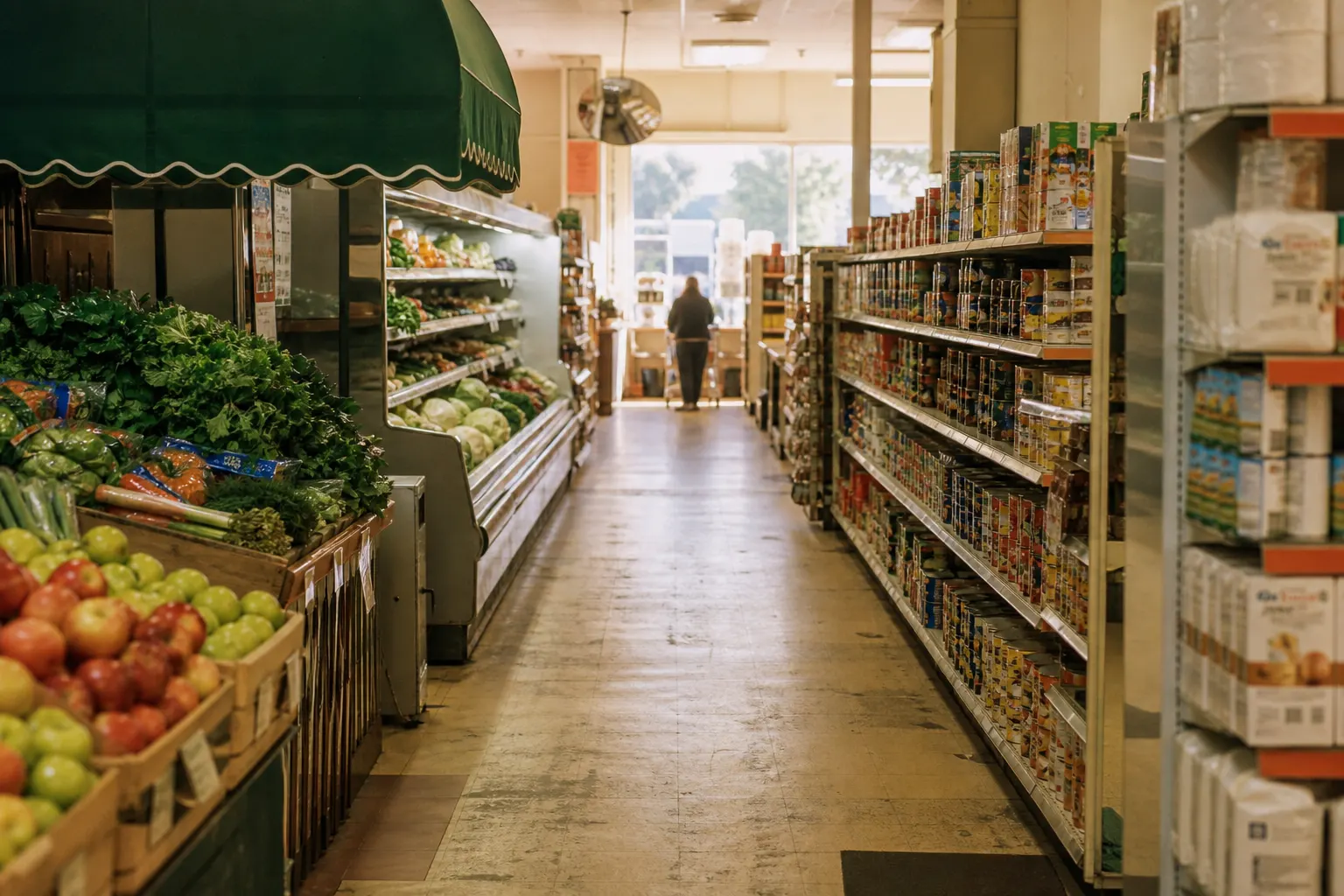
Draft the recast, the lease abstract, and the license list before you dress the photos. Then book a confidential intro and decide whether the book is a CIM or a brochure. A grocery CIM is the confidential information memorandum a qualified buyer receives after NDA: departmental sales, recast SDE, occupancy, permits, vendor terms, and the risks the buyer will find in diligence anyway.
The longer reading is how to read a CIM. This page is what belongs in the book, what must stay out, and how to use it on a live file.
A grocery CIM is not a listing-site paragraph. It is the offering book. After the buyer signs an NDA that bars approaching staff, vendors, the wholesaler, and the landlord without consent, the CIM should let a serious operator underwrite. Departmental sales — grocery, meat, produce, deli, bakery, beer and wine if present, lottery if present — belong in the book. A storewide sales number without mix hides the departments that actually make or break the recast.
The recast bridge belongs in the book. SDE is recast pre-tax cash to one owner-operator after owner pay, one-time items, and personal expenses that will not continue. Recurring shrink stays in. Banner fees stay in if the buyer will keep the fascia. Related-party rent should be shown at actual and at market. See how to recast a grocery P&L. Inventory method belongs in the book even though the dollars are counted at close: cost versus retail tags, FIFO practice, and who has been writing off dated product.
Equipment lists, excluded assets, and whether the name conveys belong in the book. Owned real estate is a second asset; recast the store on market rent if the dirt might separate. Employee counts and whether any UFCW contract exists belong in the book without dumping a payroll file into an email. The CIM should say how confidentiality will be kept on the floor. Employees learn from vendors and shoppers.
BizBuySell’s grocery/supermarket sold sample averaged a 3.38 earnings multiple in 2025, with a 2021–2025 IQR of 1.60–3.15 and a 0.43 average revenue multiple in 2025. A CIM that pastes those figures as “the asking multiple” without a recast is selling a database, not a store. Use the sample as context. Show this store’s recast and let the buyer argue the band.
FMI channel facts describe a supermarket sample: $1 trillion in 2025 supermarket sales, 45,575 U.S. supermarkets in 2024 across conventional, limited-assortment, supercenter, warehouse, club, natural/gourmet, and commissary formats, $668,377 average weekly sales per supermarket in 2025, and $19.59 weekly sales per square foot of selling area in 2025. Your independent box is not that sample. If the CIM quotes those figures, label them as channel context. If weekly sales in the book look like a chain supercenter and the photos look like a neighborhood store, the book has a problem.
Sales in the CIM should tie to scan data, deposits, and, where food is taxed or partially taxed, sales-tax filings. If they do not, stop and ask why. EBT deposits should reconcile to the SNAP mix you are describing. USDA FNS: the SNAP permit does not transfer; the new owner files a new application. The CIM should say that in plain language so a civilian attorney does not discover it in week six. WIC is a vendor file. Lottery is often personal.
SBA 7(a) buyers will read the CIM as a first pass at ability to repay. The program can fund a change of ownership up to a $5 million maximum loan amount when the borrower is creditworthy. A CIM that cannot support a DSCR conversation is not ready for that buyer pool.
A CIM that omits the lease abstract is a brochure. Remaining term, options, assignment, exclusive use, co-tenancy, base rent, CAM, and any related-party story belong in the book. See lease diligence. Remaining term under twenty-four months without options is a price fact, not a later surprise.
List SNAP, alcohol, food, WIC, tobacco, and lottery, and say which agencies have to act. Alcohol is a class, a quota, or a control-state privilege. Do not write “liquor license included” as if it were a cooler. The wholesaler agreement belongs in summary: who the primary is, whether a banner (IGA, Piggly Wiggly, or a private-label program) is a contract that needs consent, whether a personal guarantee or over-advance sits on the seller. See wholesaler and banner.
Risks belong in the book because the buyer will find them. A below-market rent. A key butcher who may not stay. A competitor opening. A short option. Putting those in the CIM is how you keep diligence from feeling like a bait-and-switch. Hiding them is how you kill trust and the close.
The blind teaser is the one-pager that sells the file without naming the store or the street. The CIM is the book after NDA. The APA is the contract that lists what is bought, how inventory is counted, and how licenses are conditioned. Do not ask the CIM to do the APA’s job, and do not ask the teaser to do the CIM’s job. See what is a blind teaser and do I need an NDA before showing financials.
Selling to family or a manager still needs a real CIM-level recast and a real price. Soft language creates hard lawsuits. Multi-store books need a shared recast and a shared license calendar or the reader cannot underwrite.
If you are building the book, book a confidential intro with the recast, lease abstract, and license list. If you are reading someone else’s book, mark the holes — mix, occupancy, permits, vendor consent — and bring that markup to the same call. Jason Taken at Grocery Store Business Broker (HedgeStone Business Advisors) will tell you whether to release, rewrite, or walk. Start from how a sale works so the CIM sits in a process, not in a vacuum.
Use this napkin recast on What is a grocery store CIM? when you book the call. It is labeled illustrative. BizBuySell's 2025 grocery sold-business earnings multiple averaged 3.38, with a 2021-2025 IQR of 1.60-3.15.
| Input or output | Illustrative figure |
|---|---|
| Weekly sales (illustrative) | $78,000 |
| Annual sales | $4,056,000 |
| Recast SDE | $190,632 (4.7% of sales) |
| Inventory at cost | $253,500 (~16 turns) |
| Occupancy check | $121,680 / year (3.0% of sales) |
| Low going-concern | $634,764 at 2.00x SDE + inventory |
| High going-concern | $796,801 at 2.85x SDE + inventory |
| Sketch DSCR on a note | 1.40 |
If weekly sales or shrink move 8 percent, the SDE and the note move with them. That is why Jason Taken starts with scan data and the lease, not with a neighbor's rumor multiple.
Book the intro call with your side of the table ready: seller files or buyer capital. The calendar is the only next step.
Print these, mark them up, and bring the marked copy to the intro. They are educational. They are not a valuation letter and not a listing. All downloadable guides.
Have the file ready so the hour is a recast, not a scavenger hunt. Then pick a time.
Get a specialist on the other side of the table
Grocery deals turn on licenses, inventory, and a recast a lender will believe. Book the intro and bring the file.
Book an Intro Call With Jason TakenAfter a signed NDA and a qualification screen. The blind teaser comes first. Scan, employee names, and the street address stay out of the teaser and out of unpaid curiosity.
Department mix, inventory method, EBT settlements, wholesaler guarantees, and a license calendar. A teaser multiple copied from another retail book is not a grocery CIM.
As channel context, yes, with a label. FMI’s $668,377 average weekly sales per supermarket in 2025 describes the Speaks supermarket sample. Do not paste it as this store’s run-rate.
You can. You should not. A CIM that omits remaining term, assignment, exclusive use, and CAM is a brochure. Buyers will discount or walk when the lease arrives later.
Bring the recast, lease abstract, and license list to a confidential intro at /book/. Jason Taken will tell you whether the book is ready to release under NDA.
Start a confidential grocery conversation
Whether you are exiting or acquiring, pick a time and we will talk through the file.
Book an Intro Call With Jason TakenThis page is educational information from Grocery Store Business Broker (HedgeStone Business Advisors). It is not legal, tax, or investment advice. Licensing, tax, and financing rules vary by state and deal. Confirm every item with counsel and your lender before you sign.
Ready when you are. Jason Taken will talk through the file.
Book a confidential intro