Is a natural / organic / health food store valued like a conventional supermarket?
Supplements dating and perishable shrink can erase recast SDE. National specialty banners nearby cap price more than a rural conventional competitor would.
Grocery Store Business Broker · HedgeStone Business Advisors · Jason Taken
Last updated 2026-09-03
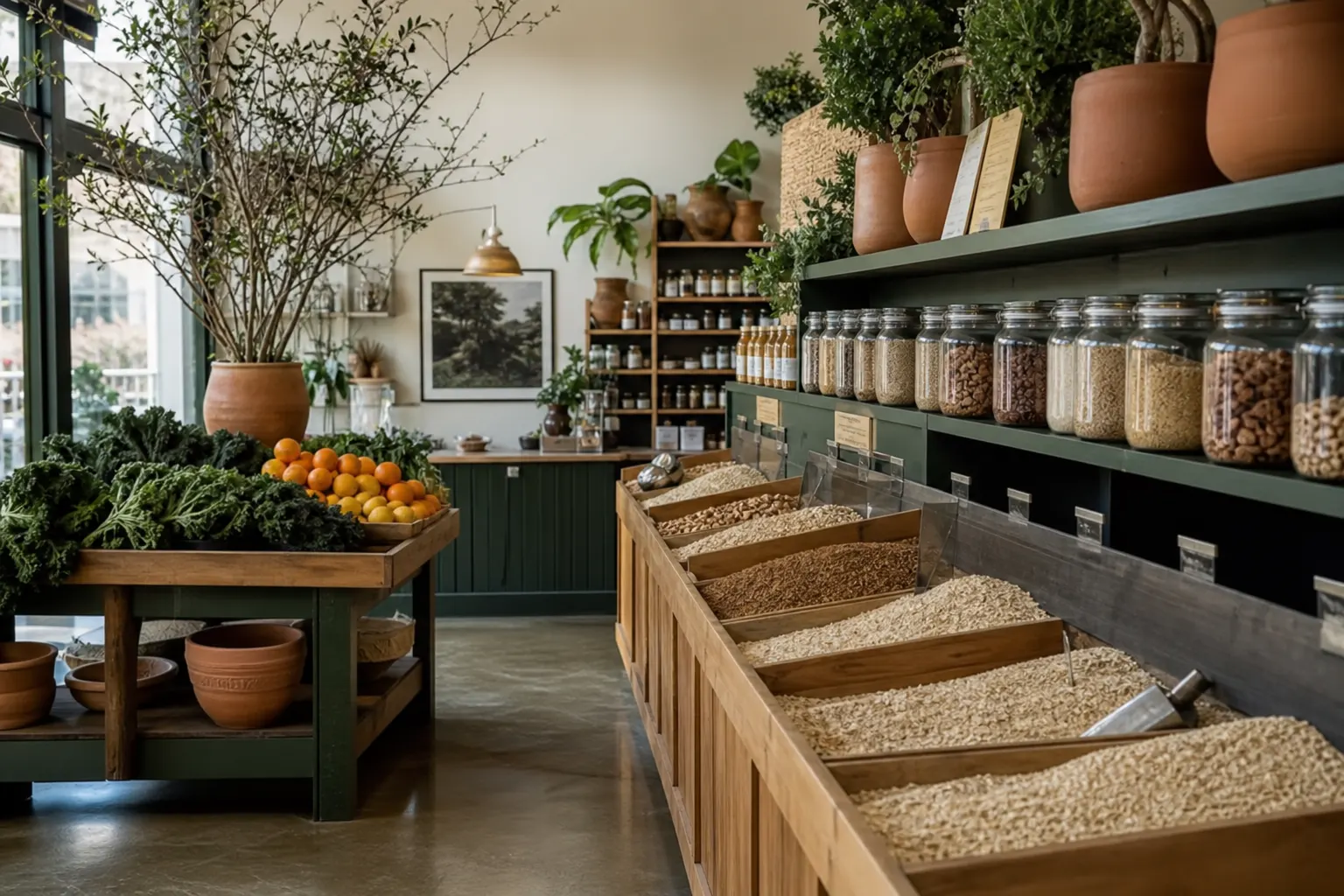
A natural, organic, or health-food store sells on a higher ring, a slower supplement clock, and a buyer who will compare you to Whole Foods or Sprouts whether that is fair or not. FMI supermarket averages are the wrong benchmark. This pack does not invent an organic-premium multiple. Grocery Store Business Broker — HedgeStone Business Advisors, led by Jason Taken — packages the file as a confidential asset sale: recast SDE, inventory at cost, then the UNFI or KeHE book. Download the Confidential Seller Playbook and circle the expired SKUs before you pick a number.
FMI’s $1 trillion in 2025 supermarket sales and 45,575 U.S. supermarkets in 2024 describe the channel. FMI’s $668,377 average weekly sales per supermarket and $19.59 weekly sales per selling square foot in 2025 describe Speaks supermarkets. Your 6,000-square-foot natural box is not that sample. FMI’s 2.1 percent average net profit for food retailers in 2025 is a food-retailer net figure. It is not a “natural premium.”
Specialty grocery runs through UNFI, KeHE, local farms, and perishable DSD. That is a different wholesaler conversation than a banner independent on a conventional house. Some rooms split the book — UNFI for grocery, KeHE for a slice of HABA, a farm for greens — and the buyer has to open all three. Minimums, delivery days, fill rates, and program charges belong in the recast as continuing costs if the buyer will keep the mix. A house that will not open a new account at your volume is a supply break, not a paperwork delay. Over-advances are debt. Sequence house consent after an NDA and a serious buyer. Read wholesaler and banner agreements. Keep the wholesaler directory as a map, not a claim that your account is portable.
New-item and slotting habits in the natural channel are not supermarket slotting folklore. If you have been paying for resets, promos, or a broker to get SKUs on the shelf, say whether those charges continue. Slotting fees that repeat are the business. A one-time reset you can document can move SDE. Do not guess. Pull the house statements. Read evaluating a store’s P&L before you argue that “brand strength” replaces a fill-rate problem.
Farm accounts and perishable DSD — bread, tofu, juice, local greens — keep delivering after a sloppy close only if someone is paying them. Schedule those contracts on the APA. A CIM that says “strong local vendors” and omits terms is a brochure. Read asset purchase agreement essentials. Working capital is the cash to buy the next UNFI load, not a vibe. The cash-to-close estimator is for the buyer side. You still need an honest inventory estimate so that number is not fiction.
If you wear a banner or a voluntary program, those fees stay if the fascia stays. Read buying a franchise or banner store for the other side of that fight. Do not assume a natural store is “independent” in the same way as a neighborhood grocery.
Supplements and HABA date. Produce in the natural channel shrinks. Frozen “better-for-you” SKUs stall. Turns are not one number. Center-store grocery, the vitamin wall, and the wet rack do not share a clock. Expired inventory that is still on the books is not inventory at cost. It is a write-off you are asking the buyer to fund. Write the dating rule into the LOI before count night. Read how inventory is counted at closing and closing-day count procedures.
Shrink that repeats every year is the business. Stop calling it one-time. Owner pay, a documented one-time legal bill, and a personal auto can move SDE. Recurring dumpage cannot. Read recasting a grocery P&L, preparing three years of financials, and shrink, margin, and turns. Print the SDE worksheet.
Scan data is the adult conversation. A weekly-sales spreadsheet without department mix is a rumor. Produce and the juice bar can sink a “healthy” storewide gross margin. EBT deposits, if you take SNAP, should reconcile to the SNAP story. A gap is mix, downtime, or fiction. Some natural stores skip SNAP. That is a diligence fact, not a moral grade. Read verifying sales with scan data. Sales-tax filings corroborate where food, supplements, or prepared food are taxed — state grocery sales tax.
Holdbacks exist because grocery has shrink and successor tax risk. Earn-outs are hard because the buyer controls mix after Monday. Read escrow, holdbacks, and earn-outs. Compare offers on cash at close, note terms, inventory treatment, and license risk — the LOI terms that matter for sellers and comparing offers.
National specialty banners nearby cap price more than a rural conventional competitor would. A new Sprouts or Whole Foods in the same trade area is a red flag that cuts the multiple. Read competition and trade-area math. This pack does not invent a natural-store sold-comp. BizBuySell grocery and supermarket sold businesses: 3.38 average earnings multiple in 2025; 2.66 five-year average; IQR 1.60–3.15 for 2021–2025. A 0.43 average revenue multiple on the 2025 sold sample is a sanity check. Those figures are a national listing-site sample. They are not an organic premium.
The valuation hub is the method. How to value a grocery store is the walkthrough. The valuation calculator lets you change inputs. Revenue multiples hide rent and labor. Use them to sanity-check, then return to SDE.
Suppose weekly sales are $55,000. Annual sales are $2,860,000. If recast SDE is 4.5 percent of sales, SDE is $128,700. A 1.60×–3.15× band is about $205,920–$405,405. Add inventory at cost after you pull expired supplements off the sheet. If related-party rent is $2,500 a month below market, pull that $30,000 out of SDE before you quote the high end. FMI’s 2.1 percent food-retailer net is not this store’s SDE. A below-market related-party rent that juiced earnings will reverse on day one.
The buyer pool is natural-channel operators, occasionally a food co-op conversion (rare), and lifestyle buyers who often cannot get SBA 7(a) terms without a manager. SBA 7(a) goes to $5 million. Unreported cash does not survive that file or a serious conventional buyer. Read selling with unreported cash and buying as a first-time owner. Seller notes often sit on standby. Read the standby. DSCR is cash flow over debt service.
A conventional supermarket operator who wants a “wellness banner” is usually a wasted week unless they already run perishable specialty. Confidential outreach is the default. Employees learn from vendors and shoppers. A public listing teaches UNFI you are leaving. Use a blind teaser. Read how to sell confidentially. The seller hub is the process. The twin page is buy a natural / organic / health food store.
Selling to a manager who already runs the floor can work if the price and the note are real. Soft language creates hard lawsuits. Read selling to family or an employee. Non-competes have to be enforceable in the state and narrow enough to keep — non-competes and confidentiality.
If you are the brand — classes, juice bar, the face on the newsletter — the SDE story changes the Monday you leave. Treat transition hours as a close condition, not a courtesy. See transition and training and the post-closing 90-day plan. The first 90 days are vendor trust, shrink, and not changing the mix for sport. A buyer who rips out the vitamin wall in week two to “simplify” will not hit your recast. That is why earn-outs fail.
A juice bar, hot bar, or café is restaurant labor wearing a grocery fascia. Give it its own sales line, labor hours, and dumpage. A blended storewide SDE that is really a smoothie counter plus a slow vitamin wall will not survive a quality-of-earnings memo. Prepared-food permits and health-department write-ups belong in the license list, not in a “community vibe” paragraph. If classes or a practitioner booth drive traffic, write whether those people stay. Traffic that is personal to you is not a multiple. It is a transition period you have to staff.
Organic produce shrink is not conventional produce shrink with a nicer sign. Shorter code dates, smaller packs, and a customer who will not take a bruised peach all hit the wet rack. Do not recast dumpage as a one-time “reset.” If you have been donation-writing unsellable produce, keep the paper. A buyer’s CPA will ask. Read how to read a CIM so you know what they will mark. HFFI and other healthy-food programs change; do not quote a stale dollar cap. See the HFFI glossary if a grant sits on the file — treat it as a diligence item, not as durable SDE.
Labor in this format is often mission-driven and paid at a wage the next owner cannot cut. State-by-state minimum wage belongs in the recast if you have been paying below the current table. WARN and union contracts are calendar items on larger headcount files — employees, union contracts, WARN.
Present the competitor set honestly. A conventional independent two miles away is not your comp if shoppers already split the basket with a national specialty banner. Name the banner, the opening date if you know it, and what happened to your weekly sales in the weeks after. Do not invent a recovery story. If you do not have those weeks, say so. Missing paper is common. Hiding the hole is how the first hour dies.
Supplements and cosmetics can trigger extra rules. Retail food is still a health-department file. Alcohol, if you sell beer or wine, is a class, a quota, or a control-state product — NABCA lists 17 control states plus local-control pockets. Read transferring a liquor license and state alcohol regimes. SNAP, if you have it, does not transfer. USDA FNS: the new owner files a new application. Read what happens to SNAP when you sell. WIC is a vendor file. Print the closing and license checklist.
Counsel who have never closed grocery will rediscover SNAP in week six. Send them working with attorneys and CPAs. Tax clearance belongs in escrow. See state bulk-sales notes, taxes on selling a grocery store, and asset sale versus stock sale.
Lease diligence is where civilians get surprised. Assignment, exclusive use, and co-tenancy move price. Remaining term under 24 months without options is a price cut. CAM true-ups can erase a year of “extra” SDE. A lease next to a new Sprouts or Whole Foods is the red flag already named. Use the rent-as-percent-of-sales checker as a sanity check, not as a valuation.
If you own the dirt, recast the store on market rent, then price the building with a real-estate licensee. Read selling with a lease versus real estate and grocery with real estate. Distressed natural stores still have a lease and a stockroom — selling a distressed grocery. Common reasons sales fall apart and surviving due diligence are the ugly lists.
Jason Taken and HedgeStone are not licensed business brokers in every state. Check the rule that applies to your deal. Selling the building always requires a real-estate license. How a sale works is the sequence from teaser to count night.
When the UNFI statement, the dating report, and the marked SDE worksheet are in one folder, book a confidential intro. Bring the competitor that opened last year. That is a useful hour.
Use this napkin recast on Sell a natural / organic / health food store when you book the call. It is labeled illustrative. BizBuySell's 2025 grocery sold-business earnings multiple averaged 3.38, with a 2021-2025 IQR of 1.60-3.15.
| Input or output | Illustrative figure |
|---|---|
| Weekly sales (illustrative) | $92,000 |
| Annual sales | $4,784,000 |
| Recast SDE | $196,144 (4.1% of sales) |
| Inventory at cost | $398,667 (~12 turns) |
| Occupancy check | $110,032 / year (2.3% of sales) |
| Low going-concern | $732,112 at 1.70x SDE + inventory |
| High going-concern | $928,256 at 2.70x SDE + inventory |
| Sketch DSCR on a note | 1.40 |
If weekly sales or shrink move 8 percent, the SDE and the note move with them. That is why Jason Taken starts with scan data and the lease, not with a neighbor's rumor multiple.
Bring three years of P&Ls, weekly sales, and the lease abstract to the intro call. Jason will tell you whether this band is even in the conversation.
Print these, mark them up, and bring the marked copy to the intro. They are educational. They are not a valuation letter and not a listing. All downloadable guides.
Have the file ready so the hour is a recast, not a scavenger hunt. Then pick a time.
Get a grounded read on what buyers will pay
We recast SDE, separate inventory at cost, and price license risk. Download the seller playbook, then put 30 minutes on the calendar.
Get a Free Grocery Store Valuation ConversationSupplements dating and perishable shrink can erase recast SDE. National specialty banners nearby cap price more than a rural conventional competitor would.
A separate line at cost, counted at close, with dating on supplements and perishables written into the LOI. Book a confidential intro if you want that count procedure on the file.
No. USDA FNS: SNAP authorization does not transfer; the new owner files a new application. Some natural stores skip SNAP entirely — that is a diligence fact, not a moral grade. Book a confidential intro if EBT is part of the week.
Not until you need consent. Sequence it after an NDA and a serious buyer.
No. This pack does not invent format-specific comps beyond the national BizBuySell grocery sample.
Sell on your terms, not on a listing site
HedgeStone Business Advisors runs a quiet process: recast, qualified operators, and a close that survives the count. The only next step is the intro call.
Book a Confidential Seller ConsultationThis page is educational information from Grocery Store Business Broker (HedgeStone Business Advisors). It is not legal, tax, or investment advice. Licensing, tax, and financing rules vary by state and deal. Confirm every item with counsel and your lender before you sign.
Ready when you are. Jason Taken will talk through the file.
Book a confidential intro