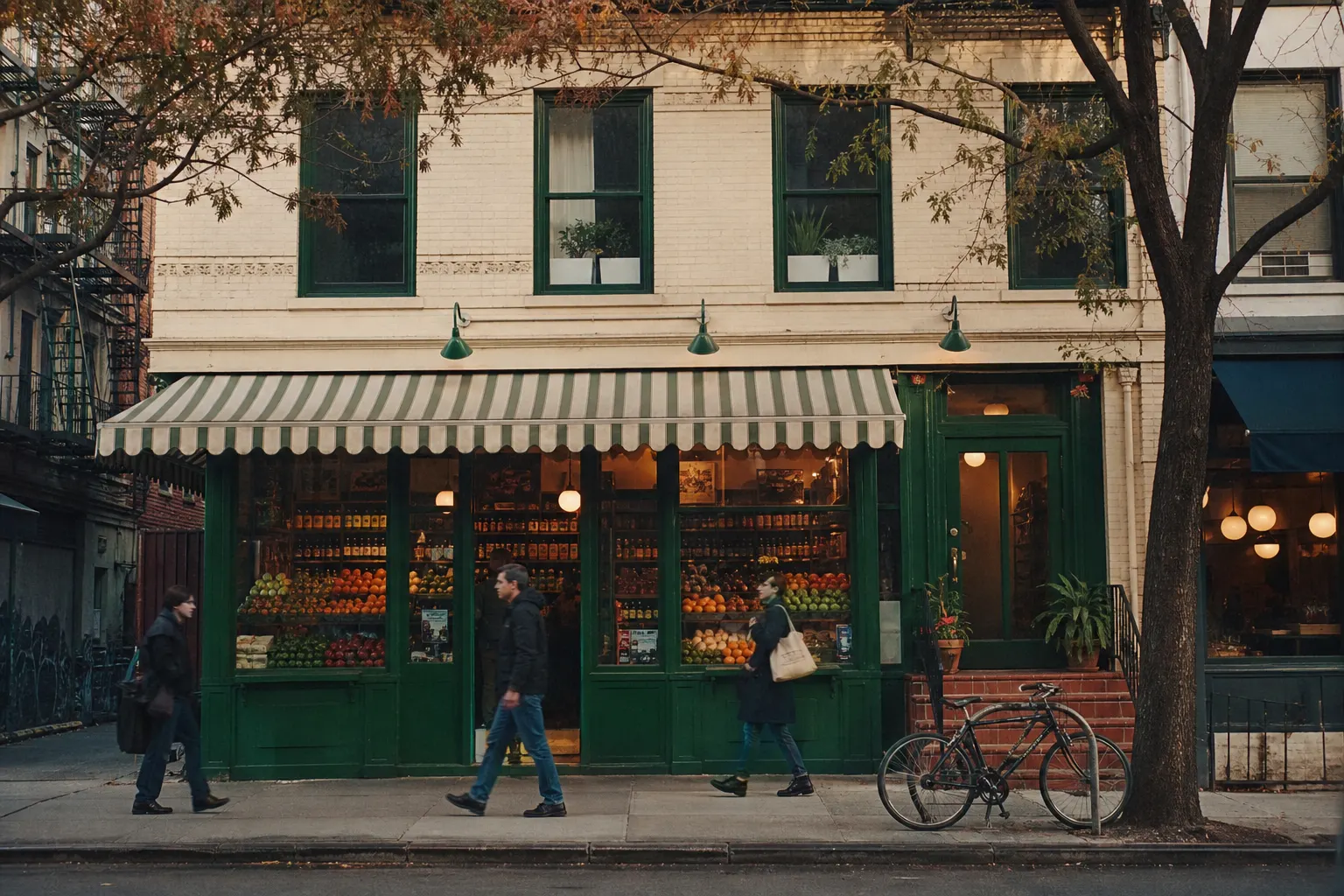
Name the city before you name the wine aisle. Then book a confidential intro with the municipal-liquor status printed and three years of numbers you can recast. A Minneapolis private off-sale and a first-ring muni town are not the same alcohol asset, even when both teasers say Twin Cities. Grocery Store Business Broker — HedgeStone Business Advisors, led by Jason Taken — treats a Twin Cities grocery as a Minnesota hybrid alcohol file, not a uniform grocery-spirits state. Statewide tax and agency rules live on the Minnesota seller page and buyer page. This essay is the metro split: muni towns at the edge, Minneapolis and St. Paul wage floors, Cub-Hy-Vee-Lunds as trip stealers, and two immigrant books that do not share a produce house.
FMI’s 2025 supermarket facts — about $1 trillion in channel sales, $668,377 average weekly sales, $19.59 per selling square foot, and a 2.1 percent food-retailer net — are channel context. They are not a Cedar Avenue Saturday. National multiples cited here come from BizBuySell’s grocery sold sample alone: 3.38× earnings (2025), 2.66× five-year, IQR 1.60–3.15, 0.43× revenue. Attach them to a Twin Cities recast after muni-liquor and city-wage facts — never as a Minneapolis ask table.
Confirm whether the suburb is a municipal liquor town
Minnesota’s alcohol regime in this research pack is hybrid. Minnesota Alcohol and Gambling Enforcement (DPS) sits at the state. Many cities operate municipal liquor stores. Municipal liquor (“muni”) towns can bar private grocery wine and spirits. Minnesota is not a uniform grocery-spirits state. Off-sale licenses vary. A municipal monopoly or limited off-sale can mean the city council and AGE have a process — or a muni town may have nothing to transfer. Verify whether the city is a muni jurisdiction before you treat alcohol as going-concern value.
NABCA’s control-state directory is the sourced backdrop for how control and local systems differ from license states. Minnesota is not labeled a NABCA control state in this pack (nabcaControl is false). The local fact that matters on a Twin Cities file is still the muni town. Read control state for the vocabulary, then read state-by-state alcohol regime for the Minnesota hybrid. Do not copy a Wisconsin Class “A” workplan onto a Lakeville or Stillwater address.
A CIM that says “the store sells wine” without naming the suburb is incomplete. Ask whether the aisle you toured is the city’s municipal store or a private off-sale the grocery actually holds. The liquor versus no-liquor essay is the format fork. Liquor-license due diligence still applies when a private off-sale exists. It does not invent a privilege the city reserved for the municipal store.
Retail food sits with Minnesota Department of Agriculture and/or Department of Health, plus local desks. A new operator is a new file. Put those dates next to landlord consent. Lease assignment and lease due diligence are often the critical path. This pack does not publish a Twin Cities rent-per-foot. Occupancy is a ratio from the lease and the P&L. Use the rent checker.
If the seller owns the box, recast the store on market rent first. Buying a store with real estate keeps the stacks apart. A related-party rent is not SDE.
Cub, Hy-Vee, Lunds & Byerlys, and Aldi steal trips
Cub, Hy-Vee, Lunds & Byerlys, and Aldi are the competitive set this pack records. Kowalski’s appears on the state chain list as a regional sibling to Lunds & Byerlys. They explain why an independent lives on language, a halal case, or hours those banners will not copy. They do not set a multiple. Do not price “a little under Cub.” Do not treat a Hy-Vee remodel as a sold-comp.
UNFI, Associated Wholesale Grocers (AWG), and C&S Wholesale Grocers appear on many Minnesota independents. Confirm drop minimums, over-advances, and whether the incoming owner gets an account. Wholesaler agreements are a close item. FMI counted 45,575 U.S. supermarkets in 2024. Your fascia is one contract. Keep independent versus banner honest.
First-ring suburbs in this pack are a Cub / Hy-Vee competitive set as a qualitative note. That is not a store count and not a density figure.
Cedar-Riverside is not Frogtown
Cedar-Riverside / Phillips is recorded as East African (Somali) independents — a well-documented Somali corridor in ACS-style notes. St. Paul Frogtown / East Side is recorded as Hmong and Southeast Asian independents. Those notes are qualitative. This page does not invent share-of-population percentages, a store count, or a density figure. Drive the aisle. Ask which language the regulars speak. Ask which produce house, meat DSD, and importer will open a new account. A Somali halal case and a Hmong produce rack can share a metro and not share a warehouse. Recast each book on its own shrink. If you cannot staff the greeting, you are buying a reset. Cash-heavy versus card-heavy still matters: cash has to survive the return, and EBT has to match the scan.
A middle-eastern / halal market and an Asian grocery are different supply books. Buying an ethnic market outside your community is the tourist warning. If the seller is the only closer who can order, write transition hours into the LOI. The ethnic versus conventional essay is the format fork.
Recast department mix. Produce and meat can sink a storewide gross margin. Read shrink, margin, and turns and verifying sales with scan data. Tie weekly sales to scan and EBT deposits.
Minneapolis and St. Paul wage floors above $11.41
The DOL consolidated table effective July 1, 2026 lists Minnesota’s state minimum wage at $11.41. Confirm DLI posters and any city floor. Minneapolis and St. Paul set local wage floors. A recast that uses the state number inside the cities is a labor hole. Related-party hours that vanish at close are not an add-back. Put the wage you will actually pay back into the recast, then run the DSCR calculator. Read state-by-state minimum wage.
SBA 7(a) can finance a change of ownership; the published maximum is $5 million. The file still has to look like a grocery: prove sales, recast earnings, count inventory at cost, and survive a new SNAP application. Read SBA 7(a) for grocery.
Minnesota food exemption and the hybrid alcohol desk
Minnesota generally exempts eligible food for home consumption from state sales tax. Prepared food, candy, and soft drinks are often taxable. Confirm the DOR Food and Food Ingredients guide. See grocery sales tax. Sales-tax filings should corroborate the week.
Confirm DOR tax clearance and successor liability on the asset sale. UCC Article 6 bulk-transfer statutes have been repealed in most states; that repeal does not erase tax successor risk. Read bulk sales and tax clearance.
WIC sits with Minnesota Department of Health — WIC. Lottery is a Minnesota State Lottery retailer contract. Tobacco sits with Minnesota Department of Revenue. None of those ride automatically on the bill of sale. WIC, lottery, and tobacco checklists belong on the same workplan as AGE and the city council if a private off-sale exists.
Federal HFFI and Twin Cities food-access programs may apply. This page records no dollar figure and will not invent one. Verify the current notice.
SNAP, permits, and the Monday-after-close file
USDA FNS: SNAP authorization does not transfer. The new owner files a new retailer application. Budget cash for the gap. Read SNAP when you sell and EBT diligence. This page does not publish a SNAP-retailer headcount for Minneapolis, St. Paul, or Minnesota.
Hold back unsellable on the count. Closing-day inventory is a procedure. Recasting a grocery P&L is the earnings method. Reject repeating inventory adjustments as add-backs.
A first-time operator gets financed when the scan, the EBT mix, and the lease remaining term tell one story. Read buying as a first-time owner and how to buy step by step. Mark the Buyer Underwriting Workbook.
What “nothing to transfer” does to the recast
If the suburb is a municipal liquor town, the wine and spirits aisle you toured may belong to the city, not to the grocery. Do not pay grocery SDE for a privilege the incoming owner cannot hold. Recast earnings as a dry grocery if that is what the buyer can operate. The liquor versus no-liquor essay is the format fork. A muni town is not a license-state delay. It is a missing asset.
If a private off-sale does exist, ask for the city-council calendar and the AGE steps. Write those dates into the LOI. A buyer who needs SBA 7(a) cannot treat the council as a courtesy. Ask whether limited off-sale seats are transferable at all. Quota license vocabulary still helps even when the limiter is a city monopoly instead of a census-tract formula.
City wage floors change the labor recast inside Minneapolis and St. Paul. Ask for the ordinance that applies to this address and the date it last moved. A first-ring suburb may sit on the state $11.41. The cities do not. Handling employees is the people file. This pack did not extract a union-contract map for the Twin Cities, so this page will not invent one. Ask who is on the payroll and who is related-party.
Bring three years of P&Ls, a scan export, the muni-versus-private alcohol fact, and the city wage printout to the first call. Preparing three years of financials is the seller’s job. How to read a CIM is the buyer’s filter. A CIM that pastes 3.38× onto an unrecast tax-return profit is selling a listing-site average.
Buying versus starting is the fork if the only reason you want the box is a corridor name. Cedar-Riverside without a Somali closer is a shrink plan. Frogtown without a Hmong produce relationship is a reset, not a going concern.
National sold multiples, not a Twin Cities invented table
Negotiate the multiple on recast SDE or EBITDA, then add inventory at cost. Subtract short remaining term, municipal-liquor risk at the suburb, Minneapolis or St. Paul wage overlays, and key-person dependence. Carry the method on the valuation hub, how to value a grocery store, and the valuation calculator.
Sellers: keep the rumor off the sales floor. Start with a blind teaser and an NDA. Read confidential sale. Then book a confidential intro with the city named and the muni-versus-private alcohol fact written down. Jason Taken will not invent a Twin Cities sold-comp to paper over a municipal liquor town.
If the suburb is a muni town, say “no private wine or spirits to transfer” on the first page of the teaser so a buyer does not tour a city liquor aisle and bid as if it were grocery. Recast the store as the grocery it will be on Monday. Timeline to sell still applies to AGE and the city council when a private off-sale does exist. Name the city. The metro name is not the alcohol regime.
Cedar-Riverside Somali independents and Frogtown Hmong independents are different supply books — confirm which produce house will open for the buyer.
An illustrative recast on How Minneapolis–St. Paul grocery stores change owners
These figures are a teaching walk-through for How Minneapolis–St. Paul grocery stores change owners, not a quote and not a sold comp. Order of operations: weekly sales, recast SDE, inventory at cost, then a multiple band. Metro pages talk corridors and operators. They do not invent asking rents or establishment counts.
Inventory is cash at close, not a multiple. Confusing the two is how sellers over-ask and buyers under-cash the wire.
Book the intro call with your side of the table ready: seller files or buyer capital. The calendar is the only next step.
This page is educational information from Grocery Store Business Broker (HedgeStone Business Advisors). It is not legal, tax, or investment advice. Licensing, tax, and financing rules vary by state and deal. Confirm every item with counsel and your lender before you sign.