Can I keep importer credit after the seller’s cell phone leaves?
Only if the house will open a new account or you already have a replacement lined up. A credit hold the week after close is a diligence miss, not bad luck.
Grocery Store Business Broker · HedgeStone Business Advisors · Jason Taken
Last updated 2026-09-04
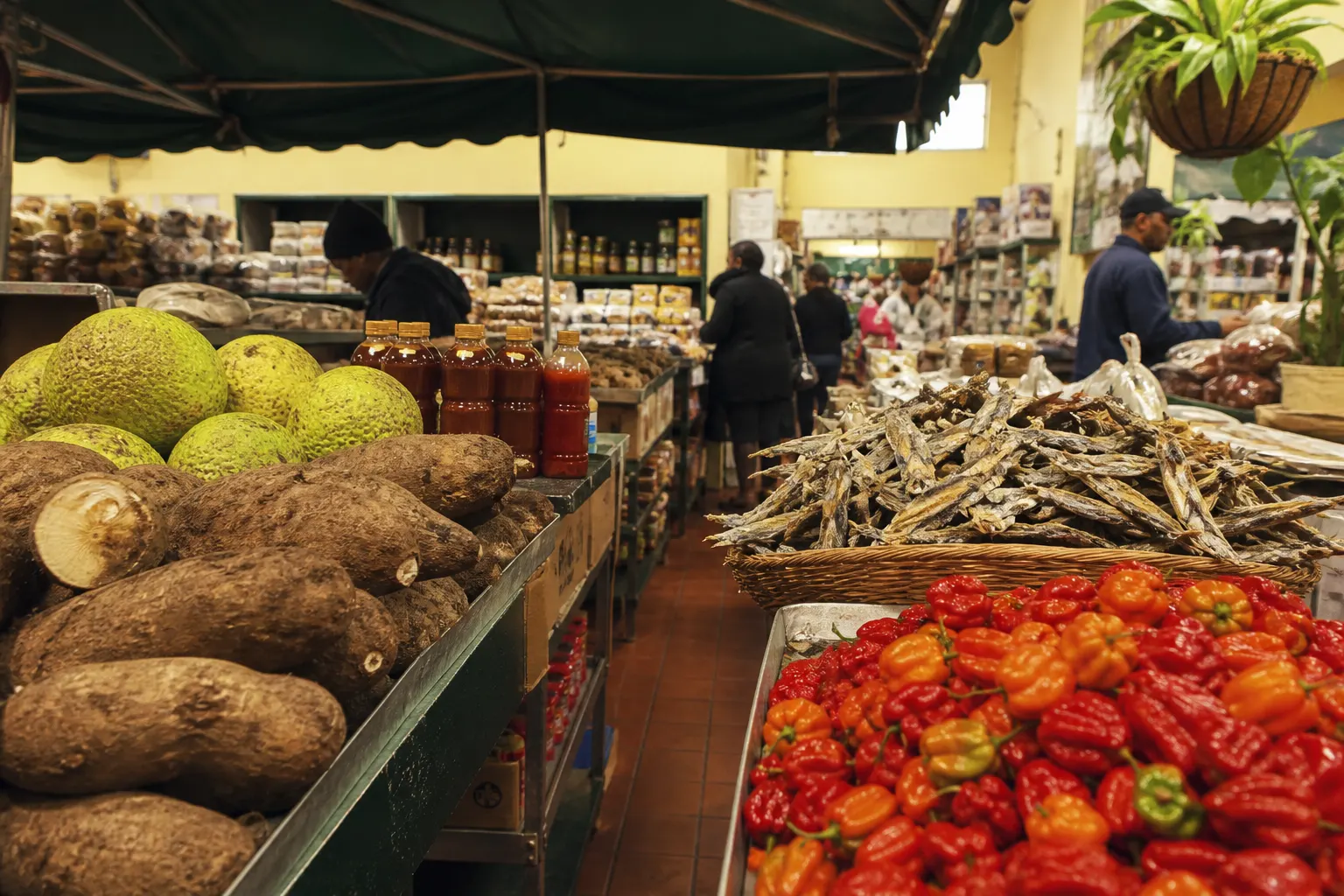
Buying a Caribbean or African market is a staffing-and-import question before it is a photo of yam and frozen fish. Can you keep the languages on the floor after the seller leaves. Can you open or assume importer credit. Can you count a high-SKU room whose cost is freight, not a warehouse tag. If any of those answers is no, the multiple is a brochure. Grocery Store Business Broker — HedgeStone Business Advisors, led by Jason Taken — works that sequence with you. Start at the buyer hub and mark the Buyer Underwriting Workbook before you ask for a CIM.
There is no live listings board on this site. Bring a community you can actually serve, a geography you will occupy, and capital you can document — then look at files. How to buy a grocery store step by step is the calendar. Buying an ethnic market outside your community is the honesty test if you are not already inside this trade.
A Caribbean or African market is often several national communities sharing one box: Jamaican, Haitian, Nigerian, Ghanaian, Ethiopian, or a mix the CIM flattened into one adjective. The regulars will tell you which one is true. Language is who can order, who can stop shrink, and who still gets greeted on Tuesday. If the seller is the only person who can talk to the importer and the meat cutter, you are buying a translator, not a store.
Ask who works the counter at the busy hours, which languages they use, and whether those people will stay. Write transition hours into the APA. Transition and training periods are a close condition, not a courtesy. Buying as a first-time owner is honest about grocery hours. Restaurant or other perishable retail can substitute if you are honest about the gap.
Compare the operating question to an Hispanic / Latino grocery or an African / Caribbean-adjacent specialty: product authenticity and language are the franchise. A conventional supermarket buyer who wants “an ethnic box” usually fails the first month.
Imported dry grocery, frozen fish and meat, and produce with long supply lines are the P&L. Stockouts and freight dominate. The boxes are often smaller than an independent supermarket with more SKU complexity. Limited DSD. A lot of cash-and-carry and ethnic wholesalers. If the primary importer will not extend credit to a new owner, you will pay cash for the next container while sales stall.
Ask for aged payables to importers, any customs holds, and whether the seller’s personal guarantee is the only thing keeping the frozen case full. A credit hold that starts the week after close is not a surprise. It is a diligence miss. Get a written indication that the book is assumable or replaceable before you write a number. Over-advances are debt. They are not an add-back.
Walk the frozen case with a thermometer and a dating habit. Fish and root vegetables spoil on a clock a conventional grocer does not run. A container that sat on the dock, a breaker that tripped overnight, and a cutter who “knows the product” without a log are how you buy someone else’s loss. Ask for invoice dates against case dates. If the seller cannot produce either, assume the count will fight you. Shrink, margin, and turns is the method. Department gross margin hides in a storewide blend. Meat and produce can sink a “healthy” number.
Unlicensed meat cutting is a walk-away, not a cleanup item. Hot-food — jerk, stew, rice — needs the permit the health department actually issued. Do not count a steam table as grocery margin if it is an unpermitted kitchen.
A busy Saturday can hide a week of empty shelves. Regulars buy what is left and come back. That looks like demand. It is also a stockout tax you will inherit. Ask for weekly sales, not a monthly blend. Reconcile scan, sales-tax filings, EBT deposits, and importer invoices. Verifying sales with scan data is the adult conversation. A weekly-sales spreadsheet without department mix is a rumor.
EBT is often the quiet sales engine. USDA FNS: SNAP authorization does not transfer. The permit is valid only for the location and owners on record. You file a new application. Budget the downtime in cash and in the story you tell the landlord. EBT / SNAP diligence and SNAP authorization are the federal rule in one place. A gap between EBT deposits and the SNAP story is mix, downtime, or fiction.
Cash-heavy files still have to survive a bank trail. Unreported cash does not survive SBA. It also does not survive a serious conventional buyer. Red flags that should kill a grocery deal include an oral lease and a wholesaler over-advance you cannot assume.
A Caribbean or African market does not underwrite like FMI’s supermarket channel. FMI’s 45,575 U.S. supermarkets in 2024 and $668,377 average weekly sales per supermarket in 2025 describe a mixed sample that includes formats with weekly warehouse drops — not a high-SKU import room whose cost is container freight. FMI’s $1 trillion in 2025 supermarket sales and 2.1 percent food-retailer net still remind you the note is thin. Use benchmark KPIs by format as context only.
BizBuySell’s grocery/supermarket sold sample — 3.38 average earnings multiple in 2025, IQR 1.60–3.15 for 2021–2025, five-year average 2.66, 2025 revenue multiple 0.43 — is a listing-site band, not a Caribbean or African premium. Inventory you cannot date, an importer who will not open credit, and language labor the seller never paid market for are the subtractions that matter. The valuation hub and multiples report are the method and the sourced sample.
Illustrative, not a quote. Recast SDE of $330,155 at 1.95×–3.17× plus $202,910 inventory at cost frames a going-concern band of about $846,712 to $1,249,501. The 2.56× midpoint lands near $1,048,107. Lease remaining term and license lag can move the check more than the multiple.
Evaluating a store’s P&L and recasting a grocery P&L are the department-level read. SBA 7(a) can finance a change of ownership. The published maximum is $5 million. The file still has to look like a grocery the program can underwrite. Use the SBA 7(a) payment and DSCR calculator. DSCR is annual cash flow after an honest recast, divided by annual debt service.
Teaching example, labeled illustrative: a $1,050,000 going-concern (ex-inventory) at 15 percent equity is $157,500. Inventory at cost of $202,910 is usually cash or a short-term piece. Add working capital for the next import load — some houses want a new-owner deposit — and a reserve for SNAP downtime. You are not a $157,500 buyer. Say the real number on the call. The cash-to-close estimator and how much money you need exist so you stop surprising yourself.
How inventory is counted at closing and closing-day count procedures need extra rules here: frozen dating, damaged dry, and SKUs the seller cannot produce an invoice for. Put those rules in the LOI terms that matter for buyers.
Seller notes often sit on standby behind SBA. Read the standby. Buying with seller financing is the buyer side. Conventional and alternative financing shows up when the box and the borrower are boring in a good way.
Retail food is the baseline. SNAP is often material to the credit mix. Hot-food needs its own permit. A steam table that is half the Friday ring is a kitchen file sitting inside a grocery file. If the health department has not blessed that kitchen, you are buying a shutdown. Alcohol — beer, rum, wine — is a class, a quota, or a control-state product. NABCA lists 17 control states plus local-control pockets. Read alcohol regime and liquor license diligence before you count a spirits story as durable. Print the closing and license checklist.
WIC is a vendor file if present. Lottery is often personal. Tobacco sits with tax and health agencies. Write license outs into the LOI. Attorneys who have never closed a grocery file will rediscover SNAP in week six. Bring them working with attorneys and CPAs and asset purchase agreement essentials.
Lease diligence still decides the file. Assignment, remaining term, exclusive use, and CAM. Use the rent-as-percent-of-sales checker. A below-market related-party rent juiced the seller’s earnings. Recast on market rent. If you also want the building, that is a second price — buying a store with real estate.
Operators from the same national communities win these files. Rarely conventional supermarket buyers. A buyer who already runs one Caribbean or African box and can staff the second is a different conversation from a first-time capital partner who liked the jerk line. If you are the second kind of buyer, bring a partner who already orders the book — or do not tour. How to read a CIM is the annotation method. Surviving due diligence is the calendar after the LOI.
State pages exist because wage, food tax, and alcohol differ. State minimum wage is a model input. A file in Florida, New York, or Texas is not the same labor or alcohol clock. Metro teaching such as Miami or Houston is trade-area context, not a store count.
Chronic out-of-stocks hidden by a busy weekend. Customs or importer credit holds. Unlicensed meat cutting. A seller who is the only language on the floor. A cash story with no bank trail. Those are format-specific kills. Competition and trade-area math still matters: two more markets on the same corridor can flatten the ring you thought you bought.
A CIM that omits the lease abstract is a brochure. Food-desert rhetoric does not replace a P&L. Read buying in a food desert if that is the story you were sold.
Keep the importers paid and talking. Re-file SNAP immediately. Walk shrink logs daily in frozen fish and produce. Hold the seller to the transition hours — especially the languages that greet the importer and the cutter. Recount problem categories within a week. Do not “Americanize” the aisle because a consultant liked a conventional planogram. The post-closing 90-day plan is the written version.
The seller page — sell a Caribbean & African market — is how the other side packages the same file. How it works is the sequence after you are under NDA. The FAQ and buyer FAQs cover the relationship.
Qualified is proof of funds, languages you can staff, and importer credit you can document or replace. Jason Taken would rather send you to the workbook than tour you through a store whose book leaves with the seller’s cell phone.
When the workbook is marked, schedule the buyer strategy call. Bring the languages, the importer names, and the states you will move to. That is enough to start looking at real files.
These figures are a teaching walk-through for Buy a Caribbean & African market, not a quote and not a sold comp. Order of operations: weekly sales, recast SDE, inventory at cost, then a multiple band.
| Input or output | Illustrative figure |
|---|---|
| Weekly sales (illustrative) | $228,000 |
| Annual sales | $11,856,000 |
| Recast SDE | $426,816 (3.6% of sales) |
| Inventory at cost | $658,667 (~18 turns) |
| Occupancy check | $438,672 / year (3.7% of sales) |
| Low going-concern | $1,384,254 at 1.70x SDE + inventory |
| High going-concern | $2,003,137 at 3.15x SDE + inventory |
| Sketch DSCR on a note | 1.51 |
If weekly sales or shrink move 8 percent, the SDE and the note move with them. That is why Jason Taken starts with scan data and the lease, not with a neighbor's rumor multiple.
Bring proof of funds or a lender pre-screen, your format, and geography. Jason will tell you whether a store like this can clear SBA or seller-carry math.
Print these, mark them up, and bring the marked copy to the intro. They are educational. They are not a valuation letter and not a listing. All downloadable guides.
Have the file ready so the hour is a recast, not a scavenger hunt. Then pick a time.
Underwrite the deal before you fall in love with the store
Scan data, SNAP mix, rent-to-sales, and DSCR. If those four do not clear, the CIM photos do not matter.
Schedule a Buyer Strategy CallOnly if the house will open a new account or you already have a replacement lined up. A credit hold the week after close is a diligence miss, not bad luck.
SBA 7(a) can finance a change of ownership; the published maximum is $5 million. The file still has to look like a grocery the program can underwrite — not a cash story without a bank trail.
Ask for invoice dates against case dates, customs holds, and whether a dock delay empties the frozen case. Stockouts hidden by a busy Saturday are a tax you inherit.
No. USDA FNS: SNAP authorization does not transfer; the new owner files a new application. Freight and importer credit do not carry the FNS file. Book a confidential intro to put EBT lag next to the first container.
Whatever the regulars actually speak at the busy hours — often more than one. If the seller is the only translator for the importer and the meat cutter, you are buying a transition, not a store.
Source and finance a grocery acquisition
Jason Taken works buyers through qualification, SBA or seller-carry structure, and a diligence plan a lender will fund. Book the hour.
Schedule a Buyer Strategy CallThis page is educational information from Grocery Store Business Broker (HedgeStone Business Advisors). It is not legal, tax, or investment advice. Licensing, tax, and financing rules vary by state and deal. Confirm every item with counsel and your lender before you sign.
Ready when you are. Jason Taken will talk through the file.
Book a confidential intro