Can I value a grocery store from weekly sales?
You can rumor. Two stores at the same sales can differ by hundreds of thousands of SDE. Recast earnings first.
Grocery Store Business Broker · HedgeStone Business Advisors · Jason Taken
Last updated 2026-09-04
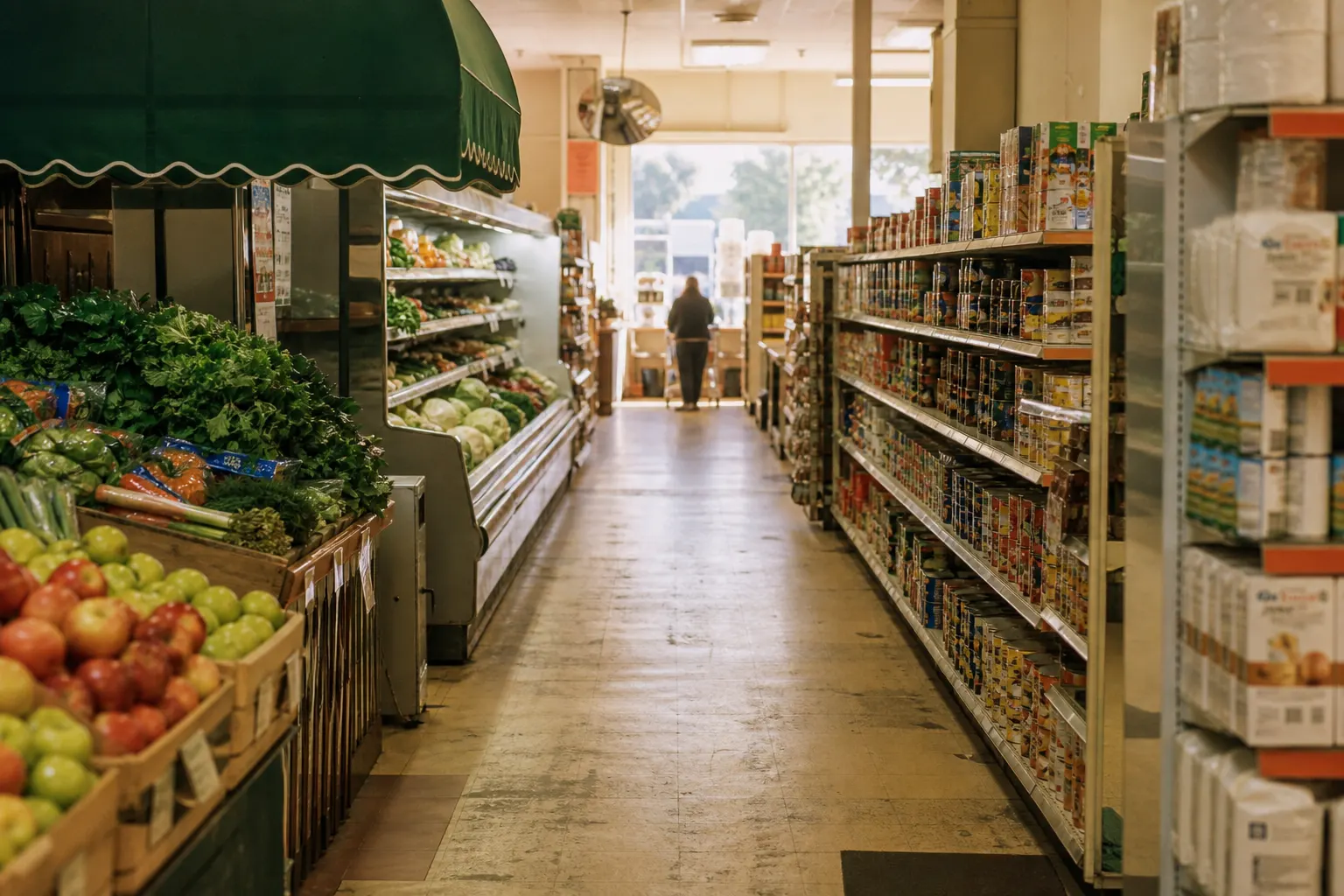
A grocery store’s going-concern value is recast earnings times a negotiated multiple, plus inventory counted at cost. That is the method. Everything else is an argument about the recast, the multiple, or the count. Grocery Store Business Broker — HedgeStone Business Advisors, led by Jason Taken — will not quote a price from weekly sales alone.
Two stores can ring the same week and be hundreds of thousands of SDE apart. One has documented shrink, a lease with options, and a meat manager who stays. The other has a 70-hour owner, an oral lease, and cash that will not survive a tax return. Sales start the conversation. They are not the value. Print the SDE Valuation Worksheet and change the inputs in the valuation calculator before you argue with a neighbor’s rumor.
Start with recasting a grocery P&L. Reported net income is a tax number. Valuation needs the cash a buyer can take after the owner is paid a market wage, after personal cars and one-time legal bills are pulled, and after related-party rent is reset to market. Recurring shrink stays in the earnings. It is the business. An “inventory adjustment” that appears every year is not a gift.
SDE versus EBITDA is the language choice. Owner-operated neighborhood stores usually talk SDE. Multi-store files with a hired general manager talk EBITDA. Do not switch languages mid-argument to juice a headline. Add-backs that repeat every year are the store. Stop calling them one-time.
Illustrative, not a quote. Reported net income $118,000. Owner salary add-back $82,000. One-time compressor with invoices $16,400. Personal auto $6,800. Related-party rent $2,200 a month below market: subtract $26,400 if the buyer will pay market. Recast SDE = $118,000 + $82,000 + $16,400 + $6,800 − $26,400 = $196,800. That is the number you multiply. How add-backs are treated is the short version of the same walk.
FMI’s 2.1 percent average net profit for food retailers in 2025 is a food-retailer net sample. It is not a valuation multiple. FMI also reports $1 trillion in 2025 supermarket sales, 45,575 U.S. supermarkets in 2024, $668,377 average weekly sales per supermarket, and $19.59 weekly sales per selling square foot. Those figures describe the Speaks supermarket channel. Do not multiply a channel benchmark and call the product your value. Your recast is the number that matters. Read the valuation pillar if you want the same method in hub form.
Buyers pay cost for sellable stock. They do not pay retail tags. They do not pay dated yogurt, dusty HBC, or the seller’s idea of a “full rack.” Inventory at cost is a current asset that turns. It is not goodwill. Count-night rules belong in the LOI: what is unsellable, who pays the crew, how disputes resolve, whether you use a third-party service. Read how inventory is counted at closing and closing-day count procedures.
Turns differ by department. Center store can turn slower than produce and still be healthy. Wine and meat have their own clocks. A single “inventory turns” boast without department math is a slogan. See shrink, margin, and turns and the glossary on inventory turns. FIFO versus LIFO versus a messy room is how you start a fight at 2 a.m.
Working capital is the cash to buy the next load after you have paid for the count. It is not a vibe and it is not included in the multiple unless you write it that way. See working capital and the inventory value estimator. Wholesaler over-advances are debt. They are not an add-back. Pull them out of the conversation about “the multiple.” Read wholesaler and banner agreements.
Same teaching file, still illustrative. Inventory at cost on a defensible count: $148,000. Low: $196,800 × 1.80 + $148,000 = $502,240. High: $196,800 × 3.00 + $148,000 = $738,400. Midpoint at 2.4× is $620,320. If the lease has 16 months left and no options, you do not live at the high end because you liked the produce.
The only sourced transaction sample on this site is BizBuySell grocery and supermarket businesses sold on that listing site: 3.38 average earnings multiple in 2025; 2.66 average for 2021–2025; sold-business earnings-multiple interquartile range 1.60–3.15 for those same years. The 2025 average revenue multiple on that sold sample is 0.43. Use the revenue multiple as a sanity check. If your implied revenue multiple is 0.8 on a thin-margin independent, you are not pricing grocery. You are pricing a story.
Those figures are a national listing-site sample. They are not chain M&A. They are not a city sold-comp. They are not a format-specific table for a rural grocery or a discount or salvage box. The multiples report is the same sample in guide form. How much is a grocery store worth is the short answer. This page is the walk.
Format changes the argument even when the national sample stays the same. An independent supermarket is labor and occupancy. A neighborhood grocery can live on basket size and hours. A gas-station grocery mixes fuel risk into the food recast. A specialty market may live on perimeter and drop center-store. This page will not invent format-specific sold comps beyond the national BizBuySell grocery sample. Benchmark KPIs by format are a cross-check. They are not the recast.
A second teaching walk, still illustrative. Weekly sales $92,000, annual $4,784,000. Recast SDE at a defendable 3.8 percent is $181,792. Inventory at cost $167,000. A 1.85×–2.75× band is $336,315–$499,928 on SDE. Add inventory: about $503,315–$666,928 going-concern. If implied revenue at the high end is about 0.14×, you are still in a grocery conversation next to the 0.43 sold-sample average. If someone is asking 0.6× revenue on this independent, they are not using this sample.
A revenue multiple that ignores occupancy is how people overpay for a high-rent box. A storewide margin that ignores meat and produce is how people overpay for a pretty grocery aisle. Evaluating a store’s P&L and the anatomy of a grocery P&L teach the statement before you multiply it.
Owned real estate does not ride inside the going-concern multiple. Recast the store as if it paid market rent. Then value the building as real estate — cap rate, appraisal, or a sale-leaseback conversation. A below-market related-party lease juiced SDE. It will reverse. Read selling with a lease versus real estate and buying a store with real estate. Format page: grocery store with real estate.
Lease remaining term under 24 months without options is a price cut. Assignment, exclusive use, and co-tenancy surprise people who have never read a grocery lease. CAM true-ups can erase a year of “extra” SDE. Lease diligence is not optional reading. See exclusive use and co-tenancy.
Licenses are time and cost, not a magical asset inside the multiple. USDA FNS: SNAP does not transfer. The new owner files a new application. Budget downtime in cash. Alcohol is a class, a quota, or a control-state product. NABCA lists 17 control states plus local-control pockets. Write those clocks into the price. See what happens to SNAP when you sell and liquor transfer. WIC is a vendor file. Lottery contracts are often personal. Tobacco sits with tax and health agencies. Print the closing and license checklist.
Comparing offers means cash at close, note terms, inventory treatment, and license risk — not the headline price. A higher multiple on a sloppy recast is a lower check. Comparing offers is the scoreboard. Escrow, holdbacks, and earn-outs explains why grocery uses holdbacks: shrink and successor tax risk. Earn-outs are hard because the buyer controls mix after Monday.
Taxes and entity choice change the check even when the multiple stays put. Taxes on selling and asset sale versus stock sale are the allocation conversation. Most independents close as an asset sale. Deal-structure glossary is the vocabulary.
A lender does not buy your story about “the neighborhood is coming back.” A lender buys DSCR on a recast they believe, a lease they can live with, and a borrower who can run perishable. SBA 7(a) can finance a change of ownership; the published maximum is $5 million. The DSCR calculator is the buyer-side mirror of this valuation page. Seller notes on standby change the senior DSCR. They do not change whether the recast was honest. Read seller financing.
Unreported cash does not survive SBA. It also does not survive a serious conventional buyer. If that is the file, the valuation conversation becomes a two-year cleanup plan, not a trophy multiple. See selling a store with unreported cash and how to value a store with no tax returns. Scan data is the adult conversation. A weekly-sales spreadsheet without department mix is a rumor. Read verifying sales with scan data.
Selling to family or a manager still needs a real number and a real note. Soft language creates hard lawsuits. See selling to family or an employee. Distressed stores still have inventory and a lease. Price those. Do not price a turnaround novel. Read selling a distressed grocery.
How it works is the process around the number. How much money you need is the buyer-side cash-to-close. How long does it take to sell is the calendar, not the price. State tax and wage context lives on pages such as sell in Ohio and buy in Georgia. What documents you need to sell is the folder list. If the folder is empty, the value conversation is a cleanup plan. Read preparing three years of financials.
A seller note does not raise a dishonest recast. It changes how the buyer funds the recast you already built. Read how seller financing is structured next to seller financing. Conventional and alternative financing does not create a third valuation method. It is another way to pay for the same SDE × multiple + inventory stack.
Sellers: start at sell a grocery store and mark the seller playbook. Buyers: start at buy a grocery store and mark the buyer workbook. The downloads page holds the worksheet, both playbooks, and the closing checklist. Circle the hole. Confidential sale still applies while you build the number. Employees learn from vendors and shoppers.
KPI vanity without a recast is decoration. If you want format benchmarks as a cross-check — not as a price — read benchmark KPIs by format and then come back to SDE × a defendable multiple + inventory at cost. Sales per square foot is a channel conversation. FMI’s $19.59 weekly figure is not your box.
Bring P&Ls, a lease page, and an honest inventory guess. Say what you want after close. Cash. A note. The building. A job in the meat case. Then say what you do not have: tax returns, scan data, or a written lease. Missing paper is not a moral failure. Hiding it on the call is how the hour dies.
Book a confidential intro when the worksheet has your numbers, not ours. The hour is for the recast, not for a trophy headline.
Use this napkin recast on How to Value a Grocery Store when you book the call. It is labeled illustrative. BizBuySell's 2025 grocery sold-business earnings multiple averaged 3.38, with a 2021-2025 IQR of 1.60-3.15.
| Input or output | Illustrative figure |
|---|---|
| Weekly sales (illustrative) | $92,000 |
| Annual sales | $4,784,000 |
| Recast SDE | $224,848 (4.7% of sales) |
| Inventory at cost | $265,778 (~18 turns) |
| Occupancy check | $148,304 / year (3.1% of sales) |
| Low going-concern | $681,747 at 1.85x SDE + inventory |
| High going-concern | $940,322 at 3.00x SDE + inventory |
| Sketch DSCR on a note | 1.43 |
If weekly sales or shrink move 8 percent, the SDE and the note move with them. That is why Jason Taken starts with scan data and the lease, not with a neighbor's rumor multiple.
Bring three years of P&Ls, weekly sales, and the lease abstract to the intro call. Jason will tell you whether this band is even in the conversation.
Print these, mark them up, and bring the marked copy to the intro. They are educational. They are not a valuation letter and not a listing. All downloadable guides.
Have the file ready so the hour is a recast, not a scavenger hunt. Then pick a time.
Get a grounded read on what buyers will pay
We recast SDE, separate inventory at cost, and price license risk. Download the seller playbook, then put 30 minutes on the calendar.
Get a Free Grocery Store Valuation ConversationYou can rumor. Two stores at the same sales can differ by hundreds of thousands of SDE. Recast earnings first.
Sellable inventory at cost. Owned real estate is a second asset. Recast the store on market rent before you price the building.
BizBuySell grocery and supermarket businesses sold on that listing site: 3.38 average earnings multiple in 2025, 2.66 five-year average, IQR 1.60–3.15. Adjust for lease, licenses, and whether the store runs without you.
As a sanity check. The 2025 BizBuySell sold sample averages 0.43 times revenue. If your implied revenue multiple looks like a restaurant story, you are not pricing grocery.
Three years of P&Ls and returns, weekly sales you can prove, a lease page, and an honest inventory guess at cost. Book a confidential intro with that folder.
Sell on your terms, not on a listing site
HedgeStone Business Advisors runs a quiet process: recast, qualified operators, and a close that survives the count. The only next step is the intro call.
Book a Confidential Seller ConsultationThis page is educational information from Grocery Store Business Broker (HedgeStone Business Advisors). It is not legal, tax, or investment advice. Licensing, tax, and financing rules vary by state and deal. Confirm every item with counsel and your lender before you sign.
Ready when you are. Jason Taken will talk through the file.
Book a confidential intro