Do most independent grocers use FIFO or LIFO?
Most Main Street independents price and count at current or FIFO cost. LIFO shows up more often as a tax election on larger returns. If LIFO is on the 1120, explain the reserve in the recast.
Grocery Store Business Broker · HedgeStone Business Advisors · Jason Taken
Last updated 2026-09-04
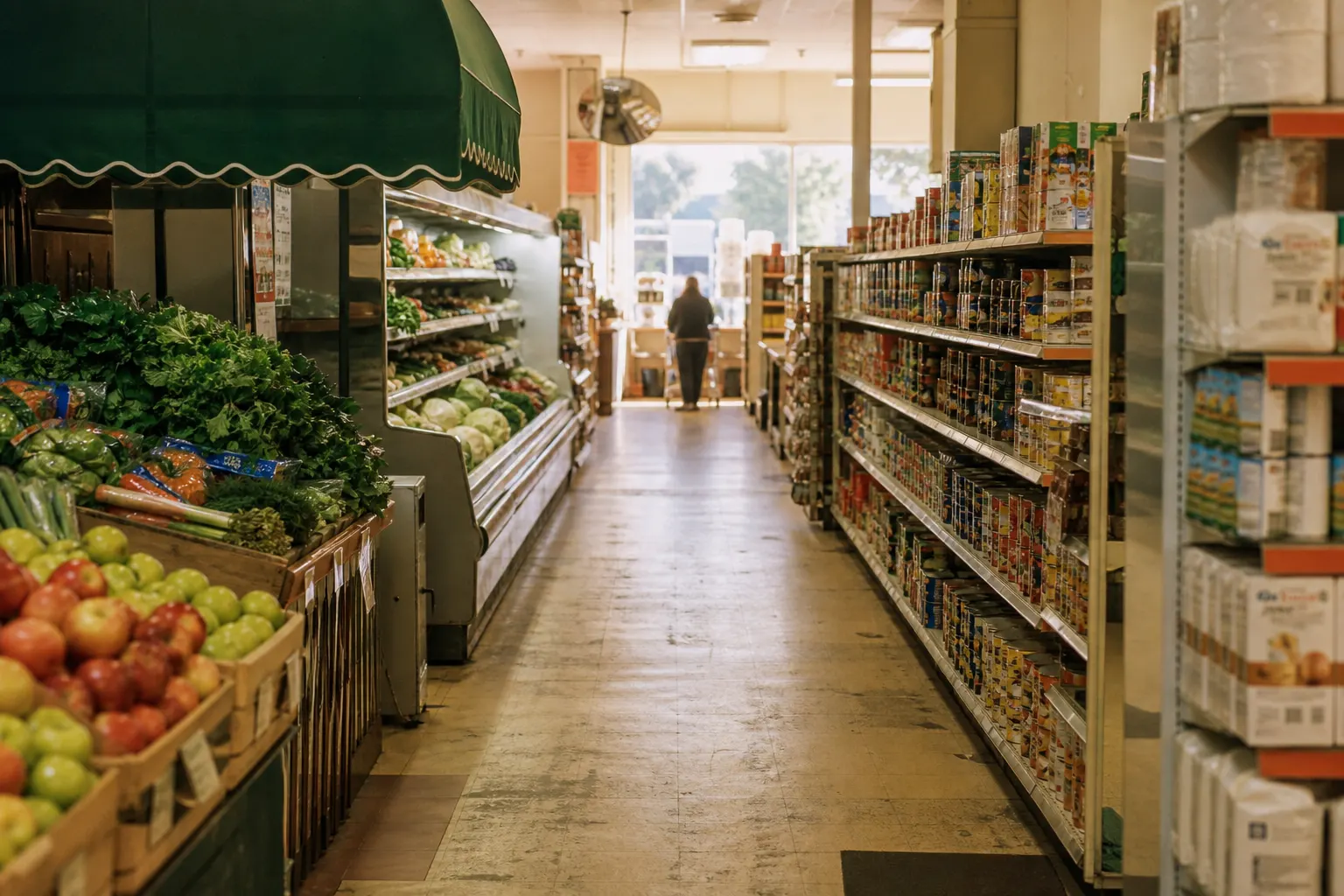
FIFO/LIFO for grocery — Cost-flow methods. FIFO treats the oldest unit as sold first. LIFO treats the newest unit as sold first. Independents usually live in FIFO or average / current cost at the aisle. LIFO is uncommon at Main Street scale; when it appears on a tax return, the reserve belongs in the recast, not in a new multiple. Count night still prices sellable stock. It does not invent a dollar inventory from a textbook example.
Write the cost method into the LOI before you hire the crew. Grocery Store Business Broker — HedgeStone Business Advisors, led by Jason Taken — wants the aisle and the books to speak the same language. Book a confidential intro when the count instructions are the page you need next.
The shelf should already be FIFO in the operational sense: oldest milk forward, oldest cans down. That rotation is dating and shrink, not an accounting election. The books choose how a purchase-price change flows into COGS. Inventory turns measure movement. They do not pick FIFO or LIFO for you.
A buyer reading only the tax return can meet a LIFO election that never shows on the tag gun. That election changes reported COGS and the inventory asset on the return. It does not change how many cases are on the pallet. How do I value inventory when selling? is the money question. This page is the method question.
Do not invent a storewide inventory dollar to illustrate the methods. Price this room under the method you wrote.
Inventory at cost is sellable product at the agreed cost. How inventory is counted at closing and closing-day procedures are the mechanics. The crew needs a rule: current vendor cost, last invoice, or a file the POS already holds. FIFO as a close method usually means current replacement or latest invoice on sellable goods, not a hunt for a five-year-old layer.
Unsellable stays out: dated perishable, damaged, open, and warehouse-cut items the house will not take back. A room that was never rotated will produce more exclusions. That is a cleanliness and shrink issue. Fighting about LIFO while the cooler is a dating museum is how you start a 2 a.m. argument about the wrong thing.
How inventory gets paid at closing is the wire. The method clause is what the invoice list is allowed to mean.
If the return shows LIFO, ask for the reserve and the layers. The recast may need to put inventory and COGS on a FIFO or current-cost basis so SDE matches the room a buyer will count. The reserve is not extra product. It is a book difference. Do not add it to the count check and also leave it in earnings.
Average-cost systems in a POS are common. Say so. A buyer who assumes every independent is textbook FIFO will misread a moving-average file. The APA should name the system export the crew will use. If the POS and the warehouse invoice file disagree on cost, pick one source of truth before the night starts so the crew is not arbitrating vendors in the aisle.
If you have the inventory method on the return and a draft count rule, bring both. Book the intro with those pages. The hour is to make the books and the aisle agree before anyone prices a pallet.
Price language for FIFO and LIFO at grocery count is (recast SDE x a defendable multiple) + inventory at cost, plus or minus lease and license risk. The table is one consistent example for this URL.
| Input or output | Illustrative figure |
|---|---|
| Weekly sales (illustrative) | $92,000 |
| Annual sales | $4,784,000 |
| Recast SDE | $277,472 (5.8% of sales) |
| Inventory at cost | $398,667 (~12 turns) |
| Occupancy check | $148,304 / year (3.1% of sales) |
| Low going-concern | $953,611 at 2.00x SDE + inventory |
| High going-concern | $1,147,841 at 2.70x SDE + inventory |
| Sketch DSCR on a note | 1.46 |
Rent at 3.1% of sales is the occupancy check. If the real lease is higher, the SDE in this table is too generous until you recast to market rent.
Book the intro call with your side of the table ready: seller files or buyer capital. The calendar is the only next step.
Print these, mark them up, and bring the marked copy to the intro. They are educational. They are not a valuation letter and not a listing. All downloadable guides.
Have the file ready so the hour is a recast, not a scavenger hunt. Then pick a time.
Get a specialist on the other side of the table
Grocery deals turn on licenses, inventory, and a recast a lender will believe. Book the intro and bring the file.
Book an Intro Call With Jason TakenMost Main Street independents price and count at current or FIFO cost. LIFO shows up more often as a tax election on larger returns. If LIFO is on the 1120, explain the reserve in the recast.
No. The LOI and APA name the cost method for the close. Tax LIFO does not secretly reprice the aisle. Write the method so the crew is not guessing at 2 a.m.
Then you have dating and shrink, not a cost-flow debate. Unsellable and expired product stays out of the paid count. Rotate the room before you argue method.
No. Inventory at cost is the sellable room priced under the agreed method. A LIFO reserve is a book-to-tax difference. Treat it in the recast, not as extra cases on a pallet.
Start a confidential grocery conversation
Whether you are exiting or acquiring, pick a time and we will talk through the file.
Book an Intro Call With Jason TakenThis page is educational information from Grocery Store Business Broker (HedgeStone Business Advisors). It is not legal, tax, or investment advice. Licensing, tax, and financing rules vary by state and deal. Confirm every item with counsel and your lender before you sign.
Ready when you are. Jason Taken will talk through the file.
Book a confidential intro