How is a grocery store valued?
Recast SDE or EBITDA times a negotiated multiple, plus inventory at cost. Use the BizBuySell grocery sold sample as context, then underwrite the lease and licenses on the file.
Grocery Store Business Broker · HedgeStone Business Advisors · Jason Taken
Last updated 2026-09-04
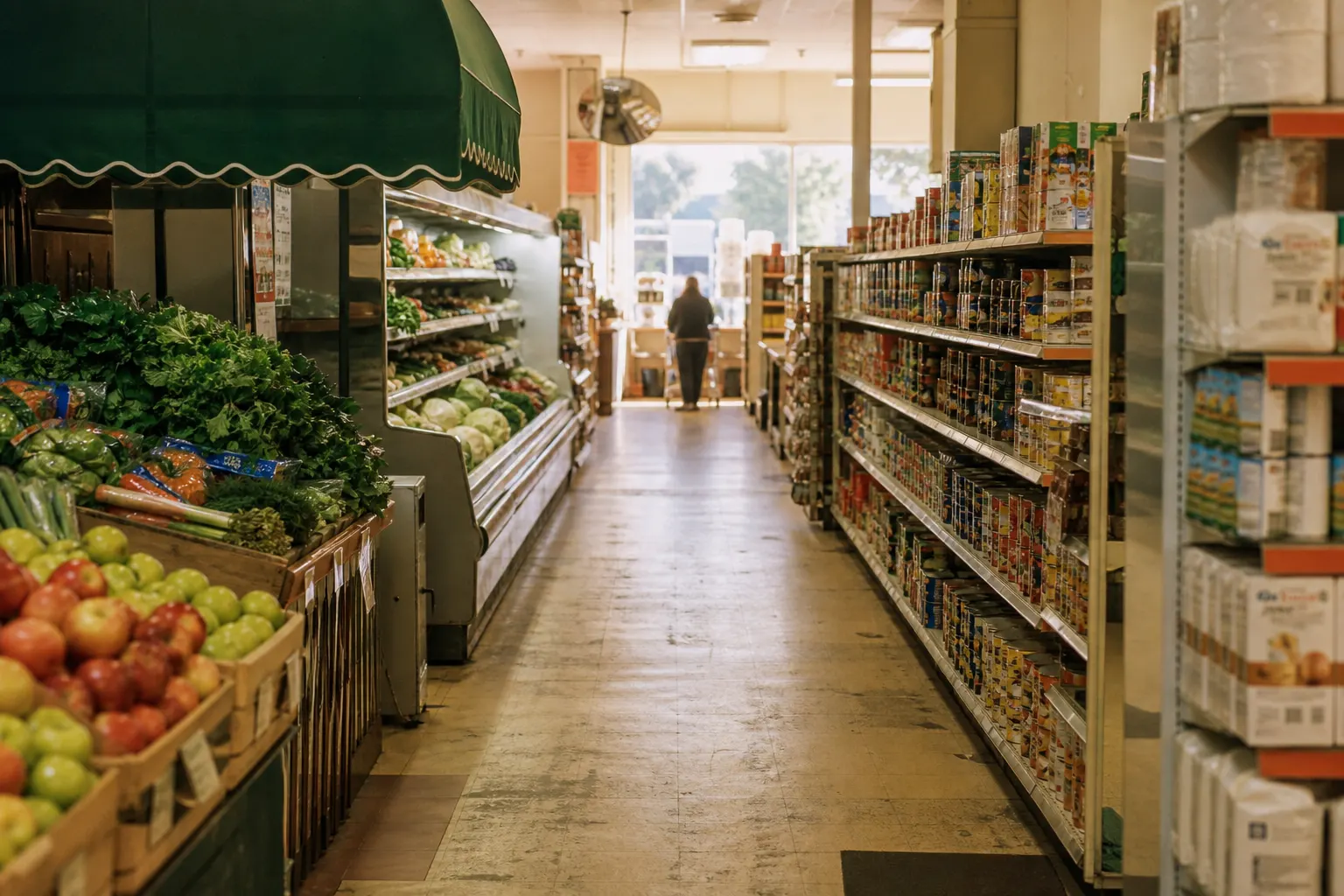
These are the questions owners and buyers actually ask before they book a confidential intro. Each answer is short on purpose. The long teaching lives on the question pages and guides. Grocery Store Business Broker is the grocery practice of HedgeStone Business Advisors. Jason Taken is the writer.
FMI puts 2025 U.S. supermarket sales at $1 trillion across 45,575 stores counted in 2024, with average weekly sales of $668,377 and $19.59 per square foot of selling area. Those are channel facts. They are not a quote on your box. Food-retailer net in that Speaks sample is 2.1 percent — a margin observation, not a multiple. When someone asks “what is it worth,” send them to SDE and inventory at cost, not to a national weekly-sales number.
Recast seller’s discretionary earnings times a multiple a financed buyer will defend, plus inventory counted at cost. That is the going-concern conversation. The full worth answer walks the arithmetic. The valuation pillar is the teaching home.
Two stores with the same weekly sales can differ by hundreds of thousands of dollars of SDE once you restore owner pay, strip personal autos, and stop treating recurring shrink as a one-time event. If you only have a sales rumor, you do not have a price. Open how to value a grocery store and recasting a grocery P&L.
The only sourced transaction sample on this site is BizBuySell’s grocery/supermarket sold set: a 3.38 average earnings multiple in 2025, a 2.66 five-year average, an interquartile range of 1.60–3.15, and a 0.43 revenue multiple. That is a listing-site sold sample, not chain M&A and not a quote on your file. Read the multiples report and the short what multiple answer.
A store with three years left on a lease, a quota liquor file, or a SNAP mix you cannot prove will not clear the top of that range because a neighbor “got 4×.” Lease remaining term and license lag move the check more than a rumor multiple. Compare offers on cash at close, note terms, inventory treatment, and license risk — the comparing offers guide is written for that argument.
No. USDA Food and Nutrition Service: SNAP authorization does not transfer; the new owner files a new application. There is no courtesy overlap you can promise the floor. Budget downtime in cash and in the story you tell the landlord. The long versions are what happens to SNAP when you sell and does SNAP authorization transfer. Buyers who need the application sequence should open how to apply for SNAP as a new owner and EBT diligence.
If EBT is a material week, the LOI should say who files, who pays for the gap, and what happens if authorization is delayed. Do not hide that clock inside a handshake.
Confidential process first: a recast, a blind teaser, an NDA, then a CIM. Vendors and shoppers will still talk if you advertise the exit on the vestibule. The confidential-sale guide and how do I keep the sale confidential are the working pages. How a sale works is the sequence.
Employees learn from DSD drivers and regulars. Tell them when the process needs them — usually after a signed LOI, not after a rumor. Should I tell my employees and what happens to employees are written for that timing.
You can sell a store that is losing money if a buyer can see a lease, a count, and a path they will fund. You cannot sell a novel. Can I sell a grocery store that is losing money and selling a distressed store stay on inventory, occupancy, and licenses.
Unreported cash will not survive SBA and will not survive a serious conventional buyer. Can I sell with unreported cash is the short answer. Recast what you can prove. Leave the folklore off the CIM.
A store with no tax returns is a different problem than a store with thin returns. How do I value a store with no tax returns tells you what scan, tender, and sales-tax filings can still prove.
A separate line at cost, counted at close, not buried in goodwill. How inventory is counted and closing-day count procedures are the operating pages. Short answers: how much is inventory at close and how does inventory get paid.
Turns are not one number. Center store and wine do not share a clock. What is a good inventory turn and shrink, margin, and turns keep departments honest.
Only if realty math stands alone. Recast the store on market rent first, then price the box as a second asset. Should I sell with the building, should I buy the building, and lease versus own are the three doors. A real-estate license is required if the property conveys.
Lease files live or die on assignment, remaining term, exclusive use, co-tenancy, and CAM. Lease diligence and how do I evaluate the lease belong in the first week, not week six.
Alcohol is a class, a quota, or a control-state privilege — never one magical asset that rides along with the keys. Does a liquor license transfer and transferring your liquor license are the working pages. Quota files have a different conversation: what happens if the license is quota. NABCA counts 17 control states; in those states the privilege is not a private sticker you assign in the APA.
WIC, lottery, and tobacco are vendor and agency files, not door stickers. Use the WIC, lottery, and tobacco checklist and what licenses the new owner needs.
Sometimes, with equity and grocery hours — or a partner who has the hours. Can a first-time buyer get financed and do I need grocery experience are honest. SBA 7(a) can finance a change of ownership up to the published $5 million maximum. The recast still has to cover debt service. Read can I buy with an SBA loan and SBA 7(a) for grocery.
Seller notes are common and often sit on standby behind a bank. How seller financing is structured, what is a standby note, and seller financing versus SBA keep the paper from turning into folklore. How much down payment and how much working capital are cash questions, not slogan questions.
Typically a success fee if a deal closes. How brokers get paid and how do business brokers charge are the compensation pages. Do I need a broker to sell and broker versus FSBO compare a screened process with doing the rumor mill yourself.
Jason Taken and HedgeStone are not licensed business brokers in every state. Check the rule that applies to your deal. Selling the building always requires a real-estate license. About and what a grocery broker does state that plainly.
Agency clocks dominate: alcohol, SNAP, landlord consent, and a messy count. How long does it take to sell and the timeline guide are the calendars. Diligence has its own clock: how long does due diligence take and surviving due diligence.
Deals die on unprovable sales, a lease that will not assign, licenses that will not move, and a seller who changes the story after the LOI. What kills grocery deals and common reasons sales fall apart name the failure modes. Red flags that should kill a deal is written for buyers who need permission to walk.
Sellers: start on sell a grocery store, pull three years of P&Ls, and mark the seller playbook. Buyers: start on buy a grocery store and the buyer workbook. If you already have a file, book a confidential intro and bring the recast, the lease, and the license list. Email jason.taken@hedgestone.com is on About as text.
Use the valuation calculator to sanity-check a recast, not to invent a price. State pages live under the seller and buyer hubs. Format pages start at sell an independent supermarket and buy an independent supermarket.
Use this napkin recast on Grocery store broker FAQ when you book the call. It is labeled illustrative. BizBuySell's 2025 grocery sold-business earnings multiple averaged 3.38, with a 2021-2025 IQR of 1.60-3.15.
| Input or output | Illustrative figure |
|---|---|
| Weekly sales (illustrative) | $124,000 |
| Annual sales | $6,448,000 |
| Recast SDE | $264,368 (4.1% of sales) |
| Inventory at cost | $460,571 (~14 turns) |
| Occupancy check | $161,200 / year (2.5% of sales) |
| Low going-concern | $989,307 at 2.00x SDE + inventory |
| High going-concern | $1,253,675 at 3.00x SDE + inventory |
| Sketch DSCR on a note | 1.45 |
If weekly sales or shrink move 8 percent, the SDE and the note move with them. That is why Jason Taken starts with scan data and the lease, not with a neighbor's rumor multiple.
Book the intro call with your side of the table ready: seller files or buyer capital. The calendar is the only next step.
Print these, mark them up, and bring the marked copy to the intro. They are educational. They are not a valuation letter and not a listing. All downloadable guides.
Have the file ready so the hour is a recast, not a scavenger hunt. Then pick a time.
Get a specialist on the other side of the table
Grocery deals turn on licenses, inventory, and a recast a lender will believe. Book the intro and bring the file.
Book an Intro Call With Jason TakenRecast SDE or EBITDA times a negotiated multiple, plus inventory at cost. Use the BizBuySell grocery sold sample as context, then underwrite the lease and licenses on the file.
No. USDA FNS: SNAP authorization does not transfer; the new owner files a new application. Budget downtime in cash and in the story you tell the landlord.
Book a confidential intro. Email jason.taken@hedgestone.com is published as text on the About page.
Confidential process first. Book a call if you want to talk through a quiet sale or a buyer search.
SBA 7(a) can finance a change of ownership up to the published $5 million maximum. The recast still has to cover debt service after you hire the labor the seller was not paying market for.
Start a confidential grocery conversation
Whether you are exiting or acquiring, pick a time and we will talk through the file.
Book an Intro Call With Jason TakenThis page is educational information from Grocery Store Business Broker (HedgeStone Business Advisors). It is not legal, tax, or investment advice. Licensing, tax, and financing rules vary by state and deal. Confirm every item with counsel and your lender before you sign.
Ready when you are. Jason Taken will talk through the file.
Book a confidential intro