Does a food-desert label raise the asking price?
No. USDA ERS access is a tract research concept. This page does not invent a scarcity premium. Price recast earnings and inventory at cost the way you would on any other independent.
Grocery Store Business Broker · HedgeStone Business Advisors · Jason Taken
Last updated 2026-09-04
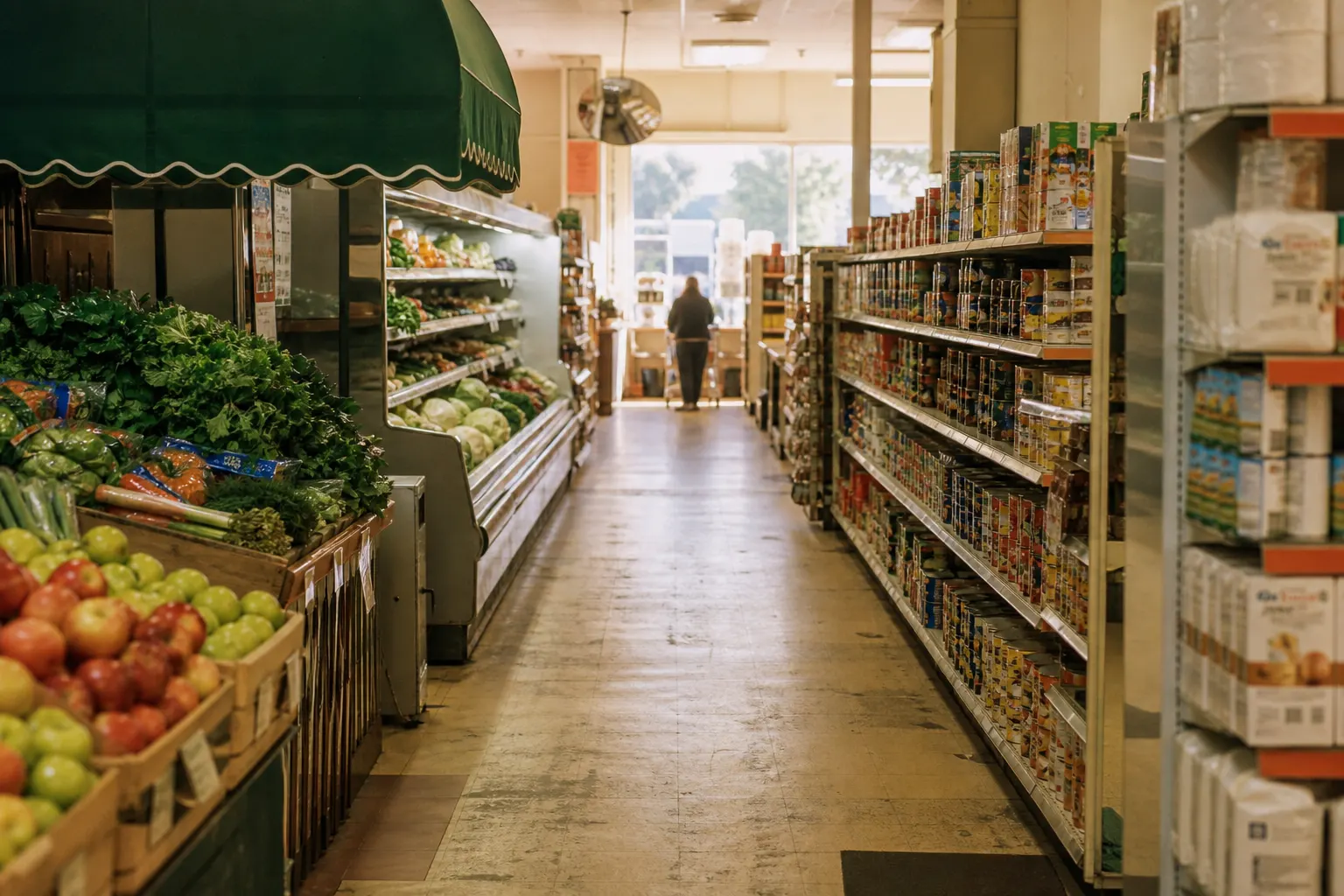
Food desert — A USDA Economic Research Service food-access concept: census tracts with low income and low access to a supermarket, measured on defined distance and vehicle tests. It is a research definition. It is not a valuation premium, and this page does not invent tract counts. Buying in a food desert is the longer underwrite. Can I buy a store in a food desert? is the short question.
Price the week, then talk about access. Grocery Store Business Broker — HedgeStone Business Advisors, led by Jason Taken — will not pay extra for a map color. Book a confidential intro when the P&L and the warehouse minimum are on the table.
A labeled tract means a published access test. It does not mean the store has a monopoly, a grant, or a higher SDE multiple. FMI counted 45,575 U.S. supermarkets in 2024 and reported about $1 trillion in supermarket sales for 2025. An access-tract independent still competes inside that channel — with limited-assortment, dollar formats, and whatever still sits on the highway. The valuation hub and how to value a grocery store stay on recast earnings plus inventory at cost.
Do not write “only grocery for miles” as if that sentence were a multiple. Miles are a research input. The register is the file. A one-store town can be a good living and a hard loan. Those remain different questions.
Freight, shrink, and a warehouse case minimum do not soften because the tract is labeled. FMI’s 2025 average weekly sales per supermarket, $668,377, describe FMI’s supermarket sample. A smaller access box should be judged on its own scan. FMI’s 2.1 percent average net profit for food retailers in 2025 still describes a thin channel. Rhetoric about access does not widen that net.
EBT mix is often heavier in these files. That is a diligence fact, not a premium. The new owner still files for SNAP. Working capital still has to cover a quiet rail. The lease still has to assign. Inventory at cost is still a separate check. None of that is optional because a map said “low access.”
If the story is “the community needs this store,” agree — and then recast. Need is not COGS. Rural distance tests and urban vehicle tests are different research inputs. Neither one restocks the cooler when the warehouse minimum is larger than the week.
The Healthy Food Financing Initiative and some state replica programs exist to help healthy-food retail in underserved areas. Terms, eligibility, and any dollar amounts change by notice. Do not quote a cap. Do not put a hoped-for grant into SDE. Do not delay a close on a program calendar you have not read in the current notice.
A program can still matter as a funding path once the week underwrites. That is the order: recast, lease, licenses, then incentives. Reverse the order and you will own a story with no warehouse drop. Technical-assistance offers change too. Treat current notices as current. Do not underwrite last year’s flyer.
Bring the P&L, the SNAP share of the week, and the warehouse minimum. Book the intro with those three, not with a tract printout. The hour is to decide whether the box works as a grocery, which is the only way it works as access.
Use this napkin recast on Food-desert grocery in a sale when you book the call. It is labeled illustrative. BizBuySell's 2025 grocery sold-business earnings multiple averaged 3.38, with a 2021-2025 IQR of 1.60-3.15.
| Input or output | Illustrative figure |
|---|---|
| Weekly sales (illustrative) | $78,000 |
| Annual sales | $4,056,000 |
| Recast SDE | $190,632 (4.7% of sales) |
| Inventory at cost | $202,800 (~20 turns) |
| Occupancy check | $121,680 / year (3.0% of sales) |
| Low going-concern | $584,064 at 2.00x SDE + inventory |
| High going-concern | $717,506 at 2.70x SDE + inventory |
| Sketch DSCR on a note | 1.40 |
If weekly sales or shrink move 8 percent, the SDE and the note move with them. That is why Jason Taken starts with scan data and the lease, not with a neighbor's rumor multiple.
Book the intro call with your side of the table ready: seller files or buyer capital. The calendar is the only next step.
Print these, mark them up, and bring the marked copy to the intro. They are educational. They are not a valuation letter and not a listing. All downloadable guides.
Have the file ready so the hour is a recast, not a scavenger hunt. Then pick a time.
Get a specialist on the other side of the table
Grocery deals turn on licenses, inventory, and a recast a lender will believe. Book the intro and bring the file.
Book an Intro Call With Jason TakenNo. USDA ERS access is a tract research concept. This page does not invent a scarcity premium. Price recast earnings and inventory at cost the way you would on any other independent.
No. The Healthy Food Financing Initiative and some state replica programs can be a funding path. Terms change by notice. Do not quote a cap and do not put a grant in SDE.
Usually not. FMI’s 2025 average weekly sales per supermarket are $668,377 for that supermarket sample. A smaller access box should be judged on its own scan, not on that channel average.
The P&L, SNAP’s share of the week, the warehouse minimum, and the lease. Bring the week you can prove. The tract map is context, not the file.
Start a confidential grocery conversation
Whether you are exiting or acquiring, pick a time and we will talk through the file.
Book an Intro Call With Jason TakenThis page is educational information from Grocery Store Business Broker (HedgeStone Business Advisors). It is not legal, tax, or investment advice. Licensing, tax, and financing rules vary by state and deal. Confirm every item with counsel and your lender before you sign.
Ready when you are. Jason Taken will talk through the file.
Book a confidential intro