Can I keep mashgiach coverage after the seller leaves?
Only if the certifying agency will continue with you and you can staff a mashgiach who is not the seller. A hechsher does not transfer because an APA says so.
Grocery Store Business Broker · HedgeStone Business Advisors · Jason Taken
Last updated 2026-09-04
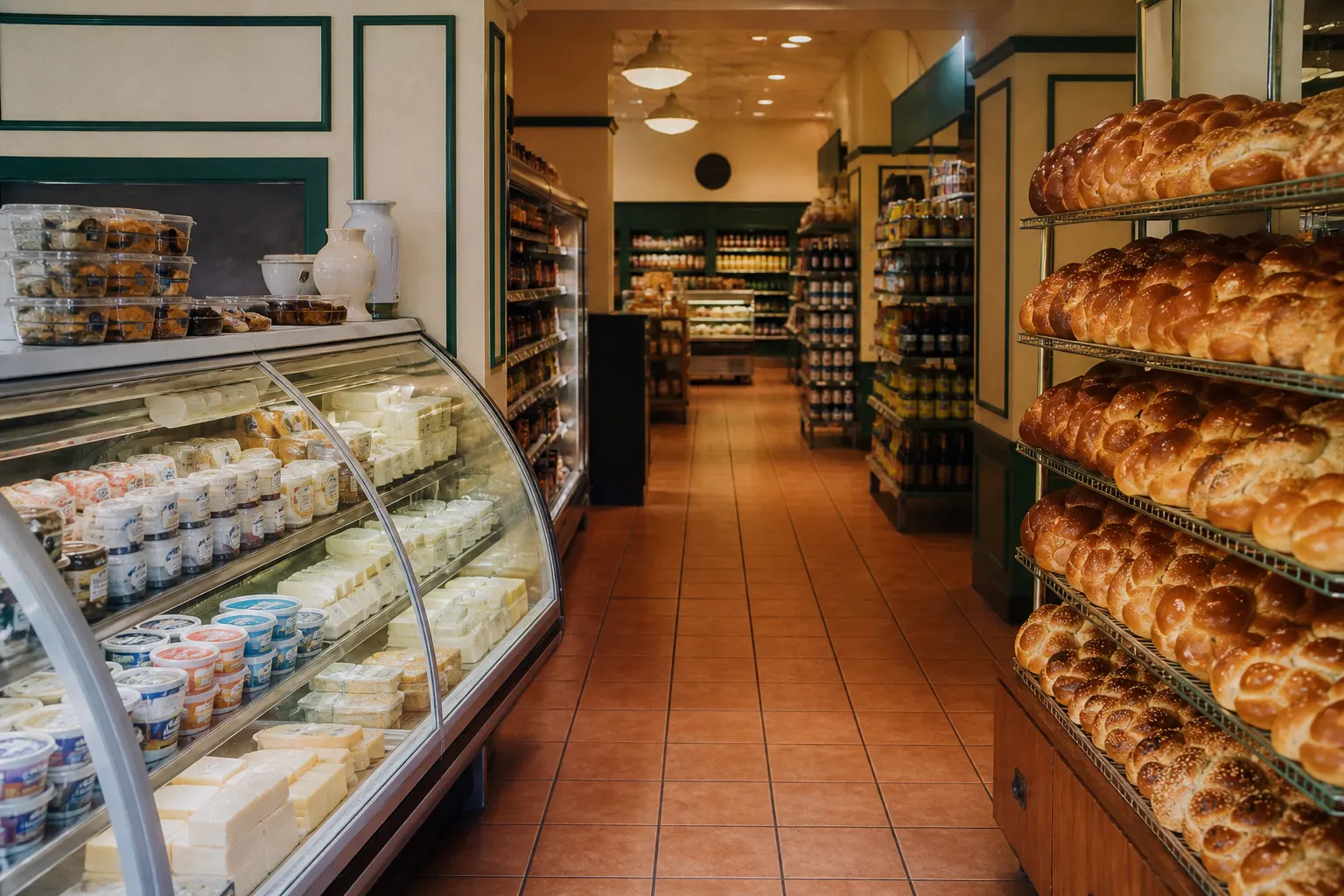
Buying a kosher market is a supervision question before it is a multiple question. Can you keep the hechsher after Monday. Can you staff a mashgiach who is not the seller. Can you buy the kosher book when the seller’s personal credit is gone. If any of those answers is no, you are touring a different business that happens to sit in the same box. Grocery Store Business Broker — HedgeStone Business Advisors, led by Jason Taken — works that sequence with you. Start at the buyer hub and mark the Buyer Underwriting Workbook before you ask for a CIM.
Qualified buyers arrive with a format they can staff, a geography they will occupy, and capital they can document — not a wish for a public listings board. How to buy a grocery store step by step is the calendar. Buying an ethnic market outside your community is the honesty test if you are not already inside this trade.
Supervision is contractual and religious. It is not a state liquor-style license and it is not SNAP retailer authorization. A hechsher does not “transfer” because an APA says so. The agency that certifies the store decides whether the relationship continues with a new owner. Name the actual supervision on the file. Do not invent a hechsher because the CIM used the word kosher.
Ask the seller, in writing, which agency is on the door, who the mashgiach is, whether that person is an employee or a contractor, and what happens to the relationship if ownership changes. Call the agency yourself under NDA. If the mashgiach is the seller, you are buying a labor replacement, not a courtesy transition. Model the hours and the wage. State minimum wage is the floor, not the mashgiach rate.
Lose the hechsher and the meat case, the dairy plant, and a large share of the regulars leave with it. The remaining store is a small grocery with the wrong SKUs. That is a conversion, not a going-concern. Read buying and converting before you price a store you plan to de-supervise.
Institutional volume — schools, shuls, catering — can be real and still be personal to the seller. Ask who writes the purchase orders and whether those accounts will follow a new owner. A handshake with a sisterhood chair is not a contract you can show a lender.
A kosher market often carries a split plant: separate meat and dairy rooms, sinks, and handling. That split is a cost center a conventional grocer does not carry, and it is a lease item. If the landlord forbids the plumbing, the hood, or the second wash area, the format dies even if the CIM looks clean. Read lease diligence for assignment, remaining term, exclusive use, and CAM. Use the rent-as-percent-of-sales checker before you fall in love with a corridor.
A below-market related-party rent juiced the seller’s SDE. It will reverse on day one. Recast the store on market rent, then decide whether you also want the building. Buying a store with real estate is two prices. The grocery-with-real-estate buy page is the twin essay.
Kosher distributors and supervised meat and dairy plants are the book. Conventional overlap is limited. If the primary vendor will not open an account for you, the multiple is a souvenir. Get a written indication that the book is assumable or replaceable before you write a number. Wholesaler over-advances are debt. They are not an add-back.
Kosher underwriting starts with whether the hechsher survives Monday — not with FMI supermarket averages. The channel still matters as thin-margin context: FMI’s 45,575 U.S. supermarket count for 2024, $668,377 average weekly supermarket sales for 2025, $1 trillion in 2025 supermarket sales, and 2.1 percent food-retailer net. None of those figures is a kosher weekly. Benchmark KPIs by format is a reminder, not a hechsher comp set.
When you do look at BizBuySell’s grocery/supermarket sold sample (3.38 average earnings multiple in 2025; 1.60–3.15 IQR for 2021–2025; 2.66 five-year average; 0.43 revenue multiple in 2025), subtract mashgiach pay the seller left off the P&L, Passover inventory you may refuse, a short lease that blocks the dairy plant, and any agency that will not speak to a new owner. This pack does not invent a kosher-only multiple. The valuation hub and multiples report stay the method.
Illustrative, not a quote. Recast SDE of $183,660 at 1.93×–3.19× plus $156,357 inventory at cost frames a going-concern band of about $510,821 to $742,232. The 2.22× midpoint lands near $564,082. Lease remaining term and license lag can move the check more than the multiple.
Revenue multiples hide mashgiach pay and the dairy plant. Return to SDE. Evaluating a store’s P&L and recasting a grocery P&L are the department-level read. Meat and dairy shrink can sink a “healthy” storewide blend. See shrink, margin, and turns.
SBA 7(a) can finance a change of ownership. The published maximum is $5 million. Eligibility on the program page includes a for-profit U.S. business that is small under SBA size rules, not an ineligible type, unable to obtain the desired credit on reasonable terms elsewhere, and creditworthy with a reasonable ability to repay. A kosher file still has to look like a grocery a lender can underwrite. Unreported cash does not survive SBA. Use the SBA 7(a) payment and DSCR calculator. DSCR is annual cash flow after an honest recast, divided by annual debt service.
If you close near Passover, a large share of the room may be holiday SKUs that do not sell again for a year — or that become unsellable the week after. That is not a conventional grocery count fight. Write the rules before 2 a.m.: what is kosher-for-Passover versus year-round, who pays the crew, how disputes resolve, and what happens to dated dairy. How inventory is counted at closing and closing-day count procedures are the mechanics. Put the same rules in the LOI terms that matter for buyers.
Turns are not one number. Center store, supervised meat, and wine do not share a clock. Inventory turns on a kosher book can look slow next to a conventional independent and still be correct for the format. Do not punish a store for stocking what the community actually buys in Nisan.
DSD bakers and dairy routes will keep delivering after a sloppy close only if someone is paying them. Sequence vendor notice after the NDA and a real deposit, not after a vestibule rumor.
Teaching example, labeled illustrative: a $560,000 going-concern (ex-inventory) at 15 percent equity is $84,000. Inventory at cost of $156,357 is usually cash or a short-term piece. Add working capital for the next kosher load — distributors may want a new-owner deposit — and a reserve for SNAP downtime. You are not an $84,000 buyer. Say the real number on the call. The cash-to-close estimator and how much money you need exist so you stop surprising yourself.
Seller notes often sit on standby behind SBA. Read the standby, not the folklore. Buying with seller financing is the buyer side of that conversation. Conventional and alternative financing shows up when the box and the borrower are boring in a good way.
USDA FNS: SNAP authorization does not transfer. The permit is valid only for the location and owners on record. You file a new application. Budget the downtime in cash and in the story you tell the landlord. EBT / SNAP diligence is the reconciliation: scan, tax, and EBT deposits should tell one story. A gap is mix, downtime, or fiction. Verifying sales with scan data is the adult conversation.
WIC is a vendor file, not a sticker on the door. Print the closing and license checklist. Retail food is the baseline. Alcohol — kosher wine, beer — is a class, a quota, or a control-state product. NABCA lists 17 control states plus local-control pockets. Read alcohol regime and liquor license diligence before you count a wine aisle as durable. Supervision is not on that list. It is a relationship you underwrite separately.
Attorneys and CPAs who have never closed a grocery file will rediscover SNAP in week six. Bring them working with attorneys and CPAs and asset purchase agreement essentials so the schedules name the agency, the mashgiach contract, and the excluded personal items.
Operators who already understand supervision win these files. Community buyers who can greet the regulars and keep the plant clean win them. A conventional supermarket operator who wants “a smaller box” usually does not. Compare the operating question to a Middle Eastern / halal market: certification and butcher skill are the franchise there too, and a tourist buyer still crushes shrink.
Language on the floor is an operating requirement, not a diversity slogan. If you cannot speak to the counter and the mashgiach, you will miss the shrink. Buying as a first-time owner is honest about grocery hours. Restaurant or other perishable retail can substitute if you are honest about the gap. Hours you will actually work are an operating requirement.
State pages exist because wage, food tax, and alcohol differ. A kosher file in New York or New Jersey is not a Texas file. Metro teaching such as New York is trade-area context, not a store count.
Walk if supervision is personal to the seller and the agency will not speak to you. Walk if you must close in the Passover window and the LOI has no count rules. Walk if the lease forbids the kitchen split. Walk if weekly sales, sales-tax filings, and EBT do not reconcile. Walk if a single kosher distributor holds the book and will not transfer. Those are red flags that should kill a grocery deal, not negotiating chips.
A CIM that omits the lease abstract is a brochure. How to read a CIM is the annotation method. Surviving due diligence is the calendar after the LOI.
Do not change the mix for sport. Keep the hechsher, the mashgiach hours, and the kosher distributors paid. Re-file SNAP immediately. Walk shrink logs daily in the meat and dairy plants. Hold the seller to the transition hours in the APA — especially institutional accounts that only the seller knew by name. Recount problem categories within a week. Transition and training periods and the post-closing 90-day plan are the written version of that list.
The seller page — sell a kosher market — is how the other side of the table packages the same file. How it works is the sequence after you are under NDA. The FAQ and buyer FAQs cover the relationship.
Qualified is proof of funds, a supervision plan you can execute, and a geography you will occupy. Jason Taken would rather send you to the workbook than tour you through a store whose hechsher leaves with the seller.
When the workbook is marked, schedule the buyer strategy call. Bring the agency name, the mashgiach arrangement, and the states you will move to. That is enough to start looking at real files.
Price language for Buy a kosher market is (recast SDE x a defendable multiple) + inventory at cost, plus or minus lease and license risk. The table is one consistent example for this URL.
| Input or output | Illustrative figure |
|---|---|
| Weekly sales (illustrative) | $168,000 |
| Annual sales | $8,736,000 |
| Recast SDE | $506,688 (5.8% of sales) |
| Inventory at cost | $728,000 (~12 turns) |
| Occupancy check | $305,760 / year (3.5% of sales) |
| Low going-concern | $1,589,370 at 1.70x SDE + inventory |
| High going-concern | $2,248,064 at 3.00x SDE + inventory |
| Sketch DSCR on a note | 1.53 |
Inventory is cash at close, not a multiple. Confusing the two is how sellers over-ask and buyers under-cash the wire.
Bring proof of funds or a lender pre-screen, your format, and geography. Jason will tell you whether a store like this can clear SBA or seller-carry math.
Print these, mark them up, and bring the marked copy to the intro. They are educational. They are not a valuation letter and not a listing. All downloadable guides.
Have the file ready so the hour is a recast, not a scavenger hunt. Then pick a time.
Underwrite the deal before you fall in love with the store
Scan data, SNAP mix, rent-to-sales, and DSCR. If those four do not clear, the CIM photos do not matter.
Schedule a Buyer Strategy CallOnly if the certifying agency will continue with you and you can staff a mashgiach who is not the seller. A hechsher does not transfer because an APA says so.
SBA 7(a) can finance a change of ownership; the published maximum is $5 million. The file still has to look like a grocery the program can underwrite.
Holiday SKUs can be unsellable the week after. Write kosher-for-Passover versus year-round rules into the LOI before 2 a.m., or you will buy a season that already ended.
No. USDA FNS: SNAP authorization does not transfer; the new owner files a new application. Supervision and FNS are two files. Book a confidential intro to sequence mashgiach and EBT.
Then you own a different store. Meat, dairy, and a large share of regulars leave with the hechsher. Price a conversion only if that is the deal you meant to buy.
Source and finance a grocery acquisition
Jason Taken works buyers through qualification, SBA or seller-carry structure, and a diligence plan a lender will fund. Book the hour.
Schedule a Buyer Strategy CallThis page is educational information from Grocery Store Business Broker (HedgeStone Business Advisors). It is not legal, tax, or investment advice. Licensing, tax, and financing rules vary by state and deal. Confirm every item with counsel and your lender before you sign.
Ready when you are. Jason Taken will talk through the file.
Book a confidential intro