What fails first on a Northeast Kingdom grocery file?
January coverage after hired labor. Heat, payroll, and the next AGNE or C&S drop must clear without borrowing Burlington density. If the quiet month fails, stop arguing goodwill.
Grocery Store Business Broker · HedgeStone Business Advisors · Jason Taken
Last updated 2026-09-04
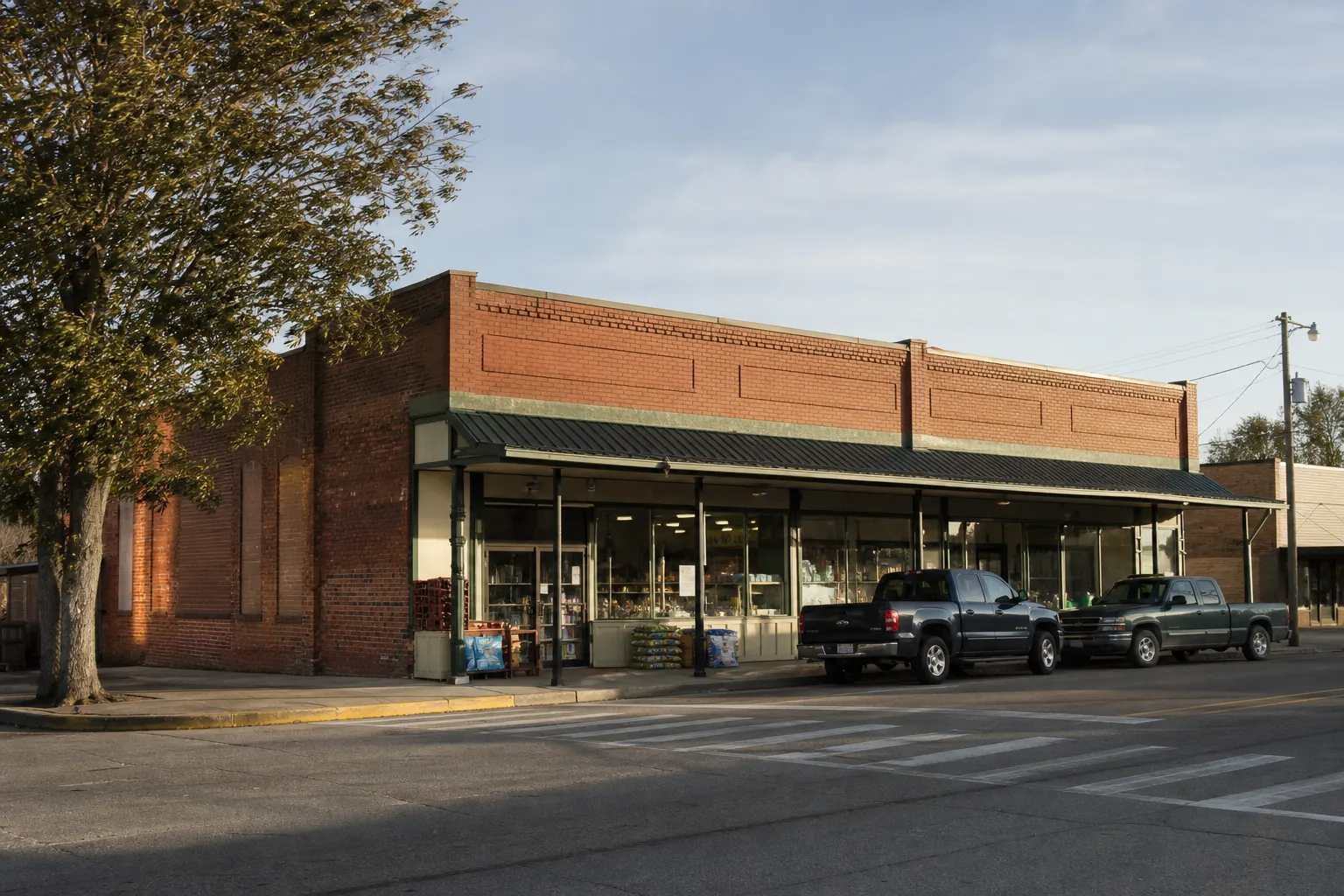
Imagine January in a Northeast Kingdom county seat: one full-line box, a cutter who may also receive the truck, heat that does not care about your multiple, and an Associated Grocers of New England drop that still has to land. If that week fails after hired labor at Vermont’s wage floor, denser Burlington demand will not save you. Book a confidential intro with proof of funds, the counties you will occupy, and a one-page January coverage sketch. Grocery Store Business Broker — HedgeStone Business Advisors, led by Jason Taken — underwrites Vermont as rural coverage first, DLL agency status second, warehouse membership third. Email jason.taken@hedgestone.com when the lease and three years of returns are ready under NDA. Print the Buyer Underwriting Workbook with Kingdom quiet-month math on page one.
The Northeast Kingdom is classic single-store geography. One supermarket often carries the town’s grocery week. Mud season logistics, truck fuel, and a second cutter who will not commute from Chittenden are operating facts. Price that week first when that is the asset. Do not average it into a Chittenden County story. Propane and heating oil for a January Kingdom box can move occupancy economics in ways a Burlington specialty lease never feels—ask for utility history by month, not a trailing-twelve blur. If the quiet month only clears because the seller stopped paying themselves, the recast will expose it.
Montpelier, Barre, and central Vermont run small-city independents with capital and hospital traffic that still need quiet months modeled. State-office and institutional baskets can steady weekdays without inventing ski peaks as run-rate. School calendars and legislative sessions can create weekday patterns that look like “stable demand” until summer arrives. Rutland and Bennington sit on southern corridors with New York and Massachusetts border trade. Customers cross state lines for price and selection. A Bennington scan that rises because Massachusetts shoppers fled a price spike is not captive local demand—drive both sides of the border. Price-check the nearest New York and Massachusetts banners the same week you tour so you know what the scan is fighting.
Burlington and Chittenden County hold the densest independent and specialty trade, with specialty cheese, prepared foods, and university-adjacent baskets that print margin a Kingdom conventional aisle never sees. Those departments also demand paid hours after the seller stops working for free. University breaks can punch holes in a Chittenden week that a CIM averages away. Owner-side twin: sell a grocery in Vermont. Sequence: how to buy a grocery store step by step. Hub: buy a grocery store.
Scale markers—not a for-sale list: Vintage 2024 population 648,493 (July 1, 2024); County Business Patterns 2023 221 NAICS 445110 establishments, all legal forms. SNAP retailer counts stay null here. FNS authorization does not transfer.
DOL’s July 1, 2026 consolidated table lists Vermont at $14.42. Burlington and Chittenden market wages often sit above that floor. Recast meat, produce, and front end on the crew you will hire. On Kingdom boxes, one cutter carrying the week is key-person risk, not wage savings. A buyer who plans to “work the meat case for a year” is describing a transition plan—and a lender will still want a hired-labor path when that year ends. Confirm Vermont DOL posters. Schedule hours a lender will believe through mud season and ski-adjacent peaks without treating either extreme as run-rate. Ski-area weekends can look like coverage until Tuesday payroll arrives with no tourism left in the register.
Rebuild the P&L with recasting a grocery P&L: replace unpaid owner hours, reverse related-party rent that vanishes Monday, leave recurring shrink in earnings, and tie weekly sales to scan data and EBT deposits. Ask for thirteen months of departmental sales so border spikes and winter shoulders stay visible. Produce shrink in mud season and meat shrink after a ski weekend are different problems—force departments apart. DSCR is cash flow over debt service after that recast. Plug the quiet month and DLL lag into the SBA 7(a) payment and DSCR calculator. Definition: what is DSCR for a grocery acquisition. Valuation method: grocery store valuation.
Hannaford (Ahold Delhaize), Shaw’s (Albertsons Companies), and Price Chopper / Market 32 (Golub) shape street price perception. They are competitive pressure—not your sold comps. Associated Grocers of New England, C&S Wholesale Grocers, and UNFI terms travel with the buyer: drop minimums, over-advances, fuel surcharges, and personal guarantees. Rural Kingdom boxes rarely have a second wholesaler ready if you reject AGNE or C&S terms you cannot assume. Ask how February delivery days actually work at this address—snow days and delayed drops are Kingdom operating facts, not color commentary. Specialty UNFI lines that carry Burlington prepared-food or natural mix can matter as much as the primary AGNE truck when those departments print the week. An over-advance is debt. Working capital must fund the next warehouse load while a new FNS file is pending. If the CIM capitalizes AGNE patronage as if it were cash equity, unwind that fiction before you bid.
Vermont Department of Liquor and Lottery keeps spirits inside the NABCA control-state agency system. Beer and wine are licensed retail. Spirits move through agency stores. Some groceries are also agency liquor locations; many are not. Confirm the address with DLL before you capitalize spirits or agency commissions as grocery margin. Agency appointments are limited. An asset sale does not automatically move the agency contract. Treat agency inventory rules and incoming-operator approval as a separate track.
Beer and wine licenses still need DLL approval for the incoming operator. Privilege lag belongs in the payment calendar. Ask whether beer-wine volume depends on customers crossing from a neighboring dry town. National alcohol worksheet: liquor license due diligence. Vermont’s addition is the agency-store verification. Model weeks without beer-wine and agency commission until DLL accepts the incoming operator. Vermont Lottery also sits under DLL—re-paper when tickets are on the counter. Tobacco routes through DLL and tax desks as applicable.
Agency spirits inventory has its own shrinkage and cash rules. Do not blend agency commission into grocery SDE as if it were aisle margin. If the grocery loses the agency appointment after close, coverage must still clear on grocery alone—or you need a dated plan to keep the appointment. That is a Kingdom-specific diligence track many Burlington specialty buyers never see.
Vermont generally exempts eligible grocery food from sales tax. Prepared food is taxable. Confirm Vermont Department of Taxes food-versus-meals guidance. Code deli, hot bar, and bakery correctly. A Burlington specialty prepared-food program that looks like grocery volume on a CIM may be mostly taxable meals—fix the taxonomy before you argue margin. Tax returns help corroborate register volume; they do not replace department scan. Ask counsel about Tax Department clearance or successor-liability holdback. Repealed UCC Article 6 elsewhere does not erase Vermont sales-tax successor risk. National clips: state grocery sales tax and bulk sales and tax clearance. Kingdom conventional aisles with thin deli programs face a simpler coding story—still verify, do not assume.
Most independents lease. Build occupancy from base rent, CAM, taxes, and insurance you actually pay, then divide by proven sales. Run the rent-as-percent-of-sales checker on the data-room lease. This pack publishes no Vermont grocery rent-per-foot table. A Chittenden specialty landlord is not a Kingdom county-seat landlord and not a Bennington border strip landlord. Short remaining term without options is a price cut. Exclusive-use language that collapses when a Dollar General or club format arrives belongs in the memo early. Start lease due diligence and lease assignment before the lender asks. Seller-owned boxes: recast ops on market rent and price realty separately—buying a store with real estate.
Kingdom county-seat leases sometimes hide deferred roof or refrigeration work that a winter freeze will expose. Ask for repair history and a walkthrough with a refrigeration tech before you treat January coverage as durable. Burlington specialty spaces can look “cheap per foot” until CAM and parking rules constrain evening prepared-food traffic—the hours that print the week.
Vermont Department of Health sits on retail food. Incoming operators need current approval from the county that inspects—Chittenden paper does not close Orleans. Last year’s inspection is not your permit. WIC sits with Vermont Department of Health — WIC. Rural grocery preservation themes recur in policy talk; federal HFFI and state ACCD notices may touch tracts—verify, do not invent grant dollars for purchase-price math. Desk map: closing and license checklist.
USDA FNS: SNAP does not transfer. File a new retailer application. Do not invent a Vermont SNAP-retailer headcount. Put EBT / SNAP diligence and how to apply for SNAP as a new owner on the LOI calendar. Kingdom single-store towns feel an EBT gap immediately—fund payroll, rent, and the next warehouse drop as working capital while the FNS file is pending. See how much working capital do I need.
SBA 7(a) can finance ownership change. The published program maximum is $5 million—the federal upper bound on loan size, not a Vermont bid target. Eligibility still lives in recast SDE, believable hours, inventory at cost, and a dated SNAP plan. No invented SOP equity-injection percents here. Population density and banner pressure keep most Vermont independents well below that maximum. Assemble equity, inventory at cost, working capital, closing costs, and FNS-gap reserve. Count inventory at cost; retail tags are not cost. Hold back tourism merchandise that will not move in November. Procedures: closing-day inventory count procedures. Tools: cash-to-close estimator and how much money you need.
Lenders who shop Hannaford will want department scan and EBT deposits that reconcile to the bank. Use verifying sales with scan data and evaluating a store’s P&L. Walk when cash never hits the bank. Kill-list: red flags that should kill a grocery deal.
Write transition hours into the APA when named people carry the mix—see transition periods and handling employees, union contracts, and WARN. First ninety days: post-closing 90-day plan. Date the submarket, DLL beer-wine class, any agency-store note, and the health desk beside SNAP. After NDA: surviving due diligence.
Kingdom operators who also hold an agency spirits desk need two transition plans: grocery operations and agency inventory rules. Losing the agency appointment after close is a separate coverage event from losing a cutter—model both. Burlington specialty buyers who inherit a prepared-food program should keep the recipe and labor map dated in the APA so Monday does not erase the margin story.
Book a confidential intro with the AGNE letter, the lease, three years of returns, the DLL agency answer, and an honest note on who runs meat through mud season. Jason will say whether January coverage clears and which Vermont desk still has to move.
Price language for Buy a Vermont grocery when January Kingdom coverage survives hired labor is (recast SDE x a defendable multiple) + inventory at cost, plus or minus lease and license risk. The table is one consistent example for this URL. State pages add the tax, wage, and alcohol-agency facts for this jurisdiction. They do not invent a local sold-comp set.
| Input or output | Illustrative figure |
|---|---|
| Weekly sales (illustrative) | $124,000 |
| Annual sales | $6,448,000 |
| Recast SDE | $373,984 (5.8% of sales) |
| Inventory at cost | $403,000 (~16 turns) |
| Occupancy check | $212,784 / year (3.3% of sales) |
| Low going-concern | $1,207,066 at 2.15x SDE + inventory |
| High going-concern | $1,581,050 at 3.15x SDE + inventory |
| Sketch DSCR on a note | 1.50 |
Inventory is cash at close, not a multiple. Confusing the two is how sellers over-ask and buyers under-cash the wire.
Bring proof of funds or a lender pre-screen, your format, and geography. Jason will tell you whether a store like this can clear SBA or seller-carry math.
Print these, mark them up, and bring the marked copy to the intro. They are educational. They are not a valuation letter and not a listing. All downloadable guides.
Have the file ready so the hour is a recast, not a scavenger hunt. Then pick a time.
Underwrite the deal before you fall in love with the store
Scan data, SNAP mix, rent-to-sales, and DSCR. If those four do not clear, the CIM photos do not matter.
Schedule a Buyer Strategy CallJanuary coverage after hired labor. Heat, payroll, and the next AGNE or C&S drop must clear without borrowing Burlington density. If the quiet month fails, stop arguing goodwill.
Only after Vermont Department of Liquor and Lottery confirms the address is an agency spirits location. Beer and wine are licensed retail; spirits move through agency stores. Many groceries are not agency desks.
DOL’s July 1, 2026 consolidated table lists Vermont at $14.42. Chittenden market wages often run higher. Recast the crew you will staff, especially when one cutter carries a Kingdom week.
Eligible grocery food is generally sales-tax exempt. Prepared food is taxable. Confirm Vermont Department of Taxes food-versus-meals guidance and code deli, hot bar, and bakery apart from aisle grocery.
Yes. Shoppers can cross from New York or Massachusetts for price and selection. Drive both sides of the border before treating southern Vermont scan as captive local demand.
Source and finance a grocery acquisition
Jason Taken works buyers through qualification, SBA or seller-carry structure, and a diligence plan a lender will fund. Book the hour.
Schedule a Buyer Strategy CallThis page is educational information from Grocery Store Business Broker (HedgeStone Business Advisors). It is not legal, tax, or investment advice. Licensing, tax, and financing rules vary by state and deal. Confirm every item with counsel and your lender before you sign.
Ready when you are. Jason Taken will talk through the file.
Book a confidential intro