Why do shrink, margin, and turns belong in one conversation?
They are the three operating numbers that turn the same weekly sales into different SDE. A leak in one distorts the other two.
Grocery Store Business Broker · HedgeStone Business Advisors · Jason Taken
Last updated 2026-09-04
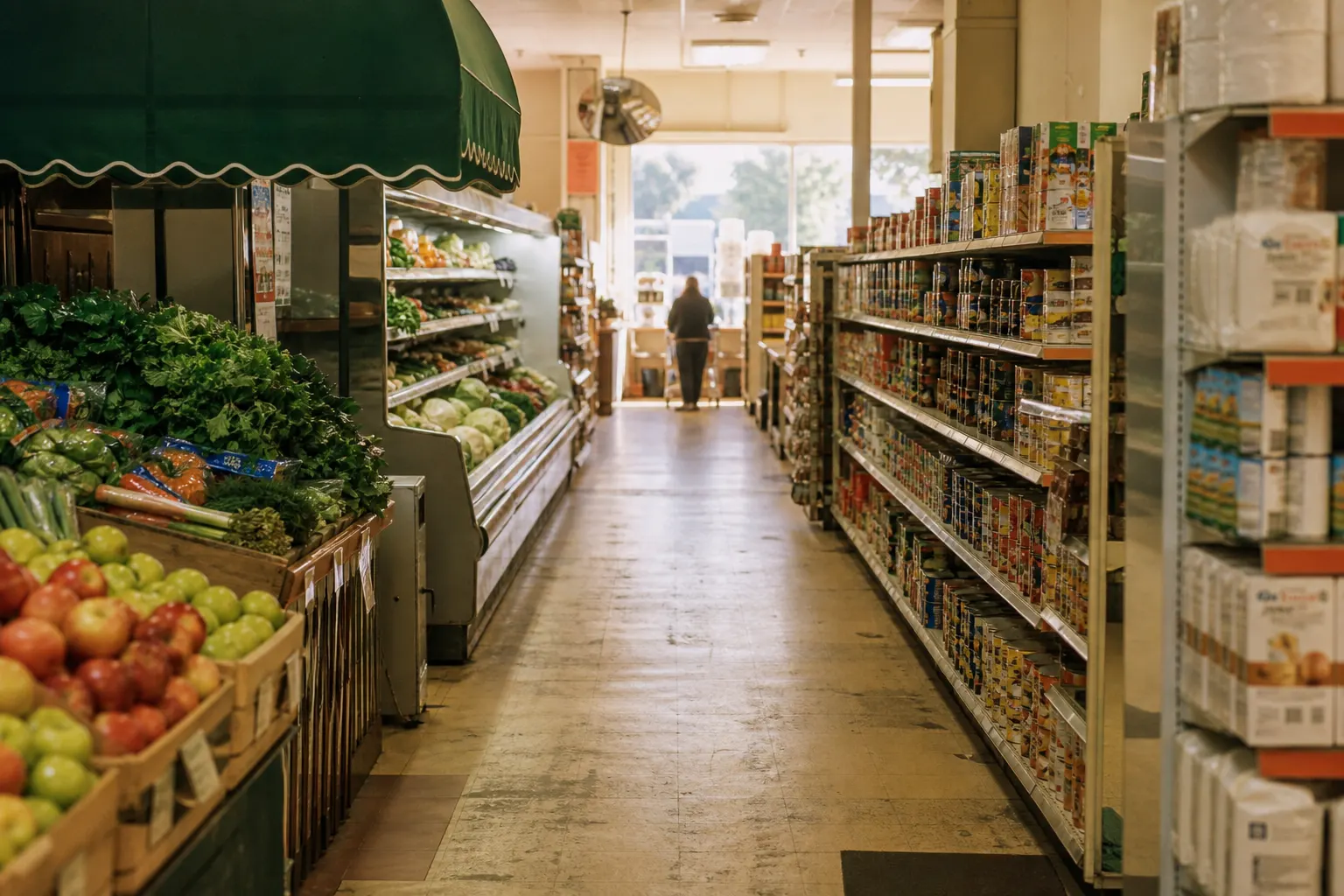
Two grocery stores can ring the same week and be different businesses. The difference is often three operating numbers: shrink, department gross margin, and inventory turns. Grocery Store Business Broker — HedgeStone Business Advisors, led by Jason Taken — reads the leak before anyone argues a multiple. Sales start the conversation. These three numbers decide whether the sales were worth anything.
This page is the operating walk. Anatomy of a grocery P&L shows where the lines sit. Evaluating a store’s P&L is the buyer’s test order. Recasting a grocery P&L is what you do after the leak is honest. Print the SDE worksheet and write shrink, margin, and turns in three columns.
Grocery is a high-turn, thin-net trade. FMI’s 2.1 percent average net profit for food retailers in 2025 is the reminder that a small leak is a large share of the year. FMI’s $1 trillion in 2025 supermarket sales and 45,575 U.S. supermarkets in 2024 describe the channel. FMI’s $668,377 average weekly sales per supermarket and $19.59 weekly sales per selling square foot describe the Speaks supermarket sample. Your independent box still lives or dies on these three numbers, not on those channel averages.
Shrink is product that left without a clean sale: theft, spoilage, error, unrecorded consumption, and the yogurt that died in the case. On a P&L it often shows up as an “inventory adjustment.” If that adjustment appears every year, it is not a gift and it is not one-time. Leave it in the earnings. Add-backs that repeat are the store. How add-backs are treated is the short rule.
Ask for three years of adjustments and for department-level shrink if the store tracks it. A store that cannot name the leak will not name it after you own the keys. Scan data plus a physical count is how you catch the gap between what the register thinks and what the shelf holds. Read verifying sales with scan data. Red flags include a seller who treats shrink as a rounding error.
Produce shrink is spoilage, trim, and the wet rack that was never logged. Meat shrink is trim, unsold grind, and the case that sat through a warm Saturday. Center-store shrink is theft, mis-rings, and vendor shorts. HBC shrink is theft with a higher retail tag. If the store only gives you one shrink number, you cannot tell whether you are buying a wet-rack problem or a back-door problem. Evaluating a store’s P&L should split that number before you recast. Anatomy of a grocery P&L shows which block it sits in. A single “inventory adjustment” at year-end is the worst presentation. It hides the department and the season. Ask for monthly.
Illustrative, not a quote. Two boxes at $85,000 a week. Store A books a $28,000 annual inventory adjustment and has a produce manager who logs spoilage. Store B books a $96,000 adjustment and calls it “one-time” every December. Same sales. Very different SDE. Do not put the same multiple on both because the vestibule looks similar. How to value a grocery store multiplies the recast, not the week.
Ethnic mix without language on the floor is a shrink plan. So is a 70-hour owner who is also the only person who watches the back door. Buying an ethnic market outside your community is the people version of this leak. Post-closing 90-day plan is where shrink shows up after Monday if you change the mix for sport. Do not change the mix for sport.
Holdbacks exist because grocery has shrink and successor tax risk. Read escrow, holdbacks, and earn-outs and holdback. Earn-outs are hard because the buyer controls mix — and therefore shrink — after Monday. Comparing offers should treat a clean shrink file as cash quality, not as atmosphere.
Storewide margin is a blend. Meat and produce can sink it while center store looks fine. Split the departments. Perimeter versus center store is the first cut. Then meat. Then produce. Then deli and bakery if they exist. Then alcohol if you sell it. Alcohol is a class, a quota, or a control-state product. NABCA lists 17 control states plus local-control pockets. A wine margin you cannot keep after a license lag is not durable. Read liquor license diligence and state-by-state alcohol regime.
Slotting fees and promotions can dress center-store margin. Ask where they sit on the P&L. If they vanish when the banner changes, they were not your margin. Read wholesaler and banner agreements. DSD bills that skip a month make margin look better. Tie vendor statements to the period. See wholesaler.
A discount or salvage grocery lives on a different margin story than an independent supermarket. A natural or organic box can show high margin and high spoilage. A gas-station grocery mixes fuel into food. Benchmark KPIs by format are a cross-check after you have departments. They are not a substitute for the split. Net margin is what is left after labor and occupancy. FMI’s 2.1 percent food-retailer net sample is why a pretty gross with a labor hole still fails.
USDA FNS: SNAP does not transfer. Mix that is EBT-heavy can still be honest. It is not a license to skip department margin. EBT deposits should reconcile to the SNAP story. A gap is mix, downtime, or fiction. Read EBT diligence. WIC items have their own pricing rules. They are not a margin fairy.
How to read a CIM is how a blended 28 percent gets into a teaser. Your job is to unblend it. The LOI terms that matter for buyers should demand department files, not a storewide slogan. Anatomy is the map. This section is the argument.
Turns are COGS divided by average inventory. Grocery is not one clock. Produce can turn many times while center store turns slowly and still be healthy. Meat has a short life. Wine can sit. HBC can collect dust. A seller who boasts “we turn 14 times” without department math is selling a slogan. What is a good inventory turn is the short question. This page wants the split.
Do not treat “14 times” as a sourced benchmark. It is a teaching example of a storewide boast. Your file might turn faster in produce and slower in grocery and still be a good store. Your file might hit a pretty storewide number because the stockroom is empty and the next warehouse drop is already late. Turns without a count date are a slogan. Pair the turn math with the last physical count and with working capital so you know whether the shelf is working or starving. How inventory is counted is where that pair becomes a price.
Inventory at cost is what you pay on count night. Turns tell you whether that stock is working or aging. Slow turns plus high shrink is a room full of problems. Fast produce turns plus no spoilage log is a story. FIFO and LIFO versus a messy room is how you start a fight at 2 a.m. Read how inventory is counted at closing and closing-day count procedures. The inventory value estimator is a teaching tool. The count is the price.
Working capital is the cash to buy the next load after you have paid for the count. Fast turns demand more cash in motion even when the shelf looks empty at 9 p.m. Slow turns demand less cash and more markdowns. How much money you need should include that motion. The cash-to-close estimator that skips inventory is a toy.
A rural grocery with long lead times will show slower center-store turns than a city box with daily DSD. That can be healthy. A city box with rural turns and city shrink is not. Competition and trade-area math changes mix. It does not create a universal turns target. Buying a distressed store often means paying for stock that already missed its clock. Price the count, not the novel.
Recast SDE already has recurring shrink in it if you recast honestly. Department margin tells you whether that SDE is durable. Turns tell you how much cash sits on the shelf and how ugly count night will be. Together they move you inside the sourced band. BizBuySell grocery and supermarket businesses sold on that listing site: 3.38 average earnings multiple in 2025; 2.66 five-year average; IQR 1.60–3.15; 0.43 average revenue multiple on the 2025 sold sample. A clean shrink file with department math can argue the upper half. A $96,000 “one-time” adjustment every December belongs nearer 1.60. Read the multiples report and the valuation pillar.
Illustrative, not a quote. Recast SDE $172,000 after you left shrink in. Inventory at cost $154,000 on a defensible count. A 1.75×–2.70× band is $301,000–$464,400 on SDE. Add inventory: about $455,000–$618,400 going-concern. If produce turns are a slog and the adjustment is climbing, you do not live at 2.70× because the center aisle is faced. The valuation calculator lets you change SDE. It will not invent a shrink percentage for you.
SBA 7(a) can finance a change of ownership. The published maximum is $5 million. Lenders buy DSCR on a recast that still contains the leak. They will not fund a multiple that assumes shrink vanishes on Tuesday. See the DSCR calculator. Unreported cash next to a shrink story is two leaks. Read selling a store with unreported cash.
How to value a grocery store is the full method: recast × multiple + inventory at cost. SDE versus EBITDA still applies. A hired manager who cannot control shrink is not EBITDA quality. Lease diligence still applies. A short lease with a leaky produce case is two cuts. Buying as a first-time owner is harder when these three numbers are sloppy.
Sellers: sell a grocery store and the seller playbook. Buyers: buy a grocery store and the buyer workbook. How it works is the sequence. Working with attorneys and CPAs exists so counsel does not treat shrink as a rounding entry in week six.
The leak you left in the recast shows up again at 2 a.m. Write what is unsellable. Who pays the crew. How disputes resolve. Whether a third-party counter runs the room. The LOI should say how inventory is counted. Read the LOI terms that matter for sellers and for buyers. Print the closing and license checklist.
Dated product is not “full racks.” Buyers pay cost for sellable stock. They do not pay retail tags. FIFO in a messy back room is a fight. Schedule the count. Transition and training does not replace a shrink log. APA essentials should list excluded inventory. Asset sale versus stock sale does not change the count. Most independents are asset sales.
A family or manager sale still needs these three numbers. Soft language about “we all know the back room” creates hard lawsuits. Distressed files still have a leak and a count. Price those. Read buying a distressed store. Confidential sale still applies while you measure shrink. Employees learn from vendors and shoppers. A vestibule sign is how you empty the stockroom before you have a buyer.
Write three years of inventory adjustments. Split last year’s gross by department. Estimate turns on produce, meat, and center store. Circle what is unsellable on a napkin. Bring that napkin.
Jason Taken reads shrink, margin, and turns before he talks multiple. Book a confidential intro with those three columns marked. The hour is for the leak, not for a storewide slogan.
Use this napkin recast on Shrink, Margin, and Turns when you book the call. It is labeled illustrative. BizBuySell's 2025 grocery sold-business earnings multiple averaged 3.38, with a 2021-2025 IQR of 1.60-3.15.
| Input or output | Illustrative figure |
|---|---|
| Weekly sales (illustrative) | $78,000 |
| Annual sales | $4,056,000 |
| Recast SDE | $190,632 (4.7% of sales) |
| Inventory at cost | $225,333 (~18 turns) |
| Occupancy check | $121,680 / year (3.0% of sales) |
| Low going-concern | $635,192 at 2.15x SDE + inventory |
| High going-concern | $797,229 at 3.00x SDE + inventory |
| Sketch DSCR on a note | 1.40 |
Rent at 3.0% of sales is the occupancy check. If the real lease is higher, the SDE in this table is too generous until you recast to market rent.
Bring proof of funds or a lender pre-screen, your format, and geography. Jason will tell you whether a store like this can clear SBA or seller-carry math.
Print these, mark them up, and bring the marked copy to the intro. They are educational. They are not a valuation letter and not a listing. All downloadable guides.
Have the file ready so the hour is a recast, not a scavenger hunt. Then pick a time.
Underwrite the deal before you fall in love with the store
Scan data, SNAP mix, rent-to-sales, and DSCR. If those four do not clear, the CIM photos do not matter.
Schedule a Buyer Strategy CallThey are the three operating numbers that turn the same weekly sales into different SDE. A leak in one distorts the other two.
No. An inventory adjustment that appears every year is the business. Leave it in the earnings.
Meat and produce can sink a blended gross that looks healthy. Read department margin, then the leak in each department.
No. Center store, produce, meat, and wine run on different clocks. A single turns boast without department math is a slogan.
They change recast SDE and the quality of inventory at cost. The multiple attaches after the leak is honest.
Source and finance a grocery acquisition
Jason Taken works buyers through qualification, SBA or seller-carry structure, and a diligence plan a lender will fund. Book the hour.
Schedule a Buyer Strategy CallThis page is educational information from Grocery Store Business Broker (HedgeStone Business Advisors). It is not legal, tax, or investment advice. Licensing, tax, and financing rules vary by state and deal. Confirm every item with counsel and your lender before you sign.
Ready when you are. Jason Taken will talk through the file.
Book a confidential intro