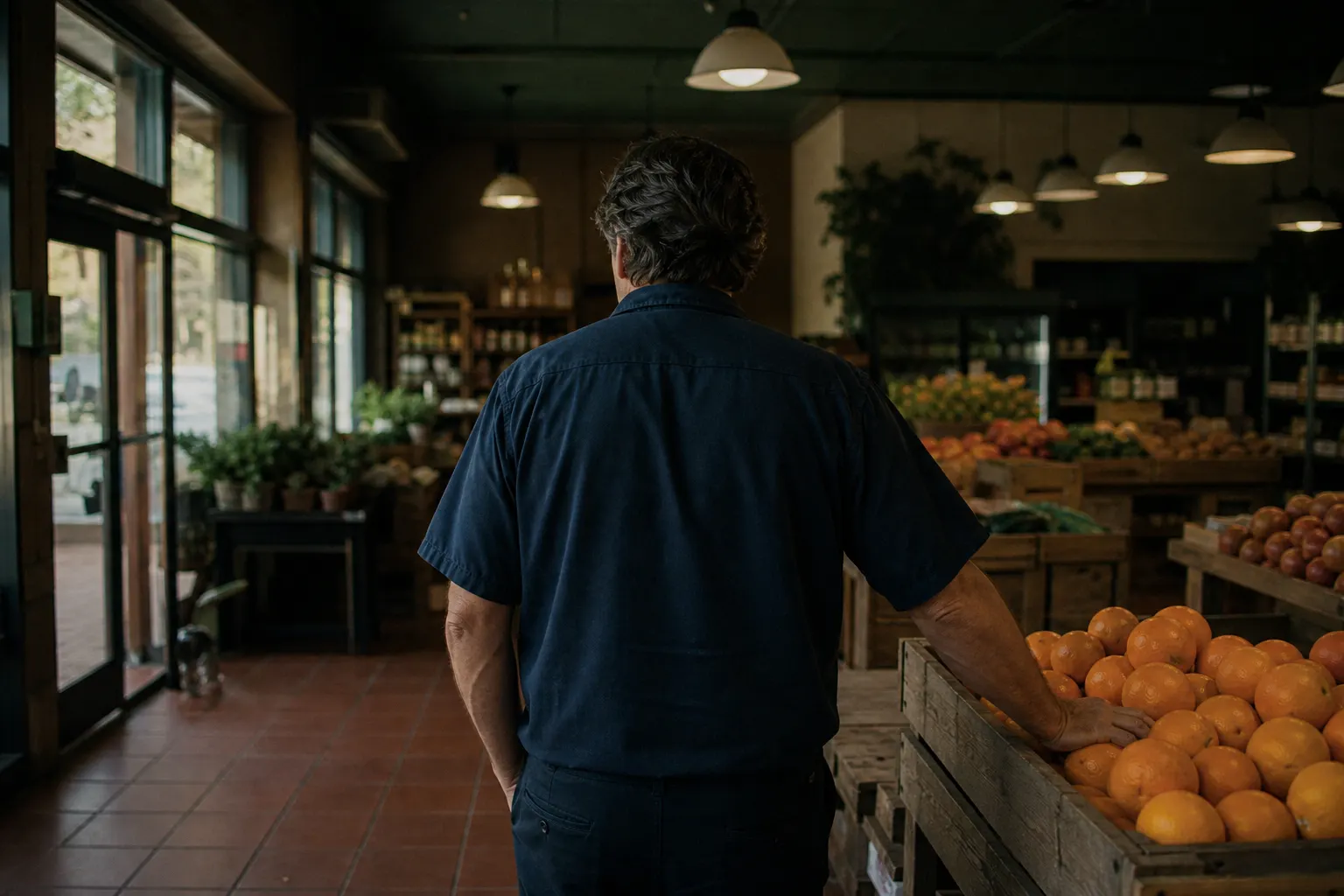
California grocery sales are license-class and county-health stories before they are statewide slogans. A Koreatown week does not underwrite like a Fresno ag-labor week, and Bay Area city wage floors can rewrite a labor line that looked fine under the state minimum. If you own the store, recast the P&L and keep the process confidential so a DSD driver does not announce the deal on a San Gabriel Valley side street. Book a confidential intro to sequence ABC, CDTFA, and landlord consent. Email jason.taken@hedgestone.com to put the hour in writing.
Grocery Store Business Broker — HedgeStone Business Advisors, led by Jason Taken — works both sides. Buyers still shopping the state should read buy a grocery store in California. Metro readings live on Los Angeles, San Francisco–Oakland, and San Diego. This essay is the seller brief: how ABC class, Publication 31, and metro texture change a quiet exit.
Census County Business Patterns 2023 counts 8,044 NAICS 445110 establishments in California. Census Vintage 2024 estimates 39,431,263 residents as of July 1, 2024. Eight thousand forty-four boxes is a large industry—not a listings board. SDE from this recast is what a serious buyer underwrites.
Type 20 versus off-sale general on the ABC report
The alcohol agency is the California Department of Alcoholic Beverage Control. Off-sale beer and wine (Type 20) is common in grocery. Spirits require a different off-sale general privilege. Off-sale general licenses are limited by census-tract population formulas in many areas. Verify the ABC license report for this address. ABC transfer is a defined process and is not automatic with the asset purchase. License value can be material—price any license friction separately from store SDE. A hoped-for spirits set that the class does not allow is not an add-back. Liquor license due diligence is the longer note.
Retail food sits with the California Department of Public Health and county environmental health. Los Angeles County paperwork does not satisfy a San Francisco inspector. Tobacco sits with CDTFA and local health departments. California State Lottery is a separate counter file if tickets are present. WIC sits with the California Department of Public Health — WIC. Write the county after NDA; keep the blind teaser regional so it does not identify the only box on that street.
Publication 31, prepared food, and CDTFA clearance
California state sales tax generally exempts qualifying food products for home consumption. Prepared food, hot food, and many fountain and hot-to-go items are taxable. Some district taxes can still apply to non-food merchandise. Confirm CDTFA Publication 31 (Grocery Stores) against this register mix. The recast should show remittance lines the way the tape actually splits them.
CDTFA successor-liability and tax-clearance practice is a standard California asset-sale checklist item. Confirm current CDTFA bulk-sale instructions and any escrow holdback with counsel before closing. Do not treat a clean ABC file as a clean tax file.
The U.S. Department of Labor WHD table effective July 1, 2026 lists California at $16.90. Many cities set higher local floors. Recast labor on what this store pays. Confirm DIR and the city—Los Angeles, San Francisco, San Jose—before underwriting payroll. A Bay Area independent already above the city floor should not be modeled as if it can drop to the state number overnight.
Basin quiet process before the corridor hears
Counsel and a CPA first. Then a blind teaser that names a part of California, a format, and inventory at cost—not the only Korean, Chinese, Mexican, or specialty independent on that Basin stretch. NDA follows. The CIM carries departmental sales, the lease abstract, and the ABC license type. Managers hear when assignment or transition hours need them. A vestibule sign in a tight corridor teaches the street early.
Recast owner compensation, documented one-time repairs, and personal items. Take related-party rent to market if the next operator will pay a third-party landlord. Reject a standing inventory adjustment as an add-back. Preparing three years of financials and verifying sales with scan data tie the week to filings. Inventory is counted at cost at close; how inventory is counted at closing is the procedure. Department the room. Hold back unsellable.
USDA FNS SNAP authorization does not transfer. The buyer files a new retailer application. Basin and Central Valley boxes with a material EBT share need cash for the gap. Write the filing into the LOI. This research pack left SNAP retailer counts null. What happens to SNAP authorization when you sell is the federal rule. California has had healthy-food financing and food-desert programs in various budget years—verify the current CDFI or CDFA notice rather than citing a stale dollar cap.
Koreatown meat and produce assortments do not underwrite like San Gabriel Valley Chinese independents, and neither looks like an East LA Mexican mix. Thai Town specialty SKUs are another file again. Bay Area Asian and specialty independents often carry occupancy that would break a Central Valley debt story. Fresno, Bakersfield, and Stockton ag-labor weeks show different hours and shrink than Basin ethnic corridors. Inland Empire logistics growth can support suburban independents that still lose if the buyer models Bay Area wages. Write the corridor into the CIM after NDA. California State Lottery, when present, is a separate counter file from ABC Type 20 or off-sale general.
Basin, Bay, San Diego, Central Valley, Inland Empire
The Los Angeles Basin is the largest ethnic-independent market in the U.S. in the research pack—Koreatown, San Gabriel Valley, East LA, Thai Town. The San Francisco Bay Area carries high occupancy cost with Asian and specialty independents. San Diego mixes border-adjacent Hispanic independents with conventional banners. The Central Valley—Fresno, Bakersfield, Stockton—is ag-labor trade areas with independent and Hispanic banners. The Inland Empire is logistics growth and suburban independents. Those are qualitative notes. Do not invent metro population shares or asking rents; rent fields remain null here.
A buyer who wants “a California independent” without naming the stretch is not underwriting. A Koreatown mix is a different file from a Fresno ag-labor week. Buying an ethnic market outside your community is the caution. Underwrite the week, the shrink, and the remaining term.
Ralphs / Food 4 Less (Kroger), Vons / Safeway / Albertsons (Albertsons Cos.), Stater Bros., WinCo Foods, and Sprouts Farmers Market are competitive context. Walk the set. See what they take and leave. Then return to this scan file and this lease. A Ralphs multiple does not travel onto a San Gabriel Valley mix. An independent that tries to beat all five on labor will donate the week.
UNFI, C&S Wholesale Grocers, and KeHE (specialty) appear as named wholesalers. Wholesaler consent is a third calendar. Wholesaler and banner agreements when you sell is the longer note. Write who will stand the store into the CIM.
Occupancy, license value, and debt that fits the Bay
Occupancy is rent—base, CAM, tax, insurance—divided by this store’s sales. Pull both from the lease and the P&L. No invented dollar-per-square-foot rent belongs here. National listing-site multiples are method context only; they are not a California sold-comp and not a Stater Bros. multiple. Argue from recast earnings via the valuation hub and how to value a grocery store. Price off-sale general friction separately when the license has material market value.
Lease due diligence covers assignment, remaining term, options, co-tenancy, and use. A landlord who rewrites rent as the price of consent changes SDE. If the seller owns the real estate, recast the store on a defendable market rent and price dirt separately. Selling with a lease versus real estate keeps the piles apart.
Debt financing still wants a lease the landlord will assign and a SNAP path the buyer can file. Bay Area occupancy can break a 7(a) story that would work in the Central Valley—use SBA 7(a) for grocery acquisitions only when the file can carry the note.
Sequence ABC, CDTFA, county health, and training
Date ABC approval, the correct county health desk, SNAP filing, CDTFA clearance, and landlord consent as separate LOI steps. If the store holds an off-sale general, give that class its own paragraph. Protect the calendar with seller LOI priorities. Write post-close training hours that keep a Basin mix alive. Apply employee and WARN guidance when those rules apply. City wage floors and paid-leave rules belong in that paragraph.
Type 20, tract quota, and why Basin weeks do not travel
California diligence fights start with the ABC license report and Publication 31 remittance, not with a Ralphs circular. Type 20 is beer and wine. Spirits need off-sale general. Census-tract population formulas can limit off-sale general in many areas—verify the report for this address. License value can be material; keep it out of store SDE when it has separate market value. A hoped-for spirits set that the class does not allow is invented earnings.
CDTFA Publication 31 separates qualifying food for home consumption from taxable prepared food, hot food, and many fountain items. District taxes can still hit non-food merchandise. Show remittance lines the way the tape splits them. CDTFA successor-liability and clearance practice is a standard California asset-sale item—confirm current bulk-sale instructions with counsel. A clean ABC file is not a clean tax file.
The Los Angeles Basin—Koreatown, San Gabriel Valley, East LA, Thai Town—is the largest ethnic-independent market in the research pack. Bay Area occupancy and city wage floors rewrite labor lines that looked fine under the state $16.90 WHD figure (effective July 1, 2026). San Diego border-adjacent Hispanic independents do not underwrite like Fresno or Bakersfield ag-labor weeks. Inland Empire logistics growth is another file again. Do not invent metro population shares or asking rents; rent fields remain null here.
Ralphs / Food 4 Less, Vons / Safeway / Albertsons, Stater Bros., WinCo, and Sprouts frame competition. Walk their sets. Return to this scan file. A Ralphs multiple does not travel onto a San Gabriel Valley mix. UNFI, C&S, and KeHE specialty accounts have consent clocks—schedule them. Healthy-food financing and food-desert programs have appeared in various California budget years; verify the current CDFI or CDFA notice rather than citing a stale dollar cap.
Bay Area city floors (Los Angeles, San Francisco, San Jose among them) can sit above the state minimum. Recast on what this store pays after confirming DIR and the city. A buyer who models the state floor onto a city-floor crew invents SDE. Landlord assignment in older Basin neighborhood boxes can be personal; a rent rewrite changes occupancy. Owned dirt is a second pile from the first CIM draft.
Buyers shopping a California search should treat Basin, Bay, San Diego, Central Valley, and Inland Empire as distinct files. This site does not publish live California inventory. Ask for a full year of scan and EBT settlement. Prepared food versus exempt grocery should appear as separate remittance lines on the CDTFA tape. Confirm the health desk and the ABC class on the same address before you write the closing Tuesday.
Bring three years of P&Ls, the lease, the last health inspection, and the ABC license type. Grocery Store Business Broker will not invent a grocery-density figure, a rent range, or a SNAP-retailer census. We will recast the store you run and map California ABC, county health, SNAP, and occupancy from this lease. Book a confidential intro to start. Email jason.taken@hedgestone.com for the hour in writing. About Jason Taken is the desk. Begin with the recast—not a corridor rumor.
An illustrative recast on Sell the California mix the ABC report actually allows
Use this napkin recast on Sell the California mix the ABC report actually allows when you book the call. It is labeled illustrative. BizBuySell's 2025 grocery sold-business earnings multiple averaged 3.38, with a 2021-2025 IQR of 1.60-3.15. State pages add the tax, wage, and alcohol-agency facts for this jurisdiction. They do not invent a local sold-comp set.
If weekly sales or shrink move 8 percent, the SDE and the note move with them. That is why Jason Taken starts with scan data and the lease, not with a neighbor's rumor multiple.
Bring three years of P&Ls, weekly sales, and the lease abstract to the intro call. Jason will tell you whether this band is even in the conversation.
This page is educational information from Grocery Store Business Broker (HedgeStone Business Advisors). It is not legal, tax, or investment advice. Licensing, tax, and financing rules vary by state and deal. Confirm every item with counsel and your lender before you sign.