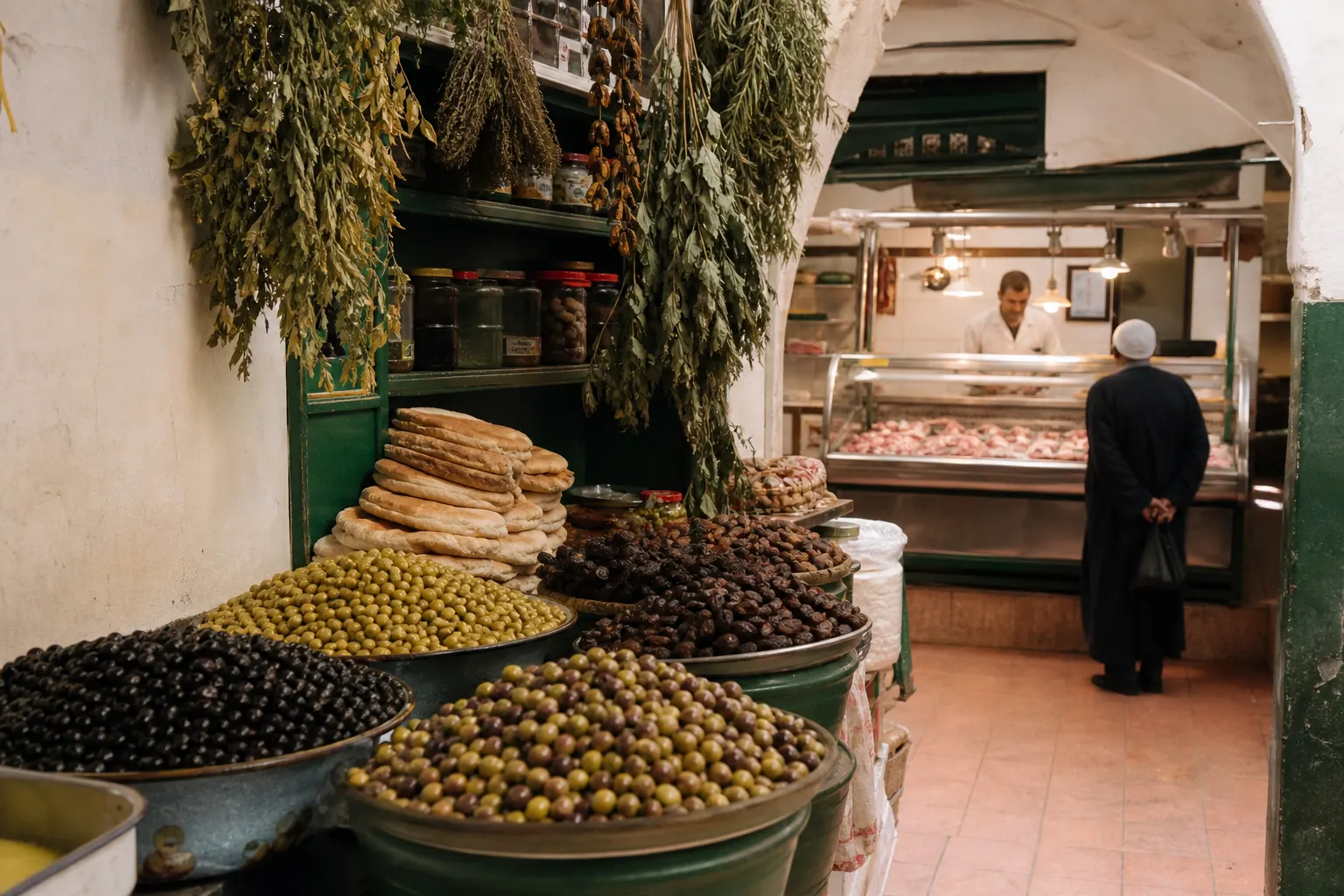
Selling a Middle Eastern or halal market is a butcher file before it is a grocery file. Halal meat is the traffic engine. Certification and cutter skill are the franchise. Grocery margins on imported dry goods subsidize the case, or the case subsidizes the grocery. Lose either and the SDE story changes. Grocery Store Business Broker — HedgeStone’s grocery practice, led by Jason Taken — packages the going concern, the inventory at cost, and the certification path without a vestibule sign.
Most independents close as asset sales. You are selling the case, the dry book, and the relationships that keep the meat incoming. You are not selling a government “halal license.” Religious certification is contractual, not a permit that rides in the APA the way a food-establishment certificate does. Confirm the store’s actual certifier. Do not invent a body name. USDA FNS: SNAP authorization does not transfer; the new owner files a new application. Download the Confidential Seller Playbook and circle the processor invoices and the butcher’s hours.
The meat case is the going concern
Do not value this box as a conventional neighborhood grocery. A shopper who came for a specific cut, a specific slaughter method, and a counter that can take the order in the right language will not substitute a supermarket tray. Department gross margin hides in a storewide blend. The meat case can make or sink the recast. Read anatomy of a grocery P&L and evaluating a store’s P&L.
FMI reports $1 trillion in 2025 supermarket sales and 45,575 U.S. supermarkets in 2024. FMI’s $668,377 average weekly sales per supermarket and $19.59 weekly sales per selling square foot in 2025 describe the Speaks supermarket channel. A 3,500-square-foot halal market is not that sample. The 2.1 percent average net profit for food retailers in 2025 is a food-retailer net sample. It is not a meat-case target. Use the valuation hub.
Scan data has to split meat from dry from produce. A weekly-sales spreadsheet without that split is a rumor. Shrink on custom meat does not behave like shrink on boxed center store. Read verifying sales with scan data and shrink, margin, and turns. Print the SDE worksheet.
Treat the butcher as a close condition. If that person will not stay, the buyer is buying a different store. Write retention and seller hours into the transition period. See transition and training and what is a fair transition period.
Ask counsel to read the meat-room rules that actually apply: retail meat, custom-exempt if that is the path, and whatever local health paper sits on the saw. Those are government files. Halal supervision is usually not. Mixing the two in the CIM is how a buyer’s attorney spends three weeks on the wrong agency. What licenses do I need under new ownership is the list. Split “health department” from “certifier” on that list before anyone drafts.
Certification does not ride in the APA
Halal chain of custody is diligence. Unclear custody is a red flag that cuts the check before anyone argues a multiple. The certifier relationship is usually a contract or a supervision arrangement. It is not SNAP. It is not a liquor privilege. Ask: who certifies, what happens on a change of ownership, and whether the incoming operator already has a path the shopper will accept. This pack will not invent a certification-body name.
A kosher market has a parallel problem with a different supervision world. Do not copy that file onto this one. The inspector, the processor list, and the shopper’s standard are not interchangeable.
Sequence who learns. Do not call the certifier or the processor on day one. Blind teaser, NDA, then a CIM for operators who can fund. Read how to sell confidentially. Employees and regulars will hear from the counter if you get the order wrong.
The LOI should condition close on a certification path the buyer can actually keep — the LOI terms that matter for sellers. Counsel who have never closed grocery will treat “halal” as a slogan. Send them working with attorneys and CPAs before they draft in a vacuum.
Processors, importers, and the dry-goods offset
Halal-certified meat processors are the supply chain that matters. Specialty importers restock dry grocery, olives, sweets, bread, and pantry brands the conventional wholesaler will not prioritize. Conventional wholesale may fill center-store holes. That three-layer book is the store.
A buyer who cannot open accounts with the processors is buying a meat case that goes dark. Read wholesaler and banner agreements when you sell and is my wholesaler agreement transferable. Over-advances are debt. DSD — bread, dairy, sweets — keeps delivering after a sloppy close only if someone is paying.
Working capital is the cash to buy the next carcass and the next import pallet, not a vibe. See how much working capital you need. Turns on meat and turns on dry import do not share a clock. Count night needs a rule for unsellable meat and dated dry. Read how inventory is counted.
Ramadan and Eid weeks are real. They are not every week. A recast that annualizes the wrong month will not survive a CPA. Bridge those weeks the same way you would bridge any seasonal spike — with scan, not with a story.
Dry grocery often looks like the profit when you stare at a shelf of imported pantry. Meat often looks like the traffic. The recast has to say which one is carrying the other. If the case is priced to draw the parking lot and the dry aisle pays the rent, a buyer who “fixes” meat margin will empty the lot. If the case is the profit and dry is a courtesy, a buyer who over-invests in import SKUs will trap cash on the shelf. How do I recast a grocery P&L is the habit. Department invoices are the evidence.
Arabic, Farsi, Urdu — Thursday-night shoppers
Language on the floor is diligence. Arabic, Farsi, Turkish, Urdu, Kurdish, English — pick what the counter actually uses. Ethnic mix without language on the floor is a shrink plan. The customer mix you can prove is the mix on the tape, not a demographic slogan.
Landlord complaints about parking at prayer times are a real operations issue when they exist. They are not a stereotype to write into marketing copy. If the lease file has complaints, put them in diligence. If it does not, do not invent them. Lease diligence is assignment, exclusive use, co-tenancy, remaining term, and CAM. Remaining term under 24 months without options is a price cut. See CAM and lease assignment.
Confidentiality is a process. Read should I tell employees and how do I keep the sale confidential. A mosque-adjacent shopper base will hear a vestibule sign before your counsel does.
Buying an ethnic market outside your community is the buyer-side warning. Should I buy an ethnic market is the short version. The buyer twin is how that side reads certification risk.
SNAP, custom-exempt meat, and why liquor is usually noise
Retail food plus any custom-exempt or retail meat rules is the baseline. SNAP, if authorized, is a new-owner application. Read what happens to SNAP when you sell, does SNAP transfer, and EBT / SNAP diligence. SNAP retailer authorization does not peel onto the APA. Budget downtime in cash and in the story you tell the landlord. EBT deposits should reconcile to the SNAP story.
Alcohol is usually the wrong conversation in this format. If beer or wine exists, it is a class, a quota, or a control-state product. NABCA lists 17 control states plus local-control pockets. Read state alcohol and liquor-license diligence only if the privilege is material to SDE. Do not dress the CIM with a liquor story the shopper did not come for.
WIC is a vendor file if present. Lottery is often personal. Tobacco sits with tax and health agencies. Print the closing and license checklist. Write outs into paper before you pick a Tuesday. Tax clearance belongs in escrow — state bulk-sales notes. This page does not invent CBP or SNAP counts for the trade area.
SBA 7(a) can finance a change of ownership; the published maximum is $5 million. Unreported cash will not survive SBA or a serious conventional buyer. Read SBA 7(a) for grocery acquisitions and selling with unreported cash. DSCR is annual cash flow over annual debt service.
Operators who already know the inspector
The buyer pool is halal operators who already have inspector and vendor relationships, and owner-operators who already shop and staff this trade. Mosque-adjacent owner-operators appear when the trade area is real. A conventional neighborhood grocer who wants to “add halal” without a butcher or a certifier path is a tourist. Screen them.
Family or a manager still needs a real price — selling to family or an employee. Compare offers on cash at close, butcher retention, certification risk, and inventory treatment — comparing offers. Seller notes often sit on standby behind SBA. Read the standby.
If you own the dirt, recast the store on market rent, then cap the building. See grocery with real estate and selling with a lease versus real estate. Related-party rent that juiced earnings will reverse.
An Asian grocery is live tanks. A Hispanic market is produce and EBT. An Indian grocery is spices and festival weeks. A kosher market is a different supervision world. This page is the meat case, the certifier, and the butcher.
Metro pages teach trade area, not inventory: Detroit, Chicago, New York, Houston. The seller hub is the long method. How a sale works is the sequence. How long a sale takes slips on SNAP, meat permits, and count night.
National multiples, local certification risk
There is no sourced halal-only multiple in this pack. Do not invent one. BizBuySell grocery and supermarket sold businesses: 3.38 average earnings multiple in 2025; 2.66 five-year average; IQR 1.60–3.15 for 2021–2025. A 0.43 average revenue multiple on the 2025 sold sample is a cross-check. Those figures are a national listing-site sample. Read the multiples report and how to value a grocery store.
Recast before you argue the band. Owner pay, a documented one-time compressor, and a personal auto can move SDE. Recurring meat shrink cannot. Read recasting a grocery P&L and preparing three years of financials.
Suppose weekly sales are $70,000. Annual sales are $3,640,000. If recast SDE is 4.8 percent of sales, SDE is $174,720. Inventory at cost — meat fast, dry slower — might be $160,000 after unsellable. A 1.60×–3.15× band on SDE is $279,552–$550,368. Add inventory: about $440,000–$710,000 going-concern. That is teaching math. It is not a quote. Lose the butcher or the certifier path and the high end of that band is fiction. The valuation calculator lets you change the inputs.
Holdbacks exist because grocery has shrink and successor tax risk. Earn-outs are hard because the buyer controls the case after Monday. Read escrow, holdbacks, and earn-outs. Distressed meat still has a lease and a stockroom: selling a distressed grocery.
Common reasons deals fall apart here are unclear custody, a butcher who will not stay, and a tourist who wanted a neighborhood grocery with a different sign. Surviving due diligence is processor invoices, the certifier letter, and last week’s meat-versus-dry split.
Mark the butcher’s hours and the certifier letter on the playbook. Then book a confidential intro. Bring three years if you have them. Bring last week’s sales if you do not. Bring the processor invoice that would be hardest to replace. That is a useful hour.
Worked math for Sell a Middle Eastern halal market
Use this napkin recast on Sell a Middle Eastern halal market when you book the call. It is labeled illustrative. BizBuySell's 2025 grocery sold-business earnings multiple averaged 3.38, with a 2021-2025 IQR of 1.60-3.15.
If weekly sales or shrink move 8 percent, the SDE and the note move with them. That is why Jason Taken starts with scan data and the lease, not with a neighbor's rumor multiple.
Bring three years of P&Ls, weekly sales, and the lease abstract to the intro call. Jason will tell you whether this band is even in the conversation.
This page is educational information from Grocery Store Business Broker (HedgeStone Business Advisors). It is not legal, tax, or investment advice. Licensing, tax, and financing rules vary by state and deal. Confirm every item with counsel and your lender before you sign.