Is 2.1 percent my target net?
It is FMI’s 2025 food-retailer net sample. Your recast is allowed to be better or worse. It is a reminder that grocery is thin, not a quote on your box.
Grocery Store Business Broker · HedgeStone Business Advisors · Jason Taken
Last updated 2026-09-04
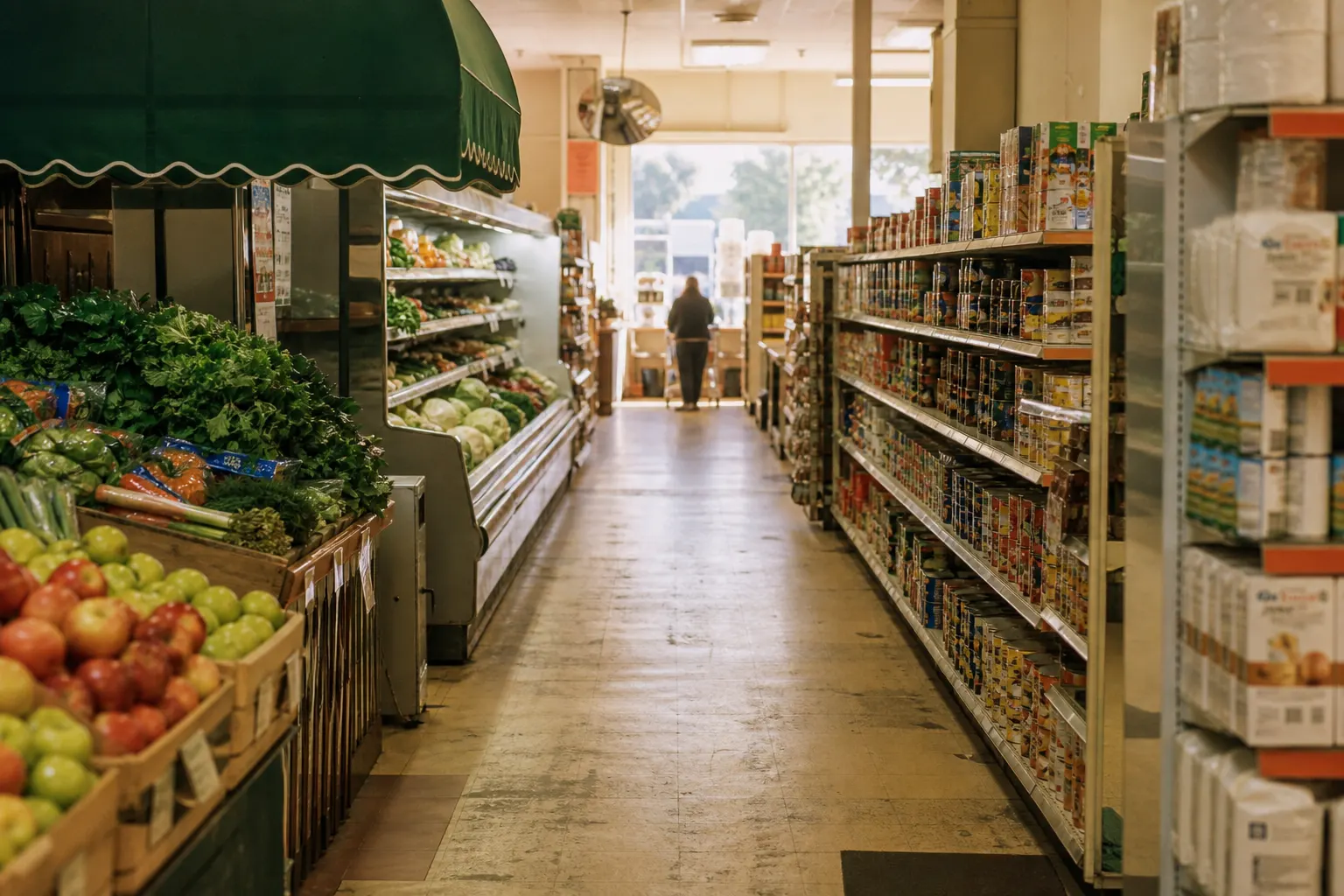
Open the P&L at department level before you ask whether the margin is “good.” The sourced net sample is FMI’s 2.1 percent average net profit for food retailers in 2025. That is a food-retailer net figure from The Food Retailing Industry Speaks. It is not a quote on your independent. It is not gross margin in the meat case. A good grocery margin is a recast you can defend after rent, labor, and shrink. Your file is allowed to be better or worse than 2.1 percent. It is not allowed to be a slogan. Book a confidential intro with the department P&L when you want that recast read.
Grocery Store Business Broker — HedgeStone Business Advisors, led by Jason Taken — uses net margin as a health check on the valuation hub. Benchmark KPIs by format is context. Anatomy of a grocery P&L is the worksheet. This page answers the margin question.
Cite 2.1 percent as FMI’s 2025 food-retailer net sample. Say the source. This pack does not publish an official independent-only net table. Common talk about a one-to-three-percent independent range is not an NGA primary table here. Do not promote that range as research. If you need a number you can footnote, use 2.1 percent and then recast this store.
FMI also reports $1 trillion in 2025 supermarket sales and 45,575 U.S. supermarkets in 2024. Those figures explain why grocery is a real industry. They do not prove your net. FMI’s $668,377 average weekly sales per supermarket in 2025 describes the Speaks channel. A smaller independent can still print a livable SDE on a thin net. A larger week can still print a weak net if occupancy ate the ring. How much a grocery store owner makes is the household read of the same thin trade.
Evaluating a store’s P&L is the skeptical pass. How to recast a grocery P&L puts owner pay back in and leaves shrink in. Net on a return that hid the living is not the net a buyer will keep.
Grocery people say “margin” when they mean three different things. Department gross is sales minus cost of goods in that aisle. Storewide gross blends those departments. Net is what remains after labor, occupancy, shrink, and the rest. A “healthy” grocery gross can hide a meat case that is giving the week away. Produce can do the same. Center store can look fine while the perimeter sinks the net. Shrink, margin, and turns is the department conversation.
Scan data belongs here. A weekly-sales spreadsheet without department mix is a rumor about margin. Verifying sales with scan data is the audit. Couponing that happens every week is not a one-time hit to gross; it is the mix.
Alcohol, where it exists, is its own class. NABCA lists 17 control states plus local-control pockets. Do not treat a control-state beer set as a spirits gross you cannot hold. Liquor license due diligence is the privilege, not a margin fantasy.
Related-party rent that sat below market juiced net. A buyer who will pay the lease as written reverses the gift. Run the rent-as-percent-of-sales checker. CAM true-ups can erase a year of “extra” net. Lease diligence is where that bill lives.
Labor is the other eater. Unpaid owner hours make net look better than a hired-operator net. What SDE is exists because the living and the net are not the same line. SDE versus EBITDA is the hired-manager fork. State minimum wage is a model input for hours you will hire.
USDA FNS: SNAP authorization does not transfer. A store whose net depends on EBT will have a different first-month net while the new owner’s application is pending. That is a cash-to-close and mix issue, not an add-back to last year’s 2.1 percent comparison. EBT / SNAP diligence is the calendar.
Banner fees stay in net if the fascia stays. A wholesaler over-advance is debt, not a margin helper.
Buyers do not pay a “good margin” multiple. They pay recast SDE times a negotiated multiple, plus inventory at cost. BizBuySell grocery and supermarket businesses sold in 2025 printed a 3.38 average earnings multiple, a 2.66 five-year average, and an IQR of 1.60–3.15. A 0.43 average revenue multiple on the 2025 sold sample hides rent and labor — the same costs that turn a pretty gross into a thin net. How much a grocery store is worth is the arithmetic. What multiple grocery stores sell for is the sample.
SBA 7(a) can finance a change of ownership up to the published $5 million maximum. A thin net still has to cover the note. DSCR is annual cash over annual debt service. A “good” margin that only exists on unpaid hours will fail coverage.
Couponing, slotting, and banner bill-backs can make gross look richer than the cash that hit the bank. If the scan and the bank do not agree, believe the bank and the sales-tax filing. Slotting fees that repeat are operations. They are not a one-time gift to net. Food-desert rhetoric does not replace a P&L. A store can serve a thin trade area and still print a defensible recast, or it can serve a busy corridor and still give the week away in the cut room.
A distressed or declining box can still have a “normal” grocery gross and a broken net. Price the inventory and the lease, not a turnaround novel about margin recovery. Selling a distressed or declining grocery store is the honest seller page. Buying a distressed store is the buyer page. Neither one invents a better net than the file.
When the department P&L is open and the 2.1 percent sample is in the margin as context — not as a quote — book a confidential intro. Bring three years of P&Ls and the weekly scan. Grocery Store Business Broker will tell you whether this net is a living, a loan, or a slogan.
These figures are a teaching walk-through for What is a good profit margin?, not a quote and not a sold comp. Order of operations: weekly sales, recast SDE, inventory at cost, then a multiple band.
| Input or output | Illustrative figure |
|---|---|
| Weekly sales (illustrative) | $108,000 |
| Annual sales | $5,616,000 |
| Recast SDE | $174,096 (3.1% of sales) |
| Inventory at cost | $280,800 (~20 turns) |
| Occupancy check | $134,784 / year (2.4% of sales) |
| Low going-concern | $655,106 at 2.15x SDE + inventory |
| High going-concern | $829,202 at 3.15x SDE + inventory |
| Sketch DSCR on a note | 1.38 |
Inventory is cash at close, not a multiple. Confusing the two is how sellers over-ask and buyers under-cash the wire.
Book the intro call with your side of the table ready: seller files or buyer capital. The calendar is the only next step.
Print these, mark them up, and bring the marked copy to the intro. They are educational. They are not a valuation letter and not a listing. All downloadable guides.
Have the file ready so the hour is a recast, not a scavenger hunt. Then pick a time.
Get a specialist on the other side of the table
Grocery deals turn on licenses, inventory, and a recast a lender will believe. Book the intro and bring the file.
Book an Intro Call With Jason TakenIt is FMI’s 2025 food-retailer net sample. Your recast is allowed to be better or worse. It is a reminder that grocery is thin, not a quote on your box.
No. Meat and produce can sink a healthy grocery gross. Net is after rent, labor, shrink, and occupancy. Read the P&L at department level, then recast.
No. Talk about a commonly cited independent range is not an official NGA table in this pack. Cite 2.1 percent as the sourced FMI net sample.
Price from recast SDE times a sourced multiple, plus inventory at cost. Net margin is a health check. 0.43 on revenue hides rent and labor.
Start a confidential grocery conversation
Whether you are exiting or acquiring, pick a time and we will talk through the file.
Book an Intro Call With Jason TakenThis page is educational information from Grocery Store Business Broker (HedgeStone Business Advisors). It is not legal, tax, or investment advice. Licensing, tax, and financing rules vary by state and deal. Confirm every item with counsel and your lender before you sign.
Ready when you are. Jason Taken will talk through the file.
Book a confidential intro