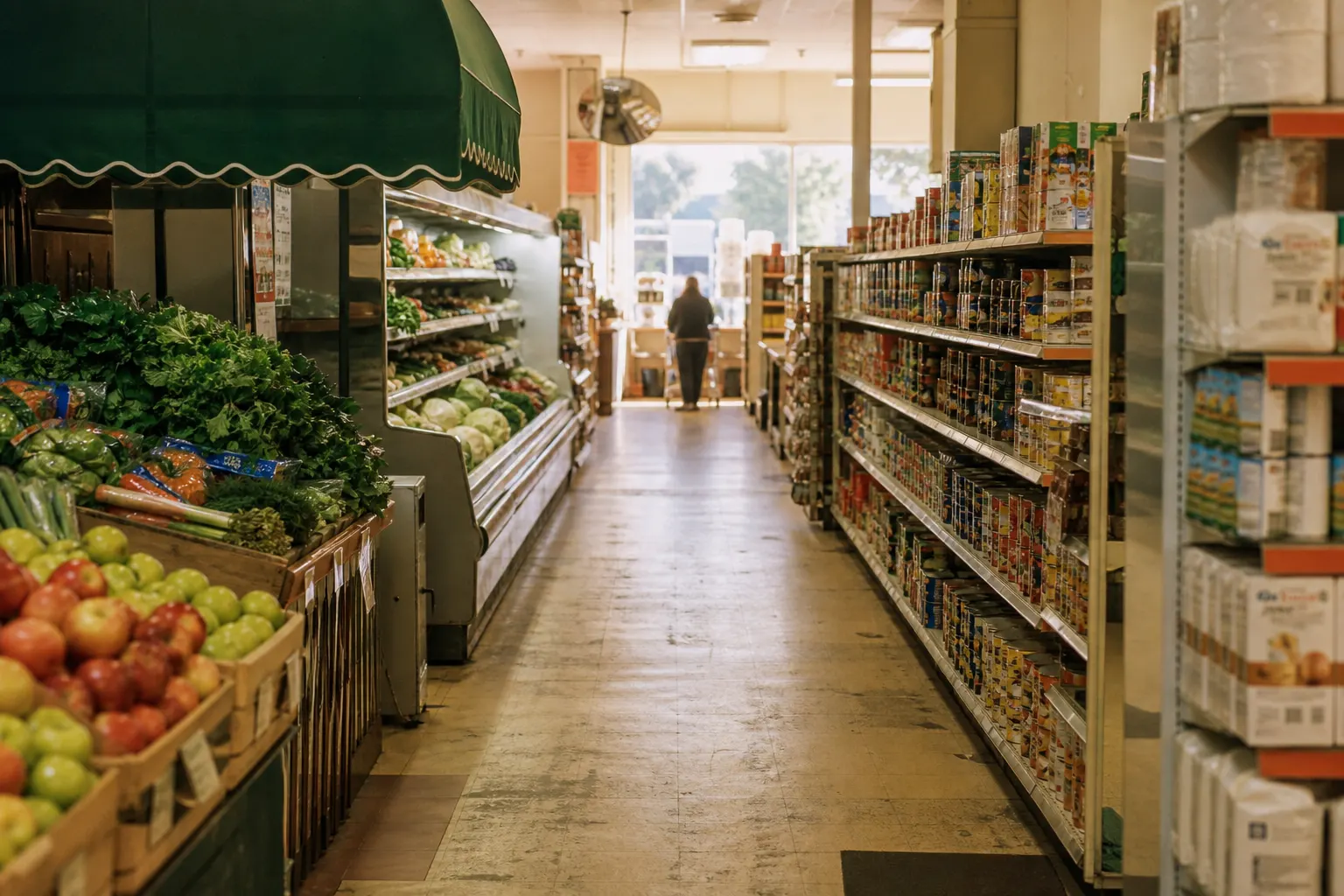
Generated illustration for this page. Not a listed store and not a photograph of a specific owner.
APA — Asset purchase agreement: the binding contract that lists purchased assets, excluded liabilities, indemnities, and closing conditions. A grocery APA needs exhibit-level license, inventory, employee, and wholesaler-consent schedules, not a generic retail form copied from another industry.
Read APA essentials before anyone starts a first draft from a template. Grocery Store Business Broker — HedgeStone Business Advisors, led by Jason Taken — treats the schedules as the store. Book a confidential intro with the marked LOI, the lease abstract, and the license list. Email jason.taken@hedgestone.com if you want that hour before counsel bills the first version.
What the grocery APA actually lists
The purchased-assets schedule should name the cases, the coolers, the POS, the store name to the extent it is yours to sell, and the leasehold if the landlord will assign. The excluded-assets schedule should name the seller’s truck, personal computers, family photos, a hunting lease, and cash in the safe. Monday is too late to discover a pickup still in the lot that the buyer thought was included.
Assumed contracts belong on their own exhibit: DSD vendors, the warehouse, a lottery retailer agreement if the agency will even assign it, and any equipment leases. Confirm the lottery file is in the buyer’s name before you treat commission as cash that survives Monday. Employee lists belong next to a transition-hours exhibit so the closer and the cutter know who is offering jobs. What an APA is is the short definition. This page is the grocery reading.
Schedules that move cash at close
Inventory at cost is usually a separate check. The APA should bind the count: cost basis, what is unsellable, who pays the crew, and how disputes resolve. How inventory is counted at closing is the procedure. A buyer who “includes inventory in the multiple” is hiding a six-figure line. Write the mechanic so the night is the number.
Holdbacks exist because grocery has shrink, open tax periods, and successor risk. Size them to a real exposure and release them when the condition clears. Escrow is where tax clearance and a disputed count sit. Earn-outs on grocery are hard because the buyer controls mix after Monday; if you use one, define the department and the scan file, not a vibe.
Purchase-price allocation is a CPA job on Form 8594. Counsel can paper the agreement. The tax file still needs a signer who saw the same schedules.
Conditions the contract cannot create
USDA FNS SNAP authorization does not transfer. A SNAP permit is valid only for the location and owners on record. The APA should condition close on lease assignment and the buyer’s ability to apply — not on a permit FNS will not issue in the seller’s name. Alcohol is a class, a quota, or a control-state product. Schedule the applications and the clocks. Do not write “liquor license conveys” as if it were a cooler.
Wholesaler consent is its own condition. The warehouse can refuse a new account, refuse to release a guarantee, or refuse banner consent. Put the agreement and the consent letter on a schedule. Landlord assignment is the same idea: the asset sale does not move the box if the landlord will not sign.
If you have a marked LOI and a store you have walked, book the APA conversation. Bring the lease, the warehouse paper, and an honest inventory guess. The hour is for the exhibits that close, not for a clean cover page.
How a buyer would price APA schedules that close a grocery store
Price language for APA schedules that close a grocery store is (recast SDE x a defendable multiple) + inventory at cost, plus or minus lease and license risk. The table is one consistent example for this URL.
Input or output
Illustrative figure
Weekly sales (illustrative)
$195,000
Annual sales
$10,140,000
Recast SDE
$588,120 (5.8% of sales)
Inventory at cost
$507,000 (~20 turns)
Occupancy check
$365,040 / year (3.6% of sales)
Low going-concern
$1,771,458 at 2.15x SDE + inventory
High going-concern
$2,359,578 at 3.15x SDE + inventory
Sketch DSCR on a note
1.54
Inventory is cash at close, not a multiple. Confusing the two is how sellers over-ask and buyers under-cash the wire.
Book the intro call with your side of the table ready: seller files or buyer capital. The calendar is the only next step.
Download the worksheets, then book the call
Print these, mark them up, and bring the marked copy to the intro. They are educational. They are not a valuation letter and not a listing.
All downloadable guides.
Confidential Seller Playbook3 pages. Recast checklist, teaser rules, license calendar, and what to bring to the first call.
Buyer Underwriting Workbook3 pages. Sales proof, shrink, rent, SNAP, DSCR, and cash-to-close math a lender will fund.
SDE Valuation Worksheet2 pages. Line-by-line add-backs, inventory at cost, and a multiple band you can defend.
Closing & License Checklist2 pages. Count night, SNAP re-application, alcohol, tax clearance, and the first 30 days.
Frequently asked questions about APA schedules that close a grocery store
What belongs on a grocery APA schedule?
Equipment, assumed contracts, inventory-count rules, excluded assets, employees the buyer may offer, and written consents for the lease and the warehouse. The recitals are the cover. The schedules are the store.
Can the APA convey the SNAP permit?
No. USDA FNS requires a new owner application. The APA can condition close, size a holdback, and require cooperation. It cannot transfer the authorization.
Who pays for inventory that fails the count?
The count rules in the APA. Write cost basis, unsellable goods, who pays the crew, and how disputes resolve so the night binds the price instead of starting a second negotiation.
Does the APA assign the wholesaler contract automatically?
Almost never. Warehouse paper is consent, credit, and often a new guarantee. Schedule the agreement and the consent as a close condition, not as a hope in the recitals.
What should I bring before APA drafts start?
The marked LOI, the lease abstract, the license list, and the store you toured. Book a confidential intro so counsel drafts from the file, not from a generic retail form.
Start a confidential grocery conversation
Whether you are exiting or acquiring, pick a time and we will talk through the file.
This page is educational information from Grocery Store Business Broker (HedgeStone Business Advisors). It is not legal, tax, or investment advice. Licensing, tax, and financing rules vary by state and deal. Confirm every item with counsel and your lender before you sign.
Ready when you are. Jason Taken will talk through the file.