Is an Indian grocery store valued like a conventional supermarket?
Inventory obsolescence (slow spices, dated frozen) is a diligence item. Buyer-pool depth is corridor-specific (Iselin, Devon, Artesia, Hillcroft) — do not nationalize it.
Grocery Store Business Broker · HedgeStone Business Advisors · Jason Taken
Last updated 2026-09-03
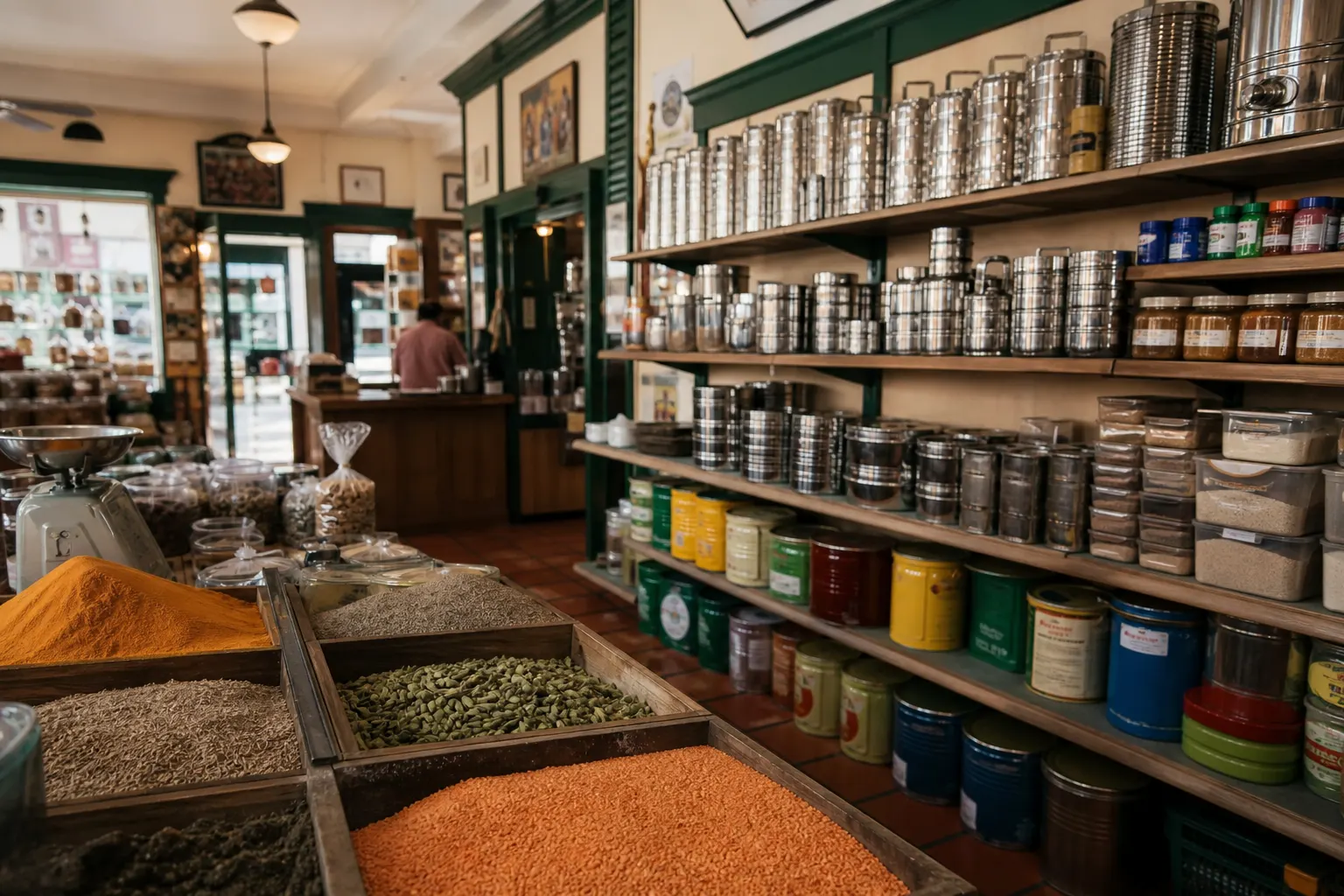
If you own an Indian or South Asian grocery, price the earnings stream and the stockroom separately. Do not hide dated masala inside goodwill. Dry grocery, spices, frozen, and produce dominate. Refrigeration is usually lighter than a full supermarket and heavier than a bodega. Community trust and festival-season volume matter. The buyer who can close is underwriting SDE a lender will believe, inventory at cost after you write off slow spices, and a restock path that does not depend on your personal credit at two coastal houses. Grocery Store Business Broker — HedgeStone’s grocery practice, led by Jason Taken — packages that as a confidential asset sale.
USDA FNS: SNAP authorization does not transfer; the new owner files a new application. There is no local shortcut because the aisle is atta and ghee. Download the Confidential Seller Playbook. Circle the spice-room aging notes you do not want to take. Missing paper is common. Hiding dated frozen is how count night becomes a lawsuit.
Inventory obsolescence is the diligence item conventional grocers miss. A fifty-pound bag of a slow regional rice, a spice SKU that turned twice last year, a frozen packet past the date the shopper will accept — those are not “full retail.” They are a negotiation. Turns are not one number. Center store and produce do not share a clock. Read shrink, margin, and turns and what is a good inventory turn.
FMI reports $1 trillion in 2025 supermarket sales and 45,575 U.S. supermarkets in 2024. FMI’s $668,377 average weekly sales per supermarket and $19.59 weekly sales per selling square foot in 2025 describe the Speaks supermarket channel. A 4,000-square-foot South Asian grocery on a corridor is not that sample. Do not quote channel weekly sales as last week’s scan. The valuation hub is the method.
How inventory is counted at closing needs a dated-product rule before anyone picks a Tuesday. FIFO versus a messy spice room is how you start a fight at 2 a.m. See FIFO and LIFO and how do I value inventory. Holdbacks exist because grocery has shrink and successor tax risk — and because this format hides age on the bottom shelf.
Print the SDE worksheet. Recast owner pay and a documented one-time freezer. Leave slow spice that will not sell in the count as a haircut, not as an add-back.
Age the room before you invite a count crew. Pull dates on spices, pickles, and frozen snacks. Separate what a shopper in this corridor will still buy from what you have been staring at since last monsoon season. A buyer who already runs a South Asian box will do that walk in twenty minutes. A tourist will call the whole room “inventory at retail.” Give the serious operator an aging list so the fight is about a few SKUs, not the entire stockroom. How much is inventory at close is the mechanic. The aging list is the format work.
Diwali, Holi, Eid, Onam, Pongal — those weeks are real. They are not a run-rate. A buyer’s CPA will annualize the wrong month if you let them. Scan data is the adult conversation. A weekly-sales spreadsheet without a festival calendar next to it is a rumor. Read verifying sales with scan data and how do I verify grocery sales.
Community trust is an asset that does not transfer on a bill of sale. The shopper who drove for a specific brand of tea or a specific frozen snack will try the next corridor store if the new owner “simplifies” the book. That is shrink with a delay. Treat seller hours as a transition period written into paper. See transition and training.
Confidentiality matters because vendors and regulars talk. Sequence who learns: counsel, CPA, then a short list under NDA. Read how to sell confidentially and how do I keep the sale confidential. A blind teaser comes before the spice-room tour.
Specialty importers — often bi-coastal — restock the book a conventional wholesaler will not carry. Cash-and-carry fills overflow and emergency holes. Limited conventional wholesale covers the filler SKUs. That split is the supply chain. A buyer who thinks UNFI or a regional grocery house will replace the import book is buying empty shelves.
Do not tell the importer first. Sequence consent after an NDA and a serious operator. Read wholesaler and banner agreements when you sell and is my wholesaler agreement transferable. Over-advances are debt. DSD — when it exists in this format — keeps delivering after a sloppy close only if someone is paying.
Working capital is the cash to buy the next container and the next cash-and-carry run, not a vibe. Import cycles are longer than a supermarket produce drop. See how much working capital you need. A first-time buyer who underestimates the cycle will bounce before SNAP clears.
The CIM should say who actually restocks — coastal house, cash-and-carry, local produce — without advertising the exit to those houses. A CIM that omits the lease is a brochure. Remaining term under 24 months without options is a price cut. A lease near a newer, larger competitor already open is a red flag, not a “growing Indian corridor” slogan.
Buyer-pool depth is corridor-specific. Iselin. Devon Avenue. Artesia. Hillcroft. Do not nationalize it. Multi-store South Asian groups in New Jersey, New York, California, Texas, and Illinois are the operators who can fund and restock. A buyer from a different metro who has never stood in those aisles is a tourist until proven otherwise.
The buyer twin is how that side reads the same economics. Buying an ethnic market outside your community and should I buy an ethnic market are the screens. Family or a manager still needs a real price and a real note — selling to family or an employee and can I sell to my manager.
Regional mix inside “Indian / South Asian” is not a branding exercise. A Gujarati-heavy dry set, a South Indian produce and frozen list, and a Pakistani or Bangladeshi meat-and-spice mix are different stores that happen to share a corridor. Multi-store groups know which one they already operate. A first-time buyer who wants “an Indian grocery” without naming the shopper will waste your due diligence calendar. Say which mix you actually run before you send the CIM.
Compare offers on cash at close, note terms, inventory haircuts, and license risk — comparing offers. Seller notes often sit on standby behind SBA. Read the standby. SBA 7(a) can finance a change of ownership; the published maximum is $5 million. Unreported cash will not survive it. Read SBA 7(a) for grocery acquisitions.
Metro pages teach trade area, not inventory: New York, Chicago, Houston, Los Angeles. State seller pages start at New Jersey, Texas, California, or Illinois.
Language on the floor is the manager question. Hindi, Gujarati, Tamil, Telugu, Malayalam, Punjabi, English — pick what the shopper actually uses at the counter. Ethnic mix without language on the floor is a shrink plan. A buyer outside the language and product set with no manager staying is the red flag. Write retention into the LOI.
Employees learn from vendors and shoppers. Read should I tell employees before you tell the cashier. Non-competes have to be enforceable in the state and narrow enough to keep. See non-competes and confidentiality.
Buying as a first-time owner is a hard path in this format if the buyer cannot source the book. Do I need grocery experience has a sharper answer here than on a conventional neighborhood box.
Retail food is the baseline. A snack counter or kitchen is a second permit. SNAP, if authorized, is a new-owner application — what happens to SNAP when you sell and does SNAP transfer. Budget downtime. EBT deposits should reconcile to the SNAP story. See EBT / SNAP diligence.
Alcohol is uncommon in this format. If beer or wine exists, it is a class, a quota, or a control-state product. NABCA lists 17 control states plus local-control pockets. Read state alcohol only if the privilege is material. Do not invent a liquor story to dress the CIM.
WIC is a vendor file if present. Lottery is often personal. Tobacco sits with tax and health agencies. Print the closing and license checklist. Write conditions into the LOI terms that matter for sellers. The APA schedules the real store: contracts, equipment, excluded assets. Read asset purchase agreement essentials. Counsel who have never closed grocery will rediscover SNAP in week six — working with attorneys and CPAs.
Tax clearance belongs in escrow. Bulk-sale practice can still exist after UCC Article 6 died. This page does not invent CBP or SNAP counts for Devon or Hillcroft.
There is no sourced South-Asian-only multiple in this pack. Do not invent one. BizBuySell grocery and supermarket sold businesses: 3.38 average earnings multiple in 2025; 2.66 five-year average; IQR 1.60–3.15 for 2021–2025. A 0.43 average revenue multiple on the 2025 sold sample is a sanity check. Those figures are a national listing-site sample. Read the multiples report and how to value a grocery store.
FMI’s 2.1 percent average net profit for food retailers in 2025 is a food-retailer net sample. It is not your spice-room target. Recast before you argue a band. Related-party rent that juiced earnings will reverse. Owner pay can move SDE. Dated inventory cannot. Read recasting a grocery P&L and preparing three years of financials.
Suppose weekly sales are $80,000. Annual sales are $4,160,000. If recast SDE is 5.0 percent of sales, SDE is $208,000. Inventory after a dated-product haircut might be $200,000 at cost — this format often carries more dry than a produce-heavy mercado. A 1.60×–3.15× band on SDE is $332,800–$655,200. Add inventory: about $533,000–$855,000 going-concern. That is teaching math. It is not a quote. Festival weeks pulled out of the run-rate can move SDE more than the multiple. The valuation calculator lets you change the inputs.
DSCR is annual cash flow over annual debt service. A rural box can be a good living and a difficult loan — different question than a corridor store next to a newer competitor. See sell a rural grocery only if that is actually the box.
An Asian grocery is tanks and live seafood. A Hispanic market is produce and EBT. An independent supermarket is a wholesaler-and-labor file. This page is spices, festival calendar, and a corridor buyer list. The seller hub is the long method. How a sale works is the sequence. How long a sale takes slips on SNAP and count night.
Common reasons deals fall apart here are a tourist buyer, a spice room full of age, and a lease in the shadow of a newer box. Surviving due diligence is importer statements, a festival-week bridge, and an honest aging list.
Circle the spice room on the playbook. Write which weeks are festival and which weeks are ordinary. Then book a confidential intro. Bring three years if you have them. Bring last week’s sales if you do not. Bring the importer invoice that would be hardest to replace. That is a useful hour.
These figures are a teaching walk-through for Sell an Indian grocery store, not a quote and not a sold comp. Order of operations: weekly sales, recast SDE, inventory at cost, then a multiple band.
| Input or output | Illustrative figure |
|---|---|
| Weekly sales (illustrative) | $141,000 |
| Annual sales | $7,332,000 |
| Recast SDE | $227,292 (3.1% of sales) |
| Inventory at cost | $458,250 (~16 turns) |
| Occupancy check | $190,632 / year (2.6% of sales) |
| Low going-concern | $844,646 at 1.70x SDE + inventory |
| High going-concern | $1,140,126 at 3.00x SDE + inventory |
| Sketch DSCR on a note | 1.43 |
Inventory is cash at close, not a multiple. Confusing the two is how sellers over-ask and buyers under-cash the wire.
Bring three years of P&Ls, weekly sales, and the lease abstract to the intro call. Jason will tell you whether this band is even in the conversation.
Print these, mark them up, and bring the marked copy to the intro. They are educational. They are not a valuation letter and not a listing. All downloadable guides.
Have the file ready so the hour is a recast, not a scavenger hunt. Then pick a time.
Get a grounded read on what buyers will pay
We recast SDE, separate inventory at cost, and price license risk. Download the seller playbook, then put 30 minutes on the calendar.
Get a Free Grocery Store Valuation ConversationInventory obsolescence (slow spices, dated frozen) is a diligence item. Buyer-pool depth is corridor-specific (Iselin, Devon, Artesia, Hillcroft) — do not nationalize it.
A separate line at cost, counted at close. Dated spices and slow frozen SKUs get held back, not averaged into cost. Book a confidential intro to write that holdback into the LOI.
No. USDA FNS: SNAP authorization does not transfer; the new owner files a new application. Festival weeks and the import book do not move the permit. Book a confidential intro to sequence FNS with the corridor buyer.
Not until you need consent. Sequence it after an NDA and a serious buyer.
No. This pack does not invent format-specific comps beyond the national BizBuySell grocery sample.
Sell on your terms, not on a listing site
HedgeStone Business Advisors runs a quiet process: recast, qualified operators, and a close that survives the count. The only next step is the intro call.
Book a Confidential Seller ConsultationThis page is educational information from Grocery Store Business Broker (HedgeStone Business Advisors). It is not legal, tax, or investment advice. Licensing, tax, and financing rules vary by state and deal. Confirm every item with counsel and your lender before you sign.
Ready when you are. Jason Taken will talk through the file.
Book a confidential intro