Is the SBA down payment the cash I need?
No. Equity is one line. Inventory at cost, working capital, SNAP lag, and closing costs sit beside it. Say the sum.
Grocery Store Business Broker · HedgeStone Business Advisors · Jason Taken
Last updated 2026-09-04
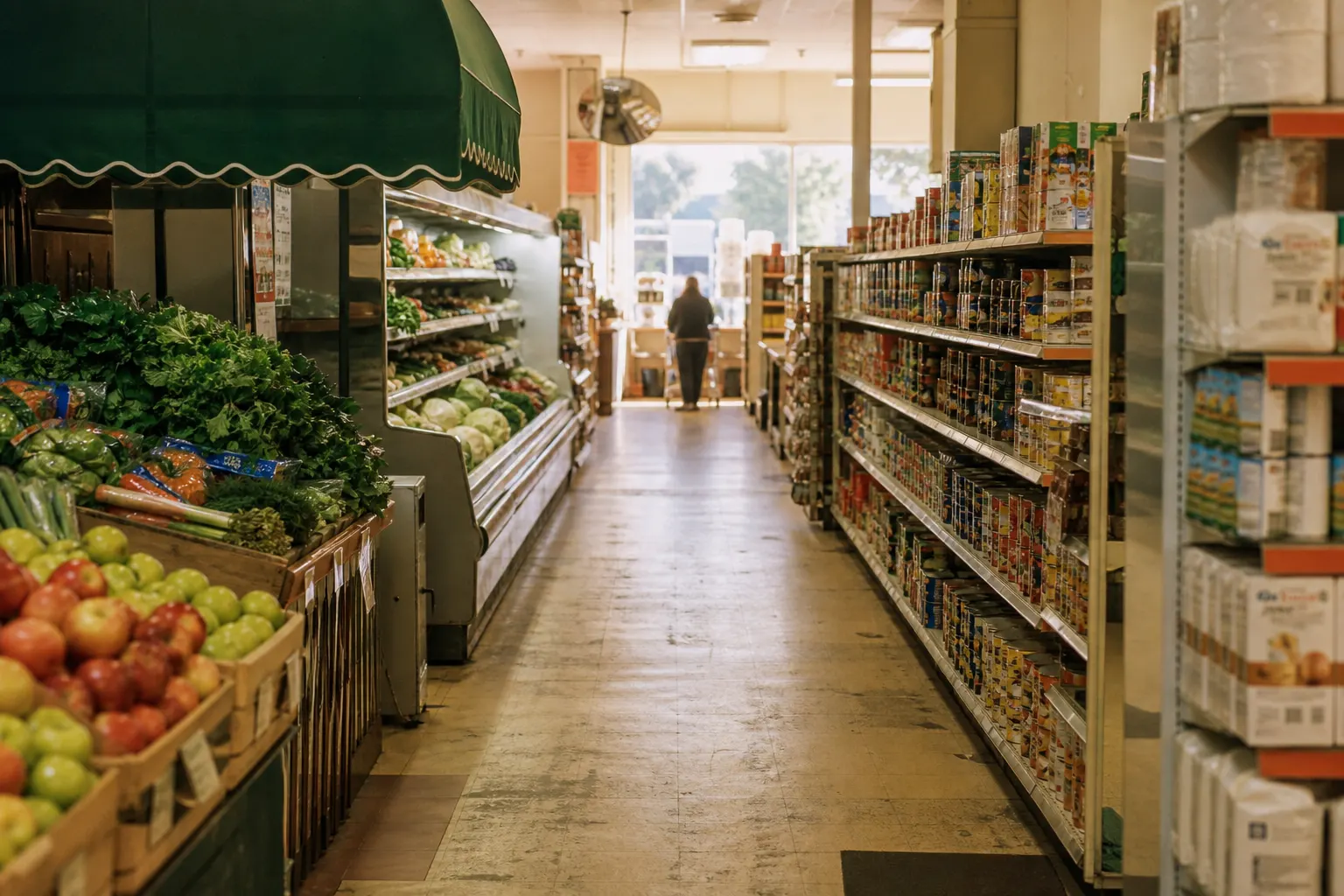
Cash to close a grocery store is larger than the equity slogan. Mark the cash-to-close estimator and the Buyer Underwriting Workbook, then book a confidential intro with a number you can say out loud. Grocery Store Business Broker — HedgeStone Business Advisors, led by Jason Taken — would rather hear the real stack in week one than watch a file die when inventory night arrives. Jason also sees grocery paper through Jaken Finance Group, which is how a DSCR conversation stays honest when someone quotes “fifteen percent down.”
The buyer hub is the method. This page is the worksheet in prose. FMI’s 2.1 percent average net profit for food retailers in 2025 is why a thin reserve is not a personality trait. Grocery is a high-turn, low-net trade. You do not get to discover that after you have spent the last dollar on goodwill.
Teaching example, labeled illustrative: a $1,050,000 going-concern (ex-inventory) at 15 percent equity is $157,500. That line is what people repeat on forums. It is not the check. Inventory at cost of $180,000 is usually cash or a short-term piece, not magic. Add $75,000 working capital — the cash to buy the next load — and $30,000 for closing plus SNAP downtime. You are a roughly $442,500 buyer, not a $157,500 buyer. Say that number on the call.
A neighborhood box can be smaller and still surprise you. Teaching example, labeled illustrative: a $620,000 going-concern at 15 percent is $93,000 equity. Inventory of $95,000, $40,000 working capital, and $20,000 for closing and SNAP lag still puts you near $248,000. A rural living that looks “affordable” on goodwill can be a terrible loan if you cannot document the rest. Those are different questions. Read buying a rural grocery before you treat a small check as an easy file.
SBA 7(a) can finance a change of ownership. The published maximum is $5 million. Eligibility still wants a for-profit U.S. business that is small under SBA size rules, not an ineligible type, unable to obtain the desired credit on reasonable terms elsewhere, and creditworthy with a reasonable ability to repay. Equity injection, inventory treatment, and standby seller notes are deal-specific. Do not invent SOP percentages from a forum. Run the SBA 7(a) payment and DSCR calculator after you replace seller hours with hired labor.
A seller note often sits on standby behind the senior loan. Standby is not free cash. It can help the senior lender’s math. It does not buy the next produce load. Buying with seller financing and how much a seller should carry are the two sides of that conversation. Conventional or credit-union paper shows up when the box and the borrower are boring in a good way — see conventional and alternative financing.
Buyers who quote BizBuySell and forget the stockroom are quoting a brochure. Grocery and supermarket businesses sold on BizBuySell in 2025 printed a 3.38 average earnings multiple, a 2.66 five-year average for 2021–2025, and a 1.60–3.15 interquartile range on that sold sample. The 0.43 average revenue multiple in 2025 is a cross-check. None of those figures includes a promise that inventory is “in the price.” The valuation hub prices the going concern. The count night prices the room.
Retail tags are not cost. Unsellable is a fight you write rules for before 2 a.m. FIFO versus a messy room is how that fight starts. Read how inventory is counted at closing and closing-day count procedures. The inventory value estimator is a teaching tool. The count is the price.
Turns are not one number. Center store and the wine room do not share a clock. Meat and produce turn on a different week than canned beans. A “healthy” storewide blend can hide a dead freezer. Shrink that is “about 2 percent” with no count history is a claim. See shrink, margin, and turns. If the seller wants retail and you are paying cost, you do not have a deal. You have an argument scheduled for midnight.
Most files close as asset sales. You buy the going concern, the equipment, and the stockroom. You do not buy the seller’s SNAP permit. APA schedules should list what is included and what is sitting in the seller’s cousin’s garage. Read asset purchase agreement essentials.
Working capital is the cash to buy the next truck from the wholesaler and the DSD vendors who will not wait for your refinance story. A supermarket that turns center store faster still needs meat and produce cash every week. An independent supermarket with a full-line book needs more dry-grocery float than a specialty market. A natural / organic file can need more because UNFI or KeHE terms are not a vibe.
An over-advance on the wholesaler statement is debt. It is not an add-back. If you cannot assume the guarantee, price the payoff inside cash to close or walk. Banner program charges belong in the recast as continuing costs if you keep the fascia. Buying a franchise or banner store versus independent is the consent problem that also moves cash.
Payroll is cash you will write in week one. State minimum wage is a model input. Owner “salary” that is really unpaid family hours reverses on Tuesday. If the store only works with the seller in the meat case seventy hours a week, model the labor you will hire, then test DSCR again. Recasting a grocery P&L is how you stop treating unpaid weeks as earnings.
Occupancy is cash too. Rent that eats the mid-single digits of sales needs a recast or a renegotiation. A below-market related-party rent juiced the seller’s SDE and will reverse on day one. Run the rent-as-percent-of-sales checker. Read lease diligence. CAM true-ups can erase a year of “extra” SDE. If you are buying the building, that is a second check — buying a store with real estate. Recast the store on market rent first.
USDA FNS: SNAP authorization does not transfer. The new owner files a new application. If EBT is a material week, downtime is a cash hole, not a paperwork footnote. Budget the application and the lag in the reserve and in the story you tell the landlord. Read EBT / SNAP diligence. Print the closing and license checklist.
Alcohol is a class, a quota, or a control-state product — NABCA lists 17 control states plus local-control pockets. Transfer fees, deposits, and dry weeks belong on the sheet. Read alcohol regime and liquor license diligence. WIC is a vendor file. Lottery is often personal. Tobacco sits with tax and health agencies. Tax clearance belongs in escrow language. Counsel and escrow have invoices. Put them on the stack.
Attorneys and CPAs who have never closed a grocery file will rediscover SNAP in week six. Bring them working with attorneys and CPAs before they discover it for you. The LOI terms that matter for buyers should condition licenses so you are not funding a store that cannot ring EBT.
HFFI and state healthy-food programs change. Do not quote a stale dollar cap as if it were cash in your account. Buying in a food desert is still a P&L and a lease. Rhetoric does not replace a reserve.
DSCR is annual cash flow after an honest recast, divided by annual debt service. Hope is not a ratio. FMI’s $668,377 average weekly sales per supermarket in 2025 is a channel benchmark. Your week has to cover the note on this box after you hire labor and pay market rent. A 2.1 percent food-retailer net sample is a reminder that a small miss in shrink or occupancy is a missed payment, not a rounding error.
Unreported cash does not survive SBA. It also does not survive a serious conventional buyer. If the seller’s lifestyle depends on a week that never hit the bank, you cannot borrow against it. Red flags that should kill a grocery deal include a sales story that scan, tax, and EBT refuse to repeat.
Buying as a first-time owner still needs the same stack. Extra equity does not replace grocery hours someone will underwrite. A partner who has perishable skill can be part of the credit story. A pretty resume cannot. How to buy a grocery store step by step is the sequence. This page is the number that sequence has to clear.
Comparing offers means cash at close, note terms, inventory treatment, and license risk — not the headline price. A lower asking price with a bloated stockroom and a SNAP-heavy mix can cost more than a cleaner file at a higher multiple. Earn-outs on grocery are hard because the buyer controls mix after Monday. Do not treat an earn-out as cash you do not need to bring.
Holdbacks exist because grocery has shrink and successor tax risk. They are not a substitute for working capital. Escrow, holdbacks, and earn-outs explain the difference. You still need money in the register on Tuesday.
Census reported $72,706 million in NAICS 44511 supermarket and other grocery sales for June 2026 (not seasonally adjusted, via FRED). That is the channel’s month. It is not your float. Your float is the next load, the next payroll, and the weeks EBT is dark.
First payroll is cash you write before the first weekend. If close is a Thursday, you still have Friday and Saturday labor. Deposits for utilities, the landlord’s assignment fee, and insurance binders belong on the same sheet as SNAP lag. A credit-card processor change can hold a few days of receipts. Put a line for that float. Preparing three years of financials is how the seller should have shown you the labor run-rate. You still have to fund the first two cycles.
Conventional paper sometimes wants more equity and a cleaner box. SBA 7(a) can stretch the check and still leave inventory as a cash problem. Neither product buys you out of a thin 2.1 percent food-retailer net. If DSCR only works on the seller’s unpaid weeks, you do not have a loan. You have a wish you are about to fund with the last of the reserve.
State pages exist because wage, food tax, and alcohol change the labor and license lines. Start at California, Texas, or New York if you already know the state. Format pages — gas-station grocery, convenience with grocery, discount or salvage — change inventory mix and therefore cash. How it works covers the sequence after you are under NDA. Buyer FAQs cover the relationship.
Jason Taken would rather send you back to the estimator than tour you through a store you cannot fund. Mark the four lines on paper. When they add to a number you can document, schedule the buyer strategy call. Bring proof of funds that cover equity, inventory, working capital, and SNAP reserve. That is what “ready” means on this side of the table.
These figures are a teaching walk-through for How much money you need to buy a grocery store, not a quote and not a sold comp. Order of operations: weekly sales, recast SDE, inventory at cost, then a multiple band.
| Input or output | Illustrative figure |
|---|---|
| Weekly sales (illustrative) | $228,000 |
| Annual sales | $11,856,000 |
| Recast SDE | $426,816 (3.6% of sales) |
| Inventory at cost | $741,000 (~16 turns) |
| Occupancy check | $438,672 / year (3.7% of sales) |
| Low going-concern | $1,658,654 at 2.15x SDE + inventory |
| High going-concern | $2,085,470 at 3.15x SDE + inventory |
| Sketch DSCR on a note | 1.51 |
If weekly sales or shrink move 8 percent, the SDE and the note move with them. That is why Jason Taken starts with scan data and the lease, not with a neighbor's rumor multiple.
Bring proof of funds or a lender pre-screen, your format, and geography. Jason will tell you whether a store like this can clear SBA or seller-carry math.
Print these, mark them up, and bring the marked copy to the intro. They are educational. They are not a valuation letter and not a listing. All downloadable guides.
Have the file ready so the hour is a recast, not a scavenger hunt. Then pick a time.
Underwrite the deal before you fall in love with the store
Scan data, SNAP mix, rent-to-sales, and DSCR. If those four do not clear, the CIM photos do not matter.
Schedule a Buyer Strategy CallNo. Equity is one line. Inventory at cost, working capital, SNAP lag, and closing costs sit beside it. Say the sum.
Sometimes a short-term piece covers it. Treat inventory at cost as cash you must have a plan for. Retail tags are not cost.
3.38 average earnings multiple on grocery/supermarket businesses sold on BizBuySell in 2025; IQR 1.60–3.15 for 2021–2025. Then subtract holes. The multiple is not cash to close.
USDA FNS: SNAP authorization does not transfer. If EBT is a real week, budget downtime until the new-owner application clears.
A marked cash-to-close sheet and proof of funds that cover the whole stack, not just the equity slogan.
Source and finance a grocery acquisition
Jason Taken works buyers through qualification, SBA or seller-carry structure, and a diligence plan a lender will fund. Book the hour.
Schedule a Buyer Strategy CallThis page is educational information from Grocery Store Business Broker (HedgeStone Business Advisors). It is not legal, tax, or investment advice. Licensing, tax, and financing rules vary by state and deal. Confirm every item with counsel and your lender before you sign.
Ready when you are. Jason Taken will talk through the file.
Book a confidential intro