Is IGA a franchise I can sell with the store?
Treat it as a banner contract, not as equity. Written consent is a close condition if the buyer wants the fascia. Do not assume the sign travels with the APA.
Grocery Store Business Broker · HedgeStone Business Advisors · Jason Taken
Last updated 2026-09-04
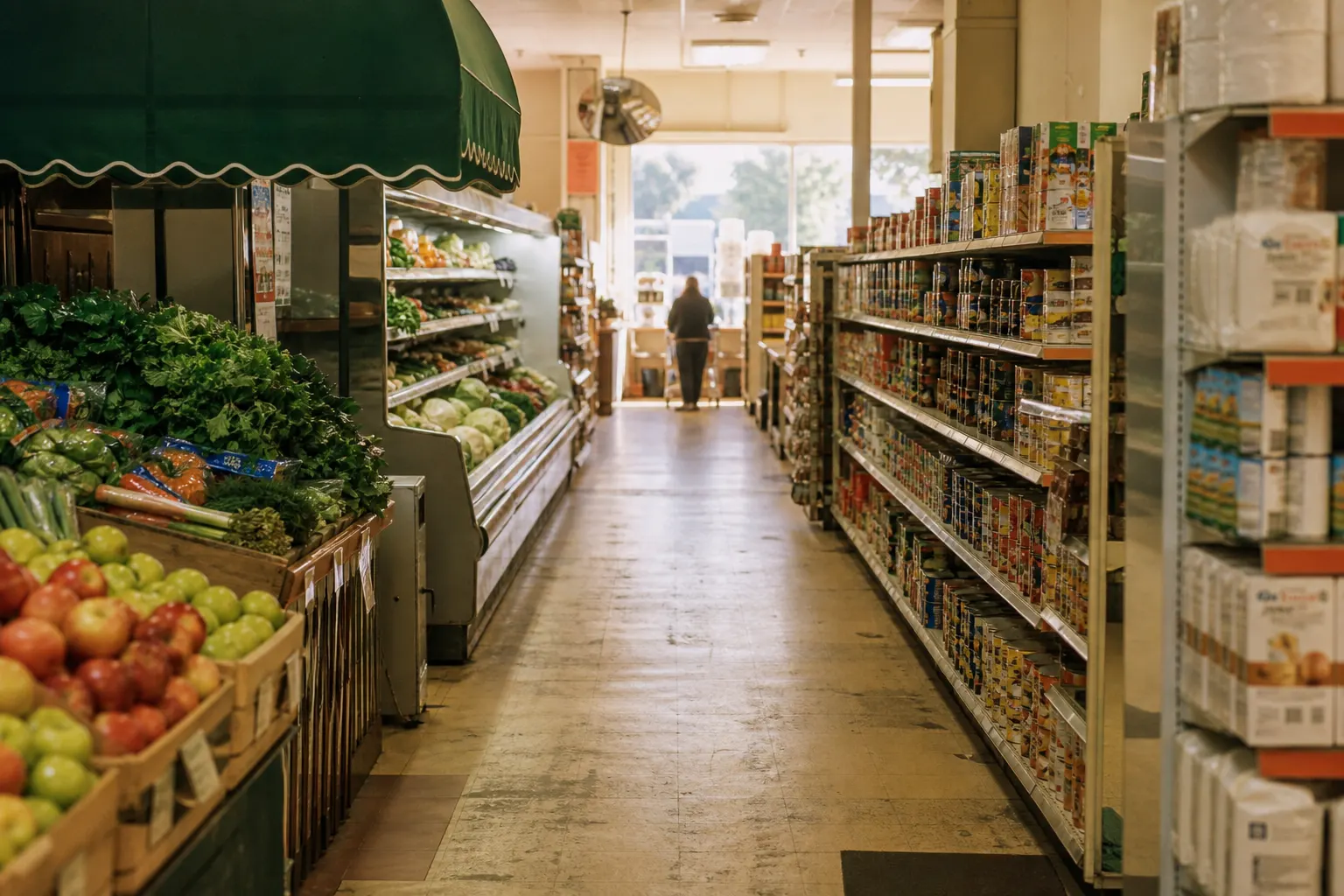
A grocery banner is a contract for a fascia. It is not equity, and it is not a franchise you can toss into the APA as if the sign were a truck. IGA, Piggly Wiggly, and similar programs charge for a name, a circular, and often a private-label set. Consent is a close condition if the buyer wants to keep that name. Grocery Store Business Broker — the grocery practice of HedgeStone Business Advisors, led by Jason Taken — treats the fascia as a diligence item, not as a slogan on a teaser.
This directory orients names you will see on independent boxes. It is not a roster of every licensed store, and it does not invent fee tables, store counts, or a banner premium. Confirm the actual agreement on this file. FMI’s $1 trillion in 2025 supermarket sales and $668,377 average weekly sales per supermarket describe the channel. They do not tell you whether the buyer can keep the IGA sign on Tuesday. Start at banner versus independent if you are choosing a path. Start at wholesaler agreements at sale if you already have a contract in the drawer.
Operators say “my IGA” the way they say “my store.” The legal file is closer to a license: use the marks, follow the program, pay the charges, buy through the book the program expects. When ownership changes, the office that owns the marks gets a vote. Some programs treat a sale as an assignment with a form. Some treat it as a new member. Some will not bless a buyer who wants a different warehouse. Read the paper. Do not rely on a handshake from the seller.
Private-label sets travel with the program. If the buyer keeps the fascia, those SKUs stay on the planogram and the rebate calendar. If the buyer converts, those SKUs become a reset: tags, tags, and a few weeks of confused shoppers. Recast both paths. Do not blend a keep-the-name earnings story with a convert cost story. Read buying and converting before you promise the circular continues.
Signage is not free goodwill. Pole signs, vestibule vinyl, and circular art are often specified. Removing them can be a close cost. Leaving them up without consent is how you start a trademark fight after funding. Write who pays for a re-skin if consent fails. Put it in the APA schedules, not in a hallway conversation.
A teaching split — not a quote. Recast SDE of $195,000 with banner fees already in the P&L. Inventory at cost $180,000. If the buyer keeps the name, those fees stay and the fascia is a consent item. If the buyer drops the name, you may need a working-capital reserve for the reset and a new wholesaler application. The going-concern multiple still comes from the national BizBuySell grocery sample, not from a “branded store” invention. 3.38 average earnings multiple on grocery/supermarket businesses sold on BizBuySell in 2025; IQR 1.60–3.15 for 2021–2025.
IGA is the name buyers ask about first. It is a long-running independent identity used with different wholesale books depending on the region. The store in front of you may buy through AWG, a regional co-op, or another house. Confirm the book. The sign is not the warehouse. See the wholesaler directory.
Piggly Wiggly shows up on independently owned boxes in several states, often with a licensed program and a specified supplier. The same rule applies: the fascia is a contract. A buyer who wants “the Pig” needs written consent. A buyer who wants the real estate and a different name needs a convert plan and a recast that drops program charges.
Wholesaler house brands sit in a third pile. Some independents wear a warehouse identity — a co-op mark, a distributor private-label fascia, or a regional banner the house will only supply if you stay on the book. Wakefern-supplied ShopRite stores are a retailer-owned cooperative story, not a typical one-store franchise flip. Do not treat a ShopRite or similar co-op identity as a transferable logo you peel off for a first-time SBA buyer. Confirm membership, equity, and whether a sale is even allowed without a board or warehouse vote. Read cooperative (grocery) so you do not confuse a retailer-owned wholesale co-op with a consumer food co-op.
Natural and specialty operators may wear no conventional banner at all and still run a tight identity: a local name, a UNFI or KeHE book, and a shopper who thinks the store is the brand. That is an independent. Do not force an IGA comparison onto a natural store or a specialty market. Discount and salvage boxes sometimes wear a franchise-like discount fascia. Treat those as trading businesses. This pack does not source a salvage-only multiple. See discount / salvage grocery.
Rural independents sometimes keep an IGA or similar mark as a lifeline for circulars and drop size. That contract can be the reason the warehouse still stops. Verify it. A banner that is about to drop the store is a price cut, not a story about community. See rural grocery.
This page does not list every licensed independent banner in the United States. If your fascia is not named here, the diligence is the same: pull the agreement, find consent, recast the fees.
Program charges show up as advertising, royalty-like fees, technology, circular, or a bundle you have been paying so long nobody labels them. If the buyer will keep the fascia, those charges are continuing costs. They are not one-time add-backs. If you have been adding them back every year because “the next owner will drop the sign,” say that in the recast and price the convert. Do not do both.
Slotting and manufacturer money are less reliable in a single independent than at chain scale. Do not recast hoped-for slotting into run-rate SDE unless the invoices repeat cleanly. Banner offices sometimes coordinate promotions. That is not a second earnings engine you can sell.
Labor does not get cheaper because the circular looks professional. Staffing still follows the state minimum-wage table and the hours the banner’s hours-of-operation rules imply. Occupancy still sits on the lease. FMI’s 2.1 percent average net profit for food retailers in 2025 is a Speaks sample. It is not a banner-store target. Recast this P&L. Read recasting a grocery P&L.
Working capital is the cash to buy the next load under the program’s drop calendar. A buyer who keeps the book needs a plan for the first drop after funding. A buyer who converts needs a plan for the last drop and the first drop from a new house. Use the cash-to-close estimator.
SBA 7(a) can finance a change of ownership. The published maximum is $5 million. A lender will still ask whether the fascia is staying, whether consent is written, and whether SNAP will have a gap. USDA FNS: SNAP authorization does not transfer. The new owner files a new application. The banner office does not file it for you. Read SBA 7(a) for grocery.
Sequence the banner conversation the way you sequence the warehouse. NDA first. Serious buyer second. Program office third. Telling the banner office before you have a process is how the floor hears you are exiting. Employees learn from vendors and shoppers. Read how to sell confidentially.
If consent is required, write it as a closing condition. Do not close and “handle the sign later.” If consent is refused, you are in a convert: new tags, new circular, maybe a new warehouse, and a shopper who wonders whether the store is closing. That is a transition problem. Write hours and a script. See transition and training.
A buyer who wants a different book often cannot keep the fascia. Treat that as one decision, not two. The LOI should say keep-the-name or convert. The APA should attach the banner agreement, any required assignment form, and a list of marks that must come down if consent fails. Inventory night still counts sellable stock at cost. Private-label that the incoming book will not take may be unsellable to that buyer. Write the rule before 2 a.m. See how inventory is counted.
Lease language can interact with the fascia. Some landlords care about the name on the monument. Some exclusive-use clauses assume a full-line grocery under a particular identity. Read lease diligence. A lease with 24 months or less and no options is still a price cut, banner or not.
Alcohol, SNAP, WIC, lottery, and tobacco do not ride on the fascia. They ride on agencies. Print the closing and license checklist. Most independents still close as asset sales. You are selling the going concern and, if consented, a license to use marks. You are not selling the trademark.
A multi-store owner wearing the same fascia on every box still needs a consent calendar store by store. One office letter that names three addresses is better than three hallway promises. If the buyer wants only two of four, the leftover stores may have to drop the name or find another operator the program will bless. Read selling multiple locations. Technology and POS rules can travel with the program. A required front-end upgrade is a close cost if the buyer keeps the name. Put it on the recast as a known capital item, not as a surprise after funding.
FMI’s $1 trillion supermarket year does not assign the marks. Neither does a busy Saturday. The program office assigns the marks. If you cannot find the contract, say that on the intro. Missing paper is common. Pretending the sign is yours in fee simple is how the first hour dies.
Bring the banner page of the agreement with the assignment clause underlined. Bring twelve months of program invoices. Bring last week’s scan data so we can see whether the circular departments are real. Say in one sentence whether the buyer must keep the name. Then say what you do not have: the contract, the fee schedule, or a letter from the office.
Print the SDE worksheet. Mark program charges as keep or drop. Mark owner pay and related-party rent the same way you would on an unbranded store. The national multiple sample does not change because the pole sign is red. Read the valuation hub and how to value a grocery store.
Jason Taken will recast a banner store in that order: weekly sales you can prove, SDE a lender will believe, fees that stay or die, inventory at cost, then consent clocks. The twin operator question is on buy an independent supermarket. The seller hub holds the rest of the sequence. If you already know the buyer will convert, skip the romance about the pole sign and recast the valley. If you already know the buyer must keep the name, get the assignment form in the room before you pick a Tuesday.
Book a confidential intro. Bring the contract if that is all you have. The hour is for whether the fascia survives the Tuesday, not for a directory of slogans.
These figures are a teaching walk-through for Grocery Banner Directory, not a quote and not a sold comp. Order of operations: weekly sales, recast SDE, inventory at cost, then a multiple band.
| Input or output | Illustrative figure |
|---|---|
| Weekly sales (illustrative) | $168,000 |
| Annual sales | $8,736,000 |
| Recast SDE | $314,496 (3.6% of sales) |
| Inventory at cost | $436,800 (~20 turns) |
| Occupancy check | $305,760 / year (3.5% of sales) |
| Low going-concern | $1,065,792 at 2.00x SDE + inventory |
| High going-concern | $1,333,114 at 2.85x SDE + inventory |
| Sketch DSCR on a note | 1.48 |
If weekly sales or shrink move 8 percent, the SDE and the note move with them. That is why Jason Taken starts with scan data and the lease, not with a neighbor's rumor multiple.
Book the intro call with your side of the table ready: seller files or buyer capital. The calendar is the only next step.
Print these, mark them up, and bring the marked copy to the intro. They are educational. They are not a valuation letter and not a listing. All downloadable guides.
Have the file ready so the hour is a recast, not a scavenger hunt. Then pick a time.
Get a specialist on the other side of the table
Grocery deals turn on licenses, inventory, and a recast a lender will believe. Book the intro and bring the file.
Book an Intro Call With Jason TakenTreat it as a banner contract, not as equity. Written consent is a close condition if the buyer wants the fascia. Do not assume the sign travels with the APA.
If the buyer keeps the name, yes. Recast those fees as continuing costs. If the buyer will convert, recast the rebrand and the lost private-label book instead.
This pack does not invent a banner premium. BizBuySell’s 2025 grocery/supermarket sold sample averaged 3.38× earnings; the 2021–2025 IQR is 1.60–3.15. Consent and lease term move the check more than the sign.
Then the fascia often dies with the book. Sequence wholesaler consent and banner consent together. Read the conversion guide before you promise the sign stays.
Not first. Sequence it after an NDA and a serious buyer, the same way you sequence the warehouse. The floor hears vendors.
Only if the contract lets you drop the name without a fee or a supply cut, and only if you recast the lost circular and private label. Read the agreement. Do not guess.
Start a confidential grocery conversation
Whether you are exiting or acquiring, pick a time and we will talk through the file.
Book an Intro Call With Jason TakenThis page is educational information from Grocery Store Business Broker (HedgeStone Business Advisors). It is not legal, tax, or investment advice. Licensing, tax, and financing rules vary by state and deal. Confirm every item with counsel and your lender before you sign.
Ready when you are. Jason Taken will talk through the file.
Book a confidential intro