Is “the only store in town” worth extra?
It is a fact about the trade area, not a license to invent a scarcity premium. Underwrite freight, SNAP, and the wholesaler minimum.
Grocery Store Business Broker · HedgeStone Business Advisors · Jason Taken
Last updated 2026-09-04
A rural grocery can be a good living and a difficult loan. Those are different questions. Mark the Buyer Underwriting Workbook, then book a confidential intro with the county you will actually move to, the hours you will work, and the cash you can document. Grocery Store Business Broker — HedgeStone Business Advisors, led by Jason Taken — will recast the week before anyone romanticizes Main Street. Jason also sees grocery paper through Jaken Finance Group, which is how a rural DSCR stays a ratio instead of a mission statement.
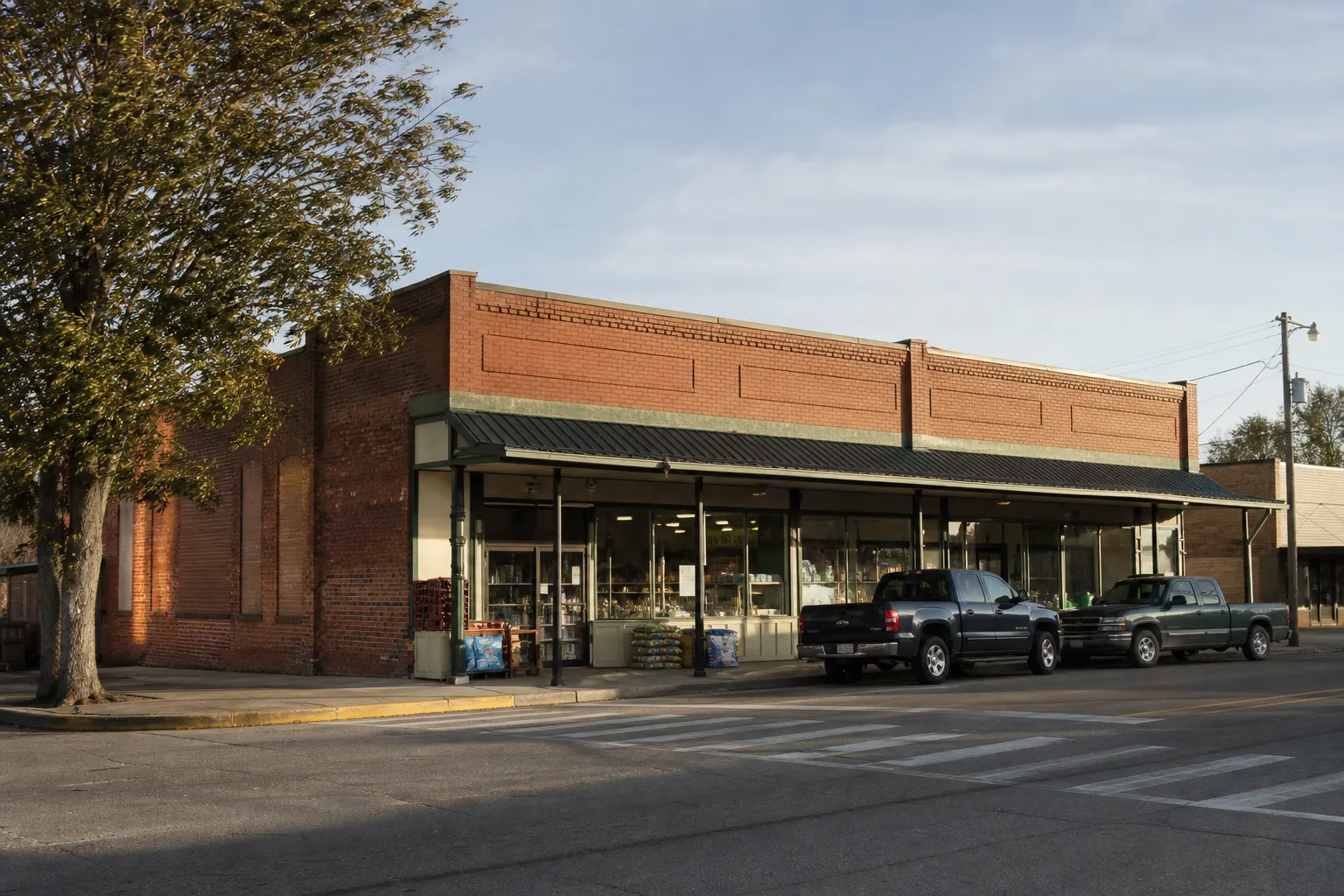
This is not a neighborhood grocery with more sky. It is one store in town, a fragile drop, and a buyer pool measured in single digits. Start at how to buy a grocery store step by step if you have not yet decided whether you can live there.
“This town will not have a store” is a sentence sellers use. It is not a license to invent a dollar amount. Do not invent a rural food-desert premium. Buying in a food desert still needs a P&L. A food desert story without sales proof and without a lease is a donation. HFFI and state healthy-food programs change; do not quote a stale dollar cap. See the Healthy Food Financing Initiative as a program name, not as a plug-in multiple.
FMI’s $668,377 average weekly sales per supermarket and $19.59 weekly sales per selling square foot in 2025 are the wrong benchmark for a rural box. FMI’s $1 trillion in 2025 supermarket sales and 45,575 U.S. supermarkets in 2024 describe a channel. Your week is this store’s scan data, sales-tax filings, and EBT deposits. Read verifying sales with scan data.
FMI’s 2.1 percent average net profit for food retailers in 2025 is a food-retailer net sample. Rural grocery can print a living after owner pay and still fail a lender’s density test. Those are not the same outcome. Evaluating a store’s P&L and recasting a grocery P&L come before anyone argues a multiple.
BizBuySell grocery and supermarket businesses sold in 2025 printed a 3.38 average earnings multiple, a 2.66 five-year average for 2021–2025, a 1.60–3.15 interquartile range, and a 0.43 average revenue multiple. Apply that national listing-site sample as context. Inventory and the building condition are most of the check on a rural file. The valuation hub is the method. The multiples report is the sourced sample.
A dollar-store opening you can confirm — already open or announced — is a diligence item. A dollar-store opening you invent is fiction. Competition and trade-area math still applies when the next grocer is forty minutes away.
Rural supply is often one primary wholesaler with a drop-size minimum, plus long DSD routes that may drop the store the week after the seller’s relationship ends. Ask what happens when this week’s purchase falls under the minimum. Freight is a line, not a vibe. The wholesaler and cooperative directory is orientation. The contract is the file.
A co-op or IGA banner can be a lifeline. Confirm the contract. Program fees belong in the recast if you will keep the fascia. Buying a franchise or banner store versus independent is the consent problem. An over-advance on the wholesaler statement is debt. If you cannot assume the guarantee, price the payoff or walk.
Turns on a rural box are not a city supermarket clock. Center store can sit. Produce still dies. Shrink that is “about 2 percent” with no count history is a claim. Read shrink, margin, and turns. Inventory at cost is often heavy because the drop is infrequent and the back room is a warehouse. Write unsellable rules before 2 a.m. See how inventory is counted at closing and closing-day count procedures.
Pharmacy, if present, is a separate license and a separate buyer skill. Loss of a pharmacy counter is a sales hole you model, not a footnote. Do not treat a pharmacist-owner as transferable labor. The same rule applies to a meat cutter who is also the closer: you are buying two jobs. Price both, or the week after close is an empty case and a locked door.
The rural file that only works because the seller is the only cutter — or the only pharmacist — is a labor file first. Model the payroll you will hire. A town that cannot produce a cutter is a town where you will be the cutter. Say that on the call. State minimum wage still applies. Unpaid family hours reverse on Tuesday.
Buying as a first-time owner on a rural grocery is possible when you will live there and work the hours. It is not possible as a remote investment with a manager you have not met. Local managers and adjacent-town independents usually win these files because they can staff Saturday. Mission-driven buyers still need a P&L.
Transition hours are a close condition. Write them into the APA. Hold the seller to the meat case and the order guide for the hours you bargained. Transition and training periods exist so the first drop after close still arrives.
Employees in a small town learn from vendors and shoppers. Confidentiality is a process. That does not change the underwriting. It does change how you walk the store. Read non-competes and confidentiality so the non-compete is enforceable in the state and narrow enough to keep.
Owned real estate is common on rural groceries and it is a second asset. Recast the store on market rent, then cap the building. Buying a store with real estate is two prices. A grocery store with real estate essay exists so you stop blending them.
A below-market related-party rent juiced the earnings and will reverse if you buy only the store. A related-party landlord who “will be fine” is not an assignment. Read lease diligence for assignment, remaining term, and who pays the roof. Rural roofs are not theoretical. A lease with twenty-four months or less and no options is a price cut.
Sale-leaseback talk shows up when a buyer wants the store and not the brick. Sale-leaseback strategy is a structure, not a slogan. Realty still needs a real-estate licensee in that state.
How to read a CIM on a rural file means looking for the deed, the roof, the cooler age, and the wholesaler contract. A CIM that omits the lease or the deed is a brochure.
USDA FNS: SNAP authorization does not transfer. The new owner files a new application. On a rural week, EBT is often a large share of sales. The new-owner gap is existential. Regulars will drive forty minutes once. They may not drive back. Budget downtime in cash and in the story you tell the town. Read EBT / SNAP diligence and what happens to SNAP authorization when you sell. Print the closing and license checklist.
EBT deposits should reconcile to the SNAP story. A gap is mix, downtime, or fiction. SNAP retailer authorization is a new file. WIC is a vendor file. Lottery is often personal. Tobacco sits with tax and health agencies. Alcohol is a class, a quota, or a control-state product — NABCA lists 17 control states plus local-control pockets. A rural beer cooler is not “the liquor license.” See state-by-state alcohol regime.
Attorneys and CPAs who have never closed a grocery file will rediscover SNAP in week six. That week can empty a rural box. Bring them working with attorneys and CPAs before you are under contract.
SBA 7(a) can finance a change of ownership. Published maximum is $5 million. Eligibility still wants a creditworthy borrower with a reasonable ability to repay. Rural files stall on density, grocery experience, and a recast that only works if the buyer is unpaid. DSCR is annual cash flow after an honest recast, divided by annual debt service. Hope is not a ratio. Run the SBA 7(a) payment and DSCR calculator after you have hired a cutter and put rent at market.
Unreported cash does not survive SBA. A town that “runs on cash” still needs a bank trail if you want a government-guaranteed loan. Red flags that should kill a grocery deal include an oral lease, a wholesaler over-advance you cannot assume, and a SNAP-heavy mix with no compliance history.
Conventional and credit-union paper sometimes fits a boring rural box with a borrower who already lives there. See conventional and alternative financing. A food-desert story without those ingredients is still a donation.
A seller note is common because the buyer pool is small and the senior lender is cautious. Read the note. Read the standby if SBA is senior. Buying with seller financing is the buyer essay. How much a seller should carry is the other side. A note you cannot service after freight and SNAP lag is not “seller financing.” It is a delayed failure. Ask whether the note amortizes, whether it stands by behind SBA, and what happens if the first drop after close is late. A rural seller who will carry and also stay in the cut room for thirty days is a different file than a seller who wants a balloon and a fishing trip on Monday.
Teaching example, labeled illustrative: a $650,000 going-concern (ex-inventory) with 15 percent equity is $97,500. Inventory at cost of $175,000 is usually cash because the drop is heavy. Add $50,000 working capital and $35,000 for closing plus SNAP downtime. You are a roughly $357,500 buyer before you argue about a seller note on the balance. Say the number. The cash-to-close estimator and how much money you need exist so the stack is honest.
Most independents close as asset sales. Tax clearance belongs in escrow. Bulk-sale or successor-liability practice can still exist after UCC Article 6 died — see bulk sales law and state-by-state bulk sales tax clearance. Asset purchase agreement essentials are where the cooler, the truck, and the excluded hunting rifle get scheduled.
Post-close, keep the vendors paid and talking. Re-file SNAP immediately. Walk shrink in perishable departments daily. Recount problem categories within a week. Do not change the mix for sport. The post-closing 90-day plan is written for this kind of week. Regulars will forgive a new owner who keeps the meat case. They will not forgive an empty cooler.
The LOI terms that matter for buyers here are wholesaler continuance, SNAP outs, inventory rules, building condition or assignment, and transition hours. Comparing offers means cash at close, note terms, inventory treatment, and license risk — not a scarcity speech. Surviving due diligence is the calendar.
If the file is really a gas-station grocery or a distressed box, go to buying a distressed store. The buyer hub is the method. How it works is the sequence after NDA. Buyer FAQs cover the relationship.
When freight, SNAP reserve, and the labor you will hire are numbers you can say out loud, schedule the buyer strategy call. Bring proof of funds, the county you will occupy, and whether you will be the butcher. That is enough to start looking at real files.
Use this napkin recast on Buy a rural / small-town grocery store when you book the call. It is labeled illustrative. BizBuySell's 2025 grocery sold-business earnings multiple averaged 3.38, with a 2021-2025 IQR of 1.60-3.15.
| Input or output | Illustrative figure |
|---|---|
| Weekly sales (illustrative) | $168,000 |
| Annual sales | $8,736,000 |
| Recast SDE | $410,592 (4.7% of sales) |
| Inventory at cost | $546,000 (~16 turns) |
| Occupancy check | $305,760 / year (3.5% of sales) |
| Low going-concern | $1,367,184 at 2.00x SDE + inventory |
| High going-concern | $1,716,187 at 2.85x SDE + inventory |
| Sketch DSCR on a note | 1.51 |
If weekly sales or shrink move 8 percent, the SDE and the note move with them. That is why Jason Taken starts with scan data and the lease, not with a neighbor's rumor multiple.
Bring proof of funds or a lender pre-screen, your format, and geography. Jason will tell you whether a store like this can clear SBA or seller-carry math.
Print these, mark them up, and bring the marked copy to the intro. They are educational. They are not a valuation letter and not a listing. All downloadable guides.
Have the file ready so the hour is a recast, not a scavenger hunt. Then pick a time.
Underwrite the deal before you fall in love with the store
Scan data, SNAP mix, rent-to-sales, and DSCR. If those four do not clear, the CIM photos do not matter.
Schedule a Buyer Strategy CallIt is a fact about the trade area, not a license to invent a scarcity premium. Underwrite freight, SNAP, and the wholesaler minimum.
SBA 7(a) can finance a change of ownership; the published maximum is $5 million. Density, experience, and DSCR still have to look like a grocery the program can underwrite. Seller notes are common here.
Pad cash for a missed drop and a SNAP gap on the same week. A rural register can empty when both clocks slip — say that number on the call.
No. USDA FNS: SNAP authorization does not transfer; the new owner files a new application. On a rural week the gap can empty the register — pad cash. Book a confidential intro to sequence FNS with the freight drop.
Distance is not a multiple. Underwrite population, payroll, and whether the wholesaler minimum still fits the week. A monopoly that cannot fund the truck is still a broken store.
Source and finance a grocery acquisition
Jason Taken works buyers through qualification, SBA or seller-carry structure, and a diligence plan a lender will fund. Book the hour.
Schedule a Buyer Strategy CallThis page is educational information from Grocery Store Business Broker (HedgeStone Business Advisors). It is not legal, tax, or investment advice. Licensing, tax, and financing rules vary by state and deal. Confirm every item with counsel and your lender before you sign.
Ready when you are. Jason Taken will talk through the file.
Book a confidential intro