Where do I start?
Start with SDE and inventory at cost, then open the term that showed up on your CIM.
Grocery Store Business Broker · HedgeStone Business Advisors · Jason Taken
Last updated 2026-09-03
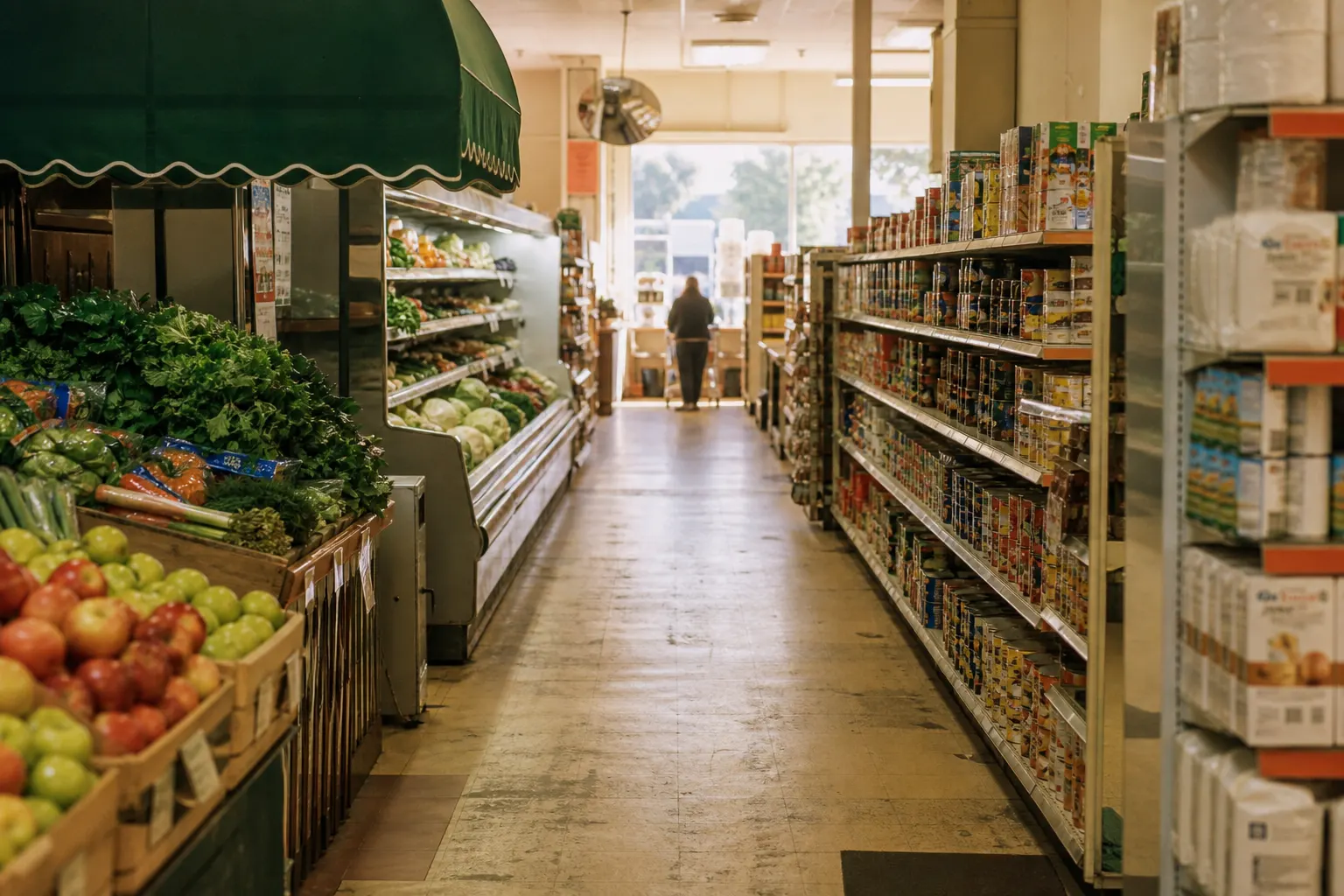
Grocery deals have their own vocabulary. Start with SDE, inventory at cost, shrink, SNAP authorization, and DSCR.
| Topic | Grocery reading | Link |
|---|---|---|
| Earnings | Recast SDE or EBITDA | SDE |
| Stockroom | Inventory at cost | inventory |
| EBT | New owner application | SNAP |
| Debt | DSCR on the recast | DSCR |
Illustrative, not a quote. For a grocery glossary, recast SDE of $180,077 at 1.79×–3.19× plus $143,958 inventory at cost frames a going-concern band of about $466,296 to $718,404. The 2.56× midpoint lands near $604,955. Lease remaining term and license lag can move the check more than the multiple.
Illustrative, not a quote. Keep the conversation on grocery glossary, scan data, and license clocks — not on a neighbor’s rumor multiple.
Transition hours are a close condition. Write them. See also SDE, inventory at cost, shrink, SNAP authorization.
HFFI and state healthy-food programs change; do not quote a stale dollar cap.
Inventory night needs rules: what is unsellable, who pays the crew, how disputes resolve.
The LOI should say how inventory is counted and how licenses are conditioned.
Scan data is the adult conversation. A weekly-sales spreadsheet without department mix is a rumor. See also turns, DSD, wholesaler, asset sale.
Banner fees and program charges belong in the recast as continuing costs if the buyer will keep the fascia.
WIC is a vendor file, not a sticker on the door.
Add-backs that repeat every year are the business. Stop calling them one-time.
Food-desert rhetoric does not replace a P&L. See also lease diligence, liquor transfer, recasting a P&L.
Working capital is the cash to buy the next load, not a vibe.
Attorneys and CPAs who have never closed a grocery file will rediscover SNAP in week six.
Recast before you argue a multiple. Owner pay, one-time legal, and personal autos can move SDE; recurring shrink cannot. See also turns, DSD, wholesaler, asset sale.
Read seller hub, buyer hub, valuation pillar. Cross-check how a sale works and the FAQ. Format pages live under sell an independent supermarket and buy an independent supermarket. Tools: valuation calculator, cash-to-close, rent checker.
Assignment, exclusive use, and co-tenancy are the three clauses that surprise civilians.
Tobacco licenses sit with tax and health agencies, not with the APA automatically. See also SDE, inventory at cost, shrink, SNAP authorization.
Non-competes have to be enforceable in the state and narrow enough to keep.
FMI channel facts describe a supermarket sample. Your 8,000 square foot box is not that sample.
FIFO versus a messy room is how you start a fight at 2 a.m.
APA schedules are where the real store lives: contracts, equipment, excluded assets. See also turns, DSD, wholesaler, asset sale.
EBT deposits should reconcile to the SNAP story. A gap is either mix, downtime, or fiction.
Lease remaining term under 24 months without options is a price cut, not a footnote.
Lottery contracts are often personal. Confirm before you count commission as durable.
Transition hours are a close condition. Write them. See also lease diligence, liquor transfer, recasting a P&L.
The LOI should say how inventory is counted and how licenses are conditioned. See also lease diligence, liquor transfer, recasting a P&L.
Scan data is the adult conversation. A weekly-sales spreadsheet without department mix is a rumor.
Add-backs that repeat every year are the business. Stop calling them one-time. See also SDE, inventory at cost, shrink, SNAP authorization.
Food-desert rhetoric does not replace a P&L.
Attorneys and CPAs who have never closed a grocery file will rediscover SNAP in week six. See also turns, DSD, wholesaler, asset sale.
Recast before you argue a multiple. Owner pay, one-time legal, and personal autos can move SDE; recurring shrink cannot.
Wholesaler over-advances are debt. They are not an add-back.
SNAP authorization does not transfer. Budget downtime in cash and in the story you tell the landlord.
Unreported cash does not survive SBA. It also does not survive a serious conventional buyer. See also SDE, inventory at cost, shrink, SNAP authorization.
Ethnic mix without language on the floor is a shrink plan.
Seller notes often sit on standby behind SBA. Read the standby, not the folklore.
A CIM that omits the lease abstract is a brochure.
Selling to family or a manager still needs a real price and a real note. Soft language creates hard lawsuits.
DSD vendors will keep delivering after a sloppy close only if someone is paying them.
Owned real estate is a second asset. Recast the store on market rent, then cap the building.
Tax clearance belongs in escrow language, not in a handshake. See also lease diligence, liquor transfer, recasting a P&L.
A rural box can be a good living and a terrible loan. Those are different questions.
DSCR is annual cash flow over annual debt service. Hope is not a ratio.
Comparing offers means cash at close, note terms, inventory treatment, and license risk — not the headline price.
Multi-store sales need a shared recast and a shared license calendar, or they unravel store by store. See also turns, DSD, wholesaler, asset sale.
Price language for Grocery deal glossary is (recast SDE x a defendable multiple) + inventory at cost, plus or minus lease and license risk. The table is one consistent example for this URL.
| Input or output | Illustrative figure |
|---|---|
| Weekly sales (illustrative) | $228,000 |
| Annual sales | $11,856,000 |
| Recast SDE | $616,512 (5.2% of sales) |
| Inventory at cost | $988,000 (~12 turns) |
| Occupancy check | $343,824 / year (2.9% of sales) |
| Low going-concern | $2,221,024 at 2.00x SDE + inventory |
| High going-concern | $2,652,582 at 2.70x SDE + inventory |
| Sketch DSCR on a note | 1.54 |
Rent at 2.9% of sales is the occupancy check. If the real lease is higher, the SDE in this table is too generous until you recast to market rent.
Book the intro call with your side of the table ready: seller files or buyer capital. The calendar is the only next step.
Print these, mark them up, and bring the marked copy to the intro. They are educational. They are not a valuation letter and not a listing. All downloadable guides.
Have the file ready so the hour is a recast, not a scavenger hunt. Then pick a time.
Get a specialist on the other side of the table
Grocery deals turn on licenses, inventory, and a recast a lender will believe. Book the intro and bring the file.
Book an Intro Call With Jason TakenStart with SDE and inventory at cost, then open the term that showed up on your CIM.
No. These are grocery-deal usage notes for operators, buyers, and lenders.
Sixty-one term pages, each tied to a recast, a count, or a license clock.
No. Sourced facts stay sourced; null CBP and SNAP counts stay unused.
Start a confidential grocery conversation
Whether you are exiting or acquiring, pick a time and we will talk through the file.
Book an Intro Call With Jason TakenThis page is educational information from Grocery Store Business Broker (HedgeStone Business Advisors). It is not legal, tax, or investment advice. Licensing, tax, and financing rules vary by state and deal. Confirm every item with counsel and your lender before you sign.
Ready when you are. Jason Taken will talk through the file.
Book a confidential intro