What departments count as the grocery perimeter?
Produce, meat, seafood, deli, bakery, and dairy along the walls. Center store is the packaged aisles. Do not blend them into one gross-margin slogan.
Grocery Store Business Broker · HedgeStone Business Advisors · Jason Taken
Last updated 2026-09-04
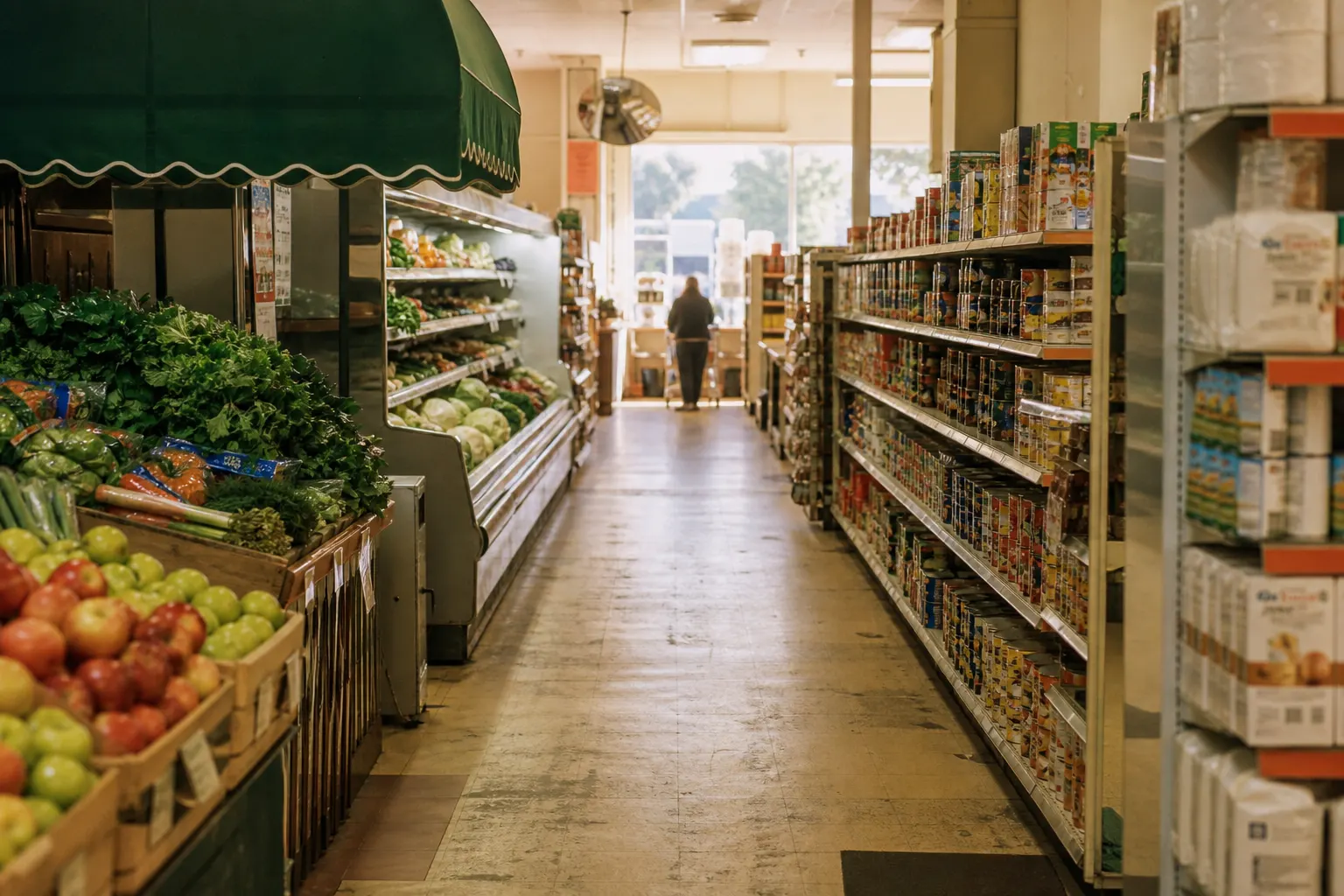
Perimeter — Produce, meat, seafood, deli, bakery, and dairy around the walls of the box. These departments are how an independent grocer earns a trip that a dollar store and a gas cooler cannot copy. They also burn labor and product in ways center store does not.
Grocery Store Business Broker — HedgeStone Business Advisors, led by Jason Taken — reads the walls before the banner. If you have departmental P&Ls, a week of scan data, and an honest waste story, Book a confidential intro. The hour is for whether this is a grocery or a large convenience store wearing a fascia.
Stand at the front door and look left and right. That ring is the perimeter. Produce sets the first impression. Meat and seafood set whether a household will plan dinner here. Deli and bakery set the lunch trip. Dairy is the weekly staple that still has to turn cold. None of that is a canned-aisle problem. Turns on a bag of chips and turns on a ribeye do not share a clock. Blend them and you will mis-price the stockroom and the labor line.
FMI’s 2.1 percent average net profit for food retailers in 2025 is a food-retailer net sample. It is not this store’s meat margin. It is a reminder that grocery is thin enough that a sloppy case can erase the living. Do not invent a “good” produce shrink percent on this page. Read the waste log, the markdowns, and whether the cutter is on the schedule five days or the owner is the only person who can break a hind.
Anatomy of a grocery P&L is where department lines live. Evaluating a store’s P&L is the buyer pass. This page is the word for the walls.
A shopper who only needs paper towels will shop the cheapest aisle in town. A shopper who wants a cut of meat, a ripe melon, and a deli sandwich that is not a roller grill will come to a grocer who still runs those departments. That is the independent’s reason to exist. If the perimeter is a afterthought — brown lettuce, a meat case with two people covering too many hours, a bakery that is a rack of thawed dough — the banner does not save you. You are competing with formats that do packaged better and cheaper.
Labor follows the walls. A produce lead, a cutter, a deli closer: those wages stay in the recast if the buyer must hire them. Unpaid family hours on the saw are not SDE a hired operator keeps. Shrink follows the walls too. Spoilage, trim, and unrecorded waste are the business, not a one-time add-back. Shrink, margin, and turns is the operating guide.
Center store still matters. It is wholesaler-book territory and the part of the mix most exposed to dollar and e-commerce leakage. A store that is “all perimeter, no center” has a different working-capital and labor profile than a conventional independent. Say which one you are selling. Do not hide a dying grocery aisle behind a pretty salad bar.
Ask for departmental sales, not a storewide gross margin. Meat and produce can sink a “healthy” blend. Walk the cases at open and at close. Look at code dates, trim, and whether the service departments actually have a closer. Match the story to scan: if the CIM says the store is a meat destination and the export shows the meat department as a rounding error, believe the export.
Count night will treat perishables differently from canned goods. Unsellable produce is not “inventory at cost” a buyer should pay for. Write the rules before the crew starts. The walls are also where a post-close owner gets in trouble fastest: changing the cut, cheapening the program, firing the only person who knows the case. That is operations, not a multiple.
When you are ready to walk this store’s produce, meat, and dairy as a file — not as a slogan — Book a confidential intro. Bring department numbers if they exist. If they do not, say so. Grocery Store Business Broker will not invent a perimeter percent to decorate the CIM.
Use this napkin recast on Grocery perimeter departments when you book the call. It is labeled illustrative. BizBuySell's 2025 grocery sold-business earnings multiple averaged 3.38, with a 2021-2025 IQR of 1.60-3.15.
| Input or output | Illustrative figure |
|---|---|
| Weekly sales (illustrative) | $228,000 |
| Annual sales | $11,856,000 |
| Recast SDE | $557,232 (4.7% of sales) |
| Inventory at cost | $658,667 (~18 turns) |
| Occupancy check | $438,672 / year (3.7% of sales) |
| Low going-concern | $1,773,131 at 2.00x SDE + inventory |
| High going-concern | $2,163,193 at 2.70x SDE + inventory |
| Sketch DSCR on a note | 1.53 |
If weekly sales or shrink move 8 percent, the SDE and the note move with them. That is why Jason Taken starts with scan data and the lease, not with a neighbor's rumor multiple.
Book the intro call with your side of the table ready: seller files or buyer capital. The calendar is the only next step.
Print these, mark them up, and bring the marked copy to the intro. They are educational. They are not a valuation letter and not a listing. All downloadable guides.
Have the file ready so the hour is a recast, not a scavenger hunt. Then pick a time.
Get a specialist on the other side of the table
Grocery deals turn on licenses, inventory, and a recast a lender will believe. Book the intro and bring the file.
Book an Intro Call With Jason TakenProduce, meat, seafood, deli, bakery, and dairy along the walls. Center store is the packaged aisles. Do not blend them into one gross-margin slogan.
Independents often win on fresh. If meat and produce are thin, shoppers can fill a cart at a dollar store or a c-store and you are left with rent and labor.
Not if meat and produce are hiding inside the blend. Ask for departmental sales, labor, and waste practice, then recast. A pretty blend can still be a dying case.
No. The walls still have to show up in the export: mix, voids, markdowns, and whether fresh is actually ringing. A pretty case without scan is a tour, not a file.
Start a confidential grocery conversation
Whether you are exiting or acquiring, pick a time and we will talk through the file.
Book an Intro Call With Jason TakenThis page is educational information from Grocery Store Business Broker (HedgeStone Business Advisors). It is not legal, tax, or investment advice. Licensing, tax, and financing rules vary by state and deal. Confirm every item with counsel and your lender before you sign.
Ready when you are. Jason Taken will talk through the file.
Book a confidential intro