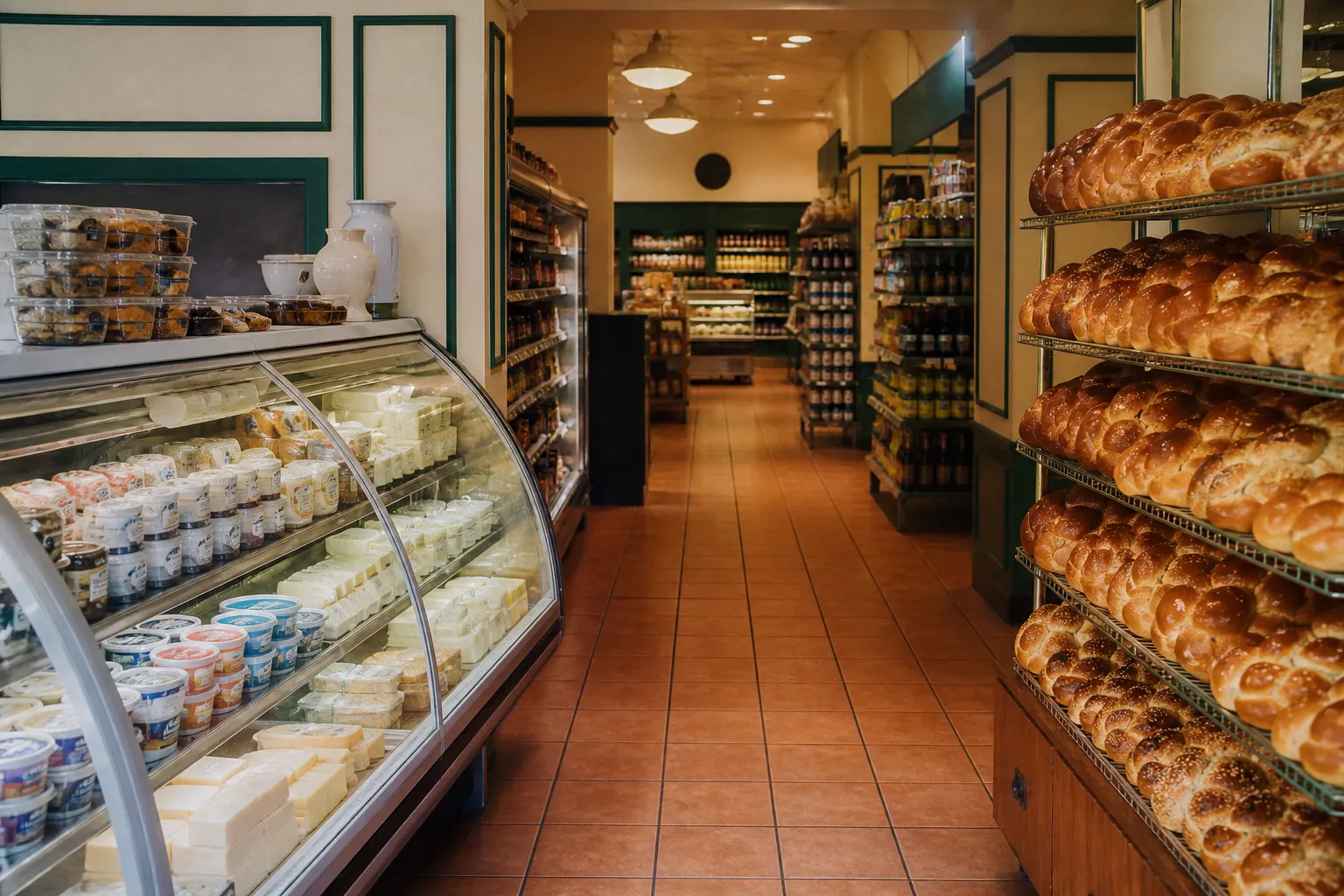
A kosher market is not a neighborhood grocery with a hechsher sticker on the door. The buyer who can close is underwriting the supervision relationship, the split meat-and-dairy plant, and a supplier list a conventional independent cannot replace on Tuesday. Grocery Store Business Broker — the grocery practice of HedgeStone Business Advisors, led by Jason Taken — packages that file as a confidential asset sale: recast SDE, inventory at cost, then the clocks that actually move. Download the Confidential Seller Playbook and mark the supervision page before you argue a multiple.
FMI’s $1 trillion in 2025 supermarket sales and 45,575 U.S. supermarkets in 2024 describe the channel. FMI’s $668,377 average weekly sales per supermarket and $19.59 weekly sales per selling square foot in 2025 describe the Speaks supermarket sample. Your supervised box is not that sample. FMI’s 2.1 percent average net profit for food retailers in 2025 is a food-retailer net figure. It is not your add-back list and it is not a kosher-only margin.
The hechsher does not ride in the APA
Name the actual supervision on the store. Do not invent a hechsher. OU, OK, Star-K, Kof-K, a local vaad, or a private mashgiach arrangement are different products. Some rooms are glatt. Some dairy is cholov Yisroel. Some “kosher-style” counters are not kosher at all. The CIM has to say which one you have, who employs the mashgiach, who pays those hours, and what happens if the seller walks.
Supervision is contractual and religious. It is not a state liquor-style license and it is not SNAP retailer authorization. USDA FNS: SNAP authorization does not transfer; the new owner files a new application. A buyer who treats the hechsher like a sticker that “assigns” with the APA will discover, after funding, that the certifying body wants a new owner interview, a plant walk, and sometimes a different mashgiach. Write that continuity as a close condition. Read asset purchase agreement essentials before counsel drafts in a vacuum.
If the supervision is personal to you — you are the mashgiach, you hold the vaad relationship, or the meat plants will only ship because they know your name — say so in the first hour. That is not a branding event. That is a transferability problem. Due diligence on this format starts with the supervision letter, not with last year’s tax return.
Shabbos hours are an operating fact, not a lifestyle footnote. Friday close times, Saturday dark, and Sunday reopen change labor, shrink on the meat rail, and who can even run the room. A buyer who wants “normal supermarket hours” is asking to become a different store. Write the actual clock on the CIM. If institutional catering — schools, shuls, a kiddush account — is a material slice of weekly sales, put those invoices in the file. That volume is loyalty to the hechsher, not to your logo. It walks if supervision changes. Do not bury it inside a storewide weekly number and hope the buyer will not ask.
Cholov Yisroel dairy, glatt meat, and a kosher-style deli that is not supervised are three different businesses. Name which one you operate. A buyer who wants to “loosen” the standard to widen the trade area is describing a conversion, not a going-concern close. Price the store you have. Read buying and converting if that is honestly the path. Conversion is a different buyer pool and a different timeline.
Meat, dairy, and the plant a conventional buyer cannot fake
A conventional grocer can swap banners. A kosher market cannot swap a supervised cut room. Meat and dairy need separate cases, separate utensils, and often separate rooms. A lease that forbids the split — shared grease trap, one hood, a landlord who will not allow a second sink wall — is a price cut, not a footnote. Read lease diligence and pull assignment, exclusive use, and co-tenancy the way you would on any grocery file. Remaining term under 24 months without options is the same problem here as on a neighborhood grocery.
The supplier list is short. Kosher distributors and supervised meat and dairy plants do not overlap much with a conventional wholesaler book. Limited conventional overlap is the point. If those plants will not open an account for the buyer, the going concern you think you sold is a dry-grocery room with a meat case the community will not trust. Sequence wholesaler consent after an NDA and a serious buyer — not as a vestibule announcement. Read wholesaler and banner agreements. Over-advances are debt. They are not an add-back.
DSD still exists — bakery, soda, some dairy — and those vendors keep delivering after a sloppy close only if someone is paying them. Schedule the contracts. A CIM that names “kosher distributors” as a vibe and omits the actual houses is a brochure.
Price the earnings, not a kosher-only multiple
This pack does not invent a kosher-market sold-comp set. BizBuySell grocery and supermarket sold businesses: 3.38 average earnings multiple in 2025; 2.66 five-year average; IQR 1.60–3.15 for 2021–2025. A 0.43 average revenue multiple on the 2025 sold sample is a sanity check, not a pricing tool. Those figures are a national listing-site sample. They are not a hechsher premium.
The valuation hub is the method. The how to value a grocery store guide is the walkthrough. Print the SDE worksheet and mark mashgiach pay, related-party rent, and one-time compressor work in the same language a lender will use. Recurring shrink cannot be an add-back. Owner pay, a documented one-time legal bill, and a personal auto can move SDE. Read recasting a grocery P&L and preparing three years of financials.
Suppose weekly sales are $72,000. Annual sales are $3,744,000. If recast SDE is 4.0 percent of sales, SDE is $149,760. A 1.60×–3.15× band on that SDE is about $239,616–$471,744. Add inventory at cost as a separate line — do not bury dated brisket inside goodwill. If related-party rent is $3,000 a month below market, pull that $36,000 out of SDE before you fall in love with the high end. FMI’s 2.1 percent food-retailer net is not this store’s SDE. The valuation calculator lets you change the inputs. It will not invent a kosher multiple.
Unreported cash will not survive SBA 7(a) — program maximum $5 million — or a serious conventional buyer. Read selling with unreported cash if that is the real file. Seller notes often sit on standby behind SBA. Read the standby. DSCR is annual cash flow over annual debt service. Hope is not a ratio.
Passover stock and the count that starts a fight
Passover is not a merchandising theme. It is a second inventory. Chametz has to leave. Kosher-for-Passover SKUs arrive in a wall. Close near that calendar and you will fight about what is sellable, what is returnable, and who owns a pallet of kitniyot the next owner will not put on the floor. Write the rule into the LOI before you pick a Tuesday. Read how inventory is counted at closing and closing-day count procedures.
Inventory night needs a department map: meat, dairy, pareve dry, frozen, produce, wine. Turns are not one number. Center-store dry and the meat rail do not share a clock. FIFO versus a messy walk-in is how you start a fight at 2 a.m. Scan data is the adult conversation. A weekly-sales spreadsheet without department mix is a rumor. Meat can sink a “healthy” storewide gross margin. Read verifying sales with scan data and shrink, margin, and turns.
Holdbacks exist because grocery has shrink and successor tax risk. Earn-outs are hard because the buyer controls mix after Monday. Read escrow, holdbacks, and earn-outs. Compare offers on cash at close, note terms, inventory treatment, and license risk — not the headline. See the LOI terms that matter for sellers and comparing offers.
SNAP, wine, and the clocks that are not the hechsher
Retail food is a health-department file. SNAP, if present, is a new-owner application. Read what happens to SNAP when you sell and EBT / SNAP diligence. EBT deposits should reconcile to the SNAP story. A gap is mix, downtime, or fiction. WIC is a vendor file, not a sticker. Lottery contracts are often personal. Tobacco sits with tax and health agencies, not with the APA automatically. Print the closing and license checklist.
Wine and beer, if you carry them, are a class, a quota, or a control-state product — NABCA lists 17 control states plus local-control pockets. Mevushal wine does not exempt you from the agency. Read transferring a liquor license, liquor diligence, and state alcohol regimes. State grocery sales tax changes the register story. Bulk-sale or successor-liability practice can still exist after UCC Article 6 died — put tax clearance in escrow language. See state bulk-sales notes.
Counsel who have never closed grocery will rediscover SNAP in week six. Send them working with attorneys and CPAs before they draft. Allocation among equipment, goodwill, and inventory changes the seller’s bill — start at taxes on selling a grocery store and asset sale versus stock sale. This page is not a tax opinion.
Who can keep the customers after Monday
The buyer pool is operators who already understand supervision, plus community buyers who already shop the room. Some volume is institutional — schools, shuls, catering — and that volume walks if the hechsher changes. A conventional supermarket operator who wants a “diverse banner” is usually a wasted NDA. Compare that pool to a Middle Eastern / halal market or a Hispanic market: language and trust matter, but kosher supervision is a third-party religious file those formats do not carry.
Sequence the vaad conversation after an NDA and a serious buyer, the same way you sequence a wholesaler. Telling the certifying body you are “thinking about selling” before you have paper is how a rumor hits the meat plants. Telling them too late is how closing week dies. Put a dated plan in the timeline: teaser, NDA, CIM, then a joint call with the supervision office once the buyer is real. Common reasons sales fall apart on this format are supervision walk-offs and a Passover count, not a missing vestibule sign.
Confidential outreach is the default. Employees learn from vendors and shoppers. A public listing is a last resort after you understand what it does to shrink, the plant relationship, and the landlord’s nerves. Read how to sell confidentially. Sequence who learns: counsel, CPA, then a short list under NDA. Non-competes have to be enforceable in the state and narrow enough to keep. See non-competes and confidentiality.
Selling to a child or a manager still needs a real price and a real note. Read selling to family or an employee. If you own the dirt, recast the store on market rent, then price the building with a real-estate licensee — selling with a lease versus real estate and grocery with real estate. Transition hours are a close condition. Write them. See transition and training. The first 90 days are vendor trust, shrink, and not changing the mix for sport — post-closing 90-day plan.
Jason Taken and HedgeStone are not licensed business brokers in every state. Check the rule that applies to your deal. Selling the building always requires a real-estate license. The seller hub is the process. The twin page is buy a kosher market. How a sale works is the sequence from teaser to count night.
When the supervision letter, the plant list, and the marked SDE worksheet are in one folder, book a confidential intro. Bring last week’s sales. Bring the lease page that talks about the kitchen. That is a useful hour.
How a buyer would price Sell a kosher market
Use this napkin recast on Sell a kosher market when you book the call. It is labeled illustrative. BizBuySell's 2025 grocery sold-business earnings multiple averaged 3.38, with a 2021-2025 IQR of 1.60-3.15.
If weekly sales or shrink move 8 percent, the SDE and the note move with them. That is why Jason Taken starts with scan data and the lease, not with a neighbor's rumor multiple.
Bring three years of P&Ls, weekly sales, and the lease abstract to the intro call. Jason will tell you whether this band is even in the conversation.
This page is educational information from Grocery Store Business Broker (HedgeStone Business Advisors). It is not legal, tax, or investment advice. Licensing, tax, and financing rules vary by state and deal. Confirm every item with counsel and your lender before you sign.