How do I underwrite UNFI or KeHE terms before I bid?
Name the actual house, ask for aged payables, and confirm whether a new owner needs a deposit and a new account. If you cannot fund the first two loads, you cannot buy the store.
Grocery Store Business Broker · HedgeStone Business Advisors · Jason Taken
Last updated 2026-09-04
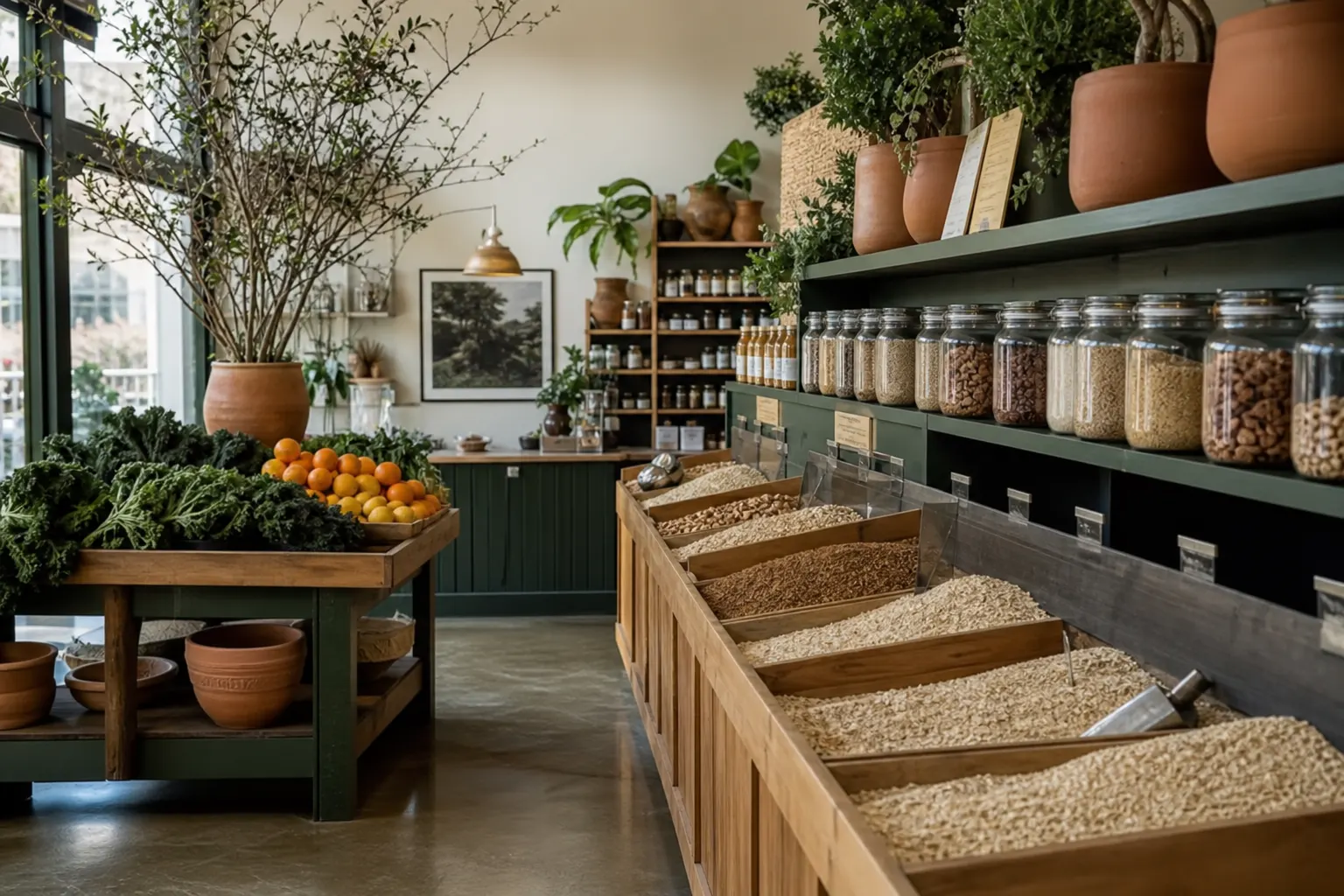
Buying a natural, organic, or health-food store is a working-capital question before it is a lifestyle story. Can you fund the turns. Can you open or assume UNFI or KeHE terms. Can you date the supplements instead of treating the vitamin wall as furniture. If any of those answers is no, you are touring a pretty box that will eat cash. Grocery Store Business Broker — HedgeStone Business Advisors, led by Jason Taken — works that sequence with you. Start at the buyer hub and mark the Buyer Underwriting Workbook before you ask for a CIM.
This site does not publish a live listings board. You bring a format you can staff, capital that survives a slow-turn room, and a geography you will occupy. Then you look at files. How to buy a grocery store step by step is the calendar. A specialty market and a food co-op live next door on this site; they are not the same underwriting.
Higher ring, higher shrink on perishables. Bulk bins, prepared foods, and a produce set built for a shopper who will compare you to Whole Foods or Sprouts — not to a conventional independent. FMI supermarket averages are the wrong benchmark. FMI reports 45,575 U.S. supermarkets in 2024 across the formats it counts, including natural/gourmet in that channel total, and $668,377 average weekly sales per supermarket in 2025. Those figures describe a mixed sample. They are not this store’s weekly. FMI’s $1 trillion in 2025 supermarket sales and 2.1 percent food-retailer net are the same reminder: grocery is thin even when the ring looks rich. Benchmark KPIs by format is context, not an organic premium.
Turns are not one number. Center store, produce, and supplements do not share a clock. Inventory turns on a natural book can look slow next to a conventional independent and still be correct — until dated bottles sit past the sell-by. Expired supplements that never hit the books are a hole in SDE, not a cleanup. Walk the vitamin wall with dates in your hand. How inventory is counted at closing and closing-day count procedures need extra rules: what is unsellable, who pays the crew, how disputes resolve.
Shrink, margin, and turns is the department-level method. Produce and prepared foods can sink a “healthy” storewide blend. Local farms and perishable DSD are real and still need invoices.
Bulk bins look like margin until contamination, labeling errors, and scoop shrink show up in the count. A juice bar or hot bar that the seller ran as a hobby is a labor center on your watch. Model the wages and the food-safety clock before you treat prepared foods as a lifestyle amenity. If the seller’s face is the class schedule and the juice bar, write those floor hours into the APA or price the traffic you will lose when that face leaves.
UNFI and KeHE are the specialty wholesalers this format usually lives on. Confirm the actual book. The wholesaler and cooperative directory is the map, not a promise that this store’s account transfers. A new owner often needs a new account, a personal guarantee, and a deposit. If you cannot fund that deposit and the first two loads, you cannot buy the store. Say that on the call.
Ask for aged payables, rebate calendars, and any over-advance. Over-advances are debt. They are not an add-back. If the seller’s terms were personal and the house will reset you to cash-on-delivery, model the working capital that reset requires. How much money you need is the stack in prose.
Do not invent a UNFI payment-term number from a forum. Read the actual agreement. Ask what happens to rebates, slotting, and any volume tier if ownership changes. A house that liked the seller’s volume may reset you to a worse tier until you prove the ring. Banner fees and program charges belong in the recast as continuing costs if you will keep the fascia. Buying a franchise or banner versus independent is the consent problem when a natural banner is in the file.
A lease next to a new Sprouts or Whole Foods is a diligence fact, not a story about “more traffic.” National specialty banners cap price more than a rural conventional competitor would. Competition and trade-area math is how you stop using a ZIP-code story as diligence. Read lease diligence for assignment, remaining term, exclusive use, and CAM. Use the rent-as-percent-of-sales checker.
A below-market related-party rent juiced the seller’s earnings. It will reverse on day one. Recast on market rent. If you also want the building, that is a second price — buying a store with real estate and the grocery-with-real-estate buy page.
The owner is often the brand. If the seller is the face of the juice bar and the class schedule, model the labor and the traffic you lose when that face leaves. A buyer who plans to “keep the vibe” without keeping the hours is pricing a different store. Write the seller’s floor hours into the APA. Transition and training periods are a close condition.
Supplements dating and perishable shrink can erase recast SDE. Owner pay, one-time legal, and personal autos can move SDE. Recurring shrink and expired bottles cannot. Recasting a grocery P&L and evaluating a store’s P&L are the department-level read. Anatomy of a grocery P&L is the map. How to read a CIM is the annotation method.
BizBuySell’s grocery/supermarket sold sample shows a 3.38 average earnings multiple in 2025 and an interquartile range of 1.60–3.15 for 2021–2025. The five-year average earnings multiple in that sample is 2.66. The 2025 average revenue multiple is 0.43. This pack does not invent an organic-premium multiple. Apply the national band after you subtract dating, banner proximity, and wholesaler-term risk. The valuation hub is the method. The multiples report is the sourced sample.
Illustrative, not a quote. Recast SDE of $301,019 at 1.89×–3.17× plus $221,143 inventory at cost frames a going-concern band of about $790,069 to $1,175,373. The 2.32× midpoint lands near $919,507. Lease remaining term and license lag can move the check more than the multiple.
SBA 7(a) can finance a change of ownership. The published maximum is $5 million. Lifestyle buyers often cannot get those terms without a manager who already knows the channel. The file still has to look like a grocery the program can underwrite. Unreported cash does not survive SBA. Use the SBA 7(a) payment and DSCR calculator. DSCR is annual cash flow after an honest recast, divided by annual debt service.
Teaching example, labeled illustrative: a $920,000 going-concern (ex-inventory) at 15 percent equity is $138,000. Inventory at cost of $221,143 is usually cash or a short-term piece — and a natural room can be a larger share of the check than a fast-turn conventional box. Add working capital for UNFI or KeHE’s first loads and a reserve if SNAP is in the mix. You are not a $138,000 buyer. Say the real number on the call. The cash-to-close estimator exists so you stop surprising yourself.
Put count rules and license outs in the LOI terms that matter for buyers. Seller notes often sit on standby behind SBA. Read the standby. Buying with seller financing is the buyer side. Conventional and alternative financing shows up when the box and the borrower are boring in a good way.
USDA FNS: SNAP authorization does not transfer. The new owner files a new application. Some natural stores skip SNAP. That is a diligence fact, not a moral grade. If EBT is material, budget downtime. If EBT is absent, do not invent a SNAP upside in the model. EBT / SNAP diligence and SNAP authorization are the federal rule. Verifying sales with scan data still applies: scan, tax, and card deposits should tell one story.
Retail food is the baseline. Supplements and cosmetics can sit under additional state rules. A “wellness” aisle is not automatically grocery. If the store compounds, does blood work, or sells items that look like a clinic, stop and let counsel name the license. Alcohol — wine, beer, kombucha over the line — is a class, a quota, or a control-state product. NABCA lists 17 control states plus local-control pockets. Read alcohol regime and liquor license diligence. Print the closing and license checklist.
Attorneys who have never closed a grocery file will rediscover SNAP in week six and supplements in week seven. Bring them working with attorneys and CPAs and asset purchase agreement essentials.
Natural-channel operators win these files. Co-op converters win them rarely. Lifestyle buyers who want a healthier life often cannot get SBA terms without a hired manager. Buying as a first-time owner is honest about that gap. Jason Taken would rather tell you in week one than watch a file die in week nine.
State pages exist because wage, food tax, and alcohol differ. State minimum wage is a model input on a labor-heavy juice and prepared-foods box. A file in California, Colorado, or Oregon is not the same clock. Metro teaching such as Denver, Portland, or Los Angeles is trade-area context, not a store count.
The owner is the brand and will leave with no transition hours. The lease sits next to a new national specialty banner. Supplement expired-inventory is not on the books. UNFI or KeHE will not open an account you can fund. Weekly sales and tax filings do not reconcile. Those are red flags that should kill a grocery deal. Surviving due diligence is the calendar after the LOI.
Conversion fantasies — new banner, new mix, new hours — need a lease that allows them and a customer who will still come. Read buying and converting before you price a turnaround.
Keep the wholesaler paid and talking. Re-file SNAP if the store uses it. Walk shrink logs daily in produce and prepared foods. Date the supplement wall in week one. Hold the seller to the transition hours. Recount problem categories within a week. The post-closing 90-day plan is the written version.
The seller page — sell a natural / organic / health food store — is how the other side packages the same file. How it works is the sequence after you are under NDA. The FAQ and buyer FAQs cover the relationship.
Qualified is proof of funds that survive a slow-turn book, a wholesaler conversation you can document, and a geography you will occupy. Bring a terms letter or a written indication from UNFI, KeHE, or the actual house on the file if you have one. If you do not, say that. Missing paper is not a moral failure. Hiding it is how the hour dies.
When the workbook is marked, schedule the buyer strategy call. Bring the wholesaler name, the dating habit you will run, and the states you will move to. That is enough to start looking at real files.
Price language for Buy a natural / organic / health food store is (recast SDE x a defendable multiple) + inventory at cost, plus or minus lease and license risk. The table is one consistent example for this URL.
| Input or output | Illustrative figure |
|---|---|
| Weekly sales (illustrative) | $92,000 |
| Annual sales | $4,784,000 |
| Recast SDE | $277,472 (5.8% of sales) |
| Inventory at cost | $299,000 (~16 turns) |
| Occupancy check | $148,304 / year (3.1% of sales) |
| Low going-concern | $812,323 at 1.85x SDE + inventory |
| High going-concern | $1,048,174 at 2.70x SDE + inventory |
| Sketch DSCR on a note | 1.46 |
Rent at 3.1% of sales is the occupancy check. If the real lease is higher, the SDE in this table is too generous until you recast to market rent.
Bring proof of funds or a lender pre-screen, your format, and geography. Jason will tell you whether a store like this can clear SBA or seller-carry math.
Print these, mark them up, and bring the marked copy to the intro. They are educational. They are not a valuation letter and not a listing. All downloadable guides.
Have the file ready so the hour is a recast, not a scavenger hunt. Then pick a time.
Underwrite the deal before you fall in love with the store
Scan data, SNAP mix, rent-to-sales, and DSCR. If those four do not clear, the CIM photos do not matter.
Schedule a Buyer Strategy CallName the actual house, ask for aged payables, and confirm whether a new owner needs a deposit and a new account. If you cannot fund the first two loads, you cannot buy the store.
SBA 7(a) can finance a change of ownership; the published maximum is $5 million. Lifestyle buyers usually need a channel manager already on payroll before the program will listen.
Dated bottles that never hit the books are a hole in SDE, not a cleanup. Walk the vitamin wall with dates in hand, then subtract what you will refuse at the count.
No. USDA FNS: SNAP authorization does not transfer; the new owner files a new application. Some natural stores skip SNAP — confirm whether EBT is even on the file. Book a confidential intro if you want that fact in the LOI.
Treat national specialty proximity as a price cap you underwrite before the LOI, not a vibe about more traffic. Recast rent and ring against that competitor, then decide.
Source and finance a grocery acquisition
Jason Taken works buyers through qualification, SBA or seller-carry structure, and a diligence plan a lender will fund. Book the hour.
Schedule a Buyer Strategy CallThis page is educational information from Grocery Store Business Broker (HedgeStone Business Advisors). It is not legal, tax, or investment advice. Licensing, tax, and financing rules vary by state and deal. Confirm every item with counsel and your lender before you sign.
Ready when you are. Jason Taken will talk through the file.
Book a confidential intro