Can I keep running the seller’s SNAP permit after close?
No. USDA FNS: SNAP authorization does not transfer. The new owner files a new application and may not use the seller’s permit.
Grocery Store Business Broker · HedgeStone Business Advisors · Jason Taken
Last updated 2026-09-04
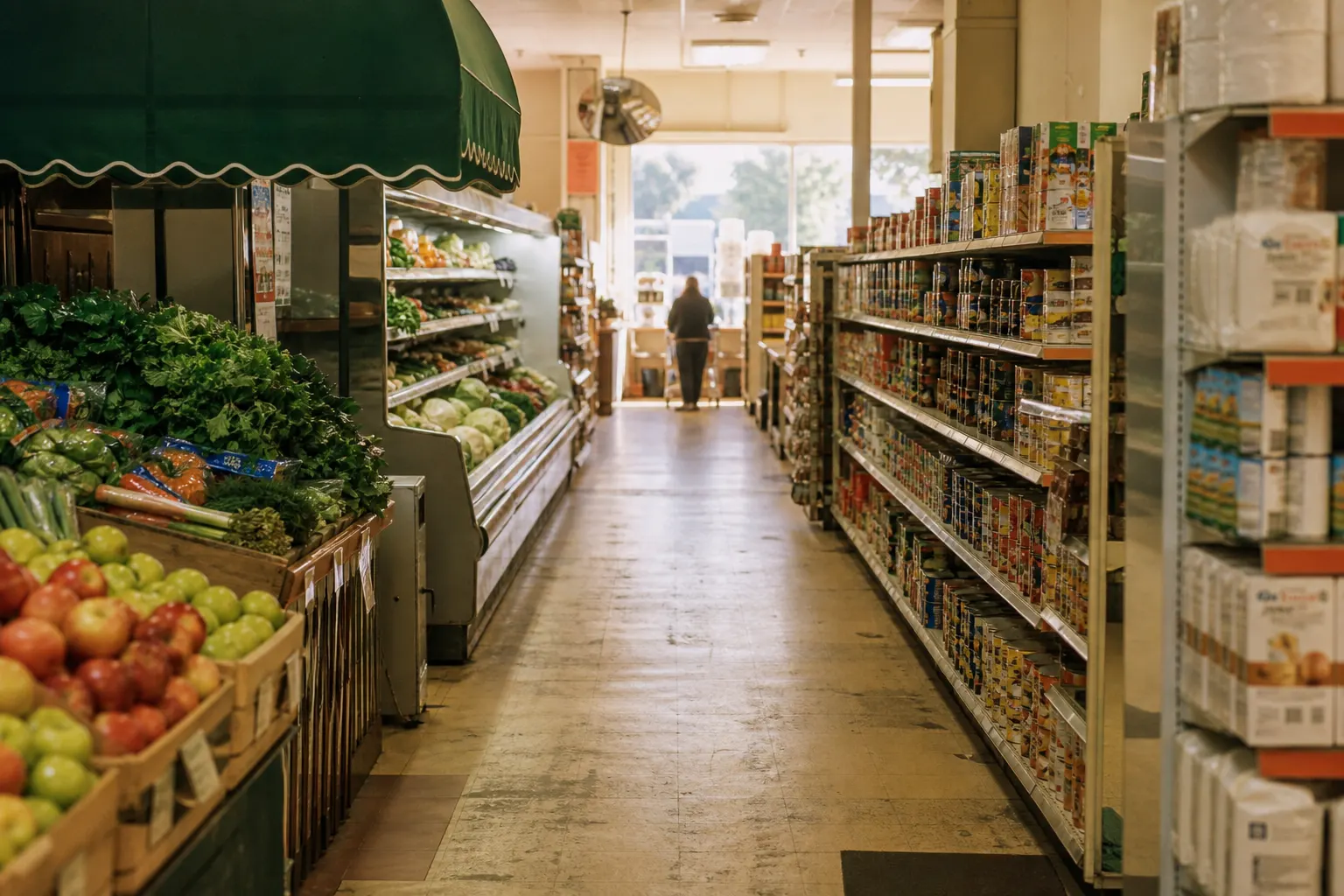
You apply as a new retailer, not as the heir to someone else’s permit. USDA FNS: SNAP authorization does not transfer. The permit is valid only for the location and the owners on record. After the ownership change, you may not accept SNAP on the seller’s number. You file a new application for the store you are about to run.
Grocery Store Business Broker — HedgeStone Business Advisors’ grocery practice, led by Jason Taken — walks that filing against the recast so the note still clears if EBT is dark. Book a confidential intro when you want that hour on your file. Print the buyer underwriting workbook and mark the SNAP line before the call.
FMI’s 45,575 U.S. supermarket count for 2024 and $19.59 weekly sales per square foot in 2025 describe a channel sample. They do not file your application. The work is local: this address, these owners, this staple-food set.
The application belongs on the same calendar as landlord consent and the wholesaler conversation. If you wait until Monday after close, you have already decided to operate without EBT until FNS acts. That may be survivable on a store with a light SNAP mix. It is a crisis on a box that lives on those deposits.
Start when you have a signed path and the facts FNS will ask for. You need the legal names and identities of the incoming owners, the store address that matches the lease, and a clear picture of the food you will actually stock. You need hours, contact people, and the ownership chart that will be true on day one — not the seller’s old chart.
This site will not invent a processing clock. FNS does not owe you a Tuesday. Budget cash and a sales mix that can live without EBT, then treat authorization as a walking condition when the mix is material. Read does SNAP transfer if anyone on your team is still hoping the old number rides along.
A 7(a) lender will ask the same question in DSCR language. SBA’s published 7(a) maximum is $5 million, and change of ownership is an eligible use. Eligible is not the same as fundable if the cash-flow story assumes uninterrupted SNAP.
Think of the file as three piles. Who owns the store now. Where the store is. What the store sells. FNS is authorizing a retailer to accept SNAP at a location. It is not blessing the seller’s history, and it is not transferring a phone number.
Ownership means the people and entities that will control the store. If you are buying through a new LLC, that LLC and its owners are the applicants. If a partner will hold twenty percent, that partner is on the file. Do not hide a silent owner because the CIM was cleaner without them. FNS will ask who is in.
Location means the address on the lease and on the food permit, not a PO box and not the seller’s old dba if you are changing the fascia. If you are moving the box, you are not “keeping” anything. You are opening a different store.
What you sell is the staple-food test in FNS’s retailer rules. A grocery that actually stocks a general line of food is a different applicant than a corner that wants SNAP for a soda cooler. Census NAICS 445110 is the industry label for supermarkets and other grocery retailers that retail a general line of food. Use that as a description of the trade, not as a substitute for the FNS staple-food categories on the application.
Hardware is a follow-on, not the application. You will need an EBT-capable terminal and a processor that can settle SNAP. That is operations. It does not replace the FNS authorization. Do not let a terminal vendor tell you that a swipe contract is the permit.
Buy the store you can authorize. A file with a thin center-store set and a heavy prepared-food counter may be a fine deli. It may be a weak SNAP applicant. Walk the aisles with the application in mind before you fall in love with the meat case.
Ask the seller for the facts the application will reuse: current authorization letter, store hours, and the inventory set that made the last FNS visit make sense. That is diligence, not a transfer. Also check EBT compliance history. A sanctioned location is a different underwriting problem than a clean one.
WIC is a separate state vendor file. If the store’s mix depends on WIC, start that desk on its own calendar. Lottery and tobacco are personal or tax-agency privileges. Alcohol is a state or local license — and in NABCA’s seventeen control states, spirits may not sit in the grocery aisle at all. None of those filings is the SNAP application. Put them on the license list under new ownership.
If you are keeping a banner, the wholesaler’s program charges belong in the recast as continuing costs. They do not file SNAP for you. If you are converting the fascia, read converting a store to a new banner before you promise FNS a store that will look different on day thirty.
Build a gap plan in dollars, not in hope. Take the SNAP share of weekly sales from deposits, not from a story. If EBT is dark, that share is gone until it is not. FMI’s 2.1 percent average net profit for food retailers in 2025 is thin enough that a missing tender class can erase a month.
Working capital has to buy the next wholesaler load and cover payroll while that tender is missing. Count it beside inventory at cost on the cash-to-close sheet. The cash-to-close estimator is a teaching tool. Your bank’s hold and your wholesaler’s terms are the real constraint.
Tell the landlord and the staff a usable story. Cashiers who keep swiping the seller’s number after close are not helping you. They are creating an FNS problem. Train the front end on what is allowed on day one. Write transition hours into the APA so the seller is there to help, not to keep the old permit alive.
BizBuySell’s 3.38 average earnings multiple on grocery and supermarket businesses sold in 2025 prices a store a buyer can operate. It does not price a dark EBT lane. If SNAP is the reason the SDE looks like a living, condition the close on the filing — or on authorization — in the LOI. Read how to buy a grocery store for the rest of the sequence.
Book a confidential intro when you want Jason Taken to mark the FNS line against your capital. Bring proof of funds or a lender conversation, last week’s sales if the seller has shared them under NDA, and an honest SNAP mix. The buyer hub and the SNAP-when-you-sell guide sit next to this answer.
Price language for How do I apply for SNAP as a new owner? is (recast SDE x a defendable multiple) + inventory at cost, plus or minus lease and license risk. The table is one consistent example for this URL.
| Input or output | Illustrative figure |
|---|---|
| Weekly sales (illustrative) | $92,000 |
| Annual sales | $4,784,000 |
| Recast SDE | $248,768 (5.2% of sales) |
| Inventory at cost | $265,778 (~18 turns) |
| Occupancy check | $110,032 / year (2.3% of sales) |
| Low going-concern | $800,629 at 2.15x SDE + inventory |
| High going-concern | $937,452 at 2.70x SDE + inventory |
| Sketch DSCR on a note | 1.44 |
Rent at 2.3% of sales is the occupancy check. If the real lease is higher, the SDE in this table is too generous until you recast to market rent.
Bring proof of funds or a lender pre-screen, your format, and geography. Jason will tell you whether a store like this can clear SBA or seller-carry math.
Print these, mark them up, and bring the marked copy to the intro. They are educational. They are not a valuation letter and not a listing. All downloadable guides.
Have the file ready so the hour is a recast, not a scavenger hunt. Then pick a time.
Underwrite the deal before you fall in love with the store
Scan data, SNAP mix, rent-to-sales, and DSCR. If those four do not clear, the CIM photos do not matter.
Schedule a Buyer Strategy CallNo. USDA FNS: SNAP authorization does not transfer. The new owner files a new application and may not use the seller’s permit.
As soon as you have a signed path and the store facts the application will ask for — not the morning after you take keys. Write the filing into the LOI.
This site does not invent a processing clock. Budget cash and mix for a gap, and treat authorization as a close condition when EBT is material to SDE.
No. WIC is a state vendor file. SNAP is federal FNS. File both if the store has both. Neither is a sticker on the door.
An SBA 7(a) lender underwriting grocery cash flow will ask how you eat if EBT is dark. Build that story before you ask for a commitment.
Read the EBT diligence guide and the SNAP-transfer answer linked from this page.
Source and finance a grocery acquisition
Jason Taken works buyers through qualification, SBA or seller-carry structure, and a diligence plan a lender will fund. Book the hour.
Schedule a Buyer Strategy CallThis page is educational information from Grocery Store Business Broker (HedgeStone Business Advisors). It is not legal, tax, or investment advice. Licensing, tax, and financing rules vary by state and deal. Confirm every item with counsel and your lender before you sign.
Ready when you are. Jason Taken will talk through the file.
Book a confidential intro