Does Idaho tax groceries on the register?
Yes. Idaho taxes groceries at the full 6% state sales tax. A separate food-tax credit on the income-tax return is not a register exemption. Confirm Idaho State Tax Commission basics for the address.
Grocery Store Business Broker · HedgeStone Business Advisors · Jason Taken
Last updated 2026-09-04
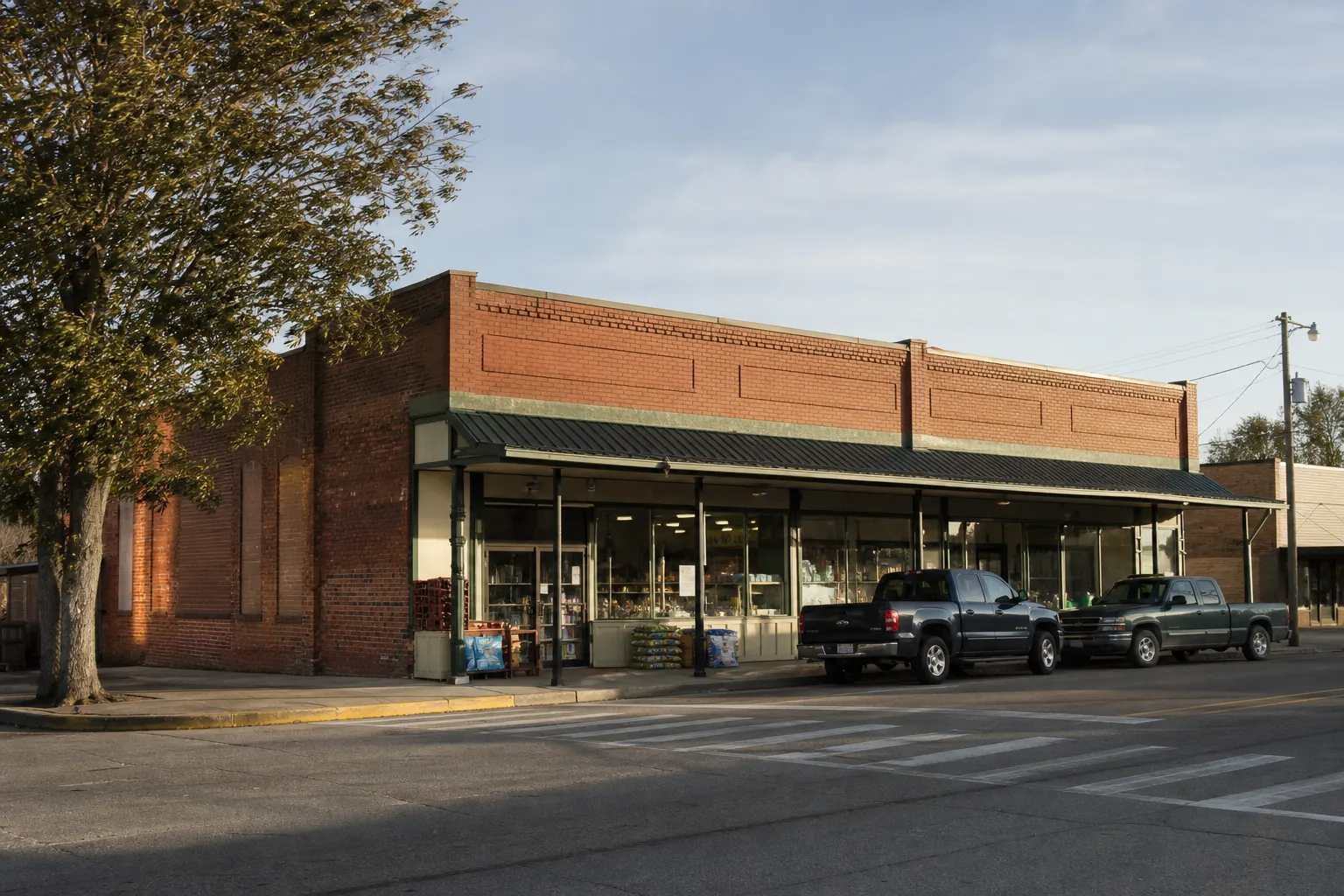
Put the corridor on the blind teaser first. Boise / Treasure Valley is the primary independent and banner market. Idaho Falls and Pocatello are eastern Idaho with their own trade patterns. Coeur d’Alene and north Idaho sit Spokane-adjacent and often in URM wholesale territory. Twin Falls and Magic Valley are ag-labor and rural independents. A buyer who underwrites “Idaho” as one wage and one warehouse will mis-price labor and freight.
Albertsons/Safeway, WinCo, and Walmart shape Treasure Valley and eastern Idaho circulars. Treat that as weather. A Magic Valley or county-seat independent still wins hours and SKUs those banners skip — name rural small-town or neighborhood format when that is the file.
Associated Food Stores, UNFI, and URM Stores are the wholesale names in the pack. Over-advances and personal guarantees travel. Ask whether the incoming operator can keep the book before you treat warehouse terms as an asset. Sequence that conversation after an NDA — wholesaler and banner agreements. North Idaho files that ignore URM and eastern files that ignore Associated Food Stores are files that reopen after close.
Idaho taxes groceries at the full 6% state sales tax. A separate Idaho food tax credit on the income-tax return offsets some of that burden for residents. It is not a register exemption. Local resort or city taxes may add on. Confirm Idaho State Tax Commission sales-tax basics for the address. A buyer trained on a food-exempt state will mis-read your top line if the CIM does not teach the 6%. State grocery sales tax is the map; the register is the lesson.
Idaho State Tax Commission clearance is a dated escrow item. Repealed UCC bulk-transfer language elsewhere does not erase Idaho successor risk — put holdback language in with counsel (clearance notes).
The U.S. Department of Labor’s July 1, 2026 consolidated table lists Idaho at the federal $7.25 floor — Idaho equals that federal minimum. Confirm Idaho Department of Labor posters. Labor in Boise is not labor in a Magic Valley packing town. Recast hours against the crew you actually run, including seasonal ag-labor weeks if that is the store.
Pull three years of returns and twenty-four months of scan data. Owner pay and a documented one-time repair can move SDE. Recurring shrink cannot. Related-party rent that juiced earnings comes out. Print the SDE worksheet — recasting a grocery P&L.
Idaho is a NABCA control state. NABCA lists seventeen control states. The Idaho State Liquor Division runs the spirits monopoly. Beer and wine retail is licensed separately. Verify the store’s wine privilege and local licensing. Beer-wine licenses transfer only with agency approval; spirits remain in the state system. Do not sell a grocery as if it included a package-store spirits book. Read control state, state alcohol regimes, and transferring your liquor license.
Idaho Department of Health and Welfare and local public health districts hold retail food. The incoming operator is a new file. WIC sits with Idaho Department of Health and Welfare — WIC. Idaho Lottery re-papers the incoming operator. Tobacco sits with the Idaho State Tax Commission. Print the WIC, lottery, and tobacco checklist.
USDA FNS: SNAP authorization does not transfer. The new owner files a new application. This pack does not publish an Idaho SNAP-retailer count; that field is null. Do not invent one. EBT should reconcile to the SNAP story you run — what happens to SNAP when you sell. Federal Healthy Food Financing Initiative language may apply in rural tracts. This pack records no state dollar figure. Do not invent a grant.
Treasure Valley and Magic Valley files price from recast SDE after the 6% grocery tax is taught — never from a listing-site slogan. No Idaho sold-comp mean appears here. A short county-seat lease, a warehouse book that will not assign, or beer-wine paper that stalls sits cautious; a clean Treasure Valley file can ask more after tax and ISLD facts are visible.
National supermarket weekly averages are channel context only — not this independent’s run rate. A Magic Valley independent is not that sample. DSCR still has to clear. SBA 7(a) can finance a change of ownership; the published maximum is $5 million. Unreported cash will not survive — selling with unreported cash. Use the valuation hub.
Inventory is a separate line at cost, counted at close — how inventory is counted at closing. Working capital for the first produce load is cash, not goodwill.
Start with operators who already live with a control-state spirits map, a taxed grocery register, and the warehouse that actually delivers. A tourist who wants a California food exemption will waste a week. Confidential outreach is the default: teaser, NDA, then a CIM — how to sell a grocery store confidentially. Employees and vendors should not learn from a sign.
WinCo is employee-owned competitive weather in the Treasure Valley, not a sold-comp. Albertsons and Safeway set a different circular. Walmart sets a third. Teach the buyer which banner actually sits across the parking lot. Eastern Idaho trade patterns are not Boise trade patterns; name Idaho Falls or Pocatello if that is the file. North Idaho operators who already buy from URM underwrite Coeur d’Alene faster than a Boise operator who has never run that book. Magic Valley ag-labor weeks belong in the recast as hours and mix, not as a slogan.
Resort or city add-on taxes can sit on top of the 6% state food tax. Confirm the address. A Sun Valley-adjacent or resort-town register is not a Pocatello register. This page will not invent a local rate. The Tax Commission guide and the city’s ordinance are the sources. A sale-leaseback is a structure if you own the dirt — sale-leaseback strategy — not a way to hide a weak grocery multiple inside a cap rate.
Write the count rule into the LOI before anyone argues goodwill. Sellable stock at cost. Unsellable off the count. A holdback exists because grocery has shrink and successor tax risk. Confirm Idaho State Tax Commission clearance practice and put it in escrow language. Compare offers on cash at close, note terms, inventory treatment, and beer-wine risk — not the headline. Read the LOI terms that matter for sellers, comparing offers, and escrow, holdbacks, and earn-outs. Earn-outs are hard because the buyer controls pricing after Monday.
APA schedules are where the cooler, the lottery terminal, and the soda fountain actually live. Send counsel working with attorneys and CPAs before they draft a generic small-business APA onto a grocery room. Non-competes have to be enforceable and narrow — non-competes and confidentiality. Transition hours should name who can order from Associated Food Stores or URM on Monday — transition and training. The first Monday still needs beer-wine paper, public health, FNS, and the warehouse to function.
The lease is occupancy. Remaining term under twenty-four months without options is a price cut — lease due diligence. If you own the building, price the going concern and the dirt as two assets — selling with a lease versus real estate. How much cash the buyer needs for the first week is a working-capital conversation. The cash-to-close estimator is a starting tool; it does not replace the warehouse guarantee. How much money you need is the longer buyer essay.
Employee transition is a people file on a 278-establishment map. A cutter who stays ninety days in Twin Falls is worth more than a wide non-compete that no Idaho court will stretch across the whole state. Write who opens, who cuts meat, and who can place the Associated Food Stores or URM order into the LOI when those names are the recast. Handling employees, union contracts, and WARN is the longer note. Idaho generally follows federal FLSA baselines at the $7.25 floor; confirm Idaho Department of Labor posters and what this store actually pays in Boise versus Magic Valley packing weeks.
A CIM that says “Idaho health” without the public-health district is incomplete. Idaho Department of Health and Welfare and local public health districts hold retail food. Name the district after NDA. The blind teaser can stay at Treasure Valley, eastern Idaho, north Idaho, or Magic Valley so it does not identify the only box on that stretch. Beer-wine paper that will not move sits next to SNAP lag on the buyer’s cash calendar. Write both into the LOI as dated steps, not as hope. The LOI terms that matter for sellers is the checklist; surviving due diligence is the seller companion when a Boise buyer asks for the live privilege number.
Occupancy is rent — base, CAM, tax, insurance — divided by this store’s sales. Pull both from the lease and the P&L. This research pack left grocery-relevant asking rent null. No dollar-per-square-foot Boise or Coeur d’Alene rent belongs here. A landlord who recasts rent as the price of consent changes SDE. Most city boxes lease. Some older county-seat stores own the building. Confirm the file before you write a blended number.
Idaho’s 278 NAICS 445110 establishments (CBP 2023) across 2,001,619 Vintage 2024 residents explain why county-seat boxes dominate the map outside Treasure Valley. That headcount is market context — never a Boise listings inventory. Sequence ISLD beer-wine approval, public-health district paper, Tax Commission clearance, landlord consent, warehouse consent, and the new FNS application on one dated workplan before anyone argues a national earnings band.
Bring the 6% grocery-tax teaching, ISLD beer-wine path (spirits stay with the Division), the public-health district name, and the Associated Food Stores or URM letter. Treasure Valley is not Magic Valley; north Idaho is not Idaho Falls.
Sun Valley-adjacent resort registers remitting add-on taxes are not Pocatello county-seat registers — confirm the address without inventing a local rate in this essay. A cutter who stays ninety days in Twin Falls is often worth more to a funded buyer than a statewide non-compete no court will stretch. Write who opens, who cuts meat, and who can place the Monday Associated Food Stores or URM order into the LOI when those names are the recast.
Occupancy is still this lease — base, CAM, tax, insurance — divided by this store’s sales. The research pack left grocery-relevant asking rent null; no Boise or Coeur d’Alene rent-per-foot belongs here. A landlord who recasts rent as the price of consent changes SDE. Older county-seat boxes sometimes own the dirt; price going concern and real estate as two assets when that is the file.
Book a confidential intro. Email jason.taken@hedgestone.com. About Jason Taken. Twin: buy Idaho. Parent: sell a grocery store. Circle Tax Commission and beer-wine on the seller playbook; keep the vestibule quiet until NDA.
These figures are a teaching walk-through for Price an Idaho grocery on recast earnings, not a circular, not a quote and not a sold comp. Order of operations: weekly sales, recast SDE, inventory at cost, then a multiple band. State pages add the tax, wage, and alcohol-agency facts for this jurisdiction. They do not invent a local sold-comp set.
| Input or output | Illustrative figure |
|---|---|
| Weekly sales (illustrative) | $168,000 |
| Annual sales | $8,736,000 |
| Recast SDE | $270,816 (3.1% of sales) |
| Inventory at cost | $436,800 (~20 turns) |
| Occupancy check | $235,872 / year (2.7% of sales) |
| Low going-concern | $897,187 at 1.70x SDE + inventory |
| High going-concern | $1,249,248 at 3.00x SDE + inventory |
| Sketch DSCR on a note | 1.46 |
Inventory is cash at close, not a multiple. Confusing the two is how sellers over-ask and buyers under-cash the wire.
Bring three years of P&Ls, weekly sales, and the lease abstract to the intro call. Jason will tell you whether this band is even in the conversation.
Print these, mark them up, and bring the marked copy to the intro. They are educational. They are not a valuation letter and not a listing. All downloadable guides.
Have the file ready so the hour is a recast, not a scavenger hunt. Then pick a time.
Get a grounded read on what buyers will pay
We recast SDE, separate inventory at cost, and price license risk. Download the seller playbook, then put 30 minutes on the calendar.
Get a Free Grocery Store Valuation ConversationYes. Idaho taxes groceries at the full 6% state sales tax. A separate food-tax credit on the income-tax return is not a register exemption. Confirm Idaho State Tax Commission basics for the address.
Yes. The Idaho State Liquor Division runs the spirits monopoly. Beer and wine retail is licensed separately. Do not sell a grocery as if it included a package-store spirits book.
No. USDA FNS: SNAP authorization does not transfer. The new owner files a new application. This pack left SNAP-retailer counts null — do not invent one.
No. Treasure Valley, eastern Idaho, north Idaho, and Magic Valley underwrite differently on wages, freight, and wholesale books. Name the corridor in the teaser.
Apply a national grocery earnings band to recast SDE after tax treatment and control-state facts are visible. This page invents no Idaho sold-comp set.
Sell on your terms, not on a listing site
HedgeStone Business Advisors runs a quiet process: recast, qualified operators, and a close that survives the count. The only next step is the intro call.
Book a Confidential Seller ConsultationThis page is educational information from Grocery Store Business Broker (HedgeStone Business Advisors). It is not legal, tax, or investment advice. Licensing, tax, and financing rules vary by state and deal. Confirm every item with counsel and your lender before you sign.
Ready when you are. Jason Taken will talk through the file.
Book a confidential intro