What is scan data in a grocery deal?
The POS extract: SKU or department sales, tenders, voids, and the clock. Not a PDF someone typed.
Grocery Store Business Broker · HedgeStone Business Advisors · Jason Taken
Last updated 2026-09-04
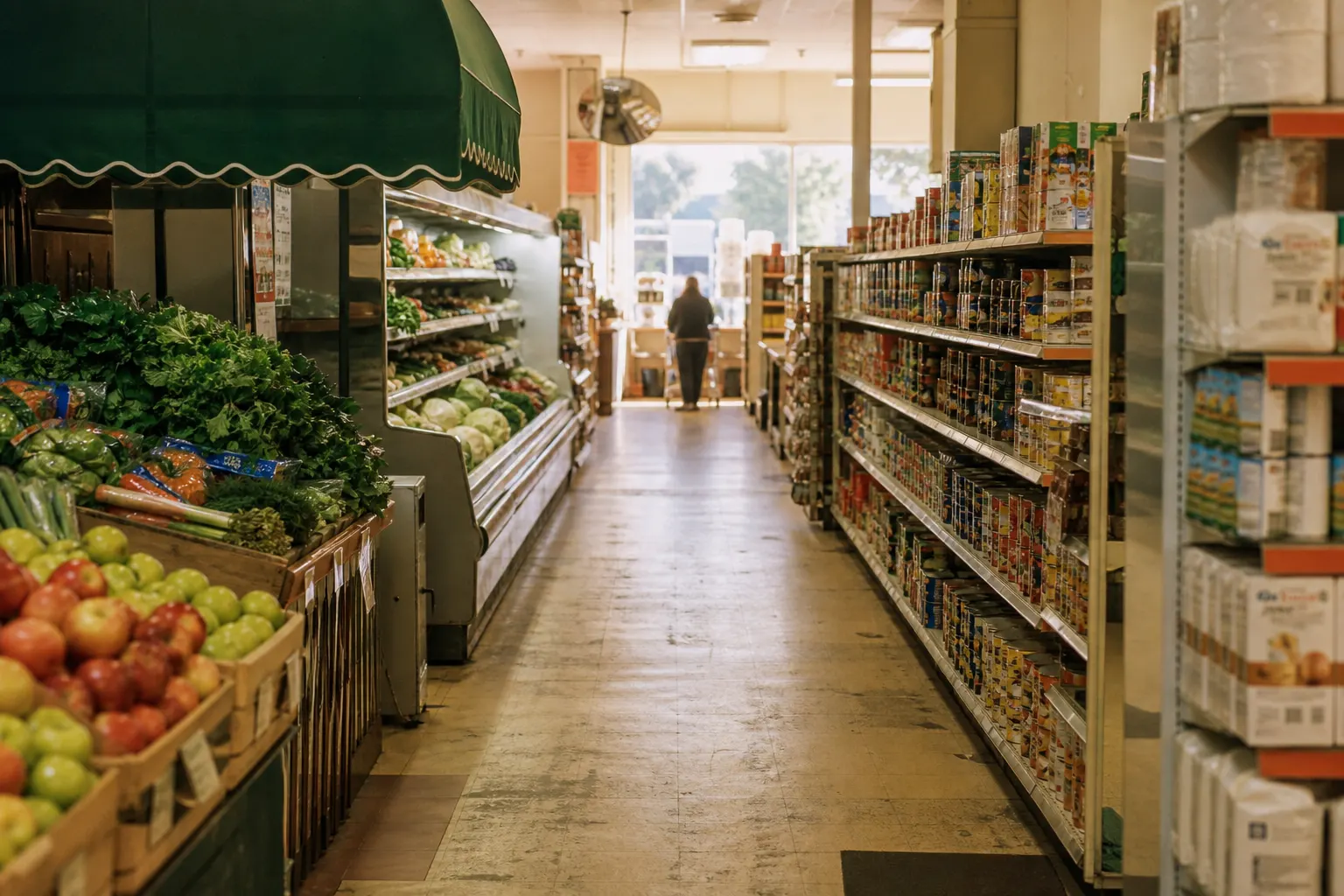
A printed “weekly sales” PDF is not proof. Scan data is the adult conversation: a POS extract with departments, tenders, voids, and a clock. Grocery Store Business Broker — HedgeStone Business Advisors, led by Jason Taken — will not let you underwrite a supermarket week from a CIM paragraph. Mark the buyer workbook, then book a confidential intro when you want that extract read on a live file.
FMI publishes $668,377 average weekly sales per supermarket in 2025 and $19.59 weekly sales per selling square foot. Those are Speaks channel figures. They are not this store’s week and they are not a reason to skip the export. Your file lives in scan, tax, EBT, and the wholesaler. The buyer hub is the door. How to buy step by step is the sequence.
Someone can type a week. A register cannot. The difference is why lenders ask for scan data and why a serious buyer does too. A CIM sales page is a claim. How to read a CIM is how you annotate the claim. This page is how you prove it.
Ask for a machine export: CSV or the native POS file, not a screenshot, not a PDF the bookkeeper retyped. Date range named. Store named. Department or SKU. Tenders. Voids and returns. If the seller’s “IT person” needs three weeks to produce that, start the clock in the LOI. A system that cannot export is a diligence fact. A seller who will not export is a different fact.
Weekly totals without department mix hide a sick perimeter. Meat and produce can sink a “healthy” grocery number. Gross margin hides the same way on the P&L. Evaluating a store’s P&L and anatomy of a grocery P&L are the earnings read. Scan is the volume read. You need both.
A rural box can be a good living and a terrible loan. Those are different questions. Scan will tell you whether the week is real. DSCR will tell you whether it services debt after you hire labor. Hope is not a ratio.
Name the system. Many independents run a grocery POS with a back-office that will spit departments. Some run a convenience-style register that will not. Say which. Ask for:
A 52-week department file, or 36 months if it exists. SKU-level for the last 13 weeks if you are going to argue mix. Tender mix for the same windows. Void, return, and no-sale reports. A list of price overrides if the system keeps them. Promotional weeks flagged.
SBA 7(a) can finance a change of ownership. Published maximum is $5 million. An SBA file will not live on a typed PDF. Conventional paper will not either. Unreported cash does not survive SBA and it does not survive a serious conventional buyer. If the week only works because a drawer never hit the bank, walk. Red flags that should kill a grocery deal exist so you stop touring a story.
Compare the export to the P&L. Teaching example, labeled illustrative: department sales for the last fiscal year should bridge to the P&L sales line within a stated, small variance for timing and house charges. A five-point gap with no memo is not “grocery.” It is a problem. Recasting a grocery P&L comes after you believe the top line.
Ask who has admin rights on the POS. A system that lets any closer edit a prior week is a weaker trail than a system that locks the day. You do not need a forensic novel. You need to know whether last October can still be rewritten. If it can, download the file yourself on a named date and hash the conversation to that copy.
Multi-store files need a scan file per store. A blended week is how a weak box hides inside a strong one. Selling multiple locations is the seller’s problem. Your problem is not letting them hand you one PDF.
Tenders tell you who is in the aisle. Card, EBT, cash, WIC, manufacturer coupons, house charges. A cash share that is an outlier for the format and the trade area needs a bank-deposit trail. A cash share that never hits the account is fiction.
Voids and returns are part of the week. A void rate that spikes on one cashier or one hour is shrink or training. A void rate that spikes every Sunday night before the weekly report is a story. No-sales on a grocery front end should have a reason. Price overrides on meat and produce are where a manager “helps” a number.
Basket size and item count, if the system has them, are a sanity check. A week of huge baskets and tiny item counts is a tender problem or a key problem. A week of tiny baskets in a full-line box is a traffic problem. Neither is a multiple.
Lottery, money services, and a Western Union pad can inflate a “sales” number that is mostly agency. Confirm what the POS calls grocery. Confirm what the P&L calls grocery. Do not pay a going-concern multiple on a money-transfer commission that is personal and portable.
Alcohol tenders, where the state allows them, should match the privilege you are actually buying. Alcohol is a class, a quota, or a control-state product. NABCA lists 17 control states plus local-control pockets. A beer week you cannot keep is not durable sales. Liquor license diligence is the file.
Scan is one trail. Sales-tax filings are the second, especially where food is taxed or partially taxed. State grocery sales tax changes what that return can prove. Use it where it exists. Do not invent a taxable share.
EBT deposits are the third. They should reconcile to the SNAP story in the mix. USDA FNS: SNAP authorization does not transfer; the new owner files a new application. That is a close clock. The deposit history is a diligence clock. A gap is mix, downtime, or fiction. EBT / SNAP diligence is the method. What happens to SNAP when you sell is the agency rule.
The wholesaler is the fourth. Purchases should look like a store that sold what the scan says. A purchase book that cannot support the week is shrink, a second supply line, or a number that was typed. DSD fills some of that gap — bread, snacks, beverages — so ask for those books too. An over-advance on the wholesaler statement is debt. It is not sales.
When all four trails agree, you have a week. When three agree and one is off, you have a memo to write. When two agree and two do not, you have a price cut or a walk. Do not average fiction.
FMI’s 2.1 percent average net profit for food retailers in 2025 is why this work is not optional. There is no slack to “believe the owner” and fix it later. Shrink, margin, and turns is the operating read once you believe the top line.
Storewide sales can look fine while meat is a hobby and produce is a donation. Ask for department share across the year, not one pretty week. Center store can carry a number. The perimeter tells you whether you bought a grocery store or a warehouse of boxes.
Seasonality should show up. A holiday spike that never comes down is a key. A summer drop in a beach trade area is a story you can underwrite. A flat line for 36 months in a store that claims a remodel, a new competitor, and a pandemic recovery is a typed file.
Competitive events belong next to the scan. A new supercenter that opened in month 18 should leave a scar or a memo. Competition analysis is the map. Scan is the proof the map is not a speech.
Ethnic mix without language on the floor is a shrink plan. If the scan says a format — tortillas, halal, kosher, produce-heavy — and the labor plan you were sold is a generalist night crew, you are buying a different store than the one that rings. Open the format page that matches: Hispanic market, independent supermarket, rural grocery. This site does not invent CBP counts.
Turns by department should be compatible with the scan. A grocery week that huge with a tiny stockroom is a just-in-time miracle or a lie. A stockroom that huge with a quiet scan is working capital you will fund at close. How inventory is counted is the later tape. Scan tells you whether that tape will look like a going concern.
A tour is a reward for a week you believe. It is not research. If the seller will not export, ask why in writing. POS vendor delay is one answer. A drawer they do not want you to see is another. Take the next-best trails — tax, EBT, wholesaler — and cut price or walk. Do not “get comfortable in the aisle.”
Attorneys and CPAs who have never closed grocery will rediscover SNAP in week six and discover scan never. Bring them this page and working with attorneys and CPAs before they underwrite a brochure.
BizBuySell’s 0.43 average revenue multiple on grocery and supermarket businesses sold in 2025 is a listing-site cross-check. Revenue multiples hide rent and labor. Use it to see whether a CIM asking price is in the atmosphere, then return to recast SDE. The 3.38 average earnings multiple in 2025 is the same kind of national sample. Neither replaces a week you can prove.
Surviving due diligence is the seller’s calendar. Your calendar is: extract first, lease second, licenses third. Lease diligence still matters. A proven week in a 14-month lease without options is a proven week you may not get to keep.
The LOI should say you get machine exports, tax filings, EBT history, and wholesaler statements on a named clock. Earnest money without those rights is a donation. The LOI terms that matter for buyers are inventory, licenses, assignment, and this access.
Keep watching after the LOI. A seller who stuffs weeks, changes mix, or “loses” a tender report during diligence has rewritten the file. Ask for a current week every week until the tape. Compare it to the file you underwrote.
Post-close, the first 90 days are vendor trust, shrink, and not changing the mix for sport. Read the 90-day plan. The scan you believed is the scan you should keep reading as the operator.
Jason Taken and HedgeStone are not licensed business brokers in every state. Check the rule that applies to your deal. Buying the building is a second file. Buying a store with real estate recasts the store on market rent first.
When you have an export — or a written refusal — schedule the buyer strategy call. Bring the four trails you have, the gap you cannot close, and the cash you can document. That is enough to decide whether the week is a store or a speech.
Use this napkin recast on Verifying grocery sales with scan data when you book the call. It is labeled illustrative. BizBuySell's 2025 grocery sold-business earnings multiple averaged 3.38, with a 2021-2025 IQR of 1.60-3.15.
| Input or output | Illustrative figure |
|---|---|
| Weekly sales (illustrative) | $92,000 |
| Annual sales | $4,784,000 |
| Recast SDE | $196,144 (4.1% of sales) |
| Inventory at cost | $239,200 (~20 turns) |
| Occupancy check | $110,032 / year (2.3% of sales) |
| Low going-concern | $572,645 at 1.70x SDE + inventory |
| High going-concern | $798,210 at 2.85x SDE + inventory |
| Sketch DSCR on a note | 1.40 |
Rent at 2.3% of sales is the occupancy check. If the real lease is higher, the SDE in this table is too generous until you recast to market rent.
Bring proof of funds or a lender pre-screen, your format, and geography. Jason will tell you whether a store like this can clear SBA or seller-carry math.
Print these, mark them up, and bring the marked copy to the intro. They are educational. They are not a valuation letter and not a listing. All downloadable guides.
Have the file ready so the hour is a recast, not a scavenger hunt. Then pick a time.
Underwrite the deal before you fall in love with the store
Scan data, SNAP mix, rent-to-sales, and DSCR. If those four do not clear, the CIM photos do not matter.
Schedule a Buyer Strategy CallThe POS extract: SKU or department sales, tenders, voids, and the clock. Not a PDF someone typed.
No. The CIM is a claim. Scan, tax, EBT, and the wholesaler are the proof.
They should reconcile to the SNAP story in the mix. A gap is mix, downtime, or fiction.
Treat it as a hole. Ask why, take the next-best trails, and cut price or walk.
You need enough history to see a trend. Three years of P&Ls plus current scan is the usual stack.
Source and finance a grocery acquisition
Jason Taken works buyers through qualification, SBA or seller-carry structure, and a diligence plan a lender will fund. Book the hour.
Schedule a Buyer Strategy CallThis page is educational information from Grocery Store Business Broker (HedgeStone Business Advisors). It is not legal, tax, or investment advice. Licensing, tax, and financing rules vary by state and deal. Confirm every item with counsel and your lender before you sign.
Ready when you are. Jason Taken will talk through the file.
Book a confidential intro