How do operators compute grocery basket size?
Total dollars divided by customer transactions for a period. Split it by tender and by department when the POS allows. A single storewide average hides a lottery line or a meat spike.
Grocery Store Business Broker · HedgeStone Business Advisors · Jason Taken
Last updated 2026-09-04
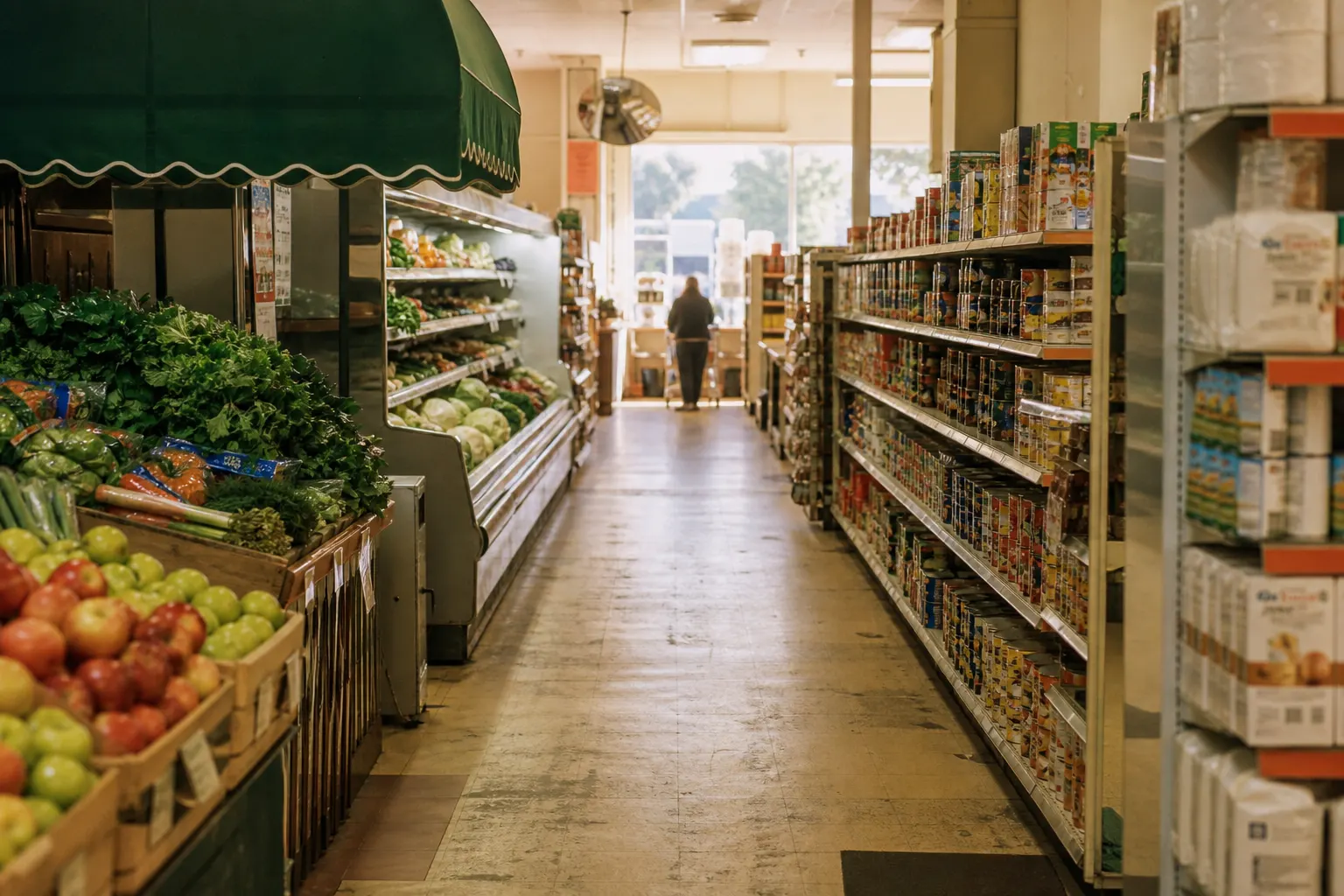
Basket size — Average dollars per customer transaction. Grocery baskets mix EBT, card, and cash, so the average hides payment mix. A rising basket with falling traffic is a different story than the reverse and must be checked against scan data.
Export the last fifty-two weeks of transactions and sit them next to the P&L. Grocery Store Business Broker — HedgeStone Business Advisors, led by Jason Taken — reads basket as one KPI, not as a valuation. Book a confidential intro with the scan file and a weekly sales tape. Email jason.taken@hedgestone.com if you want that hour on the register story.
Divide department or store dollars by customer counts for the same period. Split by tender when the POS allows: EBT, debit, credit, cash, WIC, and lottery if lottery rings as a sale. A storewide average that includes a lottery commission spike is not the grocery basket. A meat holiday week is not a run-rate basket. Verifying sales with scan data is the method. How do I verify grocery store sales? is the short version.
Department mix matters more than the headline. A larger basket built on center store grocery is a different margin story than a larger basket built on cigarettes and a hot bar. Gross margin by department is what tells you which trips are worth keeping. A weekly total with no department split cannot explain the average ticket.
If traffic falls and basket rises, fewer people are coming and each remaining trip is larger. That can be inflation, a lost fill-in visit to a dollar store or a club, or a competitor taking convenience trips. If traffic rises and basket falls, you may be winning trips and losing the big shop. Neither pattern is “good” or “bad” until you read the departments.
FMI’s 2025 supermarket sample shows average weekly sales of $668,377 per store and $19.59 per square foot of selling area. Those are channel facts for 45,575 U.S. supermarkets counted in 2024. They are not this register. Sales per square foot is the productivity check. What is a good sales per square foot? keeps the sample in its lane. Your basket still has to come from your scan file.
Card and EBT deposits should match the tender split on the same weeks. A gap is a mix change, a dead terminal, or a number that will not survive diligence. Basket size cannot paper over that recon.
A CIM that quotes basket without transaction counts is selling a slogan. Show weeks, trips, dollars, tender mix, and the departments that moved. Benchmark KPIs by format is where format context lives. The valuation hub still prices recast earnings, not an average ticket.
Do not invent a “typical grocery basket” and paste it into an offering book. If you do not have scan, say so and use sales-tax filings and vendor statements as corroboration. If you have scan, use it. Book the scan conversation when the export is in a folder you can open. Bring fifty-two weeks, a floor plan, and an honest note on what rings as a transaction. The hour is for traffic and mix, not for a single average.
Use this napkin recast on Basket size versus traffic on a grocery file when you book the call. It is labeled illustrative. BizBuySell's 2025 grocery sold-business earnings multiple averaged 3.38, with a 2021-2025 IQR of 1.60-3.15.
| Input or output | Illustrative figure |
|---|---|
| Weekly sales (illustrative) | $195,000 |
| Annual sales | $10,140,000 |
| Recast SDE | $415,740 (4.1% of sales) |
| Inventory at cost | $563,333 (~18 turns) |
| Occupancy check | $283,920 / year (2.8% of sales) |
| Low going-concern | $1,332,452 at 1.85x SDE + inventory |
| High going-concern | $1,748,192 at 2.85x SDE + inventory |
| Sketch DSCR on a note | 1.51 |
If weekly sales or shrink move 8 percent, the SDE and the note move with them. That is why Jason Taken starts with scan data and the lease, not with a neighbor's rumor multiple.
Book the intro call with your side of the table ready: seller files or buyer capital. The calendar is the only next step.
Print these, mark them up, and bring the marked copy to the intro. They are educational. They are not a valuation letter and not a listing. All downloadable guides.
Have the file ready so the hour is a recast, not a scavenger hunt. Then pick a time.
Get a specialist on the other side of the table
Grocery deals turn on licenses, inventory, and a recast a lender will believe. Book the intro and bring the file.
Book an Intro Call With Jason TakenTotal dollars divided by customer transactions for a period. Split it by tender and by department when the POS allows. A single storewide average hides a lottery line or a meat spike.
Fewer people are coming, and each remaining trip is larger. That can be inflation, a lost convenience trip, or a competitor taking fill-in visits. Read traffic and dollars together against the scan file.
No. Basket is dollars per trip. Sales per square foot is dollars per selling area. FMI’s 2025 weekly $19.59 per square foot is a supermarket sample. Your box still needs its own productivity number.
Transaction count, tender mix, and department dollars that tie to the same weeks. An average without traffic is a slogan. Pull the scan export before you write the page.
Start a confidential grocery conversation
Whether you are exiting or acquiring, pick a time and we will talk through the file.
Book an Intro Call With Jason TakenThis page is educational information from Grocery Store Business Broker (HedgeStone Business Advisors). It is not legal, tax, or investment advice. Licensing, tax, and financing rules vary by state and deal. Confirm every item with counsel and your lender before you sign.
Ready when you are. Jason Taken will talk through the file.
Book a confidential intro