Is an Asian grocery store valued like a conventional supermarket?
Equipment (live tanks, walk-ins) and import credit terms can dwarf the recast SDE story. Valuation is closer to a specialty-food operation than to FMI supermarket averages.
Grocery Store Business Broker · HedgeStone Business Advisors · Jason Taken
Last updated 2026-09-03
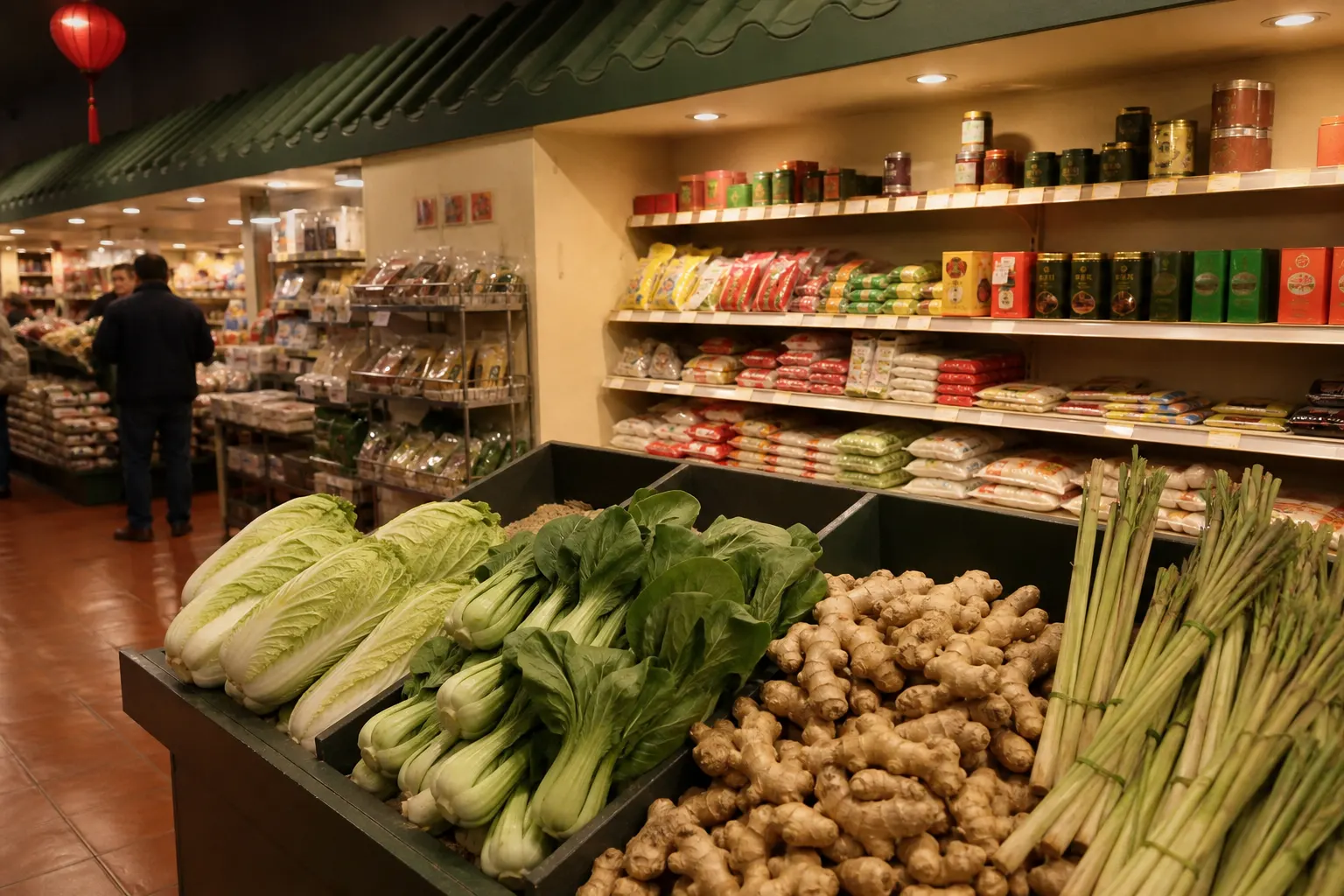
Selling an Asian grocery store is a live-tank file, an importer-credit file, and a language-on-the-floor file. It is not a supermarket teaser with a soy-sauce photo. The buyer who can close is underwriting weekly sales they can prove, SDE a lender will believe, inventory at cost with a rule for live product, and a restock path that does not die when you leave. Grocery Store Business Broker — the grocery practice of HedgeStone Business Advisors, led by Jason Taken — packages that file without advertising the exit to the fish counter.
Most independents close as asset sales. You are selling the going concern, the tanks, the walk-ins, and the stockroom. You are usually not selling the legal entity, your SNAP authorization, or a promise that the coastal importer keeps shipping on the buyer’s new credit. USDA FNS: SNAP authorization does not transfer; the new owner files a new application. Download the Confidential Seller Playbook and circle the importer statements you do not have. Missing paper is common. Hiding the hole is how the first hour dies.
Live seafood is often the reason the parking lot fills on Saturday. It is also the reason a conventional grocer walks the box and underprices the risk. Tanks, aeration, and walk-in load are capital. Fish cutters and butchers are scarce labor. Shrink on live product does not behave like shrink on boxed meat. A health-department history on tanks is not a footnote; it is a diligence item that moves the check before anyone argues a multiple.
FMI reports $1 trillion in 2025 supermarket sales and 45,575 U.S. supermarkets in 2024. FMI’s $668,377 average weekly sales per supermarket and $19.59 weekly sales per selling square foot in 2025 describe that Speaks supermarket channel. Your 6,000-square-foot Asian grocery is not that sample. Do not quote channel weekly sales as if they were last Saturday’s tank tickets. The valuation hub is the method. The valuation calculator is for changing inputs yourself.
Parking and the loading dock decide whether weekend volume is an asset or a complaint file. If trucks cannot turn and shoppers cannot park, the live program is a ceiling, not a growth story. Write the peak-hour constraint into the CIM as operations, not as a slogan about “busy weekends.”
Scan data has to show department mix. A weekly-sales spreadsheet that blends dry import, produce, and live seafood is a rumor. Meat and produce can sink a storewide margin that looks healthy. Read verifying sales with scan data and shrink, margin, and turns. Print the SDE worksheet so your CPA marks add-backs in the same language a lender will use.
Bring a tank log if you keep one: mortality, compressor outages, and the weekends you ran short. A buyer who has never held live product will treat those notes as a scare file. A buyer who has will treat them as proof you understand the room. Either way, hiding a citation or a dead-weekend story is worse than putting the packet on the table. Red flags that should kill a grocery deal in this format are health paper and a single importer, not a quiet Saturday.
The franchise in this format is often the book: specialty importers, frequently coastal, plus live-seafood vendors, plus a conventional wholesaler for a minority of SKUs. Credit terms on that import book can dwarf the recast SDE story. A buyer who cannot open an account with the same houses is buying empty shelves in week three.
Do not call the importer on day one. Sequence consent after an NDA and a serious operator — the same order as confidential sale process. Single-importer concentration is a red flag. If one house is 40 percent of dry and you have no backup, the LOI needs a restock plan, not optimism.
DSD vendors keep delivering after a sloppy close only if someone is paying them. Wholesaler over-advances are debt. They are not an add-back. Read wholesaler and banner agreements when you sell and the question whether a wholesaler agreement transfers. Banner fees belong in the recast as continuing costs if the buyer will keep the fascia.
Working capital is the cash to buy the next container and the next live load, not a vibe. See working capital and how much working capital you need. A first-time buyer who underestimates the import cycle will bounce checks before the SNAP file clears.
Mandarin, Cantonese, Vietnamese, Korean, Tagalog, or a mix — the floor language is diligence. Ethnic mix without language on the floor is a shrink plan. Shoppers who came for a specific cut, a specific brand of rice, or a specific live fish will walk if the counter cannot take the order. That is not “culture.” That is sales.
Treat seller hours on the floor as a transition period written into paper, not a handshake. Read transition and training. A buyer from outside the language set who will not keep a manager is the file buying an ethnic market outside your community was written to kill. The short version is should I buy an ethnic market.
Employees learn from vendors and shoppers. Confidentiality is a process: blind teaser, NDA, then a CIM for operators who can fund. Read how to keep the sale confidential before you tell the fish cutter. A vestibule sign teaches the importer and the Saturday crowd at the same time.
There is no sourced “Asian grocery multiple” in this pack. Do not invent one. BizBuySell grocery and supermarket sold businesses: 3.38 average earnings multiple in 2025; 2.66 five-year average; IQR 1.60–3.15 for 2021–2025. A 0.43 average revenue multiple on the 2025 sold sample is a sanity check, not a pricing tool. Those figures are a national listing-site sample. They are not an Asian-grocery-only print. The multiples report and how to value a grocery store keep that distinction.
FMI’s 2.1 percent average net profit for food retailers in 2025 is a food-retailer net sample. It is not your add-back list. Recast before you argue a multiple. Owner pay, a documented one-time compressor, and a personal auto can move SDE. Recurring tank mortality cannot. Related-party rent that juiced earnings will reverse on day one when the buyer pays market. Read recasting a grocery P&L and preparing three years of financials.
Suppose weekly sales are $95,000. Annual sales are $4,940,000. If recast SDE is 4.2 percent of sales, SDE is $207,480. Inventory at a turn count that matches how this room actually stocks — dry import slow, live and produce fast — might be $180,000 at cost. A 1.60×–3.15× band on SDE is $331,968–$653,562. Add inventory: about $512,000–$834,000 going-concern before you fight about unsellable frozen and dead tanks. That is teaching math. It is not a quote. Lease remaining term and license lag can move the check more than the multiple. Lease remaining term under 24 months without options is a price cut.
Equipment can dwarf the earnings story. Live tanks and walk-ins are scheduled assets. Do not bury them inside goodwill and hope the count night is kind. How inventory is counted at closing needs a live-product rule: what is sellable, who pays the crew, how disputes resolve. FIFO versus a messy cooler is how you start a fight at 2 a.m. See FIFO and LIFO.
SBA 7(a) can finance a change of ownership; the published maximum is $5 million. Unreported cash will not survive SBA or a serious conventional buyer. Read SBA 7(a) for grocery acquisitions and selling with unreported cash. First-time buyers with no category experience rarely close this format. DSCR is annual cash flow over annual debt service. Hope is not a ratio.
Retail food is the baseline. Live-animal and seafood rules sit on top in many cities. Alcohol is uncommon except beer and wine in some states. Alcohol is a class, a quota, or a control-state product — never “the liquor license” as one magical asset. NABCA lists 17 control states plus local-control pockets. Read state alcohol regimes and liquor-license diligence if beer is material. If it is not, do not pretend it is the deal.
SNAP: new-owner application. Read what happens to SNAP when you sell and does SNAP transfer. Budget downtime in cash and in the story you tell the landlord. EBT deposits should reconcile to the SNAP story. A gap is mix, downtime, or fiction. See EBT and EBT / SNAP diligence.
WIC is a vendor file, not a sticker. Lottery contracts are often personal. Tobacco sits with tax and health agencies, not with the APA automatically. Print the closing and license checklist. Write those conditions into the LOI terms that matter for sellers before you pick a Tuesday. Counsel who have never closed grocery will rediscover SNAP in week six — send them working with attorneys and CPAs first.
Tax clearance belongs in escrow language. Bulk-sale or successor-liability practice can still exist after UCC Article 6 died. See state bulk-sales notes. This site does not invent CBP store counts or SNAP retailer counts by city.
Same-language multi-store operators. Family buyers who already run a box. Occasionally a manager with a real note. Rarely a first-time SBA tourist who liked the produce photos. Screen the tourist. The buyer twin is how that side reads the same economics.
Compare offers on cash at close, note terms, inventory treatment, and license risk — not the headline price. Read comparing offers. Seller notes often sit on standby behind SBA. Read the standby, not the folklore. Selling to family or an employee still needs a real price.
If you own the dirt, recast the store on market rent, then cap the building. See selling with a lease versus real estate and grocery with real estate. Assignment, exclusive use, and co-tenancy are the three clauses that surprise civilians — lease diligence.
Same-language multi-store groups will ask for last year’s live-versus-dry split before they ask for a multiple. Family buyers will ask who stays on the fish counter. Answer both before you argue headline price. What documents you need to sell is the list; importer statements and the health packet are the format-specific add. How much a grocery store is worth is a short answer. This page is the long one for tanks and credit terms.
A conventional independent supermarket is a wholesaler-and-labor file. A Hispanic market is a produce-and-EBT file. This page is tanks, importers, and floor language. Metro pages teach trade area, not inventory: start at Los Angeles or Houston if that is the corridor. The seller hub is the long method.
Holdbacks exist because grocery has shrink and successor tax risk. Earn-outs are hard because the buyer controls mix after Monday. Read escrow, holdbacks, and earn-outs. Distressed tanks still have a lease and a stockroom: selling a distressed grocery.
How a sale works is the sequence from NDA to count night. How long a sale takes slips on licenses and inventory night, not on the teaser. Common reasons grocery sales fall apart in this format are importer silence, tank citations, and a buyer who cannot staff the counter.
When the playbook is marked and the importer list is honest, book a confidential intro. Bring three years if you have them. Bring last week’s sales if you do not. Bring the health-department packet and the page of the lease that scares you. That is a useful hour.
Price language for Sell an Asian grocery store is (recast SDE x a defendable multiple) + inventory at cost, plus or minus lease and license risk. The table is one consistent example for this URL.
| Input or output | Illustrative figure |
|---|---|
| Weekly sales (illustrative) | $141,000 |
| Annual sales | $7,332,000 |
| Recast SDE | $381,264 (5.2% of sales) |
| Inventory at cost | $611,000 (~12 turns) |
| Occupancy check | $190,632 / year (2.6% of sales) |
| Low going-concern | $1,316,338 at 1.85x SDE + inventory |
| High going-concern | $1,754,792 at 3.00x SDE + inventory |
| Sketch DSCR on a note | 1.50 |
Rent at 2.6% of sales is the occupancy check. If the real lease is higher, the SDE in this table is too generous until you recast to market rent.
Bring three years of P&Ls, weekly sales, and the lease abstract to the intro call. Jason will tell you whether this band is even in the conversation.
Print these, mark them up, and bring the marked copy to the intro. They are educational. They are not a valuation letter and not a listing. All downloadable guides.
Have the file ready so the hour is a recast, not a scavenger hunt. Then pick a time.
Get a grounded read on what buyers will pay
We recast SDE, separate inventory at cost, and price license risk. Download the seller playbook, then put 30 minutes on the calendar.
Get a Free Grocery Store Valuation ConversationEquipment (live tanks, walk-ins) and import credit terms can dwarf the recast SDE story. Valuation is closer to a specialty-food operation than to FMI supermarket averages.
A separate line at cost, counted at close. Live tanks and import terms are not the same as dry grocery at cost. Book a confidential intro to put those rules on the count sheet.
No. USDA FNS: SNAP authorization does not transfer; the new owner files a new application. Live seafood and import terms do not move the FNS file. Book a confidential intro to put EBT lag on the close calendar.
Not until you need consent. Sequence it after an NDA and a serious buyer.
No. This pack does not invent format-specific comps beyond the national BizBuySell grocery sample.
Sell on your terms, not on a listing site
HedgeStone Business Advisors runs a quiet process: recast, qualified operators, and a close that survives the count. The only next step is the intro call.
Book a Confidential Seller ConsultationThis page is educational information from Grocery Store Business Broker (HedgeStone Business Advisors). It is not legal, tax, or investment advice. Licensing, tax, and financing rules vary by state and deal. Confirm every item with counsel and your lender before you sign.
Ready when you are. Jason Taken will talk through the file.
Book a confidential intro