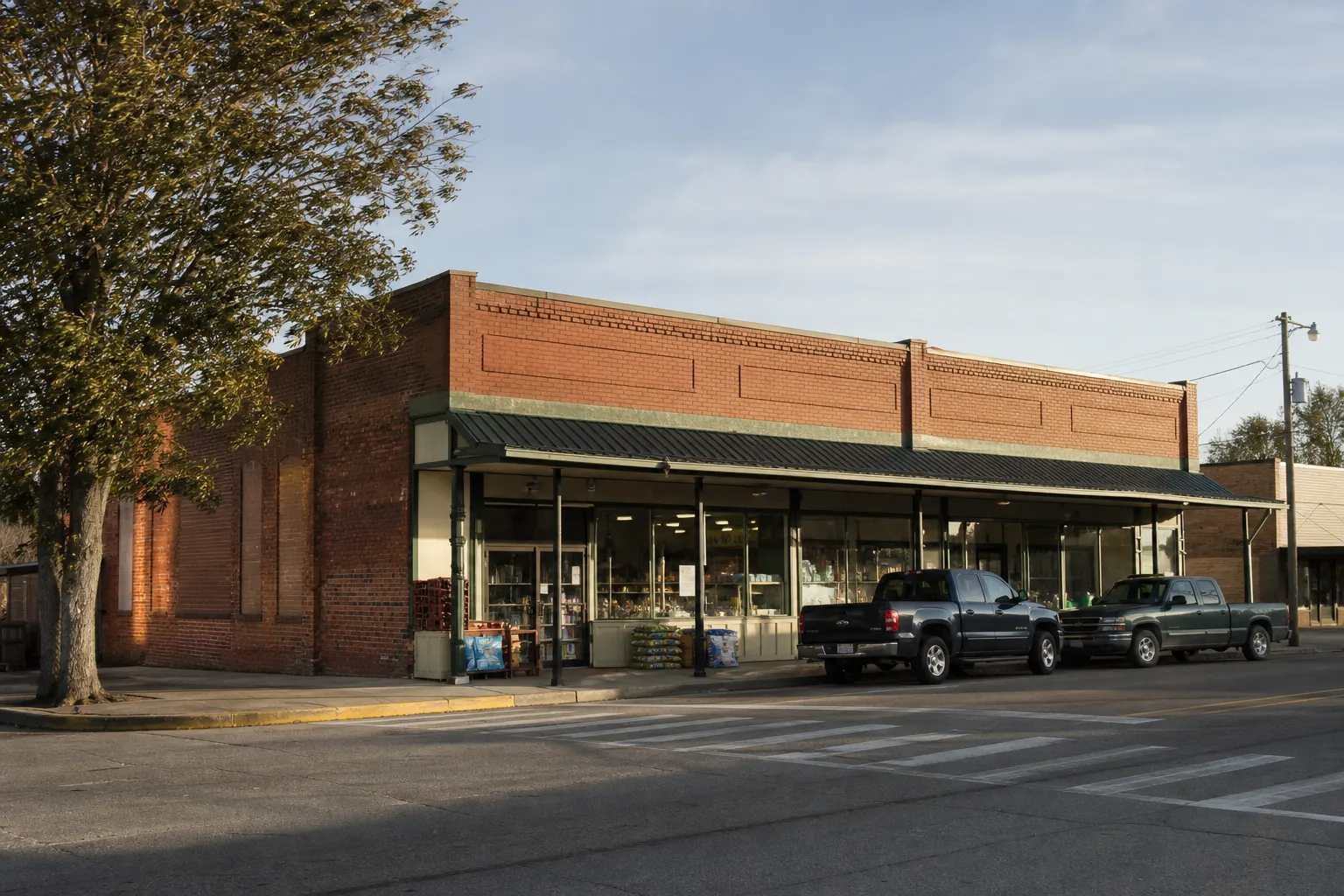
Package the Kansas file around the warehouse book and the food-tax map, then book a confidential intro. Grocery Store Business Broker, the grocery practice of HedgeStone Business Advisors led by Jason Taken, packages a Kansas independent as an asset sale: SDE a lender will believe, inventory at cost on count night, and Kansas ABC paper that does not pretend to be a package-store spirits license. Email jason.taken@hedgestone.com if you want the hour written down.
Census County Business Patterns 2023 counted 485 NAICS 445110 establishments in Kansas — supermarkets and other grocery retailers except convenience. That is industry headcount, not a for-sale listing count. Census Vintage 2024 estimates 2,970,606 people in the state as of July 1, 2024. A modest establishment count across a wide map means many files are western county seats, not Johnson County banners. Those two sourced numbers describe the field. They do not price your box. The Kansas City metro essay is grocery stores for sale in Kansas City. The twin buyer page is buy a grocery store in Kansas.
AWG’s backyard is wholesale weather, not a sold-comp
Associated Wholesale Grocers is headquartered in this metro story. Kansas City, Kansas — Wyandotte and Johnson — shares a metro with Missouri. That is wholesale geography and competitive weather. It is not a listings board and it is not a sold-comp for your box. UNFI also shows up. Guarantees and drop minimums travel. Sequence warehouse consent after an NDA the way you sequence the landlord—wholesaler and banner agreements. In this market the warehouse relationship is often the deal. A close that ignores the book reopens when the Tuesday drop will not schedule. Print who personally guaranteed the account and whether that guarantee travels with the next operator before you argue a multiple. A buyer who treats the warehouse as décor will reopen the deal the week after the APA is signed.
Dillons (Kroger), Hen House and Price Chopper (Balls Food / Cosentino’s regional), Walmart, and Aldi are competitive context. They set circular pressure. They are not live listings here. Independents still take trips those banners do not want—hours, language, a county seat that will not drive thirty miles for a banner endcap. Name the corridor in the blind teaser. Wichita is the primary in-state independent hub. Topeka and Lawrence carry capital and university trade. Western Kansas is rural single-store towns. If you run a rural small-town grocery, say so. A buyer who underwrites “Kansas” as one Johnson County suburb will mis-price labor, mix, and warehouse terms.
Keep the rumor off a Wyandotte corridor and off a Wichita independent that still beats Dillons on neighborhood trips. Confidential sale starts with a blind teaser, then NDA, then a CIM with departmental sales, the lease abstract, the ABC class, and the local food-tax printout. Should I tell my employees is a date. Managers hear when assignment or transition hours need them. Vendors learn from a vestibule sign faster than buyers learn from a teaser—keep the floor quiet.
Food tax is gone at the state; locals may remain
Kansas eliminated the state sales tax on food for home consumption effective 2025. Local city and county sales taxes may still apply to groceries. Confirm Kansas DOR food-exemption notices and the store’s local rate. A 2024 P&L and a 2026 P&L are not the same tax story. Teach the buyer which year they are reading and which ordinance still sits on the remittance tape. State grocery sales tax is the national map; the local ordinance is the Kansas fact.
Confirm Kansas DOR tax clearance and successor-liability practice on the asset sale. Most states have repealed UCC Article 6 bulk-transfer statutes; Kansas may still impose sales-tax successor liability, a bulk-sale notice, or a tax-clearance practice. Counsel and DOR decide the notice and any holdback—state bulk-sales notes. Do not assume a repealed Article 6 means there is no tax successor risk.
The U.S. Department of Labor’s July 1, 2026 consolidated table lists Kansas at the federal $7.25 floor. Confirm Kansas Department of Labor posters. Labor in Johnson County is not labor in a western county seat. Recast hours against the crew you actually run. A related-party wage that only works because family is unpaid will reverse when a funded buyer staffs the floor.
Pull three years of returns and twenty-four months of scan data. Owner pay and a documented one-time repair can move SDE. Recurring shrink cannot. Related-party rent comes out. Print the SDE worksheet—recasting a grocery P&L. Preparing three years of financials and verifying sales with scan data tie the week to filings.
Cereal-malt versus a full package privilege
Cereal-malt versus full-strength beer and county option still matter. Verify the city, county, and license class. Kansas is not on the grocery-spirits list in this pack. Liquor stores are typically separate. Local option and zoning apply. Kansas Division of Alcoholic Beverage Control and the local authority must approve; approval is not automatic with the asset purchase. Read state alcohol regimes and transferring your liquor license. A CIM that treats a cereal-malt privilege as a full package book will retrade the first time a buyer walks the cooler with counsel.
Write the class into the LOI the way ABC writes it on the address. A hoped-for full-strength cooler that county option will not allow is not an add-back. Put ABC and the local authority on a dated workplan next to landlord consent and warehouse consent so the close Tuesday is a date, not a hope. A Johnson County file and a western dry-option pocket do not share the same cooler story even when both sit inside the same state name.
Kansas Department of Agriculture Food Safety and/or local health hold retail food. Call the authority that holds the current permit. The incoming operator is a new file. WIC sits with Kansas Department of Health and Environment — WIC. Kansas Lottery re-papers the incoming operator. Tobacco sits with Kansas Department of Revenue. Print the WIC, lottery, and tobacco checklist and put those desks next to ABC on the same dated workplan.
USDA FNS authorization does not transfer. The new owner files a new application. This pack does not publish a Kansas SNAP-retailer count; that field is null. Do not invent one. EBT should reconcile to the SNAP story you run—what happens to SNAP when you sell. Pad working capital for the filing gap. Federal Healthy Food Financing Initiative language may apply in rural grocery deals. This pack records no dollar figure. Do not write a grant into SDE.
Earnings bands on a Kansas P&L, without invented comps
Price the going concern on recast SDE plus inventory at cost. Use a national grocery sold sample as a band, not as a Wichita sold-comp and not as a Dillons multiple. This page does not invent a Kansas comps table or a dollar SDE sketch. A western county-seat lease, a cereal-malt surprise, or a warehouse guarantee that will not assign sits toward the cautious end of any national range. A clean Johnson County or Wichita file can sit higher—still on the recast after the food-tax map and ABC class are visible. How to value a grocery store and the valuation hub are the method.
FMI’s supermarket-channel averages describe national supermarket America. A Panhandle-adjacent single-store town is not that sample. DSCR still has to clear. SBA 7(a) can finance a change of ownership; the published maximum is $5 million. Unreported cash will not survive—selling with unreported cash.
Inventory is a separate line at cost, counted at close—how inventory is counted at closing. Write department rules into the APA. A Wichita import mix and a western conventional box do not share a count clock. Hold back unsellable. The lease is occupancy. Remaining term under twenty-four months without options is a price cut—lease due diligence. If you own the building, price the going concern and the dirt as two assets—selling with a lease versus real estate. This pack publishes no rent-per-foot.
Occupancy is rent—base, CAM, tax, insurance—divided by this store’s sales. Pull both from the lease and the P&L. Do not invent a Kansas City, Kansas rent-per-foot or a western county-seat rent target. A landlord who recasts rent as the price of consent changes SDE. Write assignment language into the LOI before you argue a band. A seller who wants retail on the stockroom is selling a markup the buyer cannot keep. A wholesaler over-advance is debt, not inventory.
Who can fund a Kansas independent
Start with operators who already live with AWG terms, Dillons or Walmart across town, and a cereal-malt versus full-strength map. Western Kansas operators underwrite single-store towns faster than a tourist who wants a supermarket-channel weekly-sales figure. Confidential outreach is the default: teaser, NDA, then CIM. Employees and vendors should not learn from a vestibule sign.
A funded Kansas buyer will ask for the 2025-and-after food-tax story next to any local ordinance that still remits, the ABC class written the way the Division writes it, three years of returns with departmental sales, scan that ties to filings, the remaining lease term, and whether AWG will keep the next name. They will ask who opens, who orders, and whether Johnson County labor looks like western county-seat labor on the same worksheet. They will not ask for a statewide multiple. Answer those questions in the CIM before you argue a band.
Write the count rule into the LOI. Compare offers on cash at close, note terms, inventory treatment, and ABC class risk—comparing offers. Transition hours should name who can order from AWG on Monday—transition and training. The LOI terms that matter for sellers is the longer list. Handling employees, union contracts, and WARN if headcount rules sit on the floor. Parent method: sell a grocery store.
A Wichita independent that still beats Dillons on neighborhood trips and a western single-store town that is the only full-line box for miles are different teasers. Do not blend them. A buyer shopping “Kansas” without naming Wyandotte, Wichita, or the west is shopping a slogan—send them back to the corridor map. Neighbor essays for shared-metro thinking include sell in Missouri and sell in Nebraska, but each state’s ABC and food-tax map still stands alone.
Bring three years of returns, the local food-tax printout, the ABC class, the warehouse letter, and the lease abstract. Grocery Store Business Broker will not invent a Kansas sold-comp, a spirits aisle the class does not allow, or a SNAP-retailer census. We will recast the store you run and sequence DOR, ABC, health, and AWG consent on one calendar.
Download the Confidential Seller Playbook, circle the local food-tax printout and the ABC class, and book a confidential intro. Email jason.taken@hedgestone.com if you want the hour in writing. About Jason Taken is the desk. The next step is the food-tax map and the warehouse letter, not a sign on Kellogg.
An illustrative recast on Package a Kansas grocery for a funded buyer
Price language for Package a Kansas grocery for a funded buyer is (recast SDE x a defendable multiple) + inventory at cost, plus or minus lease and license risk. The table is one consistent example for this URL. State pages add the tax, wage, and alcohol-agency facts for this jurisdiction. They do not invent a local sold-comp set.
Rent at 3.1% of sales is the occupancy check. If the real lease is higher, the SDE in this table is too generous until you recast to market rent.
Bring three years of P&Ls, weekly sales, and the lease abstract to the intro call. Jason will tell you whether this band is even in the conversation.
This page is educational information from Grocery Store Business Broker (HedgeStone Business Advisors). It is not legal, tax, or investment advice. Licensing, tax, and financing rules vary by state and deal. Confirm every item with counsel and your lender before you sign.