Does SNAP authorization transfer to the buyer?
No. USDA FNS is explicit: the permit does not transfer. The new owner files a new retailer application for that location and those owners.
Grocery Store Business Broker · HedgeStone Business Advisors · Jason Taken
Last updated 2026-09-04
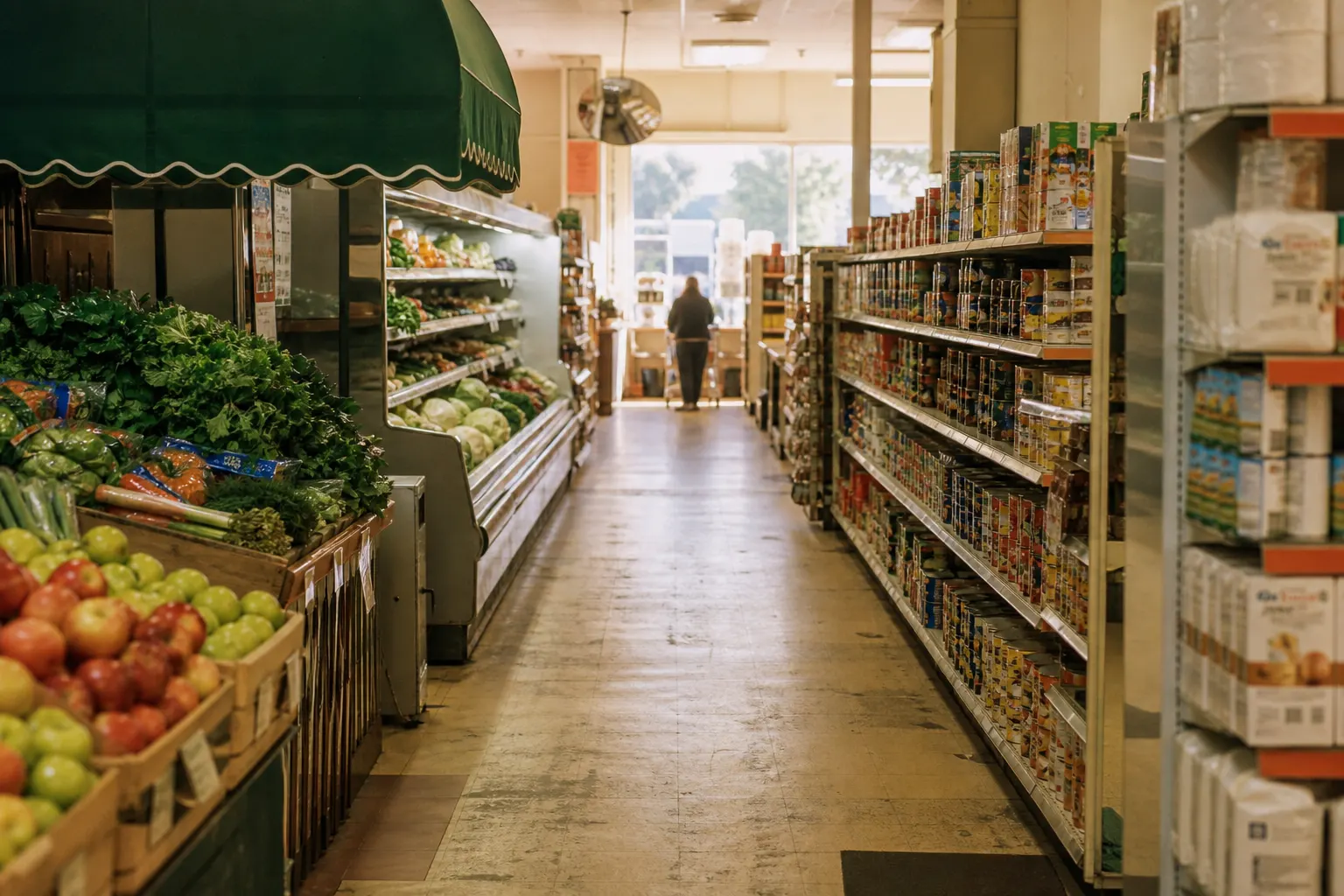
No. USDA FNS is plain: SNAP retailer authorization does not transfer. A SNAP permit is valid only for the location and the owners on record with the Food and Nutrition Service. If you sell the store, the new owner may not use your permit and must file a new application. That rule is the deal, not a footnote you discover in week six.
Grocery Store Business Broker — the grocery practice of HedgeStone Business Advisors, led by Jason Taken — treats the FNS file as a close condition. Book a confidential intro when you want that calendar drawn on your store. Bring last week’s scan data and an honest SNAP mix. That is enough to start.
FMI published $1 trillion in 2025 supermarket sales and a 2.1 percent average net profit for food retailers in its Speaks sample. Those figures describe the channel. They do not give you a spare EBT week. An independent that lives on EBT deposits cannot pretend the permit rides along with the asset purchase agreement.
FNS authorizes a retailer, not a vestibule. The authorization is a federal permission for named owners at a named address to accept SNAP. When those owners change, the old permission is no longer the buyer’s to use. The seller’s FNS number is not a courtesy loan. It is not a “soft transfer” while the new application sits in a queue.
Sellers hear the opposite from people who have never closed a grocery file. A neighbor sold “and they just kept running the cards.” That story is either a stock-sale myth, a delayed ownership filing, or a violation. None of those is a process you should copy. Read the FNS permit notice, then write the ownership-change task into how a sale works.
A stock sale is not a magic keep-the-number button. FNS still cares who the owners are. If control of the entity changes, you still have a filing problem. Counsel and the FNS notice own that call. This page will not invent a stock-sale exception that FNS did not write.
The seller also has work. You do not get to disappear and leave a live permit attached to a store you no longer run. Close or update the seller file so FNS is not looking at the wrong operator. Put that on the same closing checklist as tax clearance and the inventory count.
The incoming owner opens a new retailer application for that location and those owners. The application is about the store that will exist on Monday: staple-food inventory, ownership identities, and the address on the lease. It is not a rubber stamp of the seller’s old file.
Do not wait until the week of close to learn what FNS will ask. The how to apply as a new owner page walks the application. The EBT diligence guide walks the file you should read before you bid. Check compliance history before you treat last year’s EBT deposits as durable.
A financed buyer has a second audience. SBA 7(a) can fund a change of ownership up to the published $5 million maximum. A lender that underwrites grocery cash flow will ask how the store eats if EBT is dark. That is a DSCR question, not a slogan about “the SNAP comes with the store.”
WIC is not SNAP. A WIC vendor file sits with the state agency. Lottery contracts are often personal. Tobacco sits with tax and health desks. None of those ride on the FNS number, and none of them forgive a missing SNAP application.
EBT mix is not a vibe. It is deposits you can reconcile. If a material share of weekly sales arrives as SNAP, a dark terminal is a sales hole. FMI’s $668,377 average weekly sales per supermarket in 2025 is a channel sample. Your box may do a fraction of that and still live or die on the card mix. Recast SDE with a week that has no EBT before you argue a multiple.
BizBuySell’s grocery and supermarket sold sample printed a 3.38 average earnings multiple in 2025 and a 1.60–3.15 interquartile range for 2021–2025. Those figures price a going concern a buyer can fund. They do not price a store that cannot accept SNAP on Tuesday. License lag moves the check more than a rumor multiple. Read how to value a grocery store after you have an honest mix.
Working capital has to buy the next load while the cards are dark. That cash is not an add-back. It is the cost of the ownership change. Put it next to inventory at cost on the cash-to-close sheet. The buyer cash-to-close estimator is the napkin. The bank statements are the proof.
Tell the landlord the same story you tell the lender. A lease assignment that assumes uninterrupted SNAP volume is a story that will bounce. Abstract the lease and write the FNS gap into the conversation before you ask for consent.
The LOI should say three things in plain words. The buyer will file a new FNS application. Close may be conditioned on a complete filing, or on authorization, depending on how much EBT the store needs to survive. Neither party will operate on the seller’s permit after the ownership change.
Those sentences belong next to the inventory-count rules. Grocery deals already fight about what is unsellable at 2 a.m. They should not also fight about who is allowed to swipe a SNAP card on Wednesday. Put the FNS mechanic in the APA schedules with the other licenses.
Sellers who want a clean close help the buyer assemble store facts the application will need: hours, staple-food set, ownership chart, and the address that matches the lease. That is cooperation, not a transfer. Buyers who want a clean close start the application as soon as they have a signed path, not the morning after keys.
If the store’s SNAP mix is the reason the SDE looks livable, treat authorization as a walking condition. If the mix is light, a complete filing plus cash may be enough. Do not guess which one you are. Print the closing and license checklist and mark the FNS line before you argue price.
Book a confidential intro when you want Jason Taken to walk the SNAP mix against the recast. Bring weekly sales, EBT deposits, and the lease page with the assignment clause. The parent teaching lives on SNAP when you sell. The seller hub and buyer hub put that file back in the full sequence.
Use this napkin recast on Does SNAP authorization transfer? when you book the call. It is labeled illustrative. BizBuySell's 2025 grocery sold-business earnings multiple averaged 3.38, with a 2021-2025 IQR of 1.60-3.15.
| Input or output | Illustrative figure |
|---|---|
| Weekly sales (illustrative) | $168,000 |
| Annual sales | $8,736,000 |
| Recast SDE | $358,176 (4.1% of sales) |
| Inventory at cost | $624,000 (~14 turns) |
| Occupancy check | $235,872 / year (2.7% of sales) |
| Low going-concern | $1,232,899 at 1.70x SDE + inventory |
| High going-concern | $1,591,075 at 2.70x SDE + inventory |
| Sketch DSCR on a note | 1.49 |
If weekly sales or shrink move 8 percent, the SDE and the note move with them. That is why Jason Taken starts with scan data and the lease, not with a neighbor's rumor multiple.
Book the intro call with your side of the table ready: seller files or buyer capital. The calendar is the only next step.
Print these, mark them up, and bring the marked copy to the intro. They are educational. They are not a valuation letter and not a listing. All downloadable guides.
Have the file ready so the hour is a recast, not a scavenger hunt. Then pick a time.
Get a specialist on the other side of the table
Grocery deals turn on licenses, inventory, and a recast a lender will believe. Book the intro and bring the file.
Book an Intro Call With Jason TakenNo. USDA FNS is explicit: the permit does not transfer. The new owner files a new retailer application for that location and those owners.
No. The permit is valid only for the owners on record. Using the seller’s number after the ownership change is not a bridge. It is a violation.
Yes. The seller’s file has to be closed or updated. The buyer’s file is a separate application. Write both tasks into the closing checklist.
Do not assume it. FNS ties authorization to the owners on record. An equity deal that changes who controls the store still has to be checked against the current FNS notice, not against a rumor that “stock sales keep the number.”
As cash and as a condition, not as a hidden haircut later. Recast SDE with a mix that can survive weeks without EBT, and write the FNS application into the LOI.
Read the SNAP-when-you-sell guide and the EBT diligence guide linked from this page.
Start a confidential grocery conversation
Whether you are exiting or acquiring, pick a time and we will talk through the file.
Book an Intro Call With Jason TakenThis page is educational information from Grocery Store Business Broker (HedgeStone Business Advisors). It is not legal, tax, or investment advice. Licensing, tax, and financing rules vary by state and deal. Confirm every item with counsel and your lender before you sign.
Ready when you are. Jason Taken will talk through the file.
Book a confidential intro