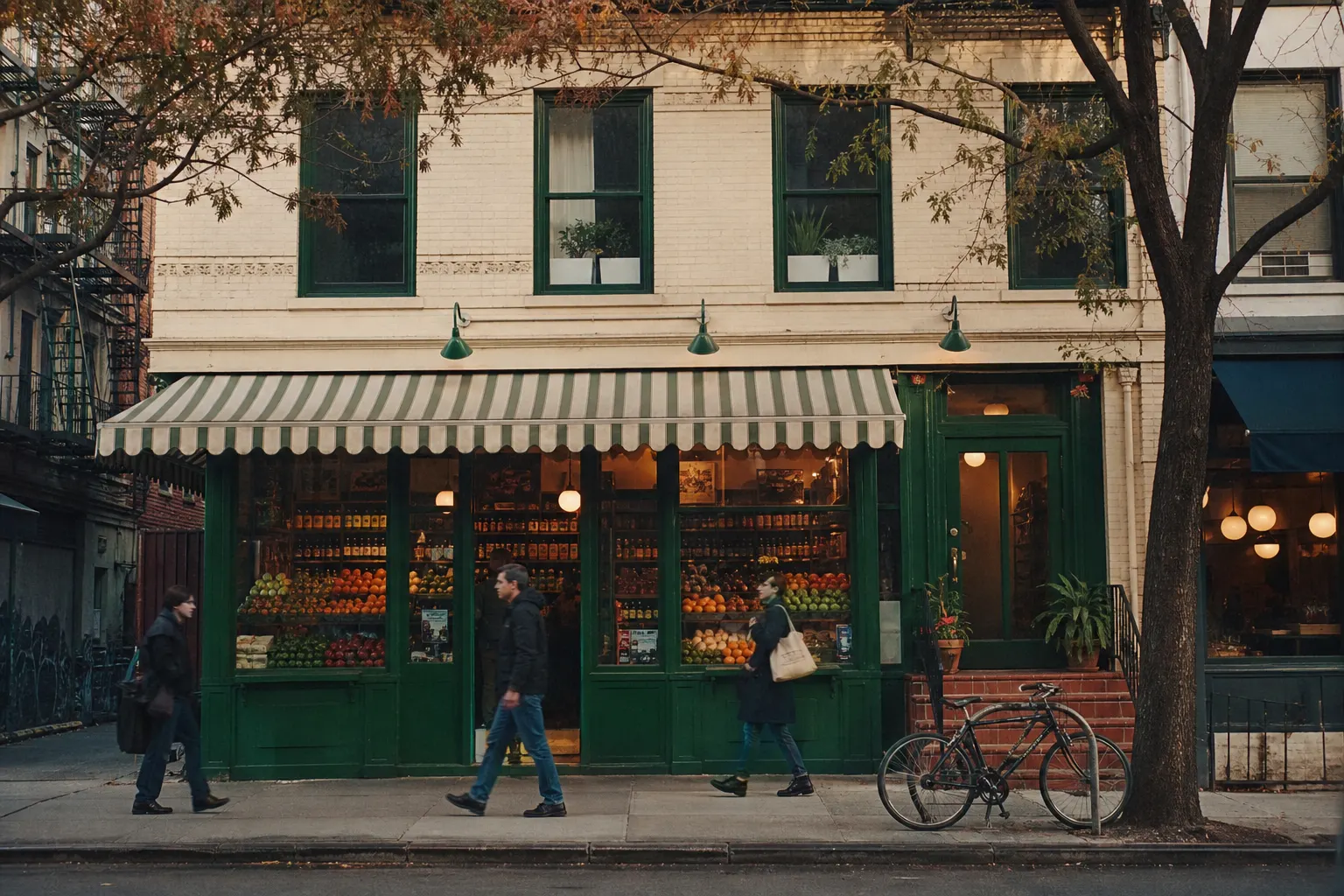
If you own an independent grocery in Columbus, start with a recast and a quiet buyer list. Grocery Store Business Broker — HedgeStone Business Advisors, led by Jason Taken — will walk the Morse Road mix, the Ohio liquor permit, and the lease assignment before anyone prices the file. Book a confidential intro when you are ready to sell or to hunt a box.
The going concern is inventory counted at cost, licenses that must be re-filed, people who know the floor, and a landlord who will consent. Kroger, Giant Eagle, Meijer, and Aldi set the competitive weather around a Columbus independent. They are context, not listings. Your store wins the trips those banners do not take: late hours, language on the aisle, international produce, a butcher who knows the neighborhood. Statewide Ohio process lives on the sell Ohio and buy Ohio pages. This essay is the Columbus file.
Morse Road mix is the operating story
Morse Road, Northland, and Cleveland Avenue run an international independent strip that local press has covered for years. A buyer who only knows a suburban Kroger will mis-read produce shrink, importer credit, and the hours that steal dinner trips. Recast department margins on that aisle mix. Do not paste a banner SDE story onto a Morse Road independent.
The same metro also holds conventional neighborhood boxes that sit closer to Giant Eagle and Meijer on center-store. Those files still need a recast. They need a different buyer conversation: occupancy as a share of sales, remaining lease term, and whether the meat manager stays. Sell an independent supermarket and sell a neighborhood grocery are the format essays. Columbus adds the Morse Road fact pattern.
Confidential outreach matters here because shoppers talk and wholesaler reps talk. Put the NDA in front of scan data. Keep C&S, UNFI, and SpartanNash off the sales floor while the process is live. How to sell a grocery store confidentially is the worksheet.
Banner weather, not a sold-comp set
Kroger is the default conventional trip in much of Franklin County. Giant Eagle still takes a quality and pharmacy trip. Meijer takes the supercenter basket. Aldi takes the price trip. An independent that cannot explain which of those trips it still wins will meet a lower multiple inside the national band, not a homemade Columbus trophy.
Price the store on recast earnings, not on weekly sales copied from a banner flyer. Two Columbus boxes at the same register total can differ by a wide SDE gap: one has documented shrink and a lease with options; the other has a seventy-hour owner and cash that will not survive a tax return. How to value a grocery store and the valuation hub walk the method. Grocery store multiples carry the sourced sample.
BizBuySell’s grocery and supermarket businesses sold on that listing site: 3.38 average earnings multiple in 2025, 2.66 five-year average for 2021–2025, interquartile range 1.60–3.15, and a 0.43 average revenue multiple on the 2025 sold sample. Use 3.38 only on a clean lease, a clean privilege, and a recast a lender will underwrite. Most files argue inside the IQR. The 0.43 revenue figure is a sanity check, not the price. Inventory is added at cost after the multiple, not folded into it.
Ohio liquor, local option, and the health desk
Ohio is a NABCA control state for spirits wholesale. Ohio Department of Commerce, Division of Liquor Control plus local option must allow the transfer; it is not a handshake. Beer and wine in grocery are common with the correct permit. Spirits on a supermarket aisle are not the typical Ohio pattern. Some groceries operate as agency or contract liquor stores — verify the permit class at the address. Permit quotas and local-option elections can stall a close. Liquor license due diligence and transferring your liquor license are the national worksheets; Columbus adds Franklin County local option on top of the Division.
Retail food is Ohio Department of Health plus local districts. The live inspector is often Franklin County Public Health or the City of Columbus, depending on the parcel. Incoming operators file as a new retail food operation. Build that lag into the close calendar the same way you build SNAP.
USDA FNS SNAP retailer authorization does not transfer. The new owner files a new application. Plan a dark stretch on EBT while FNS works the file. What happens to SNAP when you sell and EBT due diligence are required reading before you lock a date. WIC sits with Ohio Department of Health. Tobacco sits with Ohio Department of Taxation. Ohio Lottery is a separate retailer conversation for cash and ticket inventory.
Ohio generally exempts eligible food for home consumption from state sales tax. Prepared food is taxable. Confirm Ohio Department of Taxation ST food information releases and code the POS to match. A CIM that treats every scan as exempt food will fail diligence. State grocery sales tax carries the statewide clip; the Columbus register still has to match the deli.
On an asset sale, confirm Ohio Department of Taxation tax clearance and successor liability. UCC Article 6 bulk-transfer statutes have been repealed in most states; Ohio may still impose sales-tax successor liability, a bulk-sale notice, or a clearance practice. Bulk sales and tax clearance and tax clearance certificate belong in counsel’s close memo. This is not a claim that Jason Taken or HedgeStone holds an Ohio brokerage license. If the deal includes the building, a real estate license is required in every state. Business broker licensing is the national note.
Recast, occupancy, and the buyer who can close
A Columbus seller who prices from weekly sales alone will sit down with a recast. Department margins, owner add-backs that a buyer will reject, and shrink decide whether a multiple in the national IQR holds. Recasting a grocery P&L and preparing three years of financials are the seller homework. Tie weekly sales to scan data and EBT deposits. Verifying sales with scan data is how you survive diligence.
Most city independents lease. Some older neighborhood stores and inner-ring suburbs own the box. Confirm the file. Landlord consent is often the critical path: put assignment language in the LOI, not in a wish. Occupancy is a ratio from the lease and the P&L. This research pack does not attach a public rent-per-foot table for Columbus, so you underwrite rent as a share of sales from the actual lease. Lease due diligence and the rent checker are the tools. If the seller owns the real estate, recast the store on market rent and price the building as a second asset. Selling with a lease vs real estate and buy a grocery with real estate split those files.
DOL’s July 1, 2026 consolidated table lists Ohio at $11.00, or $7.25 if annual gross receipts are under $405,000. Model labor on the store you are buying, then confirm Ohio DWS posters. State minimum wage is the national table. Federal HFFI and local food-access programs may apply in Columbus tracts; this pack does not record a dollar figure, so treat incentives as a diligence call, not a line on the CIM.
Buyers who need acquisition debt should read SBA 7(a) for grocery. The published 7(a) maximum is $5 million. Lenders still want a recast, a lease they can live with, and a SNAP path. Seller financing can fill a gap when the privilege lag is the risk. How to buy a grocery store is the buyer sequence; buy a grocery store is the hub.
Inventory is counted at cost at close, with unsellable held back. Closing-day inventory count and inventory at cost keep the argument off the sales floor. Read drop minimums and over-advances in the wholesaler agreement before you sign. Wholesaler agreements when you sell and the wholesaler directory name C&S, UNFI, and SpartanNash as the Ohio independent supply names in this pack.
WIC, lottery, and who stays on Morse Road
A Columbus CIM that treats Ohio Lottery cash as seller discretionary income will fail the first bank recast. Lottery is a retailer relationship. Ticket inventory and cash on hand are counted, then the incoming owner applies. The same is true of WIC with Ohio Department of Health and tobacco with Ohio Department of Taxation. Put those three files on the same close calendar as Division of Liquor Control and Franklin County or city health. WIC, lottery, tobacco checklists is the national worksheet; Columbus adds local-option liquor elections that can stall even when the Division is ready.
Agency or contract liquor on the same premises as grocery beer and wine is a separate relationship in Ohio’s control system. If the Morse Road independent has a contract store in the vestibule, verify the permit class and whether the incoming owner can step into that contract. A buyer who models spirits margin from a Michigan or Indiana grocery-spirits aisle will mis-read an Ohio box. Control state is the vocabulary; the address is the file.
People are the other asset Morse Road buyers actually pay for. An international independent whose produce manager and butcher speak the floor will not recast the same as a seventy-hour owner who is also the only cutter. Transition and training and employees, unions, WARN belong in the LOI when the mix depends on named people. A non-compete that is too wide to enforce does not replace a cutter who stays ninety days.
Giant Eagle still takes a pharmacy and quality trip in this metro. Kroger takes the default conventional trip. Meijer takes the supercenter basket. Aldi takes price. The Morse Road independent has to explain which of those trips it still wins after close — late hours, a halal or international meat case, produce the banners do not carry. That explanation is the recast, not a slogan. Shrink, margin, and turns and anatomy of a grocery P&L are how you show it.
Working capital has to cover the SNAP dark stretch, the health-file lag, and a drop minimum that does not pause because ownership changed. How much working capital and how much money you need are the buyer worksheets. Post-closing 90-day plan is what Monday looks like when C&S still drops and FNS has not yet posted.
If the deal is an asset purchase, allocation among inventory, equipment, and goodwill is a tax conversation with the CPA — not a multiple conversation. Asset sale vs stock sale and Form 8594 keep that argument off the sales floor. Taxes on selling is the seller companion.
Price the file, then book the intro
Start from the IQR, not from a 3.38 trophy. Argue remaining lease term, license lag, Morse Road mix versus a conventional suburban box, and whether the owner’s hours are in the recast. The five-year 2.66 average is the boring starting point on a clean ordinary file. Revenue at 0.43 is a check against a seller who is selling sales instead of earnings.
Quiet process in Columbus means the vestibule stays empty of for-sale signs while Division of Liquor Control, Franklin County or city health, FNS, Ohio Lottery, and the landlord move. Timeline to sell is the calendar. Common reasons grocery sales fall apart is the failure list: SNAP lag, assignment refused, inventory that will not count.
Book a confidential intro to recast the Columbus file or to search as an incoming operator. Bring the lease, the last three years, and a honest note on who runs the meat case on Monday. Jason will tell you whether the multiple can live inside the national band — and what still has to move before a buyer writes a check.
Worked math for Recast a Columbus grocery before you sell
Price language for Recast a Columbus grocery before you sell is (recast SDE x a defendable multiple) + inventory at cost, plus or minus lease and license risk. The table is one consistent example for this URL. Metro pages talk corridors and operators. They do not invent asking rents or establishment counts.
Inventory is cash at close, not a multiple. Confusing the two is how sellers over-ask and buyers under-cash the wire.
Book the intro call with your side of the table ready: seller files or buyer capital. The calendar is the only next step.
This page is educational information from Grocery Store Business Broker (HedgeStone Business Advisors). It is not legal, tax, or investment advice. Licensing, tax, and financing rules vary by state and deal. Confirm every item with counsel and your lender before you sign.