Where does a grocery APA actually live?
In the schedules: equipment, contracts, inventory rules, excluded assets, and license consents. The recitals are the cover.
Grocery Store Business Broker · HedgeStone Business Advisors · Jason Taken
Last updated 2026-09-04
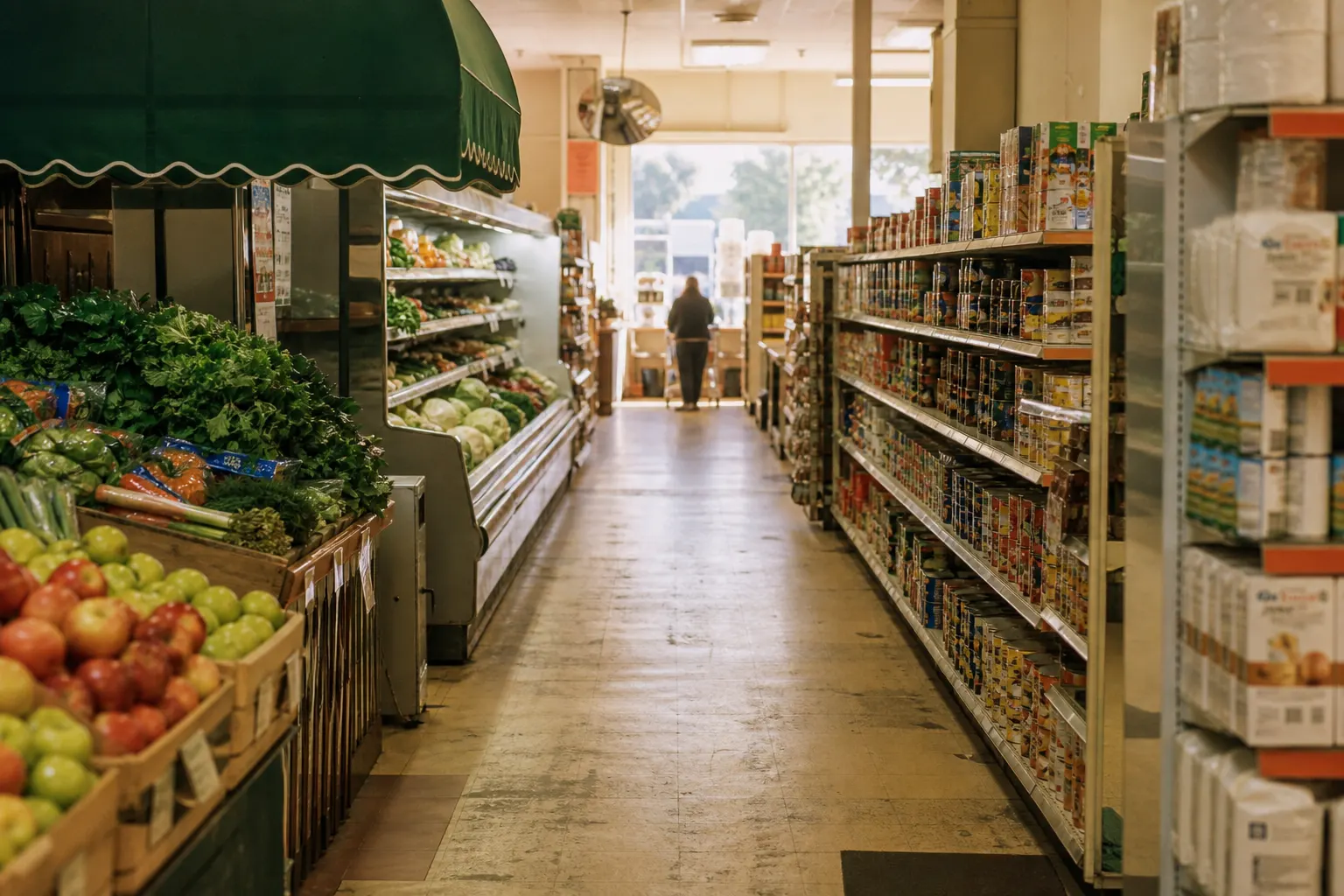
Print the closing and license checklist and book a confidential intro with the marked LOI and the store you actually toured. Grocery Store Business Broker — HedgeStone Business Advisors, led by Jason Taken — reads a grocery APA as a set of schedules, not as a stack of recitals. Jason also sees grocery paper through Jaken Finance Group, which is how inventory at cost stays a number that can close, not a paragraph that argues.
Schedules, excluded assets, and how the count binds the price are the grocery contract. Most independents close as asset sales. You are buying the going concern, the equipment, and the stockroom. You are not buying the seller’s SNAP permit. Asset sale versus stock sale is the structure choice. This page is the asset-sale document you will actually live in.
Walk the box against the equipment list. The meat saw, the produce rack, the compressor that sounds tired, the POS, the safe, the pallet jack in the dairy cooler — they are in or they are not. A recital that says “all assets used in the business” is how a seller’s cousin’s truck becomes a Monday fight. Attach photos if the list is long. Counsel can paper the language. You still have to walk the aisle.
Contracts belong on a schedule: wholesaler, DSD, banner, waste, pest, security, lottery if it is assignable, and the lease. An over-advance on the wholesaler statement is debt. It is not an add-back. If you cannot assume the guarantee, the APA should say who pays it at close. Read wholesaler and banner agreements. Banner fees and program charges belong in the recast if you will keep the fascia.
Grocery is thin. FMI’s 2.1 percent average net profit for food retailers in 2025 is a food-retailer net sample. There is not much room for a missing compressor or a contract you did not assume. FMI’s $1 trillion in 2025 supermarket sales describes the Speaks channel, not this schedule. Your file is the list you initial.
The seller’s truck, the family computer in the office, cash in the safe, a hunting lease on the wall, personal firearms in the manager’s drawer, and the loyalty club the seller thinks is “just data” — list them. Monday is too late. Excluded assets are not a slight. They are how you keep the close from becoming a theft argument.
Cash is almost always excluded. Working capital is the cash you bring to buy the next load, not the drawer you thought you were purchasing. Receivables, if any, need a line: kept by seller, purchased at a discount, or collected in escrow. Grocery receivables are usually small. When they exist — catering, accounts, WIC — write them.
Employees are not assets. Offers, union contracts, and WARN clocks are people problems with calendars. Read handling employees, union contracts, and WARN. Transition hours belong in the APA, not in a handshake. A cutter who leaves Friday and a buyer who cannot hire one by Monday is how a full-line box misses the week. Read transition and training periods.
The count should move the price. Write cost basis, what is unsellable, who pays the crew, and how disputes resolve before anyone schedules 2 a.m. FIFO versus a messy room is how you start a fight instead of a close. See how inventory is counted at closing and closing-day count procedures. The inventory value estimator is a teaching tool. The APA exhibit is the rule.
Turns are not one number. Center store and the perimeter do not share a clock. A single “inventory target” that ignores produce life is a target that will be missed. Shrink that is “about 2 percent” with no count history is a claim. Recurring shrink is not an add-back. Holdbacks exist because grocery has shrink and successor tax risk. A holdback is not a substitute for a count. Read escrow, holdbacks, and earn-outs.
The LOI terms that matter for buyers should have previewed these rules. If the letter was silent, the APA is your last clean chance. Do not let “we’ll use the industry form” replace a grocery exhibit. There is no industry form that knows this back room.
Representations are the sentences that can still cost money after Monday. Sales trails — scan data, sales tax, EBT — should match the story the seller told. A gap is mix, downtime, or fiction. Unreported cash does not survive SBA 7(a) and it does not survive a serious conventional buyer. If the week only works on cash that never hit the bank, the APA cannot repair it. Walk. Red flags that should kill a grocery deal exist so you stop papering a story.
License representations should be specific. USDA FNS: SNAP authorization does not transfer. The new owner files a new application. The APA can condition close, hold money, and require cooperation. It cannot convey the permit. Read EBT / SNAP diligence. Alcohol is a class, a quota, or a control-state product — NABCA lists 17 control states plus local-control pockets. Write the actual regime. Read liquor license due diligence. WIC is a vendor file. Lottery is often personal. Tobacco sits with tax and health agencies.
Tax clearance belongs in escrow language. Bulk-sale or successor-liability practice can still exist after UCC Article 6 died. Read state-by-state bulk sales and tax clearance. Non-competes have to be enforceable in the state and narrow enough to keep. Write the radius and the term. Read non-competes and confidentiality.
A holdback is money that stays in escrow until a clock clears or a count settles. Grocery uses holdbacks because shrink, sales tax, and successor claims show up after the keys move. Size them to a real risk, not to a round number that feels “market.” An earn-out on grocery is hard because the buyer controls mix after Monday. Prefer a holdback you can release on a date over an earn-out you cannot measure.
SBA 7(a) can finance a change of ownership; the published maximum is $5 million. Whether a particular lender will allow a holdback or a seller note is a file conversation. Do not invent SOP line items and paste them into the APA. Buying with seller financing is the note. Standby language, if any, belongs in the loan documents and should not contradict the APA.
Purchase-price allocation and Form 8594 belong with the CPA. The APA can state that the parties will agree on an allocation consistent with the deal. Counsel does not sign the tax file. Read working with attorneys and CPAs and taxes on selling a grocery store. Recast financials are how you priced the store. Allocation is how the IRS sees the pieces.
Landlord assignment is a third-party act. The APA can condition close on it. The APA cannot grant it. Remaining term under twenty-four months without options is a price cut that should already be in the number. CAM true-ups can erase a year of “extra” SDE. Read lease diligence for exclusive use, co-tenancy, and assignment. A below-market related-party rent juiced the earnings and will reverse on day one. Recast the store on market rent if you are also buying the building. Buying a store with real estate is two prices.
Wholesaler consent is the same kind of third-party act. A book you cannot buy is not a going concern. DSD vendors will keep delivering after a sloppy close only if someone is paying them. Write who owns the first week’s invoices.
BizBuySell grocery and supermarket businesses sold in 2025 printed a 3.38 average earnings multiple and a 1.60–3.15 interquartile range on the 2021–2025 sold sample. Those national listing-site figures do not draft your schedules. The valuation hub is the method you already used. The APA is where that method becomes a close.
Counsel drafts. The CPA allocates. You live with both. Inventory, equipment, and intangibles do not share a tax life. A handshake “we’ll split it later” is how two 8594s disagree. Put a process in the APA: who proposes, how long to respond, and what happens if you disagree. Working with attorneys and CPAs is the room. Do not hire people who have never closed a grocery file and then act surprised when SNAP appears in week six.
State minimum wage is a model input if accrued payroll or PTO is being prorated. Write the proration. Union contracts are calendar items on larger headcount files. Employees learn from vendors and shoppers. Confidentiality is a process, not a speech.
Post-close, the first 90 days are vendor trust, shrink, and not changing the mix for sport. Read the post-closing 90-day plan. Surviving due diligence is the calendar that should have finished before you sign. How to read a CIM is the annotation method you should already have used. The cash-to-close estimator exists so the APA’s price is a number you can still fund after inventory.
Walk the store a second time with the draft schedules in your hand. The POS version, the scale in produce, the extra rack in the back hall, the compressor the CIM called “recent” — they are on the list or they are a Monday surprise. Take photos. Date them. Counsel can attach them. You still have to walk.
Working-capital true-ups belong in the APA if you are buying any receivables or if prepaid contracts (pest, waste, security) are being prorated. Working capital is still mostly the cash you bring to buy the next load. Do not let a true-up become a second price fight. The cash-to-close estimator exists so the APA’s number is a number you can still fund after inventory.
Employee offers are not automatic. The APA should say who makes offers, who pays accrued PTO, and whether a union contract is being assumed. What happens to employees when I sell is the people question. State minimum wage is a model input if accrued time is being priced. Write the proration. Do not leave it to a hallway conversation with the bookkeeper.
Due diligence should have finished before you sign. The APA is not a second CIM. If scan, tax, and EBT still disagree, you are not ready for signatures. Read verifying sales with scan data and surviving due diligence. Common reasons grocery sales fall apart is the list you are trying not to join.
Start at how to buy a grocery store step by step if you are not yet in APA drafts. The buyer hub is the method. How it works covers the sequence after NDA. The FAQ and buyer FAQs cover the relationship. About Jason Taken is the practice.
When the schedules match the store you toured, the count binds the price, and the consents are conditions instead of wishes, book a confidential intro. Bring the marked LOI, the lease abstract, and the license list. That is enough to start an APA that will still make sense on Monday morning.
Price language for Asset purchase agreement essentials for grocery is (recast SDE x a defendable multiple) + inventory at cost, plus or minus lease and license risk. The table is one consistent example for this URL.
| Input or output | Illustrative figure |
|---|---|
| Weekly sales (illustrative) | $108,000 |
| Annual sales | $5,616,000 |
| Recast SDE | $325,728 (5.8% of sales) |
| Inventory at cost | $280,800 (~20 turns) |
| Occupancy check | $179,712 / year (3.2% of sales) |
| Low going-concern | $932,256 at 2.00x SDE + inventory |
| High going-concern | $1,209,125 at 2.85x SDE + inventory |
| Sketch DSCR on a note | 1.48 |
Inventory is cash at close, not a multiple. Confusing the two is how sellers over-ask and buyers under-cash the wire.
Bring proof of funds or a lender pre-screen, your format, and geography. Jason will tell you whether a store like this can clear SBA or seller-carry math.
Print these, mark them up, and bring the marked copy to the intro. They are educational. They are not a valuation letter and not a listing. All downloadable guides.
Have the file ready so the hour is a recast, not a scavenger hunt. Then pick a time.
Underwrite the deal before you fall in love with the store
Scan data, SNAP mix, rent-to-sales, and DSCR. If those four do not clear, the CIM photos do not matter.
Schedule a Buyer Strategy CallIn the schedules: equipment, contracts, inventory rules, excluded assets, and license consents. The recitals are the cover.
It should. Write cost basis, unsellable goods, crew payment, and dispute resolution so the count is the number, not a later argument.
The seller’s truck, personal computers, family photos, a hunting lease, and cash in the safe. List them. Monday is too late.
No. USDA FNS requires a new owner application. The APA can condition close and holdbacks. It cannot convey the permit.
The CPA, on Form 8594, using the deal you actually signed. Counsel can paper the agreement. The tax file still needs a signer.
The marked LOI, the lease abstract, the license list, and the store you toured. Book a confidential intro.
Source and finance a grocery acquisition
Jason Taken works buyers through qualification, SBA or seller-carry structure, and a diligence plan a lender will fund. Book the hour.
Schedule a Buyer Strategy CallThis page is educational information from Grocery Store Business Broker (HedgeStone Business Advisors). It is not legal, tax, or investment advice. Licensing, tax, and financing rules vary by state and deal. Confirm every item with counsel and your lender before you sign.
Ready when you are. Jason Taken will talk through the file.
Book a confidential intro