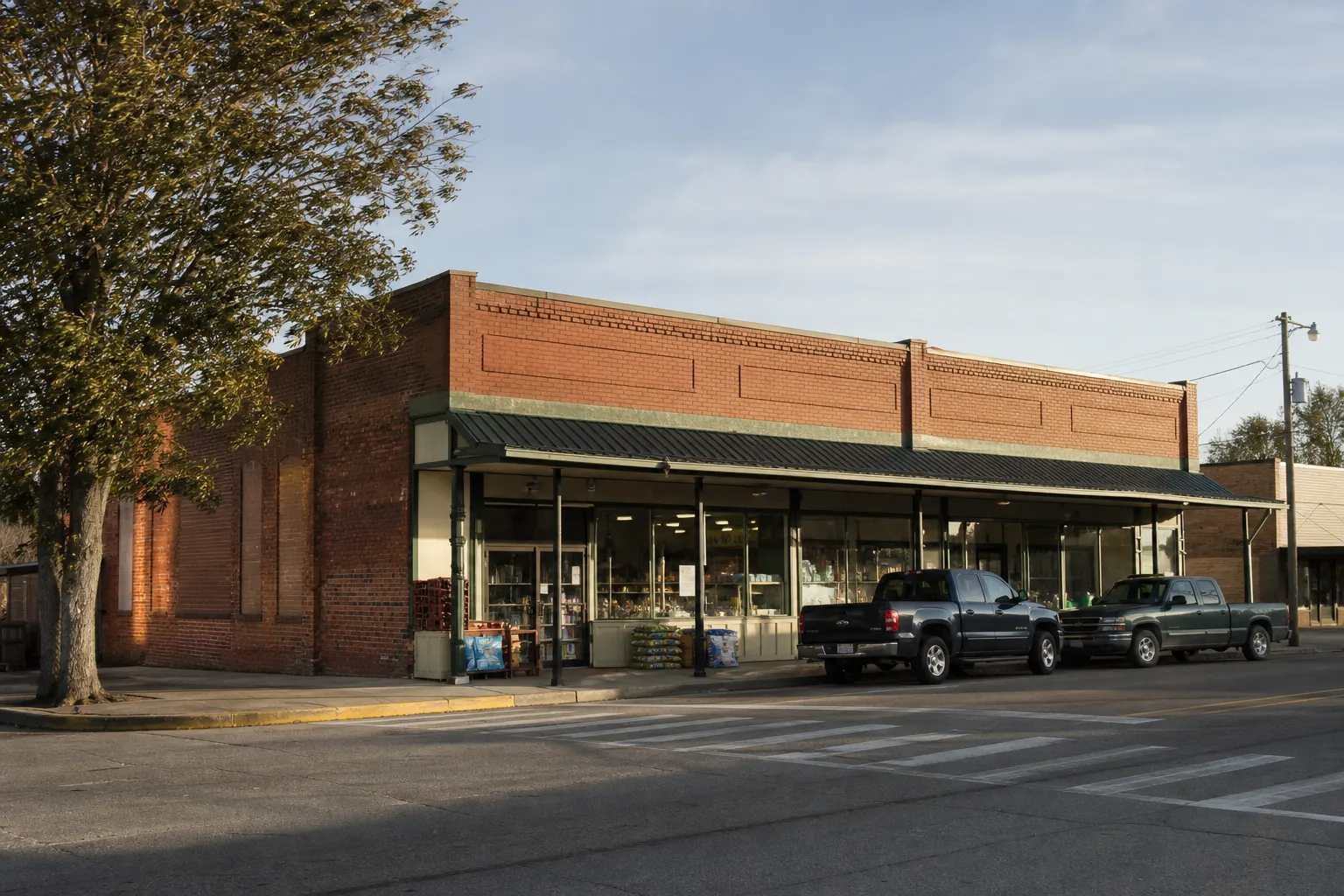
Ninety-three is not a metaphor. County Business Patterns 2023 counted 93 NAICS 445110 establishments (all legal forms) across Wyoming. Census Vintage 2024 estimates 587,618 residents as of July 1, 2024. In a market that thin, every rumor at the gas pump travels farther than a bank statement. Underwrite the box you can prove—not the story you heard about “what stores go for out here.” Scarcity is the thesis: fewer comps, louder gossip, and one lease mistake that can end a career in a county seat.
When the town, the Associated Food Stores or UNFI letter, and funds proof are ready, book a confidential intro. Jason Taken of HedgeStone Business Advisors works Wyoming independents as scarce-market files (Grocery Store Business Broker). Email jason.taken@hedgestone.com after returns and the lease abstract can survive skepticism.
Those 93 establishments measure industry headcount only. They are not listings. SNAP retailer counts remain null in this pack. FNS authorization does not transfer with the keys.
Scarcity math: gossip versus bankable diligence
Thin markets amplify confirmation bias. One loud seller, one loud wholesaler rep, and one loud competitor can invent a “going rate” that has never closed. Demand three years of returns, department scan data, and deposits that reconcile. A storewide-only CIM is a brochure; in Wyoming it is often the only brochure in town, which makes it more dangerous, not less.
Exit math is also thinner. Your buyer universe is smaller. That does not make every asking price rational—it means lease term, cooler age, and whether the week survives after unpaid seller hours disappear must be ruthless. Freight distance and drop frequency change working capital more than coastal buyers expect. How to buy a grocery store step by step is the sequence; the buyer hub is the method. Owners selling use sell a grocery in Wyoming.
Ask who else can buy this box if you walk. If the answer is “almost nobody,” price that illiquidity into your bid—do not pay a dense-market multiple for a scarce-market exit.
Cooler age and roof condition matter more when the next HVAC crew is hours away. Demand maintenance logs and a walk of the mechanical room before you fall in love with a Jackson view or a Gillette sales story. Deferred maintenance in a ninety-three-box state becomes your problem with fewer alternative operators waiting to rescue a failed week.
Jackson Hole seasonality versus Gillette energy cycles
Jackson Hole / Teton lean resort occupancy cost and seasonal visitor volume—peak weeks that should not be averaged into a flat annual line without a trough model. Percentage rent clauses sometimes spike in tourism months and still bite when the trough arrives. Gillette and energy towns lean energy-cycle volume and single-store county seats where a slowdown hits the whole week; inventory that looked smart in a boom becomes shrink in a bust. Cheyenne is the primary Front Range-adjacent market, with Colorado competition for some shoppers. Casper carries central Wyoming independents. Drive the trade area. Do not price a Teton resort week as if it were a Gillette energy week.
Most independents lease. Build occupancy as base rent plus CAM plus taxes and insurance you actually pay, then divide by sales you can prove. Run the rent-as-percent-of-sales checker on the lease in the data room. No public Wyoming grocery rent-per-foot table ships with this pack—do not invent one. Resort corridors especially tempt vanity rent stories; insist on the actual lease. Remaining term under twenty-four months without options is a price cut. Start lease assignment before the lender asks. Lease due diligence covers exclusive use, co-tenancy, and CAM true-ups. If the seller owns the box, recast operations on market rent and price realty as a second asset—buying a store with real estate is two prices.
Staffing in resort towns can be seasonal and expensive; staffing in energy towns can vanish when the rigs leave. Model both as hiring risk, not as a soft note in the CIM.
Liquor Division wholesale plus the local retail license
Wyoming Department of Revenue Liquor Division is a NABCA control wholesale agency with private retail. Grocery wine and spirits depend on the local retail liquor license—verify the city or county. Local licenses can be limited. Local governing body plus the Liquor Division must approve; the asset sale alone does not move the privilege. Liquor license due diligence is the national worksheet; Wyoming adds a control-wholesale plus local-retail split.
If the CIM capitalizes spirits you cannot license at the address, rebuild the aisle. Put Liquor Division and local-board lag on the payment calendar beside landlord consent. Resort towns and energy towns can have very different local politics around retail liquor—confirm before you bid.
No traditional lottery — strip mainland CIM clutter
Wyoming does not operate a traditional state lottery. Do not list lottery as a deal item. Do not capitalize lottery gross imported from a Midwest or coastal CIM. Confirm tobacco with Wyoming Department of Revenue. Removing phantom line items is part of underwriting discipline in a scarce market—every invented desk wastes closing energy and can mislead a lender about cash flow composition.
If a CIM still shows lottery because a prior broker copied a template, strike it and re-ask what else was copied.
Tourism CIMs sometimes smuggle “other income” that is really lodging-adjacent or seasonal services that will not survive under your ownership. Strip non-grocery income until the week stands as grocery. Scarce markets punish blended stories because there is no thick peer set to pressure-test the fiction.
Associated Food Stores letters before the multiple argument
Albertsons / Safeway (Albertsons Cos.), Smith’s (Kroger), and Walmart set price perception across large parts of the state. They are competitive weather, not sold comps. Associated Food Stores terms are central for many Mountain West independents; UNFI also appears. Drop minimums, over-advances, and personal guarantees travel with the buyer. Read the warehouse letter before you argue a trophy multiple. An over-advance is debt you inherit or pay off. Long drops and weather delays make working capital more than a coastal habit—blizzard weeks and mountain passes change when product actually hits the floor.
Treat BizBuySell’s 2025 grocery sold print (earnings multiple averaging 3.38; five-year average 2.66 for 2021–2025; interquartile span 1.60–3.15; revenue multiple averaging 0.43) as a national band only after Wyoming troughs and Liquor Division paths are honest. FMI Speaks 2025 still describes a $1 trillion supermarket channel with roughly 2.1% average net—useful context, useless as a Cheyenne quote. This essay invents neither a Wyoming asking mean nor fictional SDE dollars.
Front Range shoppers near Cheyenne sometimes leak into Colorado banners for trips. Model leakage honestly. A CIM that assumes captive county demand in a border corridor is selling hope.
Federal wage, food exemption, and local option tax traps
DOL’s July 1, 2026 consolidated table lists Wyoming at the federal $7.25 floor (no higher state minimum for FLSA-covered employers). Confirm Wyoming DWS posters. Recasting a grocery P&L replaces unpaid seller weeks with hired labor at that floor, reverses related-party rent that will not survive Monday, and leaves recurring shrink in the earnings. Energy-town and resort boxes both hide key-person risk when the seller is the only cutter.
Wyoming generally exempts eligible food for domestic home consumption from state sales tax; local option taxes can still apply to other merchandise—and food treatment can vary by locality. Confirm Wyoming DOR food-exemption guidance and any local 4th-penny / lodging mix at the address. Do not assume every city treats food the same. State grocery sales tax is the national clip; Wyoming needs a local-option paragraph.
Sales-tax returns help corroborate sales and open DOR clearance talk—they do not replace scan. Ask counsel about tax clearance or holdback. Repealed UCC Article 6 does not erase every successor risk. Bulk sales and tax clearance belongs in the closing memo.
DSCR is annual cash flow over annual debt service after the honest recast. Run the SBA 7(a) payment and DSCR calculator once unpaid weeks are gone and seasonal or energy troughs are modeled. What is DSCR for a grocery acquisition is the definition. Tie weekly sales to scan and EBT deposits.
Agriculture, WIC, and DOR desks on the calendar
Wyoming Department of Agriculture and local inspectors own retail food. Start a new operation file; do not inherit last year’s inspection as if it were yours. WIC sits with Wyoming Department of Health — WIC. Tobacco routes through DOR. Sequence those desks in the LOI with Liquor Division wholesale timing and the local retail license vote. In a ninety-three-box state, one stalled desk can strand the whole close because there is no parallel “other store” waiting as a backup plan.
Rural single-store towns sometimes brush against federal HFFI conversations. This pack records no dollar figure—do not underwrite on a grant fantasy. Prove the week first.
Boom, bust, and the cash that must clear FNS dark days
Energy towns overstock in booms and bleed shrink in busts. Resort towns overstock for peak tourism and then sit on slow movers in shoulder season. Either way, size the close carefully. USDA FNS will not let SNAP ride with ownership; the buyer opens a fresh authorization. Document that as a dated plan—see EBT / SNAP diligence and how to apply for SNAP as a new owner—not as a CIM checkbox.
Pay for stock at inventory at cost on closing night. Tags lie. Use closing-day inventory procedures and cull dead product before you wire. Then fund working capital for the next Associated Food Stores or UNFI drop through card downtime and through the trough week your CIM averaged away. The cash-to-close estimator plus how much money you need should show equity, cost inventory, closing costs, and a trough reserve—not a coastal habit pasted onto Cheyenne.
Five million is a program max on a scarce-market note
SBA 7(a) may finance the purchase. The published $5 million program maximum caps Wyoming credit conversations; it is not a valuation of a Jackson resort box or a Gillette energy independent. Lenders still underwrite recast earnings, staffing they believe, cost inventory, local liquor path, and a SNAP calendar. Equity-injection folklore will not be invented on this page. Scarcity plus seasonality usually keeps notes well under that max once troughs are honest.
Smith’s-shopping credit officers will still demand scan and EBT that match the bank. Use verifying sales with scan data and evaluating a store’s P&L before you tour. Capture transition hours in the APA—resort seasonals and energy-town key people leave on short notice. Transition periods, the post-closing 90-day plan, and surviving due diligence are the practical calendar. Red flags that should kill a grocery deal exist so rumor tours end early.
Bring the town map, lease abstract, three years of returns, Liquor Division / local retail class, Associated Food Stores letter, and a trough model when you book a confidential intro. Jason will say whether the scarce-market file covers debt. Method lives on the buyer hub; this essay is Wyoming’s ninety-three-box file.
How a buyer would price Underwrite Wyoming grocery where ninety-three boxes set the gossip
These figures are a teaching walk-through for Underwrite Wyoming grocery where ninety-three boxes set the gossip, not a quote and not a sold comp. Order of operations: weekly sales, recast SDE, inventory at cost, then a multiple band. State pages add the tax, wage, and alcohol-agency facts for this jurisdiction. They do not invent a local sold-comp set.
If weekly sales or shrink move 8 percent, the SDE and the note move with them. That is why Jason Taken starts with scan data and the lease, not with a neighbor's rumor multiple.
Bring proof of funds or a lender pre-screen, your format, and geography. Jason will tell you whether a store like this can clear SBA or seller-carry math.
This page is educational information from Grocery Store Business Broker (HedgeStone Business Advisors). It is not legal, tax, or investment advice. Licensing, tax, and financing rules vary by state and deal. Confirm every item with counsel and your lender before you sign.