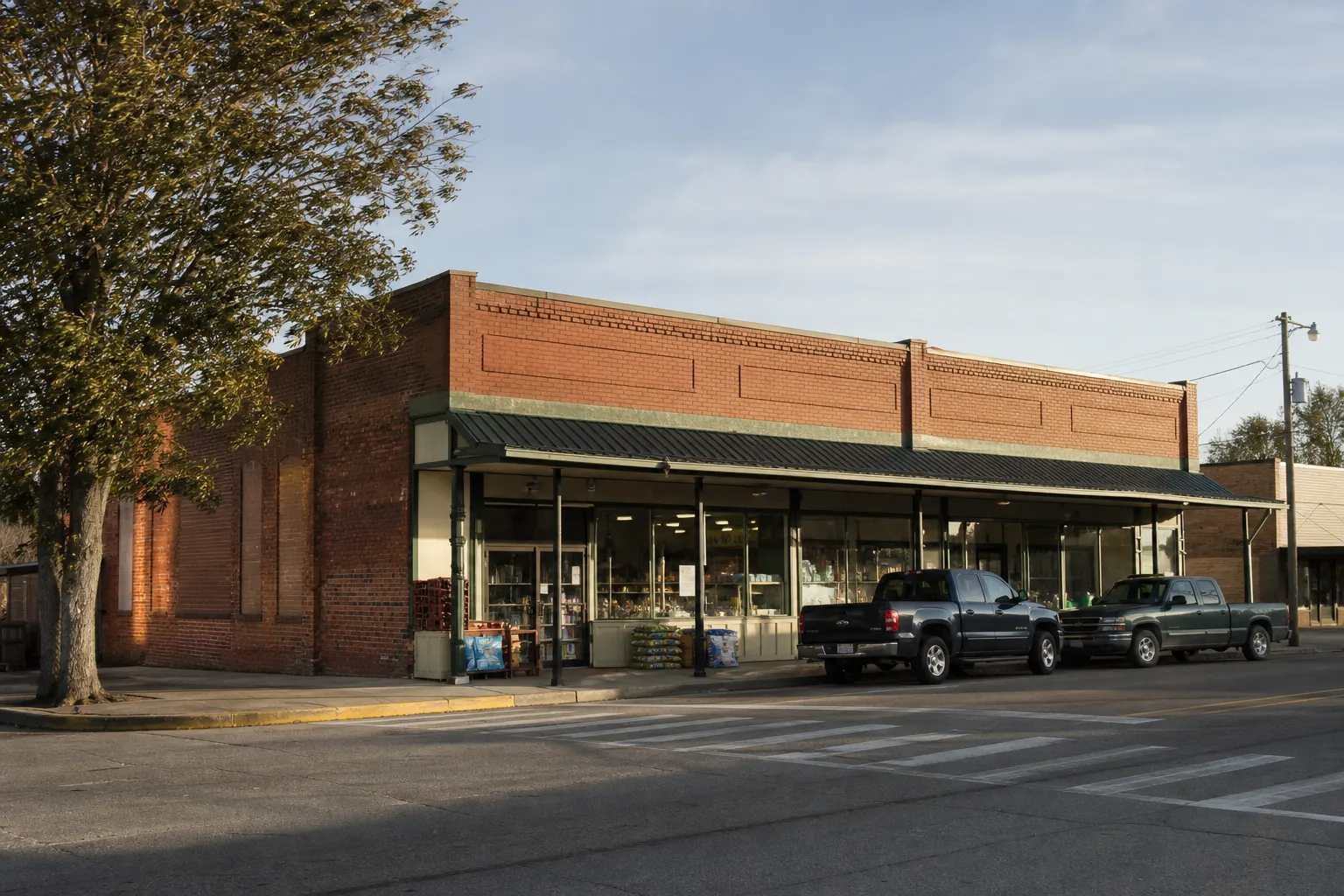
Two hundred sixty grocery establishments statewide is a warning label, not a trivia fact. County Business Patterns 2023 (NAICS 445110, all legal forms) printed 260 boxes against a Census Vintage 2024 July 1 population of 1,769,979. Layer West Virginia Alcohol Beverage Control Administration on top: NABCA control wholesale for spirits, with retail franchise and grocery placements that must be verified address-by-address—including Sunday rules that secondary summaries flag as restricted. Eastern Panhandle DC spillover is not coalfield trade and is not Huntington Tri-State border math. Density plus control is the opening thesis; everything else hangs on those two facts.
When the corridor map, ABCA class, and funds proof are ready, book a confidential intro. HedgeStone’s Jason Taken (Grocery Store Business Broker) underwrites Appalachian independents as thin-market files. Use jason.taken@hedgestone.com once the data room can survive a skeptical read.
SNAP retailer counts stay null here on purpose. FNS authorization does not travel with ownership. Headcount is industry size—nothing more.
Density first: why thin headcount changes diligence
Thick coastal markets let you triangulate comps. West Virginia often gives you one independent per county seat and a rumor mill that outruns the P&L. Treat broker chatter as a lead list. Demand three years of tax returns, department scan data, and bank deposits that reconcile line by line. Storewide-only CIMs are brochures everywhere; here they are especially dangerous because peer pressure is scarce.
Single-store towns also change exit math. Your next buyer pool is smaller. That does not make every asking price a bargain—it means lease term, cooler age, and whether the week survives after the seller’s unpaid hours disappear must be ruthless. Coolers that “always run fine” in August still fail on the first Monday you own them; budget contingency, not optimism. How to buy a grocery store step by step is the sequence; the buyer hub is the method.
Appalachian food-access dynamics also matter. Some corridors carry higher EBT share; others lean cash and card with different mix. Split the week by tender before you trust an averaged sales line. Do not invent a SNAP retailer census—this pack does not have one.
Charleston independents sometimes compete with capital-region traffic patterns that rural coalfield boxes never see. Morgantown weeks swing with the academic calendar. Ask for summer and break weeks separately before you annualize. A university town CIM that averages football Saturdays into every week is selling a myth.
Panhandle spillover versus coalfield and Tri-State trade
Eastern Panhandle / Martinsburg corridors lean DC–Baltimore commuter spillover—different wage pressure, different specialty mix, different landlord expectations than southern coalfield towns. Charleston / Kanawha is the primary in-state independent hub. Huntington sits in Tri-State border trade with Ohio and Kentucky, where price boards and shopping patterns cross state lines and Food Lion / Kroger weather can feel different on each side of the river. Morgantown carries university demand that softens when the campus empties. Drive the corridor. Do not paste a Panhandle week onto a coalfield box.
Most independents lease. Build occupancy as base rent plus CAM plus taxes and insurance you actually pay, then divide by sales you can prove. Use the rent-as-percent-of-sales checker on the real lease. No public West Virginia grocery rent-per-foot table ships with this research—inventing one is malpractice. Remaining term under twenty-four months without options cuts price. Start lease assignment before the lender asks. Lease due diligence covers exclusive use, co-tenancy, and CAM true-ups. When the seller owns the building, recast ops on market rent and price realty separately—buying a store with real estate is two prices. Owners selling follow sell a grocery in West Virginia.
Border shopping also changes inventory planning. Tri-State buyers who chase Ohio or Kentucky ads still shop your aisle on the way home; model that leakage honestly instead of pretending every household is captive.
ABCA control wholesale and franchise spirits
Alcohol is West Virginia Alcohol Beverage Control Administration. Spirits wholesale sits in the NABCA control system. Beer and wine retail are licensed; grocery spirits placements exist alongside control wholesale through retail franchise arrangements—verify ABCA for the exact store, any Sunday restrictions, and local option. Do not model a full spirits aisle because a CIM used the phrase “full liquor.” Incoming-owner approval does not ride automatically with an asset sale. Liquor license due diligence is the national worksheet; West Virginia adds a control-state and franchise verification step.
If spirits privilege lags past close, the payment calendar must absorb dark days. Put ABCA on the critical path beside landlord consent and county health. Franchise maps change; confirm whether the aisle you are buying still exists under current ABCA practice.
Secondary summaries that list West Virginia among grocery-spirits states still require store-level verification. Franchise placement is not a statewide entitlement. Sunday restrictions flagged on secondary pages belong in counsel’s memo before you capitalize weekend spirits gross.
Food exemption with local add-ons still on the ticket
West Virginia generally exempts eligible food from the state sales-tax portion; local sales taxes may still apply. Confirm Tax Division food-exemption guidance and the city rate at the address. State grocery sales tax is the national clip; West Virginia needs a local-add-on paragraph.
Tax returns help corroborate sales and open successor-liability talk with the Tax Division—they do not replace scan. Ask counsel about tax clearance or holdback on the asset sale. Repealed UCC Article 6 does not erase every successor risk. Bulk sales and tax clearance belongs in the closing memo.
Coalfield towns sometimes lean harder on prepared food and hot cases when home kitchens are thin—code those items correctly or margin fiction creeps in.
Eight seventy-five labor and the coverage test
DOL’s July 1, 2026 consolidated table lists West Virginia at $8.75. Confirm WV Division of Labor posters. Recasting a grocery P&L swaps unpaid seller weeks for hired labor at that floor, kills related-party rent that will not survive Monday, and keeps recurring shrink inside earnings. Appalachian single-store boxes often hide a seventy-hour owner who is also the only cutter—that is key-person risk, not wage savings.
DSCR is cash flow over debt service after the honest recast. Run the SBA 7(a) payment and DSCR calculator once unpaid weeks are gone and ABCA lag is on the calendar. What is DSCR for a grocery acquisition is the definition. SDE that only works because the seller never paid himself is fiction.
Hiring depth is thinner in many counties. Model overtime and recruiting lag—not a fantasy that a cutter appears the week you close. Panhandle wage pressure from DC spillover can outrun the statewide $8.75 poster; confirm what you must actually pay to keep meat open.
Kroger and Food Lion weather versus warehouse letters
Kroger banners, Food Lion (Ahold Delhaize), and Walmart set price perception across large parts of the state. They are competitive weather, not sold comps for your independent. C&S Wholesale Grocers, UNFI, and Associated Wholesale Grocers (AWG) terms travel with the buyer: drop minimums, over-advances, and personal guarantees. Read the warehouse letter before you argue a trophy multiple. An over-advance on the wholesaler statement is debt you inherit or pay off—price it or walk.
BizBuySell’s grocery/supermarket sold sample showed a 3.38 average earnings multiple in 2025, a 2.66 five-year average (2021–2025), an IQR of 1.60–3.15, and a 0.43 average revenue multiple in 2025. Apply that national band after the West Virginia thin-market recast—not as a Charleston average. FMI’s 2025 Speaks figures ($1 trillion supermarket sales; 2.1 percent average net profit) describe a national channel. No West Virginia asking-price mean will be invented on this page.
DHHR WIC, Lottery, health, and Tax Division desks
Retail food sits with West Virginia Department of Health and local sanitarians. County practice differs; last year’s inspection is not your permit. Incoming operators file a new retail food operation.
WIC sits with West Virginia DHHR — WIC. West Virginia Lottery tickets re-paper when tickets are on the counter. Tobacco routes through Tax Division and ABCA as applicable. Write each desk into the LOI calendar. Tax clearance / successor liability with the Tax Division belongs beside counsel’s bulk-sale memo.
Federal HFFI and Appalachian food-access programs may appear in some tracts—no dollar figure is recorded here; chase program detail only after the store file is honest.
Cash stack, new SNAP file, and the program ceiling
FNS requires a fresh SNAP application—authorization does not transfer. Put “buyer files new FNS application” in the LOI, never “SNAP included.” Keep EBT / SNAP diligence and how to apply for SNAP as a new owner in diligence. Reconcile weekly sales to scan and EBT deposits before you trust the CIM. Coalfield corridors and Panhandle spillover corridors can show very different tender mixes; do not average them into one statewide story.
Inventory at cost is a closing count outside the earnings multiple. Hold back unsellable. Closing-day inventory procedures keep that fight off the floor. Working capital buys the next C&S, UNFI, or AWG drop while cards are dark—and while Tri-State border shoppers chase Ohio or Kentucky ads. Equity + inventory + working capital + closing costs + an FNS-gap reserve is the real cash ask. Use the cash-to-close estimator and how much money you need. In a 260-establishment market, mis-sizing working capital has fewer second chances because the next buyer for a failed week is hard to find.
SBA 7(a) can finance ownership change. The published maximum is $5 million—a hard ceiling on a West Virginia credit file, not a quote on any Panhandle or coalfield independent. Eligibility and repayment live in the store file: recast SDE at the $8.75 floor, believable hours in a thin hiring market, inventory at cost, ABCA franchise path, and a dated SNAP plan. SOP equity-injection percents will not be invented here. Thin markets often live well below that ceiling because coverage is tight after hired labor and control-state lag.
Lenders who already shop Kroger will demand scan and EBT that reconcile to the bank. Gaps are mix, downtime, or fiction. Verifying sales with scan data and evaluating a store’s P&L are the adult tests. Transition hours belong in the APA—especially when the seller is the only reliable cutter in a county seat. Transition periods, handling employees, union contracts, and WARN, and the post-closing 90-day plan sit beside surviving due diligence. Red flags that should kill a grocery deal exists so you stop touring a story.
Also pressure-test cooler age and roof condition early. Thin markets forgive fewer deferred-maintenance surprises because repair crews and capital both travel farther. A beautiful CIM week that depends on a failing freezer is not a week—it is a future cash call.
Book a confidential intro with the corridor map, lease abstract, three years of returns, ABCA privilege class, and an honest $8.75 labor recast. Jason will say whether the thin-market file covers debt inside the national band—and which West Virginia desk still has to move. The buyer hub is national. This page is the density-and-ABCA file.
An illustrative recast on Buy West Virginia grocery where density and ABCA set the week
Use this napkin recast on Buy West Virginia grocery where density and ABCA set the week when you book the call. It is labeled illustrative. BizBuySell's 2025 grocery sold-business earnings multiple averaged 3.38, with a 2021-2025 IQR of 1.60-3.15. State pages add the tax, wage, and alcohol-agency facts for this jurisdiction. They do not invent a local sold-comp set.
Rent at 2.3% of sales is the occupancy check. If the real lease is higher, the SDE in this table is too generous until you recast to market rent.
Bring proof of funds or a lender pre-screen, your format, and geography. Jason will tell you whether a store like this can clear SBA or seller-carry math.
This page is educational information from Grocery Store Business Broker (HedgeStone Business Advisors). It is not legal, tax, or investment advice. Licensing, tax, and financing rules vary by state and deal. Confirm every item with counsel and your lender before you sign.