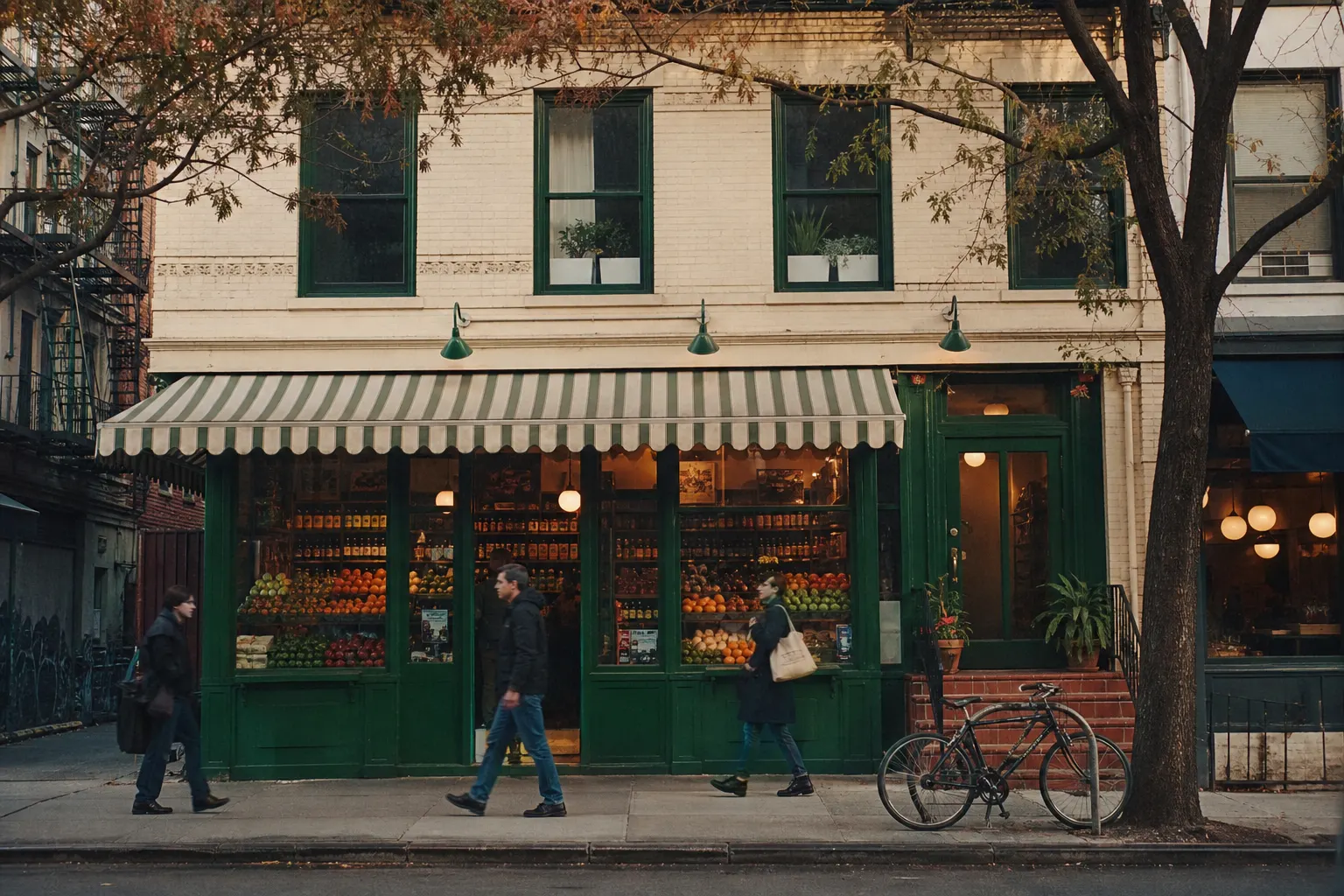
A Chicago grocery is a ward-and-suburb file. Jewel-Osco circulars, Mariano’s / Food 4 Less, Aldi, and suburban Meijer already steal trips; the independent wins on language, importer credit, and a lease that assigns. After January 1, 2026, the grocery-tax map is an address question, not a statewide slogan. Grocery Store Business Broker — HedgeStone Business Advisors, led by Jason Taken — sequences the local liquor commissioner, ILCC, and MyTax before anyone tours. Book a confidential intro with the liquor class and a MyTax printout. Email jason.taken@hedgestone.com if you want that hour written down.
Statewide Illinois maps live on sell a grocery store in Illinois and buy a grocery store in Illinois. This page is the metro: Little Village and Pilsen, Devon Avenue, Argyle and Uptown, City versus suburban liquor desks, and year-over-year tax lines that will not compare without a note.
The 2026 grocery-tax ordinance is diligence, not a slogan
The state 1% grocery tax was eliminated January 1, 2026 (IDOR FY 2026-03; P.A. 103-0781). Municipalities and counties may impose a local 1% grocery tax by ordinance. RTA/MED grocery taxes remain. Confirm MyTax Illinois rate finder for the store address. Do not write “Illinois has no grocery tax” onto a suburban CIM until you have the ordinance status. State-by-state grocery sales tax is the longer map.
Show 2025 remittance and 2026 remittance as two rows. A buyer who annualizes last year’s grocery-tax line onto this year’s ordinance map will misread cash. Suburban ordinance status is a 2026 diligence item. City and suburb are not the same sentence. IDOR bulk-sales and successor-liability practice remains a standard Illinois asset-sale item — confirm the current IDOR bulk-sales bulletin. State-by-state bulk sales and tax clearance is the longer note.
Local commissioner, ILCC, and saturation politics
Off-premise wine is commonly available to grocery licensees. Spirits are generally allowed in grocery with the correct license; Chicago and suburban local rules add conditions. Local saturation and local-option rules apply. Verify the municipality. The incoming owner needs the local liquor commissioner and the Illinois Liquor Control Commission. Transfer is not automatic. Liquor license due diligence is the checklist.
Local liquor politics are a ward and municipality file. Saturation rules can slow a transfer even when ILCC is ready. Build hearing time into the LOI. A CIM that says “Illinois allows grocery liquor” without the local class and the local commissioner is incomplete. Name both desks. Name the class.
Retail food sits with the Illinois Department of Public Health and local health departments. Chicago DPH is a separate desk from suburban departments. Call the department that holds the current permit. Tobacco sits with the Illinois Department of Revenue. Illinois Lottery is a separate file if tickets are on the counter. WIC sits with the Illinois Department of Human Services.
Little Village, Devon, and Argyle as three floors
Little Village and Pilsen are a documented Mexican independent corridor. Devon Avenue is documented South Asian and Jewish/kosher independent territory. Argyle and Uptown are documented Vietnamese and East Asian independent territory. Keep the notes qualitative. Do not invent a population percentage. A suburban Jewel-Osco multiple does not travel onto that mix. Buying an ethnic market outside your community is the caution. Sell a Hispanic grocery if that is the Little Village book.
A Mexican independent on 26th Street does not stock like a South Asian or kosher box on Devon, and neither stocks like a Vietnamese independent on Argyle. Walk the invoices. If you cannot restock what is on the shelf, you are buying a lease and a hope. Kosher and South Asian files on Devon can carry vendor and holiday calendars a conventional Jewel-Osco recast will not show. Ask for those calendars. A week that depends on a holiday the incoming owner does not understand is still a real week — not an add-back and not a defect.
Jewel-Osco circulars are the price tape many city and suburban shoppers already know. An independent that cedes milk and eggs and wins on the rest of the basket can still recast. An independent that matches that tape on every SKU will donate labor. Pull department grosses. Name the nearest banner as context — not as a listing. Wholesaler and banner agreements when you sell covers importer credit and drop minimums.
Quiet sale before 26th Street vendors hear
How to sell a grocery store confidentially means counsel and a CPA first, then a blind teaser that names a part of metro and a format — not the only Mexican independent in Little Village. NDA, then a CIM with departmental sales, the lease abstract, and both alcohol desks. Managers hear when the local commissioner, the assignment, or transition hours need them.
Recasting a grocery P&L restores owner compensation, keeps documented one-time repairs, pulls personal items, and takes related-party rent to market if the next operator will pay a third-party landlord. Reject a standing inventory adjustment as an add-back. Preparing three years of financials and verifying sales with scan data tie the week to filings.
The U.S. Department of Labor WHD table effective July 1, 2026 lists Illinois at $15.00. Chicago and some Cook County suburbs set higher floors. Confirm IDOL and the city. Recast labor on the wage tape this store actually runs, including any city overlay. FMI’s 2.1 percent average net for food retailers in 2025 is channel context for a Chicago independent — not a sold-comp. Trade-talk independent net bands are not an official NGA primary statistic in this research pack. This pack left asking rent null; FMI’s $19.59 weekly sales per selling square foot is channel productivity, not a Chicago rent quote.
Leasehold, inventory, and the FNS gap
Lease due diligence is assignment, remaining term, options, co-tenancy, and use. A landlord who recasts rent as the price of consent changes SDE. Most city boxes lease; some older neighborhood stores own the building. Confirm the file. Selling with a lease versus real estate keeps the piles apart. Model occupancy from this lease and this P&L — not from a metro brochure.
Inventory is counted at cost at close. How inventory is counted at closing is the procedure. Department the room. Hold back unsellable. A wholesaler over-advance is debt.
USDA FNS requires a new SNAP retailer application for the incoming owner. Neighborhood boxes that ring a material EBT share need cash for the gap. Write the filing into the LOI. What happens to SNAP authorization when you sell is the federal rule. SBA 7(a) still tops out at the published $5 million maximum — SBA 7(a) for grocery acquisitions. Write the person who will stand in the store into the CIM.
National sample after the tax map and the wage overlay
BizBuySell’s national grocery sold sample — 3.38 average earnings multiple in 2025, 2.66 five-year average, IQR 1.60–3.15, 0.43 average revenue multiple — attaches to recast earnings on a listing-site sample. Apply it, if at all, after the recast includes the actual wage tape and the grocery-tax remittance at this address. It is not a Chicago sold-comp. The valuation hub and how to value a grocery store are the method.
Buyers shopping an Illinois search should treat Chicago as files, not as a listings board. Sequence the local liquor commissioner, ILCC, SNAP filing, IDOR bulk-sales notice, and landlord consent as dated steps. Suburban ordinance status on the 2026 grocery tax belongs in that same paper. The LOI terms that matter for buyers is the longer list. Training hours after close keep a Little Village, Devon, or Argyle mix alive — transition and training periods. Employee stay bonuses belong in the LOI if those people are the only ones who can order that mix.
A suburban Cook County box can still be a Chicago-metro file. It is not a City liquor-commissioner file and it is not a Chicago DPH file. Write the suburb on the CIM after NDA. Confirm that suburb’s grocery-tax ordinance and its minimum-wage overlay.
Suburban Cook ordinance overlays and Mariano’s weather
A suburban Cook County box can share a Chicago-metro teaser and still sit under a different liquor commissioner, a different health department, and a different grocery-tax ordinance. Confirm MyTax for that suburb. Confirm the wage overlay. Do not paste a City of Chicago liquor-commissioner story onto a suburban CIM. Mariano’s / Food 4 Less and Aldi steal different trips than Jewel-Osco — name which banner actually sits in the trade area. Competition analysis and trade-area math is the method.
Devon Avenue kosher calendars and South Asian holiday weeks are operating facts. Ask for those calendars in diligence. A week that depends on a holiday the incoming owner does not understand is still a real week. Employee stay bonuses belong in the LOI if those people are the only ones who can order that mix. Anatomy of a grocery store P&L and shrink, margin, and turns show whether center store is carrying the perimeter on 26th Street or Argyle.
Illinois Lottery, if tickets are on the counter, is a separate retailer file from the local liquor commissioner. Tobacco sits with the Illinois Department of Revenue. WIC, lottery, and tobacco transfer checklists keeps those off the “liquor desks” line. Surviving due diligence is the seller companion when a Chicago buyer asks for MyTax and the local liquor class in the same folder. Timeline to sell a grocery store should show both alcohol desks, IDOR bulk-sales notice, and FNS as dated steps.
Do not import a downstate Illinois aisle mix onto a Little Village or Devon file. This page’s qualitative corridors are Little Village / Pilsen, Devon Avenue, and Argyle / Uptown. The buyer’s job is this lease, these two alcohol desks, and this scan. Year-over-year sales-tax lines after the January 1, 2026 state grocery-tax change will not compare without a note — show 2025 and 2026 remittance as two rows before anyone annualizes cash. A suburban ordinance that re-imposes a local 1% grocery tax is a diligence item, not a footnote.
Ward liquor politics and suburban ordinance status
Local liquor politics are a ward and municipality file. Saturation and local-option rules can slow a transfer even when ILCC is ready. Build hearing time into the LOI. A CIM that says “Illinois allows grocery liquor” without the local class and the local commissioner is incomplete. Name both desks. Name the class.
Suburban Cook County boxes can still be Chicago-metro files. They are not City liquor-commissioner files and not Chicago DPH files. Write the suburb on the CIM after NDA. Confirm that suburb’s 2026 grocery-tax ordinance and its minimum-wage overlay. Year-over-year sales-tax lines will not be comparable without a note showing 2025 remittance and 2026 remittance as two rows.
Little Village, Devon, and Argyle are three files. A Mexican independent on 26th Street does not stock like a South Asian or kosher box on Devon, and neither stocks like a Vietnamese independent on Argyle. Walk the invoices. Invent neither a population percentage nor a rent-per-foot.
Book the Chicago intro
Bring three years of P&Ls, the lease, the last health inspection, the local liquor class, and a MyTax printout for the address. Grocery Store Business Broker will not invent a metro population, a grocery-density figure, or a rent range this pack left null. We will recast the store you run and map the local commissioner, ILCC, SNAP, and the grocery-tax ordinance that actually applies.
Book a confidential intro to start that file. Email jason.taken@hedgestone.com if you want the hour in writing. About Jason Taken is the desk. Bring the MyTax printout and the local liquor class. The next step is the two alcohol desks and the 2026 remittance tape, not a sign in the vestibule.
An illustrative recast on Recast a Chicago grocery on the 2026 tax map and two alcohol desks
Use this napkin recast on Recast a Chicago grocery on the 2026 tax map and two alcohol desks when you book the call. It is labeled illustrative. BizBuySell's 2025 grocery sold-business earnings multiple averaged 3.38, with a 2021-2025 IQR of 1.60-3.15. Metro pages talk corridors and operators. They do not invent asking rents or establishment counts.
If weekly sales or shrink move 8 percent, the SDE and the note move with them. That is why Jason Taken starts with scan data and the lease, not with a neighbor's rumor multiple.
Book the intro call with your side of the table ready: seller files or buyer capital. The calendar is the only next step.
This page is educational information from Grocery Store Business Broker (HedgeStone Business Advisors). It is not legal, tax, or investment advice. Licensing, tax, and financing rules vary by state and deal. Confirm every item with counsel and your lender before you sign.