Do I need Spanish on the floor to buy this store?
Yes, or a manager who already has it and will stay. Register Spanish is table stakes. A tourist buyer misses shrink and authenticity.
Grocery Store Business Broker · HedgeStone Business Advisors · Jason Taken
Last updated 2026-09-04
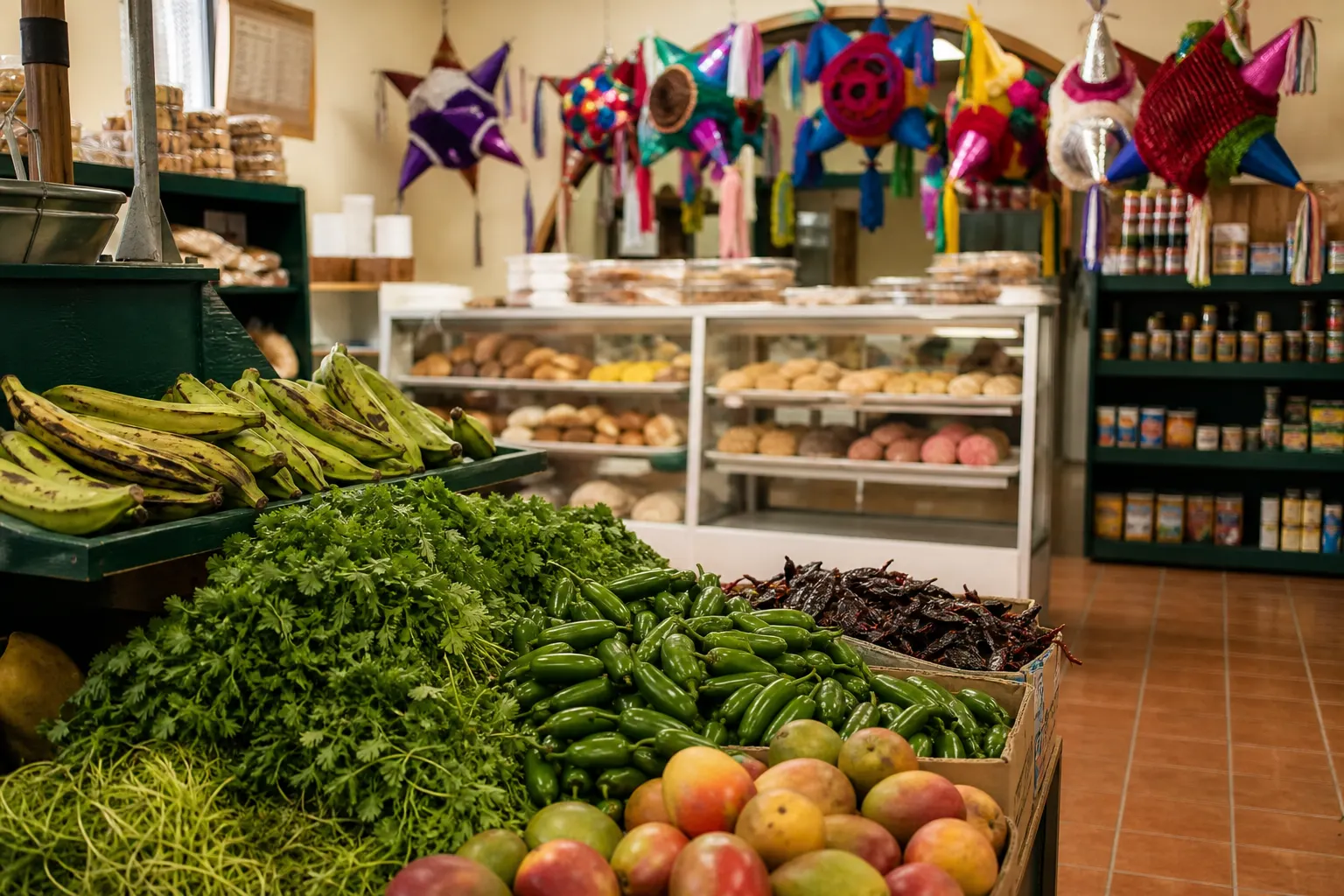
Buying a Hispanic or Latino grocery store is a Spanish-on-the-floor decision, a produce-and-carnecería decision, and a SNAP-mix decision. It is not “conventional grocery plus salsa.” If you cannot source the import book or staff the skill, the multiple is irrelevant. Grocery Store Business Broker — HedgeStone Business Advisors, led by Jason Taken — underwrites that file with you the way a financed buyer will: prove sales, recast SDE, count inventory at cost, and survive a new SNAP application. Mark the Buyer Underwriting Workbook, then book a confidential intro with the language you can hire and the capital you can document.
Read how to buy a grocery store for the sequence. Read buying an ethnic market outside your community if you are the tourist. This format is not an Asian grocery, an Indian grocery, or a Caribbean / African market. Those books and those greetings are different. The buy-a-grocery-store hub is the method. This page is the Hispanic file.
Language on the floor is who can order, who can stop shrink, and who the regulars will still greet. Register Spanish is table stakes. A Mexican trade area is not automatically a Central American book. A Caribbean corridor is not automatically a Northern Mexican carnecería. Ask which Spanish the regulars speak, and who on the payroll can answer them without the seller in the room.
Buyers from outside the community systematically miss shrink and product authenticity. The cut at the meat case, the tortilla that is still warm, the panadería that opens before dawn — those are trust, not décor. If the seller is the only cutter or the only closer, treat transition labor as a close condition, not a courtesy. Write the hours into the LOI. Transition and training periods exist so “the seller will help” becomes a schedule.
A conventional operator who plans to “keep a Spanish-speaking cashier” and reset the aisle is a shrink plan. Should I buy an ethnic market is the fork. Buying as a first-time owner is honest about grocery hours. If you need a partner who already runs a carnecería, say that on the first call. Jason Taken would rather send you to the workbook than tour you through a store you cannot staff.
Labor in prepared foods and panadería can dominate the P&L even when produce and meat drive traffic. Model the wage you will actually pay after the related-party cousins leave. Minimum wage is a floor. The baker who starts at 4 a.m. is not priced at the floor. If the recast only works because the owner is the baker, the butcher, and the closer, you are buying a job, not a store. Use the DSCR calculator after you put real labor back in.
Produce, meat, and imported dry grocery drive traffic. Prepared foods and panadería can dominate labor. Economics are not a supermarket average with a salsa endcap. Produce shrink is the underwriting core. If shrink is “about 2 percent” with no count history, assume it is worse. Department mix hides in a storewide blend. Meat and produce can sink a “healthy” grocery margin. Read shrink, margin, and turns and evaluating a store’s P&L.
Turns are not one number. Center-store import and the produce rack do not share a clock. Scan data has to show department mix. A weekly-sales spreadsheet without that mix is a rumor. Read verifying sales with scan data. Sales-tax filings should corroborate the week, especially where food is taxed or partially taxed. See grocery sales tax.
FMI’s $1 trillion in 2025 supermarket sales describes the supermarket channel. The 2.1 percent food-retailer net sample is a reminder that grocery is thin. FMI’s $668,377 average weekly sales per supermarket in 2025 is not this store’s Saturday produce rack. Do not quote channel weekly sales as if they were last week’s tickets.
A neighborhood grocery lives on hours and a lease. This format lives on authenticity and a perishable rack. Compare them only after you admit that. The ethnic versus conventional essay is the format fork, not a slogan about “community.”
Credit mix — EBT versus card versus cash — is the underwriting core on many Hispanic files. EBT is often the quiet sales engine. USDA FNS: SNAP authorization does not transfer. The new owner files a new application. The close calendar has to survive a new FNS file. Budget downtime in cash and in the story you tell the landlord. Read EBT / SNAP diligence and what happens to SNAP authorization.
EBT deposits should reconcile to the SNAP story. A gap is mix, downtime, or fiction. A cash-heavy mix the tax returns do not support will not survive SBA 7(a). It also will not survive a serious conventional buyer. Unreported cash is not a multiple. It is a walk-away. See red flags that should kill a grocery deal.
WIC, if present, is a vendor file, not a sticker on the door. Print the closing and license checklist. Working with attorneys and CPAs exists because counsel who have never closed a grocery file will rediscover SNAP in week six. Write the new-owner application into the APA as a calendar item, not a hope.
Specialty importers and produce houses, a conventional wholesaler for center store, and tortillería or meat DSD — that is the book. The conventional door stocks a minority of what fills the basket. The SKUs that make the regulars stay usually come from houses that know the seller, not from the same co-op that stocks an independent supermarket.
Ask who will open a new account. Ask what happens to credit at close. A buyer who cannot source the import book is a walk-away, even if the lease is pretty. DSD vendors will keep delivering after a sloppy close only if someone is paying them. Put those vendors on a schedule in asset-purchase-agreement essentials. An asset sale does not move credit by magic.
Who usually wins this file: operators already in the language and product set, and regional Hispanic banners that already have the houses. Conventional buyers who will fail without the community should be screened out — including you, if that is the honest read. Read how to read a CIM. A CIM that omits the vendor list is a brochure.
Beer and wine matter on many Hispanic files when the state and the local option allow them. Alcohol is a class, a quota, or a control-state product. NABCA lists 17 control states plus local-control pockets. It is never “the liquor license” as one magical asset. Read state-by-state alcohol regime and liquor license diligence. Transferring a liquor license is the calendar, not a slogan. Write license outs into the LOI terms that matter for buyers.
Retail food plus any hot-food or bakery permit runs on a separate permit calendar. A panadería or a taquería counter is not “grocery” to the health department. Confirm the permit class before you count that labor as durable. Tobacco sits with tax and health agencies. Lottery is often personal. None of those ride along automatically.
State pages such as buy a grocery store in Texas and California exist because wage, food tax, and alcohol differ. Metro pages such as Dallas–Fort Worth and Los Angeles are trade-area teaching. They do not invent a Hispanic-store count. They do keep you from pricing a control-state spirits fantasy in a license-state beer file. See also control state.
Hispanic files often need more working capital than the equity line suggests because produce and meat turn on a different clock than import dry. Teaching example, labeled illustrative: a $950,000 going-concern (ex-inventory) at 15 percent equity is $142,500. Inventory at cost of $200,000 — produce, meat, import dry — is usually cash or a short-term piece. Add $70,000 for the next produce house and meat DSD, plus $40,000 for closing and SNAP downtime on an EBT-heavy mix. You are roughly a $452,500 buyer. Say that on the call. The cash-to-close estimator and how much money you need exist so the equity slogan does not own the hour.
Inventory is a separate line at cost, counted at close. Retail tags are not cost. Unsellable produce is a fight you write rules for before 2 a.m. Read how inventory is counted and closing-day count procedures.
SBA 7(a) can finance a change of ownership. Published maximum is $5 million. Eligibility still wants a for-profit U.S. business that is small under SBA size rules, creditworthy, and able to repay. Inventory treatment and standby seller notes are deal-specific. Buying with seller financing is the other piece. DSCR is annual cash flow after an honest recast, divided by annual debt service. Hope is not a ratio.
Recast before you argue a multiple. Owner pay, one-time legal, and personal autos can move SDE; recurring produce shrink cannot. Read recasting a grocery P&L and anatomy of a grocery P&L. Wholesaler over-advances are debt. They are not an add-back.
A lease in a corridor that is already over-stored is a red flag, not a “busy Hispanic neighborhood” story. Competition and trade-area math is how you stop using a ZIP code as diligence. A second carnecería two blocks over is a mix fight.
Rent-to-sales still applies. Occupancy that eats the mid-single digits of sales needs a recast or a renegotiation. A below-market related-party rent juiced the seller’s earnings and will reverse on day one. Use the rent-as-percent-of-sales checker. Read lease diligence for assignment, remaining term, exclusive use, co-tenancy, and CAM. Remaining term under 24 months without options is a price cut.
If the building is in the deal, recast the store on market rent, then cap the realty. Buying a store with real estate is two prices. The grocery with real estate buy page is the method. Do not let a cheap cousin lease hide a building you cannot fund.
BizBuySell grocery sold figures — 3.38 average earnings multiple in 2025; IQR 1.60–3.15 for 2021–2025 — are a national listing-site sample. Do not apply a higher multiple because the store is “ethnic.” This pack does not publish a Hispanic-grocery-only multiple. Subtract SNAP lag, produce shrink, import concentration, lease holes, and panadería labor the seller never paid market for. Revenue multiples hide rent and labor. Use 0.43 (2025 sold-sample average) only as a cross-check, then return to SDE. The valuation hub is the method. The multiples report is the sourced sample.
The LOI should say how inventory is counted and how licenses are conditioned. Seller hours on the floor are a close condition. License outs for SNAP, alcohol, and the bakery permit belong in the paper. Read the LOI terms that matter for buyers and surviving due diligence.
After close, the first 90 days on a Hispanic file are produce-house trust, carnecería shrink, and refusing a conventional planogram reset. Keep the produce house and tortillería paid. Re-file SNAP immediately. Walk shrink logs daily in produce and meat. Hold the seller to transition hours — especially the cutter and the 4 a.m. baker. Recount problem categories within a week. Read the post-closing 90-day plan. Regulars came for the cut, the tortilla, and the person who knew their order.
The twin sell a Hispanic / Latino grocery page is the other side of the table. How it works is the sequence after you are under NDA. The FAQ and buyer FAQs cover the relationship. Markable paper lives on downloads.
FMI’s 45,575 U.S. supermarkets in 2024 are a supermarket sample — not this box. Your recast may beat or miss the 2.1 percent food-retailer net sample; it is not a slogan about “the Hispanic market.” Bring proof of funds, Spanish you can staff, and states you will occupy. Then book a confidential intro.
Price language for Buy a Hispanic / Latino grocery store is (recast SDE x a defendable multiple) + inventory at cost, plus or minus lease and license risk. The table is one consistent example for this URL.
| Input or output | Illustrative figure |
|---|---|
| Weekly sales (illustrative) | $124,000 |
| Annual sales | $6,448,000 |
| Recast SDE | $335,296 (5.2% of sales) |
| Inventory at cost | $460,571 (~14 turns) |
| Occupancy check | $161,200 / year (2.5% of sales) |
| Low going-concern | $1,181,457 at 2.15x SDE + inventory |
| High going-concern | $1,466,459 at 3.00x SDE + inventory |
| Sketch DSCR on a note | 1.48 |
Rent at 2.5% of sales is the occupancy check. If the real lease is higher, the SDE in this table is too generous until you recast to market rent.
Bring proof of funds or a lender pre-screen, your format, and geography. Jason will tell you whether a store like this can clear SBA or seller-carry math.
Print these, mark them up, and bring the marked copy to the intro. They are educational. They are not a valuation letter and not a listing. All downloadable guides.
Have the file ready so the hour is a recast, not a scavenger hunt. Then pick a time.
Underwrite the deal before you fall in love with the store
Scan data, SNAP mix, rent-to-sales, and DSCR. If those four do not clear, the CIM photos do not matter.
Schedule a Buyer Strategy CallYes, or a manager who already has it and will stay. Register Spanish is table stakes. A tourist buyer misses shrink and authenticity.
SBA 7(a) can finance a change of ownership; the published maximum is $5 million. The file still has to look like a grocery the program can underwrite.
Demand department mix, not a storewide blend. Produce shrink and meat labor can sink a “healthy” grocery margin — walk counts and cutter hours before you argue a multiple.
No. USDA FNS: SNAP authorization does not transfer; the new owner files a new application. Spanish on the floor does not move FNS. Book a confidential intro if EBT is a large share of the week.
Traffic often leaves with them. Write transition hours into the APA and model wages for the 4 a.m. baker and the cutter the regulars trust — related-party cousins are not a free labor plan.
Source and finance a grocery acquisition
Jason Taken works buyers through qualification, SBA or seller-carry structure, and a diligence plan a lender will fund. Book the hour.
Schedule a Buyer Strategy CallThis page is educational information from Grocery Store Business Broker (HedgeStone Business Advisors). It is not legal, tax, or investment advice. Licensing, tax, and financing rules vary by state and deal. Confirm every item with counsel and your lender before you sign.
Ready when you are. Jason Taken will talk through the file.
Book a confidential intro