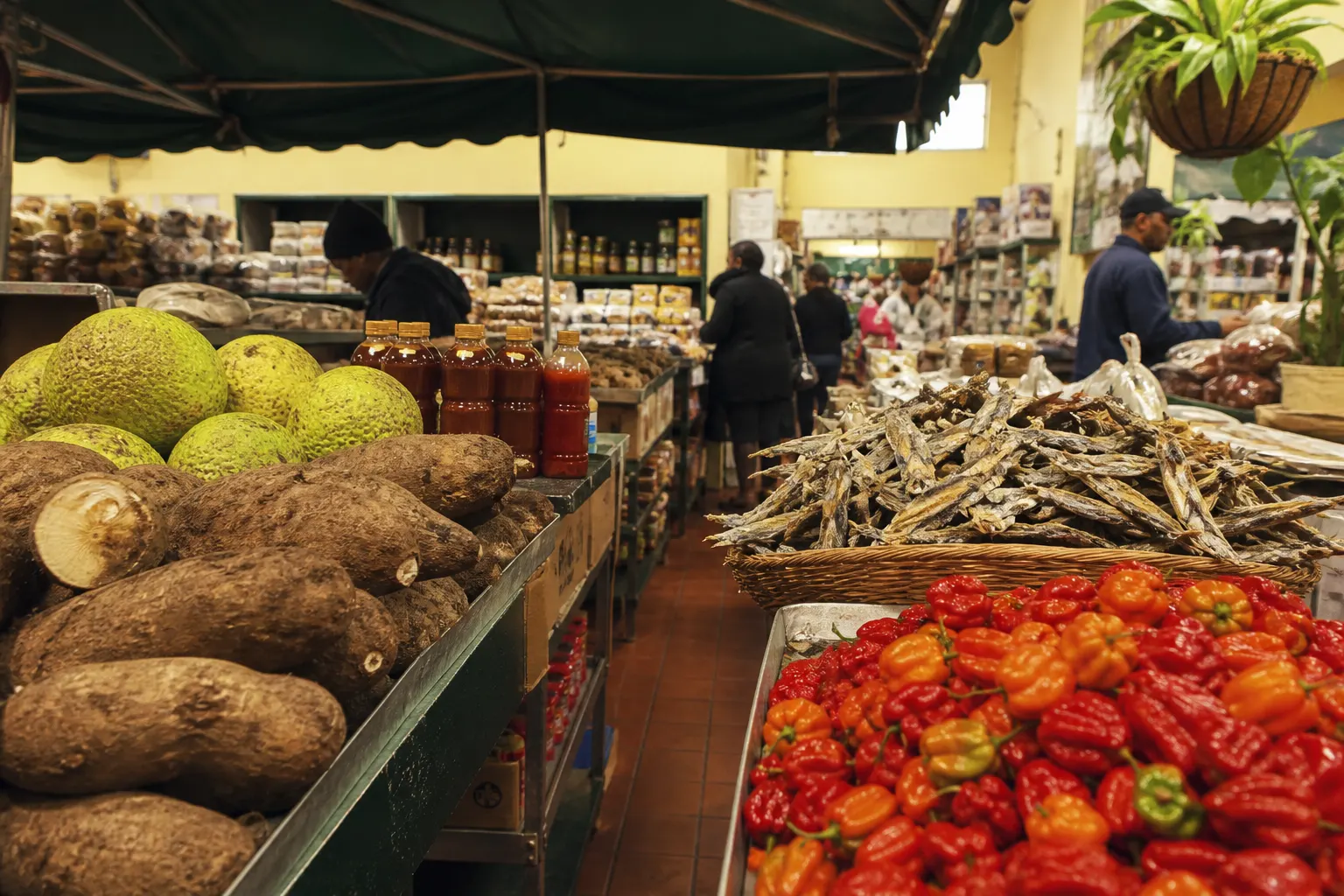
Selling a Caribbean or African market is a freight file, a language file, and a count the warehouse grocer cannot finish. Imported dry, frozen fish and meat, and produce with long supply lines are the P&L. Stockouts and freight are the story. Grocery Store Business Broker — HedgeStone Business Advisors, led by Jason Taken — packages that going concern as a confidential asset sale: recast SDE, inventory at cost, then the importer list a buyer has to keep. Mark the Confidential Seller Playbook before you pick a multiple off a supermarket sample.
FMI’s $1 trillion in 2025 supermarket sales and 45,575 U.S. supermarkets in 2024 are channel facts. FMI’s $668,377 average weekly sales per supermarket and $19.59 weekly sales per selling square foot in 2025 describe Speaks supermarkets. A 4,000-square-foot box with yam, saltfish, and a chest freezer wall is not that sample. FMI’s 2.1 percent average net profit for food retailers in 2025 is a food-retailer net figure. It is not your shrink story.
This pack does not invent a Caribbean-only or African-only multiple. Read the seller hub for process, then stay on this page for the supply chain that actually closes.
Freight and frozen fish are the earnings
The room is often smaller than an independent supermarket and denser than a neighborhood grocery. SKU complexity is the point. Jamaican, Haitian, Trinidadian, Nigerian, Ghanaian, Ethiopian, and West African shoppers do not share one dry set. Ackee, palm oil, fufu flour, suya spice, malt drinks, goat, oxtail, and whole frozen snapper are different clocks. A storewide gross margin that looks “healthy” can hide a produce and seafood hole.
Freight is not a one-time add-back. Container delay, air-freight fill-in, and a broken freezer on a Thursday before a holiday weekend are the business. Recurring shrink on thawed fish and sprouted yam cannot be recast into SDE. Owner pay, a documented one-time compressor, and a personal auto can. Read recasting a grocery P&L and anatomy of a grocery P&L. Print the SDE worksheet so your CPA marks freight the way a lender will read it.
Cash-and-carry fill-in hides true COGS if the owner pays Restaurant Depot or a similar house on a personal card and never codes it. The recast has to pull those tickets back into the store. Otherwise the buyer inherits a margin that only existed because you shopped the gap yourself. Weekend spikes around Independence days, Carnival, and church-calendar Sundays are real. They are not a growth trend. Show a year of weeks, not a hero Saturday. Read evaluating a store’s P&L.
A steam table or hot-food counter is a second department with its own permit, labor, and dumpage. Do not blend it into grocery SDE and call the blend “food service upside.” If it is material, give it its own sales line and its own shrink story. If it is a side pot on Saturday, say that too. A buyer who underwrites the steam table as durable grocery earnings will re-trade after the first health-department walk.
Scan data is the adult conversation if the register can produce it. Many rooms in this format still run a mix of scan, open-department keys, and cash. A weekly-sales spreadsheet without department mix is a rumor. EBT deposits should reconcile to the SNAP story. A gap is mix, downtime, or fiction. Read verifying sales with scan data. Sales-tax filings are a corroboration tool where food is taxed or partially taxed — state grocery sales tax.
Language on the floor is not a courtesy
Who speaks Haitian Creole, Jamaican Patois, Yoruba, Twi, Amharic, or French at the counter is the moat. A buyer from outside those communities who staffs the aisle in English-only inherits shrink, wrong cuts, and a quiet walk-out of the weekend rush. Read buying an ethnic market outside your community if you are talking to that buyer anyway. Transition hours are a close condition. Write them. See transition and training.
This is a different language problem than a Hispanic / Latino grocery or an Asian grocery. Those pages teach their own supply books. Do not noun-swap “ethnic” and call it diligence. Name the national communities that actually shop your room. Name who on payroll can buy from the importer on the phone. If that person is you, say so. That is transferability, not pride. A buyer who plans to “keep your staff” still needs a written transition period and a wage they can fund after you leave. Hope is not a staffing plan.
Confidentiality still matters. Employees learn from vendors and shoppers. A vestibule sign teaches the importer you are leaving before the buyer has an account. Default to a blind teaser and an NDA. Read how to sell confidentially. Non-competes have to be enforceable in the state and narrow enough to keep — non-competes and confidentiality.
Importers, cash-and-carry, and a credit hold you cannot hide
The wholesaler book on this format is importers, ethnic houses, and cash-and-carry fill-in. DSD is limited. That is the opposite of a banner supermarket. Sequence consent after an NDA and a serious buyer. Read wholesaler and banner agreements and keep the wholesaler directory as a map, not a claim that your house is on it.
Customs and importer credit holds are red flags that cut the multiple. If the seller has been on COD because a container went unpaid, the buyer is buying that reputation unless you disclose it and show a clean recent statement. Ask each house for a twelve-month statement: invoice dates, paid dates, deductions, and any hold. Net-15, COD, and cash-at-the-dock are different working-capital problems. The buyer who cannot fund the next container does not close, even if the SDE multiple looks cheap. Over-advances are debt. They are not an add-back. DSD vendors — bread, soda, ice — keep delivering after a sloppy close only if someone is paying them. Schedule those contracts on the APA. Read asset purchase agreement essentials.
Green banana, yellow plantain, cassava, and breadfruit do not wait for a conventional produce clerk. Count rules have to name what is sellable on Monday morning, not what looked good on the Saturday rush. Frozen whole fish that has been glazed, thawed, and glazed again is not inventory at cost. It is a conversation you have before 2 a.m. or a fight you have after. Put photos of the freezer wall in the diligence room so nobody is surprised by the count crew. See red flags that should kill a grocery deal if the room cannot be counted.
Unlicensed meat cutting is a deal killer, not a culture note. If goat and oxtail are broken down in a back room without the permit the health department expects, say it on the CIM or watch due diligence die in week three. Hot food and a steam table need their own permit. A CIM that omits the lease abstract is a brochure — lease diligence. Assignment, exclusive use, and co-tenancy still surprise civilians. Remaining term under 24 months without options is a price cut.
EBT mix and the federal clock
EBT is often the quiet sales engine. USDA FNS: SNAP authorization does not transfer; the new owner files a new application. Budget downtime in cash and in the story you tell the landlord. Read what happens to SNAP when you sell and EBT / SNAP diligence. Print the closing and license checklist. Write those conditions into the LOI before you pick a closing date.
Retail food is the health file. WIC, if present, is a vendor file, not a sticker. Lottery contracts are often personal. Tobacco sits with tax and health agencies. Alcohol — rum, beer, wine — is a class, a quota, or a control-state product. NABCA lists 17 control states plus local-control pockets. Read transferring a liquor license and state alcohol regimes. WIC, lottery, and tobacco checklists belong in the same folder.
SBA 7(a) goes to $5 million. Unreported cash does not survive that file or a serious conventional buyer. Read selling with unreported cash. Seller notes often sit on standby. Read the standby. DSCR is cash flow over debt service. Counsel who have never closed grocery will rediscover SNAP in week six — working with attorneys and CPAs. Tax clearance belongs in escrow. See state bulk-sales notes and taxes on selling a grocery store.
Count night in a room a warehouse grocer cannot read
Freight and spoilage of frozen fish and root vegetables dominate diligence. A conventional multiple from BizBuySell’s mixed grocery sample may overstate a store whose inventory cannot be counted cleanly. BizBuySell grocery and supermarket sold businesses: 3.38 average earnings multiple in 2025; 2.66 five-year average; IQR 1.60–3.15 for 2021–2025. A 0.43 average revenue multiple on the 2025 sold sample is a cross-check, not a pricing law. The valuation hub and how to value a grocery store are the method. This page will not invent a format-only sold-comp.
Suppose weekly sales are $68,000. Annual sales are $3,536,000. If recast SDE is 3.6 percent of sales, SDE is $127,296. A 1.60×–3.15× band is about $203,674–$400,982. Add inventory at cost as a separate line. Write the unsellable rule before 2 a.m.: freezer burn, thawed-and-refrozen, sprouted roots, swollen cans, and dry goods past the importer’s code. FIFO versus a messy walk-in starts the fight. Read how inventory is counted at closing and closing-day count procedures. Turns are not one number. Dry rice and the fish freezer do not share a clock. See shrink, margin, and turns.
Chronic out-of-stocks hidden by a busy Saturday are a red flag. The weekend looks loud. Monday’s holes are the real store. Holdbacks exist because grocery has shrink and successor tax risk. Earn-outs are hard because the buyer controls mix after Monday. Read escrow, holdbacks, and earn-outs. Compare offers on cash at close, note terms, inventory treatment, and license risk — the LOI terms that matter for sellers and comparing offers. The valuation calculator lets you change inputs. It will not invent a Caribbean multiple.
The buyer list is smaller than you want
Operators from the same national communities close these rooms. Conventional supermarket buyers rarely do. A multi-store independent who already runs a Caribbean or African box in the next county is the adult conversation. A first-time lifestyle buyer who “loves the food” and cannot staff the language is a wasted week. Selling to a cousin or a manager still needs a real price and a real note — selling to family or an employee.
If you own the dirt, recast the store on market rent, then price the building with a real-estate licensee. Related-party rent that juiced earnings will reverse on day one. Read selling with a lease versus real estate and grocery with real estate. CAM true-ups can erase a year of “extra” SDE. Distressed rooms still have a lease and a stockroom — selling a distressed grocery.
Jason Taken and HedgeStone are not licensed business brokers in every state. Check the rule that applies to your deal. Selling the building always requires a real-estate license. The twin page is buy a Caribbean & African market. How a sale works is the sequence. Common reasons sales fall apart is the ugly list.
When the importer statements, the language roster, and last week’s sales are in one folder, book a confidential intro. Bring the freezer that worries you. That is a useful hour.
An illustrative recast on Sell a Caribbean & African market
These figures are a teaching walk-through for Sell a Caribbean & African market, not a quote and not a sold comp. Order of operations: weekly sales, recast SDE, inventory at cost, then a multiple band.
If weekly sales or shrink move 8 percent, the SDE and the note move with them. That is why Jason Taken starts with scan data and the lease, not with a neighbor's rumor multiple.
Bring three years of P&Ls, weekly sales, and the lease abstract to the intro call. Jason will tell you whether this band is even in the conversation.
This page is educational information from Grocery Store Business Broker (HedgeStone Business Advisors). It is not legal, tax, or investment advice. Licensing, tax, and financing rules vary by state and deal. Confirm every item with counsel and your lender before you sign.