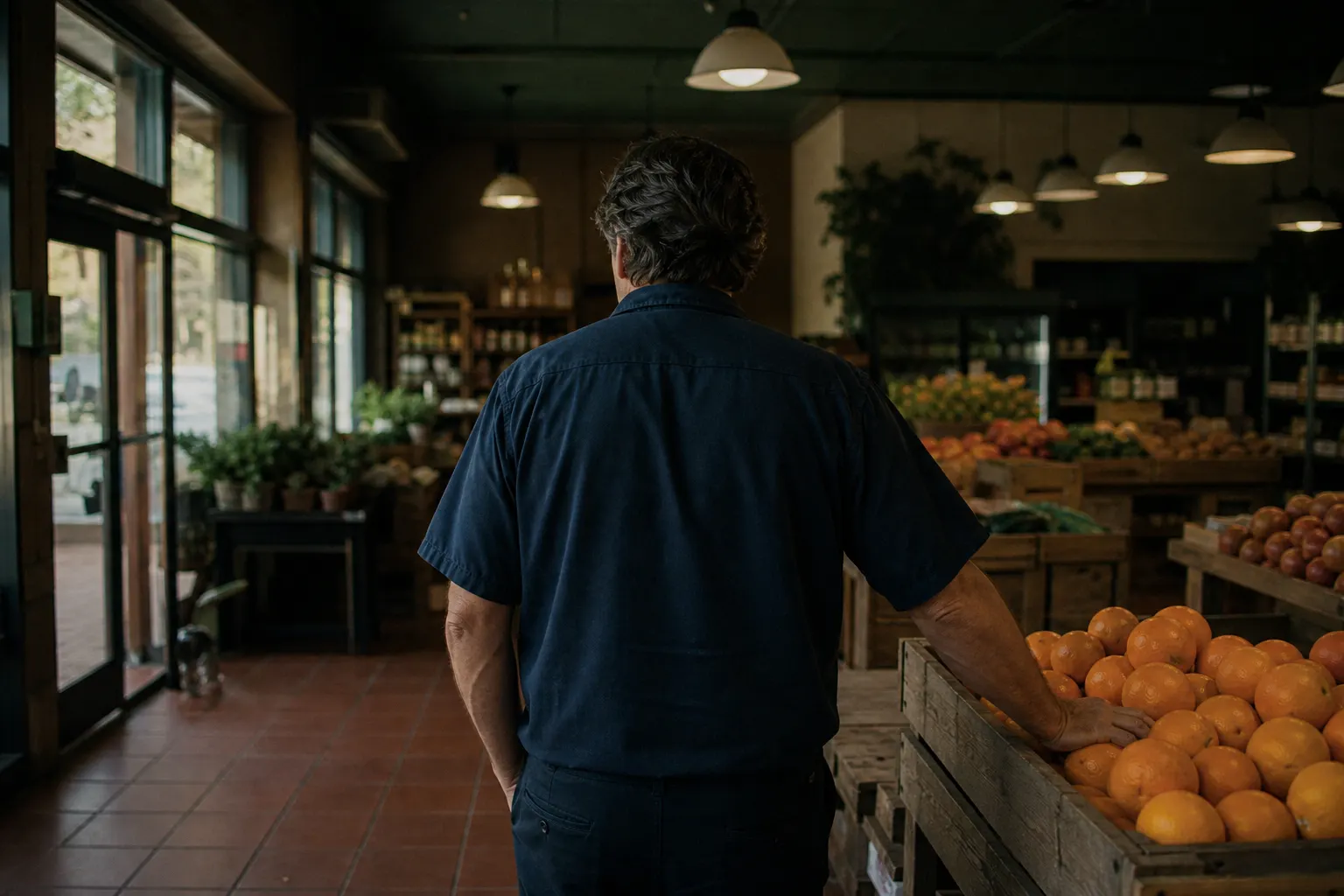
Name the town before you name the multiple. A Massachusetts grocery sale is a local-board file that happens to sit in a dense supermarket state. County Business Patterns 2023 counted 1,348 NAICS 445110 establishments in Massachusetts (supermarkets and other grocery retailers except convenience, all legal forms). Census Vintage 2024 estimated 7,136,171 residents as of July 1, 2024. Those sourced counts describe how many boxes and how many people. They do not tell a buyer what your Dorchester, Worcester, or South Shore store is worth.
Book a confidential intro when you want the recast started while the night crew still thinks you are remodeling. Grocery Store Business Broker (HedgeStone Business Advisors) builds SDE, schedules inventory at cost, and maps the Section 15 path. Jason Taken and HedgeStone are not listing a Massachusetts brokerage license here. If the real estate conveys, a real estate license is required in every state.
FMI reported $1 trillion in 2025 supermarket sales and a 2.1% average net profit for food retailers. A Commonwealth independent lives inside that thin margin while Market Basket, Stop & Shop, Hannaford, and Shaw’s / Star Market set price perception. SBA 7(a) can finance a change of ownership up to the published $5 million maximum. The underwriter still wants three recast years and a license calendar that matches the close date.
Population quotas sit on the package license
Massachusetts is a license state. The Massachusetts Alcoholic Beverages Control Commission is the named agency. Section 15 package-store licenses—often held by grocery—can include wine and spirits. Local boards control issuance. Municipality population quotas for package licenses are a classic deal issue. Verify the town with the ABCC and the local board. A quota license can have separate market value. That value is not automatic with an asset purchase.
The local board plus the ABCC must approve. Privileges are not a handshake in the APA. Secondary lists that say grocery may sell spirits still defer to the town. Read liquor license diligence before you treat the aisle as transferable goodwill.
Tobacco sits with the Massachusetts Department of Revenue and local boards. Lottery cash and ticket inventory need a Massachusetts State Lottery conversation before you lock a Tuesday. Those files are not the same as the package license and not the same as the board-of-health permit.
Market Basket towns and the immigrant corridors
Boston, Dorchester, East Boston, and Quincy hold Cape Verdean, Vietnamese, Chinese, and Latino independents that a traveling buyer will mis-price if they only know a Stop & Shop (Ahold Delhaize) on the highway. Cambridge and Somerville are specialty and dense urban independents with different rent stories—this page does not invent rent—and different trip purposes. Worcester and Springfield are secondary metros; Springfield’s Puerto Rican and other Latino corridors are their own teaser. North Shore and South Shore suburban conventional stores sit in a Market Basket (DeMoulas) competitive set. Say which corridor you are in. The Boston metro page is the sibling map for the core.
Hannaford (Ahold Delhaize) and Shaw’s / Star Market (Albertsons Cos.) fill the rest of the banner set. Your independent still has to win trips those banners do not want. Do not paste a circular into the CIM as if it were a sold comp. This page does not invent Massachusetts sold comps.
Wholesale names that show up are C&S Wholesale Grocers, UNFI, and Associated Grocers of New England. Over-advances and personal guarantees travel. Ask whether Associated Grocers of New England or C&S will keep the incoming operator. A Massachusetts close that ignores that book is a close that reopens. UNFI drop minimums belong in the recast. Read wholesaler agreements.
Mass Food Trust and HFFI-style programs have existed in various years. Verify the current CDFI notice rather than a stale cap. No dollar figure is recorded here.
Meals tax, salad bars, and a DOR recast
Massachusetts generally exempts food products for human consumption from sales tax. Prepared meals are taxable. Confirm Department of Revenue meals-tax versus grocery guidance for hot bars and salad bars. A recast that treats the entire register as exempt grocery will not survive diligence. Counsel confirms the rate in force on the closing date. Read recasting a grocery P&L and grocery sales tax.
Confirm DOR tax clearance and successor liability on the asset sale. UCC Article 6 bulk-transfer statutes have been repealed in most states. Massachusetts may still impose sales-tax successor liability, a bulk-sale notice, or a tax-clearance practice. Do not assume a repealed Article 6 means there is no tax successor risk. Read bulk sales and tax clearance.
DOL’s July 1, 2026 consolidated table lists Massachusetts at $15.00. State minimum wage is above federal. Confirm Massachusetts Department of Labor Standards paid-leave and wage posters before you recast labor. A buyer who underwrites as if the store were a federal-floor file will re-trade when the poster is on the wall.
Price the going concern on recast SDE plus inventory at cost. The only sourced sold-comp set here is BizBuySell grocery and supermarket: 3.38 average earnings multiple in 2025, 2.66 five-year average, and a 1.60–3.15 interquartile range for 2021–2025 sold businesses. Use that national sample. Subtract lease holes and license lag. Do not print an illustrative SDE dollar example as a Commonwealth quote.
Inventory is counted at close at cost. Write unsellable rules before anyone shows up. Many stores lease; some own the box. Price dirt and the going concern as two assets. If remaining term is short, say so in the teaser. Read lease diligence.
This page does not publish a SNAP-retailer headcount. The pack left that field null. USDA FNS authorization does not transfer. The new owner files a new application.
Local boards of health and the ABCC calendar
Retail food is a local board-of-health file. The state Department of Public Health sets the food code. The permit is issued to the new operator. WIC is Massachusetts Department of Public Health — WIC. Put the health calendar on the same workplan as the local liquor board and the ABCC so the close date is a date. A seller who treats the board hearing as a formality will watch a quota objection rewrite the escrow calendar.
If the sale includes the building, close it with a Massachusetts real-estate licensee. Securities, franchise, and local rules can still apply, and published broker-licensing lists conflict — confirm current statute with counsel. Jason Taken and HedgeStone are not listing a Massachusetts brokerage license here.
A CIM that names Market Basket but hides the town quota is not a Massachusetts CIM. A CIM that names the ABCC but skips SDE is a brochure. Write the Section 15 class into the LOI. Write Springfield or Dorchester into the teaser if that is the box. Transition hours belong in the APA.
Start the intro while the store is still quiet
The operators who close Massachusetts files usually already know the local board and the banner set. Outreach should start with people who have already survived a quota hearing or an AGNE book—not with a public listing that tells the cutters you are leaving. Quiet process means ABCC work stays off the sales floor while the board of health and the SNAP file are still in motion.
A traveling buyer who only knows Hannaford will mis-read a Cape Verdean or Vietnamese independent. Price the file, not the fascia they drove past. The Monday after close still needs the warehouse book, the EBT path, and the package license to function.
Package the town quota apart from store SDE
A Section 15 seat in a quota-tight town can carry separate market value. That value is not automatic, and it is not a Cub-style multiple pasted onto an independent. Write the license class into the teaser only after counsel confirms the town still has a transferable path. A CIM that folds an assumed package premium into goodwill will re-trade when the local board tables the transfer. Quota license and liquor license due diligence are the longer notes. Value the grocery going concern on recast SDE first; treat the privilege as a second paragraph with its own calendar.
Dorchester, East Boston, and Quincy independents need buyers who already understand Cape Verdean, Vietnamese, Chinese, or Latino trips. Cambridge and Somerville specialty boxes need a different buyer list—rent stories differ, and this pack does not invent a public rent-per-foot table. Occupancy is still rent and CAM as a share of this store’s sales from the lease you have. Springfield’s Puerto Rican corridors are not a South Shore Market Basket fight with different signage. Name the corridor after NDA. The Boston metro page is the sibling map; it is not a statewide listings board.
Scan data and EBT settlement belong in the room before a serious name. Verifying sales with scan data and preparing three years of financials keep a Stop & Shop shopper from treating a holiday week as run-rate. Related-party rent goes to market when the next operator will pay a third-party landlord. Reject a standing inventory adjustment as an add-back.
Local board, ABCC, health, and SNAP on one calendar
Sequence the local liquor board hearing, ABCC approval, local board-of-health retail-food permit, USDA FNS SNAP application, Massachusetts State Lottery re-paper, tobacco (Department of Revenue / local boards), and landlord consent as dated steps in the LOI. The LOI terms that matter for sellers should freeze inventory holdback, Section 15 class, and transition hours. Transition and training periods keep a Vietnamese or Latino mix alive after keys change. People are the asset: a produce lead who stays ninety days is worth more than a wide non-compete.
Working capital has to cover EBT downtime, board calendars, and a Monday C&S, UNFI, or Associated Grocers of New England drop. How much working capital is the planning question. SBA 7(a) can finance a change of ownership up to the published $5 million maximum; the underwriter still wants a lease the landlord will assign and a license calendar that matches the close. SBA 7(a) for grocery acquisitions is the longer note. Seller financing can bridge quota hearings when the town calendar runs longer than escrow.
Inventory night is a process. How inventory is counted at closing is the procedure: department the room, hold back unsellable, count at cost. A wholesaler over-advance is debt. Mass Food Trust and HFFI-style programs have existed in various years—verify the current CDFI notice rather than citing a stale dollar cap. No dollar figure is recorded in this research pack.
Book a confidential intro when you are ready to recast the Commonwealth file. Bring three years of returns, the lease, the Section 15 class, and the town’s package-quota answer before the local board calendar fills. Keep reading the seller hub, confidential sale, valuation, and how a sale works. Sibling: buy in Massachusetts.
An illustrative recast on Sell a Massachusetts grocery on the town’s package quota
Use this napkin recast on Sell a Massachusetts grocery on the town’s package quota when you book the call. It is labeled illustrative. BizBuySell's 2025 grocery sold-business earnings multiple averaged 3.38, with a 2021-2025 IQR of 1.60-3.15. State pages add the tax, wage, and alcohol-agency facts for this jurisdiction. They do not invent a local sold-comp set.
If weekly sales or shrink move 8 percent, the SDE and the note move with them. That is why Jason Taken starts with scan data and the lease, not with a neighbor's rumor multiple.
Bring three years of P&Ls, weekly sales, and the lease abstract to the intro call. Jason will tell you whether this band is even in the conversation.
This page is educational information from Grocery Store Business Broker (HedgeStone Business Advisors). It is not legal, tax, or investment advice. Licensing, tax, and financing rules vary by state and deal. Confirm every item with counsel and your lender before you sign.