Is there a higher multiple for an ethnic market?
No sourced ethnic-only multiple exists in this pack. Use the national BizBuySell grocery and supermarket sold sample. Do not add a premium because the store is “ethnic.”
Grocery Store Business Broker · HedgeStone Business Advisors · Jason Taken
Last updated 2026-09-04
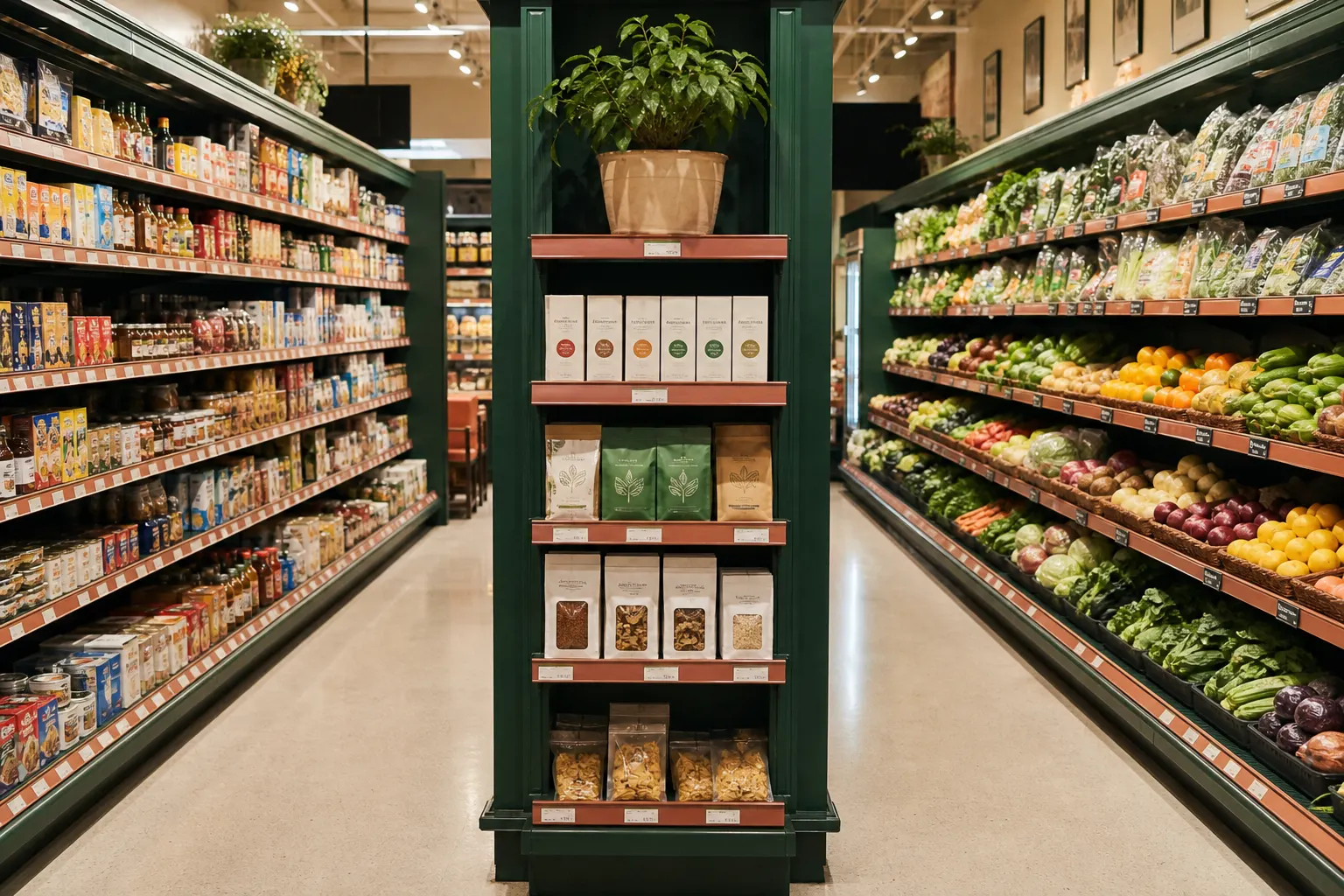
Name the community, the language on the floor, and the importer who will still ship after Monday. Then book a confidential intro with those three answers, last week’s sales, and the languages you can hire. Grocery Store Business Broker — HedgeStone Business Advisors, led by Jason Taken — will not price a community market as a conventional independent with a different spice rack.
“Ethnic” is a search phrase, not a format. A Hispanic or Latino grocery lives on produce, meat, and imported dry grocery. An Asian grocery lives on live seafood, imported dry, and scarce cutters. An Indian or South Asian grocery lives on dry grocery, spices, frozen, and festival weeks that are not a run-rate. A Middle Eastern or halal market lives on certified meat and the butcher who can keep the chain of custody. A kosher market lives on supervision. A Caribbean or African market lives on long freight and frozen fish. A conventional independent lives on a wholesaler book — AWG, C&S, UNFI, SpartanNash, a regional co-op — plus DSD. If you cannot name which of those you are buying, you are not ready to tour.
FMI reports $1 trillion in 2025 supermarket sales and 45,575 U.S. supermarkets in 2024. FMI also publishes $668,377 average weekly sales per supermarket and $19.59 weekly sales per selling square foot in 2025. Those figures describe the Speaks supermarket channel. They do not describe a 9,000-square-foot mercado, a live-tank box, or a Devon Avenue dry grocery. FMI’s 2.1 percent average net profit for food retailers in 2025 is a food-retailer net sample. It is a reminder that grocery is thin. It is not a slogan about “busy ethnic weekends.”
A conventional independent can look like the channel from farther away: center store, a meat case, produce, a circular. A community market can look busy on Saturday and still fail a recast if produce shrink, import dating, or a single importer concentration eats the week. Credit mix — EBT versus card versus cash — is underwriting, not atmosphere. Unreported cash does not survive SBA 7(a) and it does not survive a serious conventional buyer. If the tax returns do not support the register, walk. Read selling with unreported cash.
Scan data still matters when the SKU set is imported. A weekly-sales spreadsheet without department mix is a rumor here too. Read verifying sales with scan data. Festival weeks, Ramadan, Lunar New Year, and Passover are not ordinary run-rate. Call them out on the P&L or you will annualize a holiday.
The buyer pool for a community market is operators already in the language and the product set, plus the occasional regional banner that already stocks that corridor. Conventional supermarket buyers who want to “add ethnic” without a manager who can buy the book fail. Screen them out of the teaser if you are the seller. If you are the conventional buyer, read buying an ethnic market outside your community and should I buy an ethnic market before you ask for a CIM.
A Hispanic file without Spanish on the floor is a shrink plan. An Asian file without a fish cutter or a live-tank protocol is a health-department file. A South Asian file without the corridor’s languages is a store the regulars will leave. A halal file without a certifier path and a butcher who will stay is a different business on Tuesday. A kosher file that loses the hechsher is a different business. Religious certification is contractual, not a government permit. Do not invent a certifier name. Confirm the store’s actual supervision.
A conventional independent has a wider SBA 7(a) pool: owner-operators exiting a smaller store, multi-store independents adding a box, first-time buyers with grocery hours. That wider pool is not a higher multiple. It is more people who can staff the week. The community market’s thinner pool is not a discount you invent. It is a reason to call the operators who already shop the store.
Hispanic produce and carnicería shrink is the underwriting core. Asian live seafood and walk-in load is a refrigeration story a conventional grocer does not carry. South Asian slow spices and dated frozen are an obsolescence count. Caribbean frozen fish and root vegetables spoil on a long supply line. Conventional shrink often hides in center store and the meat case. Do not apply one shrink percent to both columns.
Turns are not one number on either side. Imported dry grocery does not share a clock with a banana table. Inventory at cost is a separate line, counted at close. Retail tags are not cost. Write what is unsellable — dated imports, freezer burn, product the incoming buyer cannot sell in that community — before 2 a.m. See how inventory is counted at closing. A conventional buyer who cannot read the dating on the import book will overpay for a room of leftovers.
Importer credit terms can dwarf the recast SDE story on an Asian or South Asian box. A single-house concentration is a red flag. Cash-and-carry overflow is not a book. Ask who will still ship when the seller’s personal relationship ends. DSD tortillas, bread, and beverages will keep delivering only if someone is paying them.
A conventional independent lives or dies on wholesaler terms, an over-advance that is debt, and a night crew. Banner program fees belong in that recast if the fascia stays. That is a different comparison: independent versus banner. Do not borrow it here.
Treat seller hours as a close condition, not a courtesy. Regulars who know the owner by name will test the new counter on Monday. Transition and training belong in the APA. Hold the seller to those hours. A butcher, a fish cutter, or a baker who will not stay is a price cut or a walk. Write the names.
Confidentiality is a process. Employees learn from vendors and shoppers. A community rumor mill is faster than a conventional one when the store is the Saturday meeting place. Read how to sell confidentially. Soft language on a sale to family or a manager still needs a real price and a real note. See selling to a family member or employee.
Non-competes have to be enforceable in the state and narrow enough to keep. A seller who opens a competing mercado three blocks away is how the recast dies. Write the radius in the language the regulars actually travel.
Hot-food, panadería, and snack-counter permits sit with the health department. They do not ride automatically with the grocery food permit. A conventional independent with a cold deli and a community market with a hot line are different labor and different waste. Do not blend them in the teaser.
USDA FNS: SNAP authorization does not transfer. The new owner files a new application. Budget the application and the downtime in cash and in the story you tell the landlord. A community market that rings a real EBT week cannot float that hole on hope. A conventional independent with a lighter EBT mix still files the same application. Read EBT diligence and what happens to SNAP when you sell. Print the closing and license checklist.
EBT deposits should reconcile to the SNAP story. A gap is mix, downtime, or fiction. WIC is a vendor file. Alcohol, when it exists, is a class, a quota, or a control-state product. NABCA lists 17 control states plus local-control pockets. Many community markets are beer-and-wine or no alcohol. Do not assume a spirits privilege. Read state-by-state alcohol. Tobacco and lottery, if present, sit with tax and health agencies and are often personal.
SBA 7(a) can finance a change of ownership. Published maximum is $5 million. Eligibility still wants a for-profit U.S. business that is small under SBA size rules, not an ineligible type, unable to obtain the desired credit on reasonable terms elsewhere, and creditworthy with a reasonable ability to repay. Category experience is part of creditworthy on a community file. Capital without language is how lenders stall.
DSCR is annual cash flow after an honest recast, divided by annual debt service. Hope is not a ratio. Replace seller hours and unpaid family with the bilingual roster you will actually hire. State minimum wage is a model input. Recurring shrink is not an add-back.
BizBuySell grocery and supermarket businesses sold in 2025 printed a 3.38 average earnings multiple, a 2.66 five-year average for 2021–2025, a 1.60–3.15 interquartile range on that sold sample, and a 0.43 average revenue multiple in 2025. Those are national listing-site sold figures. They are not chain M&A. This pack does not publish a Hispanic multiple, an Asian multiple, or a “community premium.” Buyers from outside the community systematically miss shrink and product authenticity. That is a reason to lower the offer or walk, not a reason to invent a higher multiple for the seller.
Teaching walk, labeled illustrative: recast SDE of $280,000 on a community market and $280,000 on a conventional independent. The multiple band starts in the same sold IQR. The community file then subtracts an importer you cannot replace, a language you cannot staff, and produce shrink you have not counted. The conventional file subtracts a related-party rent and a wholesaler over-advance. Those holes are not the same. Do not average them.
Lease remaining term under twenty-four months without options is a price cut on both sides. A corridor that is already over-stored is a diligence item on the community side. Occupancy that eats the mid-single digits of sales needs a recast on the conventional side. Read lease diligence. CAM true-ups can erase a year of “extra” SDE.
Most independents close as asset sales. You are buying the going concern, the equipment, and the stockroom. You are not buying the seller’s SNAP permit or the seller’s personal importer account unless that house will open a new file. Tax clearance belongs in escrow language.
Working capital is the cash to buy the next import load, not a vibe. Community freight can be a larger check than a conventional drop. Say the real cash-to-close number on the call. The cash-to-close estimator exists so you stop surprising yourself.
If you already know the format, go to that type page and mark the Buyer Underwriting Workbook. The seller hub and buyer hub are the method. How it works is the sequence after you are under NDA.
If you are the seller, the teaser should name the community the way the regulars name it, not the way a listing site names “ethnic grocery.” Operators already in that product set will recognize the importer list and the festival calendar. A conventional buyer who wants a tour without those answers is not your first call. Sequence the outreach. How to sell confidentially still applies. The seller playbook still gets marked. Add the languages on the floor and the house that ships the dry grocery.
When the language roster, the importer statements, and last week’s sales are in one folder, book a confidential intro. Bring the skill you can keep — butcher, fish cutter, baker — and the capital you can document. That is a useful hour.
These figures are a teaching walk-through for Community market versus a conventional independent, not a quote and not a sold comp. Order of operations: weekly sales, recast SDE, inventory at cost, then a multiple band.
| Input or output | Illustrative figure |
|---|---|
| Weekly sales (illustrative) | $108,000 |
| Annual sales | $5,616,000 |
| Recast SDE | $202,176 (3.6% of sales) |
| Inventory at cost | $280,800 (~20 turns) |
| Occupancy check | $179,712 / year (3.2% of sales) |
| Low going-concern | $685,152 at 2.00x SDE + inventory |
| High going-concern | $826,675 at 2.70x SDE + inventory |
| Sketch DSCR on a note | 1.41 |
Inventory is cash at close, not a multiple. Confusing the two is how sellers over-ask and buyers under-cash the wire.
Book the intro call with your side of the table ready: seller files or buyer capital. The calendar is the only next step.
Print these, mark them up, and bring the marked copy to the intro. They are educational. They are not a valuation letter and not a listing. All downloadable guides.
Have the file ready so the hour is a recast, not a scavenger hunt. Then pick a time.
Get a specialist on the other side of the table
Grocery deals turn on licenses, inventory, and a recast a lender will believe. Book the intro and bring the file.
Book an Intro Call With Jason TakenNo sourced ethnic-only multiple exists in this pack. Use the national BizBuySell grocery and supermarket sold sample. Do not add a premium because the store is “ethnic.”
Operators already in the language and the product set. Conventional buyers who cannot source the import book or staff the counter fail after the seller leaves the floor.
No. Produce and carnicería, live seafood, festival dry grocery, halal certification, and hechsher supervision are different businesses. Do not noun-swap them.
No. USDA FNS: SNAP authorization does not transfer. The new owner files a new application. Budget downtime whether the mix is community or conventional.
Treat transition hours as a close condition, not a courtesy, especially when the regulars know the seller by name. Write the hours into the APA.
SBA 7(a) can finance a change of ownership; the published maximum is $5 million. Category experience and a book you can buy still matter. A tourist buyer with capital and no language is a stalled file.
Start a confidential grocery conversation
Whether you are exiting or acquiring, pick a time and we will talk through the file.
Book an Intro Call With Jason TakenThis page is educational information from Grocery Store Business Broker (HedgeStone Business Advisors). It is not legal, tax, or investment advice. Licensing, tax, and financing rules vary by state and deal. Confirm every item with counsel and your lender before you sign.
Ready when you are. Jason Taken will talk through the file.
Book a confidential intro