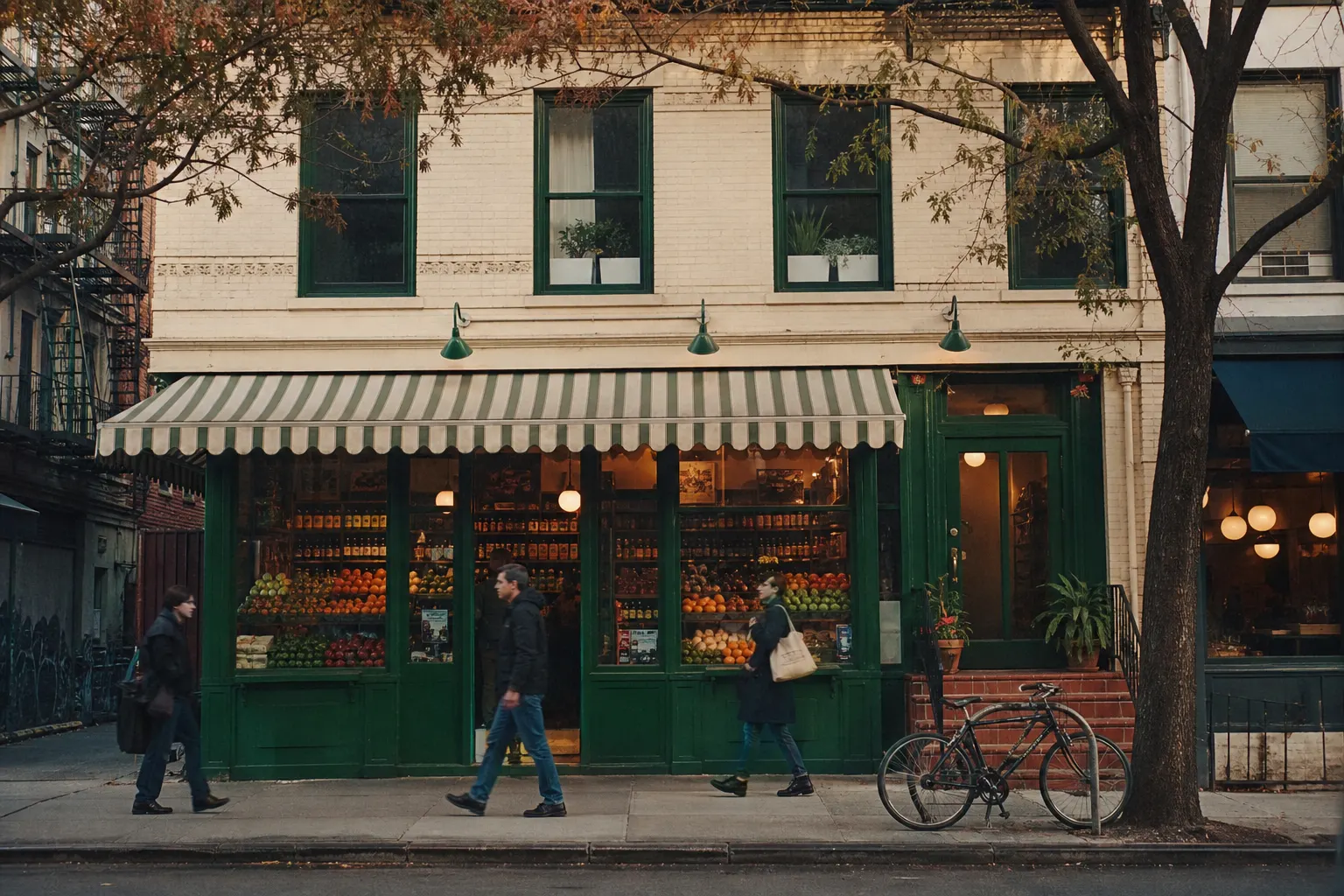
Giant Eagle was born in this market. That fact is competitive context, not a eulogy for independents. A Pittsburgh grocery sale is still a recast, a count, and a license calendar. Jason Taken — Grocery Store Business Broker, the grocery practice of HedgeStone Business Advisors — will not price a Strip District specialty box as if it were a suburban Giant Eagle with better signage. Book a confidential intro with Allegheny County Health paper, the PLCB class, and three years of returns. Email jason.taken@hedgestone.com if that is what you have.
Read the Pennsylvania sell page and Pennsylvania buy page for statewide tax and control-state alcohol. This essay is Allegheny and the surrounding independent set: Giant Eagle, Aldi, and Walmart on the conventional map; specialty and long-standing independents in the Strip District and Bloomfield rather than a single ethnic monopoly. Qualitative notes. No invented metro population, no invented density, no invented rent.
Hometown banner, leftover trips
Giant Eagle sets hours, pharmacy, and fuel-loyalty expectations across much of the metro. Aldi steals the price-sensitive center-store basket. Walmart steals the general-merchandise-plus-grocery trip. Independents still win on specialty mix, late hours, and a butcher or counter the banners will not staff. That is a story you prove with scan department mix, not with a slogan about “loyalty.” FMI’s $1 trillion in 2025 supermarket sales describes the supermarket channel. It is not last week’s tickets in Bloomfield.
Independent supermarket is the conventional format. Specialty market is closer to many Strip District boxes. Do not mix the multiples in your head. Selling a specialty market if you own that book. C&S, UNFI, and (for some formats) Wakefern appear on Pennsylvania invoices. Drop terms and whether a new owner can keep the account belong in diligence. Grocery banner directory is useful only if you are actually converting. Most Pittsburgh independents are not.
Pennsylvania Fresh Food Financing Initiative is the historic state model. Confirm current The Food Trust or Reinvestment Fund notices. Do not paste a historical dollar cap into the CIM as if it were cash at closing.
Beer on grocery paper, spirits in the state store
Pennsylvania is a NABCA control state. Distilled spirits retail through Fine Wine & Good Spirits. Grocery alcohol is beer expansion via restaurant or distributor privileges, plus wine-to-go where a licensed restaurant inside the store holds it. Confirm the exact PLCB privilege. Restaurant and distributor licenses can be quota-limited. PLCB approval is required. That paper can have value apart from the going concern. Control state is the vocabulary. Transferring your liquor license is the process. A CIM that says “we sell alcohol” without the class is not a Pittsburgh CIM.
Do not model a spirits aisle you cannot legally operate. Do not treat a Fine Wine & Good Spirits store down the block as in-store margin.
Allegheny County Health is the inspector of record
Pennsylvania Department of Agriculture handles retail food in much of the commonwealth. Allegheny County Health Department is a separate local regime. If the store sits in the county’s jurisdiction, the county file is the file. Inspections, plan review, and the person who walks the cooler after closing are county questions. Philadelphia’s split is a sibling fact, not this metro’s desk.
Pennsylvania Department of Health runs WIC. Pennsylvania Lottery is a separate retailer contract. Tobacco sits with Pennsylvania Department of Revenue. Schedule them. Federal SNAP retailer authorization is an FNS file on named owners. The buyer applies new. The seller’s permit does not convey. Does SNAP authorization transfer is the federal answer. Budget the gap in cash to close.
Specialty independents are not a monopoly and not a clone
The research file describes Strip District and Bloomfield as specialty and long-standing independents rather than a single ethnic monopoly. That is a diligence instruction. Taste the mix. Name the labor. Ask who opens and who orders when the seller is in Florida. A key-person counter is a transition period condition, not a courtesy. Red flags that should kill a grocery deal include a lease that dies in eighteen months and a P&L that only works on unpaid family hours.
Pennsylvania generally exempts eligible food for home consumption from state sales tax. Prepared food and many hot items are taxable. Confirm DOR guidance. A Strip District prepared-food program that is coded as grocery will fail a recon. Hot food kitchen versus no kitchen is the format fork if you have a kitchen.
The DOL table lists Pennsylvania at federal $7.25. Pittsburgh and some localities overlay wage or sick-leave rules. Confirm the city. State-by-state minimum wage is the starting table, not the last word inside the city.
This pack publishes no Pittsburgh rent-per-foot range and no CBSA population. Occupancy is a share of sales from the lease. Sale-leaseback is a different conversation if the seller also owns the building. Buying a store with real estate and sell with the building are the realty forks. Recast the store on market rent first.
Most states repealed UCC Article 6. Pennsylvania may still impose sales-tax successor liability or a clearance practice. Confirm Pennsylvania DOR. Hold back in escrow if counsel requires it. Common reasons grocery sales fall apart include clearance and license lag more often than a fight over the last multiple tick.
Earnings band without a fake mill-town average
BizBuySell grocery and supermarket sold businesses: 3.38 average earnings multiple in 2025, 2.66 five-year average, IQR 1.60–3.15, 0.43 average revenue multiple on the 2025 sold sample. That is a national listing-site sample. It is not a Pittsburgh sold-comp set. Apply it to recast SDE, then add inventory at cost. A short lease or a PLCB lag moves you inside the IQR. How much is a grocery store worth and what multiple do grocery stores sell for point back to that sample. This page will not invent a worked SDE dollar sketch.
SBA 7(a) can finance a change of ownership; published maximum $5 million. Preparing three years of financials is how you survive the credit memo. Unreported cash will not.
River wards, hills, and the lease that actually assigns
Pittsburgh geography is not a slogan. A Strip District box and a hill-neighborhood box do not share a shopper, a delivery window, or a parking story. Read the lease for truck access, after-hours receiving, and whether the landlord can recapture. Co-tenancy in an older center can matter when the drugstore left. Co-tenancy clause and CAM belong in the first read. How do I evaluate the lease is the remaining-term and assignment question. Landlord consent belongs in the LOI, not in a wish after funding.
A mill-town independent outside the city core can look cheap on a revenue multiple and still be a 70-hour job. Rural small-town grocery if that is actually the file. Do not mix it with a Bloomfield specialty box. Selling a distressed grocery if volume is falling — declining sales are a recast problem, not a reason to invent a higher multiple “because Giant Eagle is tired.”
Inventory night in a specialty independent is department work: import dry grocery that turns slowly, a cheese or meat counter that dies fast, and center store that looks like a supermarket. Write the protocol. What is a good inventory turn is not one number across those departments. FIFO if the stockroom story depends on it.
Who writes a check in Giant Eagle’s hometown
Multi-store independents adding a box. A manager with capital. A specialty operator who already knows PLCB. First-time buyers need tax returns and a lease a lender will accept. Do I need a business broker to sell is a process question, not a license lecture. How do business brokers charge if you want fee language. How long does it take to sell a grocery store is dominated by PLCB and Allegheny County Health, not by how badly you want to be done.
If the building conveys, Pennsylvania real estate is a second closing with a real-estate licensee. Recast the store on market rent first. Should I sell with the building is the fork. This pack has no rent table.
Distributor paper versus a restaurant privilege inside the store
Pennsylvania grocery alcohol is easy to mis-label. A distributor license, an R-license, and a wine-to-go restaurant privilege inside a grocery are different PLCB products. They transfer on different facts. They price differently. Read the paper. What happens if the liquor license is quota if the series is limited. Do not let a teaser collapse them into “we sell beer.”
Aldi and Walmart still steal center-store trips in this metro. Independents who pretend those banners are not there will lose the diligence argument. Name the neighbor. Explain the leftover basket. Discount salvage grocery only if that is actually the format — most Pittsburgh independents are not salvage.
SBA 7(a) can finance a change of ownership; published maximum $5 million. Allegheny County Health and PLCB clocks belong in the close plan. How much working capital do I need includes the count and an FNS pad. Seller note if the credit file needs stacking. Is seller financing better than SBA is a structure question, not a slogan.
A Pittsburgh first-time buyer who has only worked a Giant Eagle night crew will still trip on a Strip District specialty count and a county health file that is not PDA. Buying as a first-time owner is honest about hours. Post-closing 90-day plan if you need a written first quarter.
Weis Markets sits on the statewide Pennsylvania chain list and matters more in Harrisburg and the Lehigh Valley than on the Allegheny River. Do not recast a Bloomfield specialty independent as a Weis lookalike. Scranton, Wilkes-Barre, and Erie are thinner buyer pools in the state file — not this metro. This page is Pittsburgh.
Pennsylvania Lottery and WIC remain separate from PLCB. A Strip District independent that sells tickets still has a lottery retailer contract that does not ride the APA. Allegheny County Health does not issue those contracts. Build three calendars: county food, PLCB class, and lottery/WIC/tobacco. Lottery retailer is the glossary name. Buyers who skip that stack will discover it after funding.
Tobacco sits with Pennsylvania Department of Revenue. It is a fourth file if the store sells cigarettes. Do not bury it inside PLCB or treat it as inventory.
Keep Giant Eagle’s name off the vestibule as a “for sale” signal. Timeline to sell is dominated by agency clocks. Allegheny County Health, the PLCB class, and the warehouse letter should sit in the same folder before anyone tours. Book a confidential intro if you want a quiet process or a hunt. Bring the county health permit, the PLCB class, and the warehouse letter. How it works is the firm sequence. This page is the Pittsburgh file. Allegheny County Health and the PLCB class should sit in the same folder as the warehouse letter before anyone tours.
Worked math for Grocery stores for sale in Pittsburgh
Use this napkin recast on Grocery stores for sale in Pittsburgh when you book the call. It is labeled illustrative. BizBuySell's 2025 grocery sold-business earnings multiple averaged 3.38, with a 2021-2025 IQR of 1.60-3.15. Metro pages talk corridors and operators. They do not invent asking rents or establishment counts.
If weekly sales or shrink move 8 percent, the SDE and the note move with them. That is why Jason Taken starts with scan data and the lease, not with a neighbor's rumor multiple.
Book the intro call with your side of the table ready: seller files or buyer capital. The calendar is the only next step.
This page is educational information from Grocery Store Business Broker (HedgeStone Business Advisors). It is not legal, tax, or investment advice. Licensing, tax, and financing rules vary by state and deal. Confirm every item with counsel and your lender before you sign.