Is a food co-op valued like a conventional supermarket?
Equity is member equity. Confirm bylaws, patronage payable, and whether the real estate is separately owned. This is a legal-structure deal first.
Grocery Store Business Broker · HedgeStone Business Advisors · Jason Taken
Last updated 2026-09-03
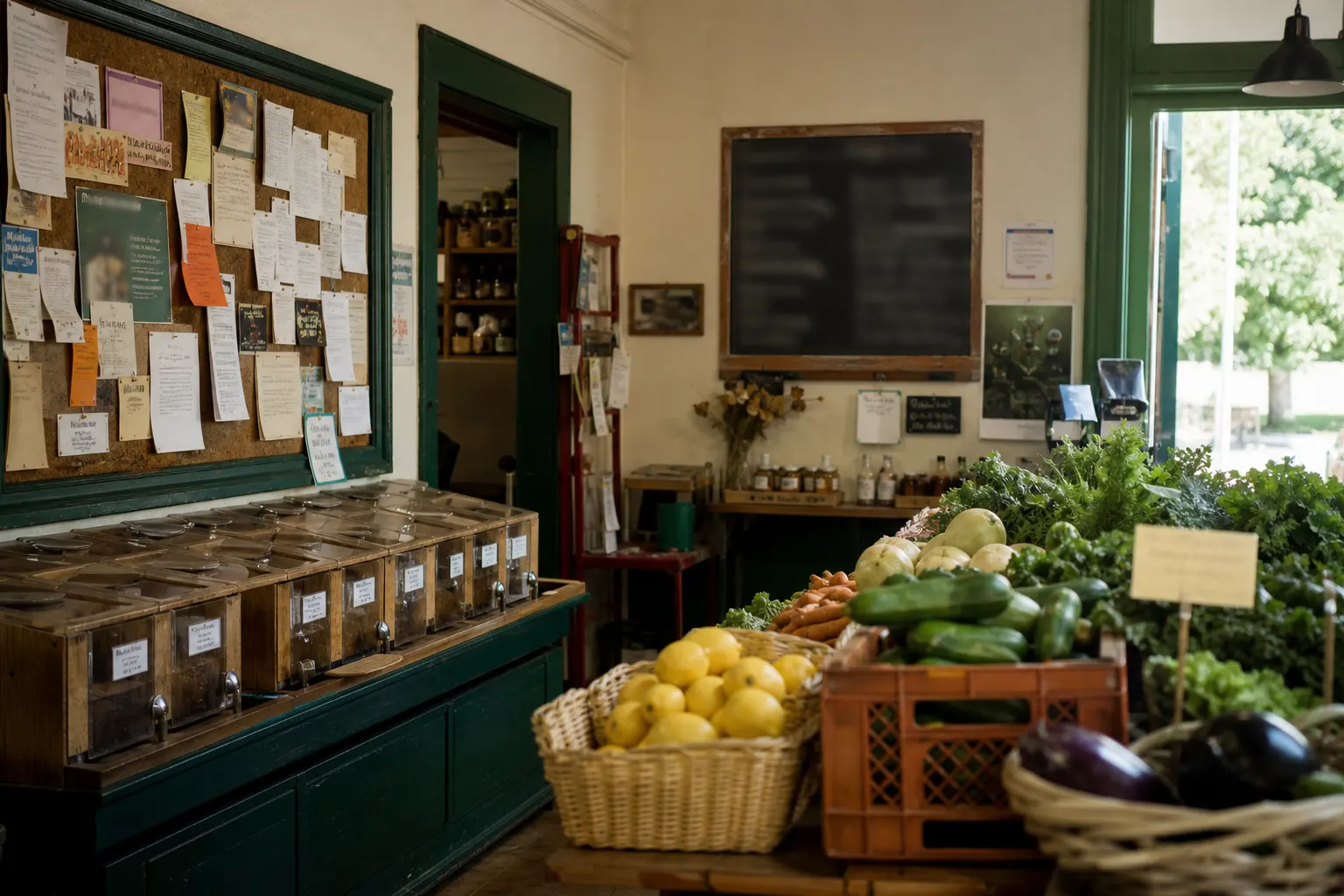
A food co-op is member-owned. Patronage rebates, board governance, and volunteer labor — if any — make recast SDE a different exercise than selling an S-corp neighborhood grocery. Selling “the co-op” may be a member vote, not a private asset sale a general manager can sign on a Tuesday. Do not force a BizBuySell multiple onto a cooperative without governance review. Grocery Store Business Broker — HedgeStone Business Advisors, led by Jason Taken — will still recast the store, count inventory at cost, and map licenses. The bylaws decide whether anyone has the right to sell it.
FMI’s $1 trillion in 2025 supermarket sales and 45,575 U.S. supermarkets in 2024 describe the channel. FMI’s $668,377 average weekly sales per supermarket and $19.59 weekly sales per selling square foot in 2025 describe Speaks supermarkets. A member-owned room is not that sample. FMI’s 2.1 percent average net profit for food retailers in 2025 is a food-retailer net figure. It is not a co-op patronage rate.
Start with the statute of organization and the bylaws. Some cooperatives require a member vote to sell assets, merge, or convert. Some require a supermajority. Some require notice periods that will not fit a buyer’s SBA 7(a) clock. Special-meeting mechanics matter: who can call the meeting, what notice goes out, whether proxies count, and whether a quorum of members who never shop the store can still block a sale. The board that “already agrees” is not the membership. If the board cannot deliver a vote, there is no deal. That is the first red flag in the research pack, and it is the first question on the intro.
Board minutes are diligence. A year of minutes that already argue about selling, converting, or “finding a partner” tells you the political temperature. Minutes that never mention the store’s losses while the P&L does are a different problem. Put the minute book in the room with the tax returns. Read how to read a CIM and surviving due diligence with governance as the first tab, not the last. A merger into another cooperative, an asset sale of the store, and a conversion to a private corporation are three different legal paths. Name which one the bylaws even allow before anyone writes a LOI.
Equity is member equity. Confirm patronage payable, allocated equity, and whether members can redeem. A private buyer who thinks they are purchasing “owner SDE” the way they would from a sole proprietor is reading the wrong entity. Read asset sale versus stock sale and deal-structure vocabulary. Counsel who have never closed a cooperative will draft an APA as if the GM were the seller. Send them working with attorneys and CPAs and the bylaws in the same email.
Real estate may sit in a separate LLC, a land trust, or a related member entity. Confirm that before you quote a going-concern-plus-dirt number. Recast the store on market rent, then price the building with a real-estate licensee if it conveys. Read selling with a lease versus real estate and grocery with real estate. Selling the building always requires a real-estate license. Jason Taken and HedgeStone are not licensed business brokers in every state. Check the rule that applies to your deal.
Patronage rebates are not an add-back. If members are owed a payable, that is a liability on the close. If the store has been running “profit” by delaying patronage, the recast has to say so. Volunteer shifts counted as if they were free forever are a red flag. The next operator — especially a private one — will pay those hours or lose the labor. Put a market wage on the volunteer graph and watch SDE move. State-by-state minimum wage belongs in that graph if paid staff sit below the current table.
General-manager pay, a documented one-time compressor, and a one-time legal bill can move SDE. Recurring shrink cannot. Related-party deals with member-owned buildings that juiced earnings will reverse on day one. Read recasting a grocery P&L and preparing three years of financials. Print the SDE worksheet. Mark patronage and volunteer hours in the margin. The Confidential Seller Playbook is the rest of the paper.
Scan data is still the adult conversation. A weekly-sales spreadsheet without department mix is a rumor. Produce and bulk can sink a “healthy” storewide gross margin. EBT deposits should reconcile to the SNAP story. A gap is mix, downtime, or fiction. Read verifying sales with scan data and shrink, margin, and turns. Turns are not one number. Bulk bins and center store do not share a clock.
This pack does not invent a co-op-only sold-comp. BizBuySell grocery and supermarket sold businesses: 3.38 average earnings multiple in 2025; 2.66 five-year average; IQR 1.60–3.15 for 2021–2025. A 0.43 average revenue multiple on the 2025 sold sample is a cross-check, not a pricing law. Those figures are a national listing-site sample of sold grocery and supermarket businesses. They assume a private seller who can convey the going concern. A cooperative that cannot deliver a vote is not in that sample.
The valuation hub is the method for the store economics. How to value a grocery store is the walkthrough. Use them after the bylaws, not instead of the bylaws. The valuation calculator lets you change SDE and inventory inputs. It will not vote for the members.
Suppose weekly sales are $48,000. Annual sales are $2,496,000. If recast SDE — after putting a wage on volunteer hours and reversing delayed patronage — is 3.2 percent of sales, SDE is $79,872. A 1.60×–3.15× band is about $127,795–$251,597. Add inventory at cost as a separate line. If that band looks small next to member equity on the balance sheet, you have found the real conversation: this may be a conversion, a merger, or a wind-down, not a Tuesday multiple. FMI’s 2.1 percent food-retailer net is not this recast.
Unreported cash does not survive SBA 7(a) — program maximum $5 million — or a serious conventional buyer. Conventional SBA buyers are rare on this format anyway. Read selling with unreported cash. Seller notes and DSCR still matter if a private operator is the other side. Tax clearance belongs in escrow. See taxes on selling a grocery store and state bulk-sales notes. This page is not a tax opinion.
Many co-ops buy through UNFI. Some are affiliated with National Co+op Grocers. Confirm membership in the file. Do not assume it and do not print NCG as a selling point until someone shows the agreement. Local farm accounts may be handshake relationships that do not assign. Sequence wholesaler consent after an NDA and a serious counterparty. Read wholesaler and banner agreements and keep the wholesaler directory as a map.
DSD — bread, dairy, produce — keeps delivering after a sloppy close only if someone is paying them. Over-advances are debt. A CIM that omits the lease abstract is a brochure. Lease diligence still turns on assignment, exclusive use, and co-tenancy. Remaining term under 24 months without options is a price cut. CAM true-ups can erase a year of “extra” SDE.
Inventory night needs a rule for bulk, dated vitamins if you carry them, and produce. Read how inventory is counted at closing and closing-day count procedures. Holdbacks exist because grocery has shrink and successor tax risk. Earn-outs are hard because the buyer — or the remaining members — control mix after Monday. Read escrow, holdbacks, and earn-outs. Compare proposals on cash at close, note terms, inventory treatment, license risk, and whether the vote is actually deliverable — the LOI terms that matter for sellers and comparing offers.
The natural buyer is another co-op or an NCG-affiliated operator — if, and only if, the file shows that affiliation. Conversion to a private independent is politically hard. Member backlash to a private buyer is a red flag that cuts the multiple, or kills the vote. A conventional supermarket operator who wants a “mission banner” is usually a wasted NDA. Rarely does a conventional SBA buyer survive the membership meeting.
Confidentiality and democracy pull in opposite directions. Employees and members learn from vendors and shoppers. A vestibule sign starts a campaign before the board has a resolution. Default to a blind teaser and a short list under NDA, then a member communication plan the bylaws require. The notice that legally must go to members is also the leak. Draft it with counsel so it does not name the buyer before the vote, and so it does not promise a patronage outcome you cannot fund. Read how to sell confidentially. Non-competes are a strange fit when the “seller” is a membership. See non-competes and confidentiality.
If NCG affiliation is confirmed in the file, ask what actually assigns: buying programs, branding, and any shared services. If it is not confirmed, do not put National Co+op Grocers on the teaser. A farm that sells to you because the produce manager sits on their CSA board may not sell to the next operator. Write the accounts that are personal. That is the same transferability problem a kosher plant list has, with different politics.
Selling to a long-time GM still needs a real price and a real note if the bylaws allow it. Soft language creates hard lawsuits. Read selling to family or an employee. Transition hours are a close condition. Write them. See transition and training and the post-closing 90-day plan. The first 90 days are vendor trust, shrink, and not changing the mix for sport — especially not ripping out the bulk aisle the members just voted to keep.
A natural / organic store can look similar on the floor and still be a private S-corp. Do not confuse the two files. How a sale works is the grocery sequence. The seller hub is the process. The twin page is buy a food co-op.
If the co-op operates a store, it still has a retail-food file. USDA FNS: SNAP authorization does not transfer; the new owner — or the surviving entity after conversion — files a new application. There is no local cooperative shortcut. Read what happens to SNAP when you sell and EBT / SNAP diligence. Print the closing and license checklist. Write those conditions into paper before you pick a date.
WIC is a vendor file, not a sticker. Lottery contracts are often personal. Tobacco sits with tax and health agencies. Alcohol is a class, a quota, or a control-state product — NABCA lists 17 control states plus local-control pockets. Read transferring a liquor license and state alcohol regimes. State grocery sales tax changes the register story. WIC, lottery, and tobacco checklists belong in the same folder as the bylaws.
WARN and union contracts are calendar items on larger headcount files — employees, union contracts, WARN. Distressed co-ops still have a lease and a stockroom. Price those, not a turnaround novel. See selling a distressed grocery and common reasons sales fall apart. Surviving due diligence on this format is governance first, then the count.
When the bylaws, the patronage schedule, and the marked SDE worksheet are in one folder, book a confidential intro. Bring the clause that says who can sell. That is a useful hour.
Use this napkin recast on Sell a food co-op when you book the call. It is labeled illustrative. BizBuySell's 2025 grocery sold-business earnings multiple averaged 3.38, with a 2021-2025 IQR of 1.60-3.15.
| Input or output | Illustrative figure |
|---|---|
| Weekly sales (illustrative) | $78,000 |
| Annual sales | $4,056,000 |
| Recast SDE | $190,632 (4.7% of sales) |
| Inventory at cost | $225,333 (~18 turns) |
| Occupancy check | $121,680 / year (3.0% of sales) |
| Low going-concern | $635,192 at 2.15x SDE + inventory |
| High going-concern | $768,634 at 2.85x SDE + inventory |
| Sketch DSCR on a note | 1.40 |
Rent at 3.0% of sales is the occupancy check. If the real lease is higher, the SDE in this table is too generous until you recast to market rent.
Bring three years of P&Ls, weekly sales, and the lease abstract to the intro call. Jason will tell you whether this band is even in the conversation.
Print these, mark them up, and bring the marked copy to the intro. They are educational. They are not a valuation letter and not a listing. All downloadable guides.
Have the file ready so the hour is a recast, not a scavenger hunt. Then pick a time.
Get a grounded read on what buyers will pay
We recast SDE, separate inventory at cost, and price license risk. Download the seller playbook, then put 30 minutes on the calendar.
Get a Free Grocery Store Valuation ConversationEquity is member equity. Confirm bylaws, patronage payable, and whether the real estate is separately owned. This is a legal-structure deal first.
Member-owned inventory is still a separate line at cost, counted at close. Patronage payable is not the same pile as sellable stock. Book a confidential intro to keep those two off the same line.
No. USDA FNS: SNAP authorization does not transfer; the new owner or successor entity files a new application. Member votes do not move the FNS file. Book an intro if you want that clock on the close calendar.
Not until you need consent. Sequence it after an NDA and a serious buyer.
No. This pack does not invent format-specific comps beyond the national BizBuySell grocery sample.
Sell on your terms, not on a listing site
HedgeStone Business Advisors runs a quiet process: recast, qualified operators, and a close that survives the count. The only next step is the intro call.
Book a Confidential Seller ConsultationThis page is educational information from Grocery Store Business Broker (HedgeStone Business Advisors). It is not legal, tax, or investment advice. Licensing, tax, and financing rules vary by state and deal. Confirm every item with counsel and your lender before you sign.
Ready when you are. Jason Taken will talk through the file.
Book a confidential intro