Is grocery escrow the same as earnest money?
No. Earnest money is the buyer’s deposit. Escrow is the account and the agent that may hold that deposit, the rest of the price, a holdback, or a count true-up.
Grocery Store Business Broker · HedgeStone Business Advisors · Jason Taken
Last updated 2026-09-04
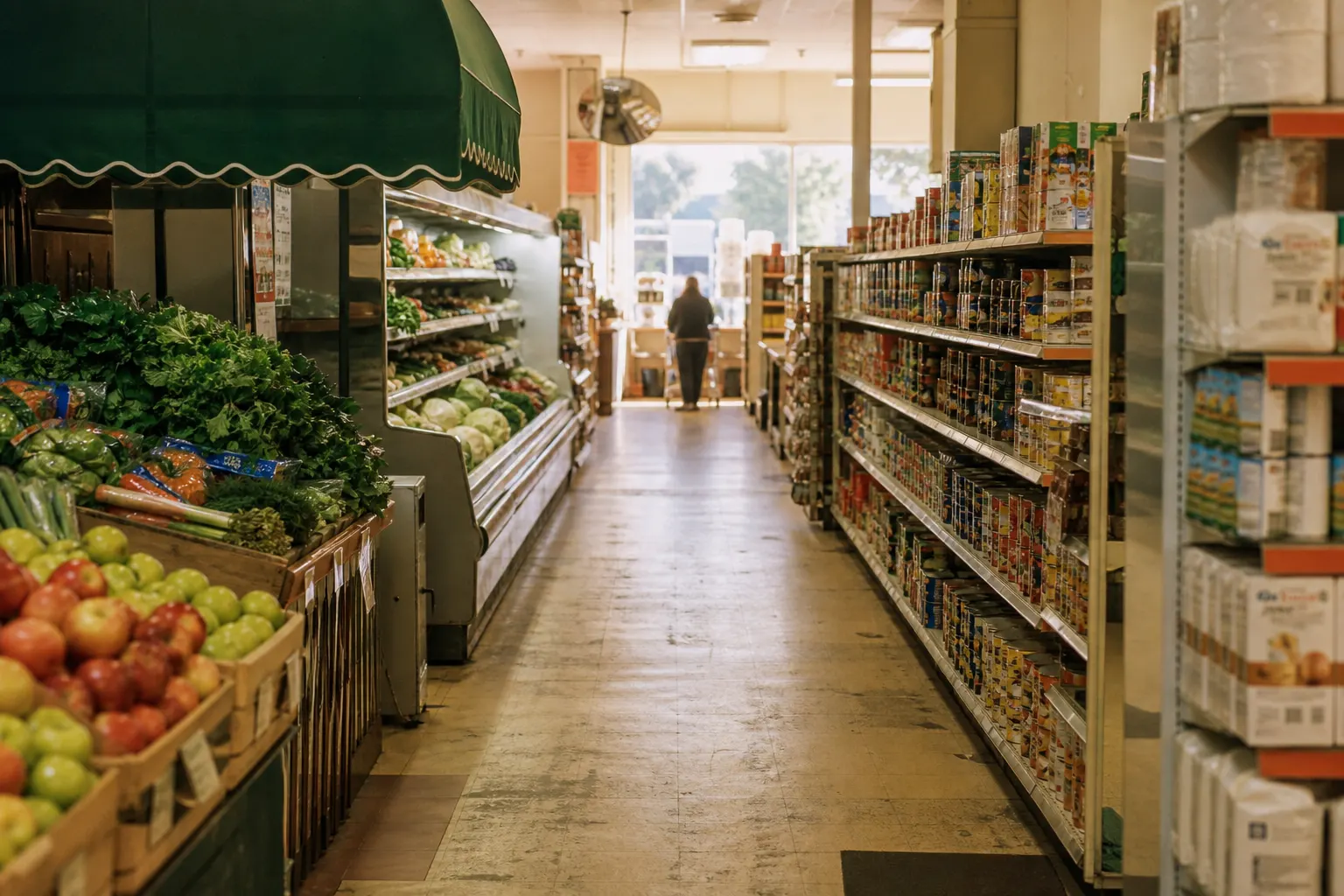
Escrow — A third party holding money and documents until the APA says they may be released. On a grocery close that usually means the price, the earnest money already posted, a tax-clearance holdback, and sometimes a slice of inventory at cost until the third-party count is signed. Escrow, holdbacks, and earn-outs is the map of those buckets.
Name the agent and the release tests before count night. Grocery Store Business Broker — HedgeStone Business Advisors, led by Jason Taken — will not treat a parking-lot cash-out as a close. Book a confidential intro when the instructions are the next page you need to write.
The APA, the bill of sale, assignment consents, and the wires sit in one place so no one “closes” on a missing signature. Earnest money already there credits to the price. The balance of the going-concern check arrives when conditions are met. A holdback is a later slice of seller proceeds that stays after the main wire — tax, a shrink dispute, a known claim.
Grocery adds paper a house sale does not: license applications in process, a count certificate, sometimes a bulk-sale notice. Bulk sales law and state bulk-sale and tax-clearance practice tell you whether the state still expects a notice or a clearance certificate. Put that certificate in the release list instead of hoping the auditor never writes.
The agent follows written instructions. If the instructions are vague, the agent will not invent grocery custom. Write them. Say who pays the escrow fee, who gets any interest, and how many originals of the bill of sale the agent must see. Grocery closes stall on missing W-9s and mismatched entity names as often as they stall on price.
Closing-day inventory procedures often finish after the first scheduled wire. Parties therefore escrow a portion of the inventory payment — or the whole inventory check — until both sides sign the count. Unsellable product, who pays the crew, and how disputes resolve belong in those instructions, not in a hallway argument at 2 a.m.
Tax holdbacks exist because successor exposure is real even when UCC Article 6 is gone. Sales tax, withholding, and local business tax can follow the buyer if clearance never arrives. Escrow holds a bargained slice until the certificate or a dated release test is met. That is not an earn-out. It is insurance on a filing.
Do not use escrow as a junk drawer for every fear. Each retained dollar needs a test and a date. Open-ended “we’ll figure it out” is how proceeds rot.
Typical grocery release tests: signed APA and assignments, landlord consent if required, inventory certificate or a dated fallback, tax instructions, and any license condition the parties agreed to treat as closing-critical. A condition that never arrives needs a walk-away and a return path for the buyer’s money. Earnest money already in the account should credit on the same settlement statement as the new wire so no one “forgets” a deposit that has been sitting for sixty days.
Multi-store files need one instruction set per store or a schedule that cannot be read two ways. One wire for three boxes with three counts is how a good store subsidizes a bad count.
If you have a draft APA and a count rule, bring them. Book the intro with those pages and the tax-clearance plan. The hour is to decide what the agent must see before anyone is paid.
These figures are a teaching walk-through for Escrow on a grocery closing, not a quote and not a sold comp. Order of operations: weekly sales, recast SDE, inventory at cost, then a multiple band.
| Input or output | Illustrative figure |
|---|---|
| Weekly sales (illustrative) | $168,000 |
| Annual sales | $8,736,000 |
| Recast SDE | $314,496 (3.6% of sales) |
| Inventory at cost | $546,000 (~16 turns) |
| Occupancy check | $305,760 / year (3.5% of sales) |
| Low going-concern | $1,222,166 at 2.15x SDE + inventory |
| High going-concern | $1,489,488 at 3.00x SDE + inventory |
| Sketch DSCR on a note | 1.48 |
If weekly sales or shrink move 8 percent, the SDE and the note move with them. That is why Jason Taken starts with scan data and the lease, not with a neighbor's rumor multiple.
Book the intro call with your side of the table ready: seller files or buyer capital. The calendar is the only next step.
Print these, mark them up, and bring the marked copy to the intro. They are educational. They are not a valuation letter and not a listing. All downloadable guides.
Have the file ready so the hour is a recast, not a scavenger hunt. Then pick a time.
Get a specialist on the other side of the table
Grocery deals turn on licenses, inventory, and a recast a lender will believe. Book the intro and bring the file.
Book an Intro Call With Jason TakenNo. Earnest money is the buyer’s deposit. Escrow is the account and the agent that may hold that deposit, the rest of the price, a holdback, or a count true-up.
Because the third-party count often finishes after the first wire. A retained slice pays the true-up or a dispute without reopening the whole price.
The parties name one in the LOI or APA — often a title company, an attorney trust account, or an escrow firm used to bulk-sale tax. Pick someone who will follow written instructions.
Count rules, tax-clearance holdback, license conditions, and who gets interest. [Escrow, holdbacks, and earn-outs](/guides/escrow-holdbacks-and-earn-outs/) is the structure page.
Start a confidential grocery conversation
Whether you are exiting or acquiring, pick a time and we will talk through the file.
Book an Intro Call With Jason TakenThis page is educational information from Grocery Store Business Broker (HedgeStone Business Advisors). It is not legal, tax, or investment advice. Licensing, tax, and financing rules vary by state and deal. Confirm every item with counsel and your lender before you sign.
Ready when you are. Jason Taken will talk through the file.
Book a confidential intro